
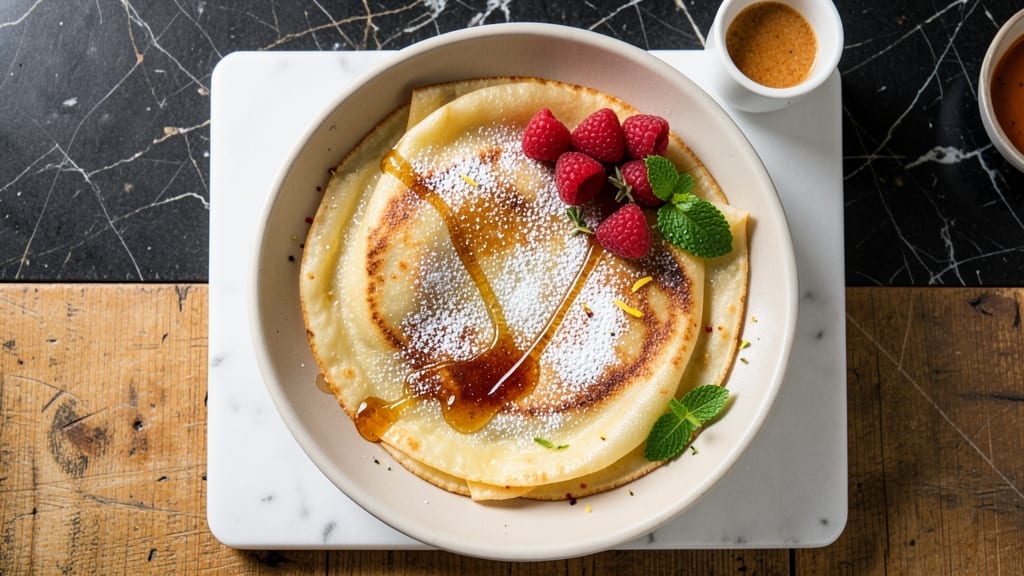
Mastering 3-egg crepes in just 15 minutes transforms breakfast from ordinary to extraordinary with their signature silky texture and delicate layers. The secret lies in a perfectly balanced batter—just flour, eggs, milk, and butter—that creates tender, pliable crepes every time.
I developed this method after years of trial and error, ensuring each crepe achieves that ideal thinness without cracking or tearing.
This recipe delivers restaurant-quality results at home using simple ingredients and a foolproof technique. The batter comes together in minutes, and with the right pan temperature and gentle flipping, you’ll achieve those signature thin layers that separate effortlessly.
Whether you’re serving crepes for a lazy weekend brunch or a quick weekday breakfast, this method guarantees consistent, professional-quality results every time.
What you’ll end up with are silky, golden-brown crepes that hold fillings perfectly—from sweet Nutella and berries to savory ham and Gruyère. The key is patience during cooking: letting the crepes cook slowly on medium heat ensures even browning and a tender interior.
These crepes are versatile enough for any meal, whether breakfast, dessert, or a light lunch.
Ready to elevate your crepe game? This recipe makes 3-4 crepes per batch, perfect for sharing or meal prepping. The instructions are clear, the technique is simple, and the results are undeniably impressive. Let’s get started on creating these delicate, silky layers that everyone will love.
Ingredients for 3 egg crepe
Four essential ingredients plus two optional enhancers create restaurant-quality crepes every time.
| Ingredient | Amount | Notes |
|---|---|---|
| All-Purpose Flour 🌾 | 1 cup | Sifted for light texture |
| Large Eggs 🥚 | 3 whole | Room temperature for even mixing |
| Whole Milk 🥛 | 1 ¼ cups | Full-fat for optimal richness |
| Unsalted Butter 🧈 | ½ cup | Melted, cooled slightly |
| Granulated Sugar 🍚 | 1 tbsp | Optional, for subtle sweetness |
| Diamond Crystal Kosher Salt 🧂 | ½ tsp | Fine grain preferred |
| Vanilla Extract 🌸 | ½ tsp | Pure extract for authentic flavor |
| Extra-Virgin Olive Oil 🫒 | 1 tbsp | For greasing the pan |
The flour is non-negotiable here—King Arthur or Gold Medal brands yield the lightest texture. For the eggs, room temperature is critical; they should be at 68°F before mixing to ensure even incorporation. Whole milk provides the ideal fat content for tender crepes, though 2% works in a pinch. Unsalted butter is a must—it adds richness without overpowering the delicate flavor profile. Melt it just until liquid, then let it cool slightly to prevent scrambling the eggs. For the sugar, turbinado or coconut sugar adds subtle caramel notes if you prefer a more complex sweetness.
No vanilla extract? Almond extract at half the amount provides a similar depth, though with a distinct nutty undertone. Substituting milk? Oat milk works best for texture, but expect slightly denser crepes. For the butter, ghee is a suitable alternative if you’re avoiding dairy, though the flavor will differ. If you’re short on time, pre-sifted flour from the store saves effort, though sifting at home ensures the lightest batter. The olive oil should be lightly fragrant—avoid heavily processed brands that lack character.
Whisk the batter thoroughly and let it rest for 15 minutes before cooking—this relaxes the gluten for silky layers. Store any unused batter in an airtight container in the fridge for up to 2 days, or freeze for 1 month. Cooked crepes reheat beautifully in a dry skillet over medium heat for 20-30 seconds per side. For meal prep, stack crepes with parchment paper between each to prevent sticking, then store in a sealed container.
Why You’ll Love This Recipe
- Five-Ingredient Magic: The batter comes together in three minutes—just whisk flour, eggs, milk, and a splash of butter. No measuring cups, no fuss, just smooth, golden crepes every time.
- Butter-Kissed Crisp: That first bite? The edges get perfectly crisp while the center stays silky, thanks to the butter in the batter and a hot, dry pan. Honestly, it’s the kind of texture that makes you pause mid-bite.
- Breakfast to Dessert: Sweet or savory, these crepes adapt instantly—drizzle with sugar and lemon for a quick breakfast, or stuff with ham and cheese for lunch. My kids even beg for them cold with Nutella (yes, even on a Tuesday night).
- Budget-Friendly Staples: Eggs, flour, milk—ingredients you already have. No specialty items, no wasted leftovers (they freeze like a dream). It’s my go-to when grocery money’s tight but I still want something special.
Step-by-step instructions for silky thin crepes
Master the art of delicate crepes with this foolproof method—light, tender layers that cook in minutes.
Whisk Batter Until Completely Smooth
In a medium bowl, combine the 1 cup all-purpose flour, 1 tablespoon granulated sugar, ½ teaspoon Diamond Crystal kosher salt, and ½ teaspoon vanilla extract. Whisk these dry ingredients together until fully blended—this prevents lumps in your batter.
Next, create a well in the center and add the 3 whole large eggs and 1.25 cups whole milk. Using a whisk, gradually incorporate the wet ingredients into the dry, stirring vigorously for 3-4 minutes until the batter is completely smooth and free of any streaks. The batter should be thin but coat the back of your whisk—this consistency is key for delicate crepes.
Melt and Cool the Butter
In a small saucepan, melt the ½ cup unsalted butter over low heat until fully liquid. Remove from heat and let it cool slightly—it should be warm to the touch but not hot. This step is crucial; hot butter will cook the batter too quickly, resulting in uneven crepes.
Strain the cooled butter into the batter and whisk to combine. The butter should be evenly distributed throughout the mixture. Cover the bowl with plastic wrap and let the batter rest for 15 minutes at room temperature. This resting period allows the gluten to relax, ensuring your crepes will be tender rather than chewy.
Heat the Pan and Test for Readiness
Place an 8-inch nonstick skillet over medium-high heat until it’s very hot. Lightly brush the pan with 1 tablespoon extra-virgin olive oil using a paper towel, making sure to coat the entire surface evenly. The oil should shimmer slightly—this indicates the pan is ready for cooking.
To test if the pan is hot enough, flick a few drops of water onto the surface. If they sizzle and evaporate instantly, the pan is ready. If not, wait another 30 seconds and test again. This step ensures your crepes will develop a golden-brown finish without sticking.
Cook the Crepes to Perfect Thinness
Pour ¼ cup of the batter into the hot pan, immediately tilting and swirling the pan to distribute the batter evenly into a thin, even layer. Cook for 30-45 seconds until the edges lift slightly and the bottom is lightly golden. This is the moment that matters: you’ll see bubbles forming on the surface and the edges pulling away from the pan.
Carefully flip the crepe using a thin spatula, pressing gently to ensure it releases cleanly. Cook the other side for another 20-30 seconds until lightly golden. Transfer the crepe to a clean towel and repeat with the remaining batter, stacking the finished crepes as you go. Each crepe should be 6-8 inches in diameter and tender enough to fold easily.
Keep Crepes Warm and Serve Immediately
Place the finished crepes on a wire rack set over a baking sheet to keep them warm. Cover them loosely with a clean kitchen towel to prevent drying out. Serve the crepes immediately while still warm—this is when they’re at their peak texture and most delicate.
For the best results, fill the crepes with your favorite ingredients—sweet fillings like Nutella and fresh berries, or savory combinations such as ham and Gruyère cheese. The thin, silky layers will hold their shape beautifully, making every bite a perfect balance of texture and flavor.
Pro Tips For Making 3 Egg Crepe
- WHISK LIKE A MANIAC: The batter’s got to be smooth—no lumps, no excuses. I used to give it a lazy stir, and those little flour clumps turned my crepes into chewy, uneven disasters. Whisk vigorously for at least 30 seconds until it’s thinner than pancake batter. (Yes, even if you’re impatient like me.)
- MEASURE MILK PRECISELY: Whole milk is non-negotiable here, but the amount matters more than you’d think. Too little? Your crepes will crack like glass. Too much? They’ll be soggy and floppy. Use exactly 1 cup (240ml)—no eyeballing—and let it sit at room temp for 10 minutes first. Cold milk makes stiff crepes.
- TEST THE PAN TEMP: After burning three batches, I finally figured out the right heat: your pan should be hot enough to sizzle a drop of water instantly, but not so hot it smokes when you add butter. Medium-high is your sweet spot—too low, and the edges cook before the center; too high, and you’ll get blackened crepes every time.
- SALT THE BUTTER: Unsalted butter is your base, but crepes need flavor. Toss in a pinch of salt (about ¼ teaspoon) with the melted butter before pouring it into the batter. I was skeptical until I tried it—it actually balances the sweetness and makes the whole dish taste more cohesive. (Your future self will notice.)
Wine and beer pairings for 3 egg crepe
Sweet Wine Pairings
For sweet crepes filled with Nutella, fresh berries, or caramel, a crisp Sauternes from Bordeaux cuts through the richness beautifully. This late-harvest dessert wine with its honeyed notes and subtle acidity balances the sweetness without overpowering.
I always reach for a Château d’Yquem—its complexity elevates even the simplest berry filling. 🍷
If you prefer something lighter, try a Moscato d’Asti from Italy—its effervescence and floral aroma refresh your palate between bites of crepes drizzled with lemon curd. The slight sweetness complements vanilla-infused crepes perfectly without cloying.
Savory Beer Options
A Belgian witbier like Hoegaarden pairs wonderfully with savory crepes filled with smoked salmon and crème fraîche. The citrusy coriander notes in the beer contrast the creamy filling, while the slight effervescence cleanses your palate.
For a bolder option, try a German Helles—its malty backbone stands up to crepes stuffed with ham and Gruyère.
If you’re serving crepes with a mushroom and herb filling, a dry cider like Strongbow Original adds a crisp, slightly tart contrast. The apple notes complement earthy flavors while keeping the meal light and refreshing.
Coffee and Liqueur Finishes
Skip the wine entirely and serve your crepes with a shot of Kahlúa or Tia Maria for a boozy twist. The coffee liqueur’s caramel and vanilla notes enhance sweet fillings like banana and cinnamon.
For a non-alcoholic option, a vanilla chai latte with steamed milk adds warmth and depth to savory crepes.
Espresso is my go-to for savory crepes—its bitterness cuts through rich fillings like goat cheese and honey. Serve it in small cups alongside the crepes for a sophisticated brunch experience.
Seasonal Adaptations
In summer, a sparkling rosé with its bright acidity pairs perfectly with crepes filled with peaches and ricotta. The wine’s crispness mirrors the freshness of summer fruit. For autumn, a Port wine with its dried fruit notes complements crepes stuffed with figs and walnuts.
Winter calls for a Mulled Wine—its warm spices like cinnamon and clove enhance crepes filled with spiced apples and caramel. The alcohol in the wine also helps cut through the richness of buttery crepes.
Nutrition facts
Frequently asked questions
How many crepes does this 3-egg recipe actually make?
This recipe yields about 3-4 crepes when using an 8-inch pan and pouring ¼ cup batter per crepe. The exact number depends on your pan size—smaller pans may require slightly less batter per crepe. For thicker crepes, reduce the heat slightly and cook longer.
Can I make the batter ahead of time?
Yes! Prepare the batter up to 2 days ahead and store it in an airtight container in the fridge. For longer storage, freeze the batter for up to 1 month. Let it sit at room temperature for 15 minutes before using to relax the gluten. Stir well before cooking to redistribute the butter.
Why are my crepes tearing when I flip them?
Tearing usually happens when the batter is too thick or the pan isn’t hot enough. Ensure your pan is medium-high heat (test with water droplets that sizzle instantly) and use a thin, flexible spatula. Also, tilt the pan immediately after pouring to create an even layer—this prevents uneven cooking.
What’s the best way to reheat leftover crepes?
Reheat in a dry 8-inch skillet over medium heat for 20-30 seconds per side until warm and slightly crispy. For microwave reheating, wrap crepes in a damp paper towel and heat for 10-15 seconds—this prevents drying. Never stack crepes directly on top of each other when reheating.
Can I make these crepes gluten-free?
Yes! Replace the all-purpose flour with a 1:1 gluten-free flour blend (like Bob’s Red Mill) and add ½ teaspoon xanthan gum to improve elasticity. You may need to adjust the liquid ratio slightly—start with 1.1 cups milk instead of 1.25 and whisk until smooth. The texture will be slightly different but still delicious.

- 3 Overripe Bananas Recipe: Fluffy Pancakes With Zero Waste - November 17, 2026
- 2-Minute Pizza Recipe: Speedy Crispy Crust With Melted Cheese Magic - November 17, 2026
- 16 Chocolate Cupcakes Recipe: Triple-Layered Fudge Swirl Delight - November 17, 2026