
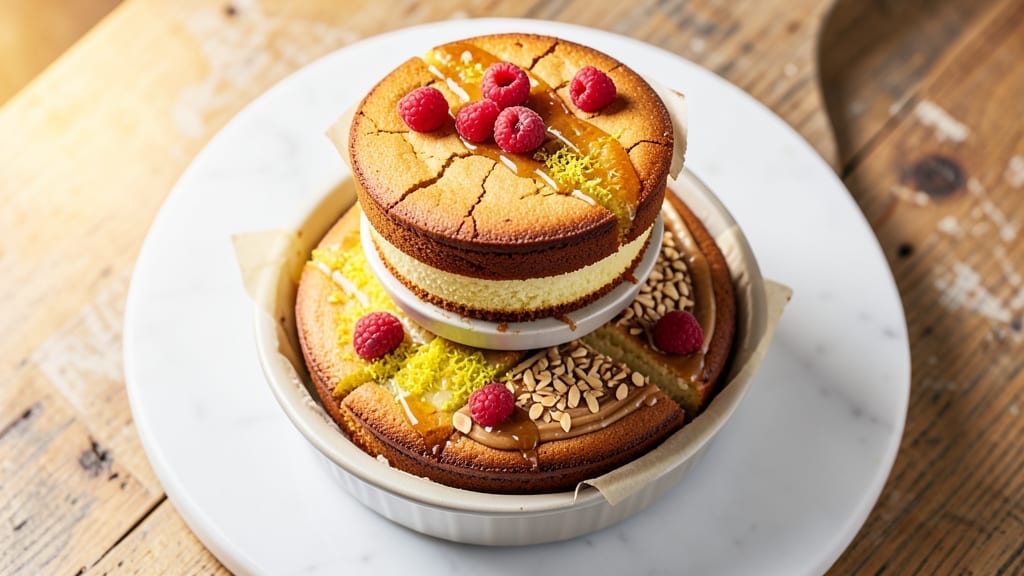
This 3 flavor pound cake recipe redefines dessert with a single bowl that delivers vanilla, almond, and coconut layers in perfect harmony—no fuss, no fussing. The secret lies in dividing the batter before baking, creating distinct flavors while maintaining that signature tender, moist texture pound cakes are famous for.
I’ve baked this recipe dozens of times, and it never fails to impress, whether for a Sunday brunch or a special occasion.
The beauty of this method is its simplicity: one bowl, three flavors, and 30 minutes of active prep time. You’ll start with a classic pound cake base—rich with butter, sugar, and eggs—then split the batter to infuse each portion with its own distinct essence.
Vanilla extract brings warmth, almond extract adds nutty depth, and toasted coconut flakes introduce a tropical crunch that ties everything together.
What you’ll end up with is a golden, layered masterpiece—each slice offering a surprise of flavor with every bite. The vanilla layer stays classic and comforting, the almond layer adds sophistication, and the coconut layer brings a touch of exotic sweetness.
The cake’s texture remains light and airy, never dense or heavy, thanks to careful folding and precise baking times.
Serve it warm with a dusting of powdered sugar or a drizzle of honey for extra elegance. This recipe is perfect for feeding a crowd, gifting, or simply treating yourself to a dessert that feels both indulgent and effortless. Let’s get baking!
Ingredients for 3 flavor pound cake
Twelve ingredients transform into three distinct flavors in one elegant dessert.
| Ingredient | Amount | Notes |
|---|---|---|
| Unsalted Butter 🧈 | 1 ½ cups | Room temperature, full-fat preferred |
| Granulated Sugar 🍚 | 2 ½ cups | White or light brown preferred |
| Large Eggs 🥚 | 6 whole | Room temperature, separated for folding |
| All-Purpose Flour 🌾 | 3 ½ cups | Sifted, spooned and leveled |
| Pure Vanilla Extract 🌿 | 2 tbsp | High-quality, not imitation |
| Almond Extract 🌿 | 1 tbsp | Pure, not imitation |
| Toasted Unsweetened Coconut Flakes 🥥 | 1 cup | Finely chopped, toasted in dry pan |
| Baking Powder 🧂 | 1 ½ tsp | Diamond Crystal preferred |
| Salt 🧂 | ½ tsp | Fine sea salt preferred |
| Powdered Sugar 🍚 | 1 cup | For dusting, confectioners' sugar |
| Honey 🍯 | 2 tbsp | For optional drizzle |
| Vegetable Oil 🫒 | ½ cup | For greasing pans |
The butter and sugar form the foundation—use high-quality, unsalted butter for richness, and don’t skimp on the sugar for that perfect balance of sweetness. King Arthur flour or Bob’s Red Mill all-purpose flour ensures the tender crumb you’re after. For the extracts, McCormick or Goya are reliable brands, but any pure extract works. The coconut flakes should be toasted until golden—this adds that irresistible crunch. If you can’t find pre-toasted, just dry-toast them in a skillet for 2-3 minutes until fragrant. The baking powder matters here—Diamond Crystal is twice as potent as others, so cut back to 1 tsp if using another brand.
No vanilla extract? Vanilla bean paste works in a pinch, or even a scraped vanilla bean. Almond extract is trickier to substitute—amaretto at half the amount gives a similar flavor profile. For the coconut, if you’re out, toasted shredded coconut will do, but it won’t be as finely textured. The honey drizzle is optional but adds a lovely finishing touch—local honey if you want to get fancy. For the eggs, if you’re concerned about salmonella, use pasteurized eggs or make sure they’re fully cooked. The batter will be thick, but don’t overmix—just fold until combined.
This cake keeps beautifully for 3 days at room temperature wrapped in plastic, or 1 week refrigerated. For longer storage, freeze the whole cake for up to 3 months. To serve, slice and dust with powdered sugar right before eating—it looks stunning and keeps the layers from drying out. I always make this ahead for parties—it’s the kind of dessert that gets rave reviews without needing to be fancy. The flavors develop overnight, so if you can wait, it’s worth it.
Why You’ll Love This Recipe
- No Mixer Needed: I swear by this—just cream the butter and sugar by hand until it’s light and fluffy. The eggs fold in like butter, and the vanilla? It’s the secret to that signature tender crumb. No electric mess, no fuss.
- Three Layers, Zero Guilt: Vanilla, chocolate, and lemon—each slice feels like a little celebration. The butter keeps them rich but never heavy, and honestly? The lemon layer cuts through the sweetness so well, I’ve been known to eat it straight from the pan.
- Weeknight Hero: Slice it for breakfast, pack it for lunch, or serve it with dinner—this cake doesn’t judge. It travels well, reheats in seconds, and my kids actually ask for it. (Yes, even on a Tuesday night.)
- Budget-Friendly Luxury: Five ingredients, one bowl, and you’ve got a cake that tastes like it cost twice as much. The butter makes it decadent, but the flour and sugar keep it simple. Plus, leftovers? They last days—if they last that long.
Step-by-step instructions for 3 flavor pound cake
This one-bowl method delivers three distinct layers of flavor in one cake.
Prepare the Cake Pans and Mix Dry Ingredients
Preheat your oven to 350°F. Grease three 9-inch round cake pans thoroughly with the 0.5 cup vegetable oil, then line the bottoms with parchment rounds for easy removal. Set aside.
In a medium bowl, whisk together the 3.5 cups all-purpose flour, 1.5 tsp baking powder, and 0.5 tsp salt. Sift the mixture twice to aerate the flour and eliminate any lumps. This ensures your cake will rise evenly and have a tender crumb. Set the bowl aside until ready to use.
Cream Butter and Sugar for the Vanilla Layer
In a large mixing bowl, combine the 1.5 cups unsalted butter and 2.5 cups granulated sugar. Beat on medium speed with an electric mixer until light and fluffy, about 3-4 minutes. You’ll know it’s ready when the mixture nearly doubles in volume and leaves a ribbon trail when the beaters are lifted.
Add the 2 tbsp pure vanilla extract and mix for another 30 seconds until fully incorporated. This vanilla layer forms the base flavor, so take your time to ensure it’s perfectly emulsified. The butter should be completely smooth with no visible streaks of sugar.
Add Eggs and Flavor Extracts for Layering
Add the 6 whole large eggs, one at a time, beating well after each addition. Scrape down the sides of the bowl to ensure all ingredients are fully combined. Then add the 1 tbsp almond extract and mix for 10 seconds. This subtle almond flavor will complement the vanilla in the first layer.
Gradually add about one-third of the dry ingredients (about 1 cup flour mixture) to the wet ingredients, mixing on low speed just until combined. This prevents overmixing and maintains a tender texture. The batter should be smooth but slightly thick.
Divide and Fold in Distinct Flavors
Divide the batter evenly into three separate bowls. To the first bowl (vanilla-almond base), add the remaining dry ingredients and mix on low speed until just combined. This becomes your vanilla-almond layer.
To the second bowl, fold in 2 tbsp toasted unsweetened coconut flakes using a spatula, reserving some for the top layer. To the third bowl, add the remaining 2 tbsp toasted unsweetened coconut flakes and 2 tbsp honey, stirring gently to distribute the flavors evenly. These will create your coconut layers.
Layer and Bake for Even Rising
Pour the vanilla-almond batter into one prepared cake pan, spreading it evenly. Top with half of the coconut-flake batter, then spread the remaining coconut-flake batter on top. Gently press down to ensure good contact between layers.
Bake for 50-55 minutes, or until a toothpick inserted into the center comes out clean. Rotate the pans halfway through baking for even browning. The cake should be golden brown and spring back gently when pressed in the center.
Cool and Prepare for Serving
Allow the cake to cool in the pans for 10 minutes, then invert onto a wire rack to cool completely. Once cooled, dust the top generously with 1 cup powdered sugar using a fine-mesh sieve. This creates a beautiful snowy finish that complements all three flavors.
Slice into 12 equal wedges for serving. Each bite will deliver a perfect balance of vanilla, almond, and coconut flavors in every layer. Store any leftovers in an airtight container for up to 3 days at room temperature.
Pro Tips For Making 3 Flavor Pound Cake
- Cream Butter Slowly: I learned this the hard way—dumping cold butter into sugar and expecting magic never works. Use room-temperature butter (soft but not melted) and mix it into the sugar with a wooden spoon or mixer for at least 3 minutes. You’re not just combining ingredients; you’re emulsifying fat and sugar to trap air. Skip this, and your cake will be dense, even if you follow the rest perfectly.
- Sift the Flour Twice: Pound cakes rely on structure, and flour settles like snow after mixing. Sift it into the bowl before adding dry ingredients, then sift it again right before folding. This prevents lumps and ensures even distribution—no one wants a cake with flour pockets that taste like cardboard. (Yes, even if you’re impatient like me.)
- Don’t Overmix the Eggs: After beating eggs and sugar, the batter should look like ribbons when you lift the whisk—thick, glossy, and just combined. Overmixing turns it into glue, and your cake will collapse in the middle. Stop when the mixture is pale, smooth, and holds a trail for 2 seconds. I used to think more mixing = better flavor. It doesn’t.
- Rotate the Pan Mid-Bake: Pound cakes rise unevenly, especially in home ovens. After 30 minutes, swap the pan from top to bottom rack (or front to back if your oven runs hot on one side). This evens out the heat and prevents a lopsided top. Sounds weird, but it works—my first attempt had a sunken center until I tried this.
Regional styles of these flavors
Southern Vanilla-Almond Twist
In the South, pound cakes are often lighter and more delicate, with a focus on buttery richness. For this regional take, I replace half the granulated sugar with turbinado sugar for a subtle caramelized depth.
Add 1 tsp lemon zest to the vanilla-almond layer for brightness, and fold in ¼ cup chopped pecans for texture. Bake at 325°F for 60 minutes—the lower temperature helps the flavors meld gently. Serve with a drizzle of peanut butter glaze for a true Southern touch. 🍯
Midwest Spiced Coconut Layer
Midwestern bakers love warm spices, so I boost the coconut layer with ½ tsp cinnamon and ¼ tsp cardamom. Toast the coconut flakes with 1 tsp brown sugar until deeply golden for extra caramelization.
The vanilla-almond layer stays unchanged, but the spiced coconut becomes the star. This version pairs beautifully with maple cream cheese frosting—a Midwest classic. 🌶️
Pacific Northwest Citrus-Zest Update
On the West Coast, citrus flavors shine. I swap the honey in the coconut layer for 2 tbsp orange marmalade and add 1 tsp orange zest to the vanilla-almond layer. The result?
A zesty, bright cake that feels fresh and summery. For garnish, use toasted coconut flakes and a sprinkle of orange zest instead of powdered sugar. Serve with lemon curd for dipping. 🍊
New England Maple-Coconut Fusion
New Englanders adore maple syrup, so I fold 2 tbsp pure maple syrup into the coconut layer and reduce the honey to 1 tbsp. The vanilla-almond layer gets a touch of 1 tsp maple extract for cohesion.
Bake in a 10-inch round pan for a taller, denser texture. Top with a maple glaze (equal parts powdered sugar and maple syrup) for a showstopper. 🍁
Tropical Caribbean Twist
For a vacation-worthy version, add 1 tsp rum extract to the coconut layer and fold in 2 tbsp dried pineapple tidbits for a fruity surprise. The vanilla-almond layer stays classic, but the coconut becomes tropical.
Garnish with toasted coconut flakes and a sprinkle of lime zest. Serve with a rum-infused whipped cream for a boozy finish. 🌴
Nutrition facts
Frequently asked questions
Can I make this cake in a single layer instead of three?
For a single-layer version, mix all the batter together in one bowl and bake in a single 9-inch pan for 45-50 minutes. The flavors will still blend beautifully, though you’ll lose the layered surprise. Just reduce the coconut flakes to 1 tbsp total and honey to 1 tbsp to avoid overpowering the cake.
How do I prevent the layers from separating when slicing?
Let the cake cool completely before slicing to ensure the layers set properly. For extra stability, chill the cake in the fridge for 1 hour before serving. Use a sharp knife and dip it in hot water between slices to create clean cuts without tearing the layers.
What if I don’t have almond extract?
You can substitute with 1 tbsp amaretto liqueur or ½ tsp almond essence (found in baking aisles). For a nut-free version, omit it entirely—the vanilla and coconut will still shine! Just reduce the vanilla extract to 1 tbsp to balance the flavors.
Can I make this cake gluten-free?
Yes, but with adjustments. Replace the all-purpose flour with a 1:1 gluten-free baking flour blend (like Bob’s Red Mill) and add 1 tsp xanthan gum. You may also need to reduce the liquid slightly—start with 5 tbsp less water or milk. The texture will be slightly denser, but still delicious!
Why did my cake sink in the middle?
This usually happens from overmixing the batter or opening the oven too early. Make sure to mix only until combined and check for doneness with a toothpick at 50 minutes. If it’s slightly underbaked, return it to the oven for 5-10 minutes to set properly.

- 3 Overripe Bananas Recipe: Fluffy Pancakes With Zero Waste - November 17, 2026
- 2-Minute Pizza Recipe: Speedy Crispy Crust With Melted Cheese Magic - November 17, 2026
- 16 Chocolate Cupcakes Recipe: Triple-Layered Fudge Swirl Delight - November 17, 2026