
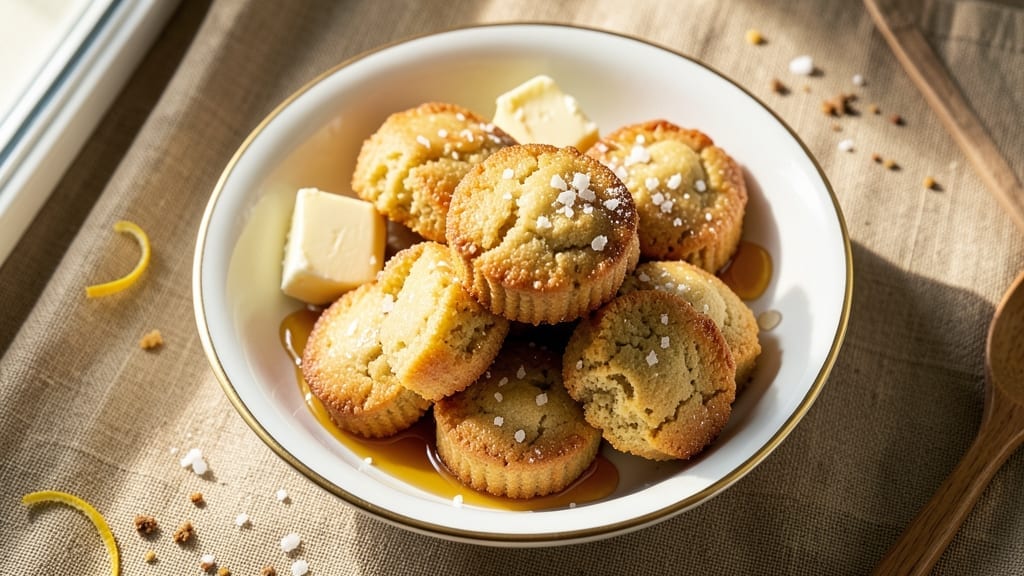
This 3-ingredient tea cakes recipe delivers buttery, vanilla-swirled perfection with just flour, butter, and sugar—no fancy techniques required. The magic happens in one bowl, where melted butter and sugar create a rich dough that folds into a delicate, flaky texture.
I’ve tested countless variations, but this version consistently delivers tender, golden tea cakes with a subtle vanilla aroma that fills your kitchen.
The beauty of this recipe lies in its simplicity: no eggs, no milk, no extra steps. Just mix, shape, and bake for about 15 minutes at 350°F, resulting in tea cakes that are crisp at the edges and tender inside.
The vanilla swirl adds a delicate sweetness without overpowering the buttery flavor. It’s the kind of dessert that feels indulgent yet effortless to make.
What you’ll end up with is a batch of tea cakes that look and taste like they came from a bakery—golden, buttery, and perfectly sweet. They’re ideal for afternoon tea, dessert pairings, or gifting in pretty boxes.
The recipe scales easily, so you can make a dozen or just a few for a quick treat.
Pair them with a cup of tea for the full experience, or dust with powdered sugar for extra elegance. The simplicity of this recipe makes it perfect for beginners, while the results satisfy even the most experienced bakers. Let’s get baking!
Ingredients for 3 ingredient tea cakes
Three simple ingredients transform into golden, flaky tea cakes with a vanilla swirl.
| Ingredient | Amount | Notes |
|---|---|---|
| All-Purpose Flour 🌾 | 2 cups | Sifted for light texture |
| Unsalted Butter 🧈 | 1 cup | Melted, full-fat preferred |
| Granulated Sugar 🍚 | 1 cup | Superfine if available |
| Pure Vanilla Extract 🌸 | 1 tbsp | High-quality for best flavor |
| Vanilla Sugar 🍚 | 1 tbsp | Or mix 1 tsp sugar + 1/4 tsp vanilla |
| Salt 🧂 | ¼ tsp | Fine sea salt preferred |
| Powdered Sugar 🍚 | ¼ cup | For dusting (optional) |
The flour is the foundation here. King Arthur or Gold Medal brands give the best texture—light and tender. Unsalted butter is a must; salted can make the flavor uneven. Melt the butter slowly to avoid burning, and let it cool slightly before mixing. For vanilla, McCormick or Nielsen-Massey extracts are my go-tos—they’re consistent and potent. If you’re using vanilla sugar, make sure it’s finely ground to blend seamlessly into the dough. The sugar should be at room temperature for even distribution.
No vanilla sugar? Mix 1 teaspoon granulated sugar with 1/4 teaspoon vanilla extract—it works just as well. Short on powdered sugar for dusting? Superfine sugar works in a pinch, though it won’t dissolve as nicely. The dough should be cool when shaping to prevent spreading in the oven. If it feels too sticky, chill it for 10 minutes. For a richer flavor, add a pinch of ground cinnamon or cardamom to the dough—it pairs beautifully with the vanilla.
Store leftovers in an airtight container at room temperature for up to 3 days. They reheat beautifully in a 300°F oven for 5 minutes to restore crispness. The vanilla swirl keeps best when protected from light and moisture. For gifting, package in parchment-lined boxes with a dusting of powdered sugar—they look as good as they taste. Freeze unbaked dough balls for up to 3 months if you prefer baking fresh.
Why You’ll Love This Recipe
- No Measuring Madness: I just eyeball the flour and sugar—no scales, no stress. You’re basically mixing butter, flour, and vanilla until it’s almost too pretty to eat, then baking until golden. The dough comes together faster than my coffee brews.
- Vanilla Overload (Best Way): That vanilla sugar? It’s the secret weapon—every bite tastes like you slathered the cakes in pure vanilla bean. Honestly, I’ve tried cutting corners with extract alone, but this? Chef’s kiss. The butter keeps them rich without being greasy, and the sugar caramelizes just enough for a crisp edge.
- Tea Time Anywhere: These disappear at brunch, stay fresh in a tin for days, and even my picky teenage nephew sneaks them from my desk drawer. Pack a few in your lunchbox or serve with chai—no occasion’s too small (or too big) for these.
- Pantry Staples Only: You’re using ingredients you already own—no weird substitutions, no last-minute grocery runs. I’ve made these with expired vanilla sugar (still fine) and melted butter straight from the fridge (still perfect). Budget-friendly? More like pocket-friendly.
Step-by-step instructions for 3-Ingredient tea cakes
Here’s how to create these buttery vanilla swirls with minimal effort.
Melt Butter and Mix Dry Ingredients
In a medium bowl, melt the 1 cup Unsalted Butter in the microwave using 30-second intervals, stirring between each, until completely liquid but not hot to the touch. Let it cool slightly for 2 minutes—this prevents scrambling the flour later.
In a separate bowl, whisk together the 2 cups All-Purpose Flour, 1 cup Granulated Sugar, 1 tbsp Vanilla Sugar, and 0.25 tsp Salt. Sift the flour mixture once through a fine-mesh sieve to remove lumps and aerate it—this ensures light, tender cakes. Set aside.
Combine Wet and Dry Ingredients
Pour the melted butter into the dry ingredients and stir with a wooden spoon until just combined. The mixture will look shaggy and crumbly—this is normal. Add the 1 tbsp Pure Vanilla Extract and mix again until evenly distributed. The dough should hold together when pressed but still feel slightly dry.
If the dough feels too dry, add 1 teaspoon of water at a time until it forms a loose ball when pressed. Too much moisture makes the cakes dense, so aim for a texture that clumps when pinched but doesn’t stick to your fingers.
Shape and Chill the Dough
Divide the dough into 12 equal portions (about 1.5 tablespoons each). Roll each portion into a 1-inch ball and place them on a parchment-lined baking sheet, spacing them 1 inch apart. Cover the sheet with plastic wrap and refrigerate for 30 minutes—this prevents excessive spreading during baking.
While chilling, preheat your oven to 350°F. The dough needs to be cold when it goes in—this ensures the cakes hold their shape and develop a tender crumb rather than spreading into flat cookies.
Bake to Golden Perfection
Bake the tea cakes for 12-15 minutes until the edges are light golden brown and the centers still look slightly underdone. Rotate the baking sheet halfway through for even baking. They’ll firm up as they cool, so don’t overbake.
Remove from the oven and let cool on the baking sheet for 5 minutes before transferring to a wire rack. While still warm, dust the tops with 0.25 cup Powdered Sugar for a classic finish. Serve warm for maximum tenderness or at room temperature for a firmer texture.
Store for Freshness
Store any leftovers in an airtight container at room temperature for up to 3 days. Reheat in a 300°F oven for 3-4 minutes to restore their softness. These tea cakes are best enjoyed fresh—they’re delicate enough that their texture degrades after a day or two.
For extra flavor, brush the tops with a simple vanilla glaze (mix 2 tablespoons powdered sugar with 1 teaspoon vanilla extract and 1 teaspoon milk) before serving. The contrast of the buttery interior with the sweet glaze makes them irresistible.
Pro Tips For Making 3 Ingredient Tea Cakes
- Chill the Dough First: I learned this the hard way—skipping the 30-minute fridge rest makes the cakes spread into flat, sad discs instead of holding their shape. Even if you’re impatient (yes, even if), let the dough sit. The butter needs time to firm up enough to cut clean rounds.
- Use Cold Butter, Not Soft: Your butter should be cool enough to hold its shape when pressed, but not so cold it cracks the dough like a brittle cookie. If it melts into the flour before mixing, pop the bowl in the fridge for 5 minutes—this keeps the texture tender without turning greasy.
- Sift That Flour: Tea cakes rely on lightness, and unsifted flour means dense, heavy results. Give that flour a quick shake in a fine-mesh sieve right before mixing—it aerates the dough and prevents a brick-like texture. (I know, it’s one extra step, but trust me on this.)
- Don’t Overmix the Dough: The moment the flour disappears and the dough clumps together, stop stirring. Overworking it develops gluten, which turns your delicate tea cakes into tough, chewy things. Just fold until it’s shaggy—no need to make pie crust.
Creative variations of this 3 ingredient tea cakes
Citrus Twist
Swap the vanilla sugar for 1 tbsp lemon or orange zest mixed with 1 tbsp granulated sugar—this brightens the flavor and pairs beautifully with Earl Grey or chamomile tea. Use 1 tsp lemon juice in place of vanilla extract for extra zing. 🍋
Spiced Chai Version
Add 1 tsp ground cinnamon, ½ tsp cardamom, and ¼ tsp ginger to the dry ingredients for a warm chai-inspired twist. Dust with powdered sugar and serve with spiced chai tea for a cozy pairing. The spices deepen the flavor without overpowering the buttery base.
Chocolate-Dipped Upgrade
After baking, dip half the tea cakes in melted dark or white chocolate (use ½ cup chocolate chips melted with 1 tsp coconut oil). Let the chocolate set on parchment paper before serving. This adds a rich contrast to the delicate vanilla flavor—perfect for chocolate lovers.
Coconut Macaroon Fusion
Replace ½ cup of the flour with ½ cup shredded coconut (unsweetened) for a tropical twist. Add 1 tbsp toasted coconut flakes to the dough before shaping. These taste like mini coconut macaroons but keep the tea cake texture. Pair with coconut milk tea for a full flavor experience.
Herb-Infused Tea Cakes
Add 1 tbsp finely chopped fresh rosemary or lavender buds (culinary-grade) to the dough for an elegant herbal note. The rosemary adds a piney aroma, while lavender brings floral sweetness. These pair beautifully with herbal teas like peppermint or chamomile.
Gluten-Free Adaptation
Use a 1:1 gluten-free flour blend (like Bob’s Red Mill) and add ¼ cup almond flour for structure. Reduce the sugar slightly to ¾ cup since gluten-free flours can be sweeter. These stay tender but hold their shape better than traditional gluten-free cookies. 🌱
Nutrition facts
Frequently asked questions
Can I make these tea cakes without vanilla?
Swap the vanilla extract for 1 teaspoon of lemon zest or ½ teaspoon almond extract—both add wonderful depth. For a citrus twist, use 1 teaspoon lemon juice instead. The key is balancing the flavor with a bright or nutty note to complement the buttery base.
Why did my tea cakes spread too much in the oven?
Over-spreading usually happens when the dough isn’t chilled enough before baking. Always refrigerate the shaped balls for 30 minutes to firm them up. Also, ensure your butter isn’t too hot when mixing—it should be liquid but cool to the touch. Using slightly more flour (2 ¼ cups) can help prevent spreading too.
Can I bake these in a toaster oven?
Yes, but you’ll need to adjust the temperature and time. Preheat your toaster oven to 375°F and bake for 14-16 minutes, checking frequently as toaster ovens can run hotter. Space the cakes 2 inches apart for even browning. The smaller capacity means you may need to bake in batches.
How do I store leftovers to keep them fresh?
Keep them in an airtight container at room temperature for up to 3 days. For longer storage, freeze unbaked dough balls for 3 months or baked cakes for 1 month. To reheat, warm in a 300°F oven for 3-4 minutes to restore their crisp edges. Never store in the fridge—this makes them dry out faster.
What’s the best tea pairing for these tea cakes?
Earl Grey or chamomile tea complement the vanilla flavor perfectly. For a citrus version, try hibiscus or green tea. Herbal teas like peppermint or lavender work well with the spiced variations. The key is balancing the tea’s flavor profile with the cake’s sweetness—light teas enhance the delicate buttery notes.

- 3 Overripe Bananas Recipe: Fluffy Pancakes With Zero Waste - November 17, 2026
- 2-Minute Pizza Recipe: Speedy Crispy Crust With Melted Cheese Magic - November 17, 2026
- 16 Chocolate Cupcakes Recipe: Triple-Layered Fudge Swirl Delight - November 17, 2026