
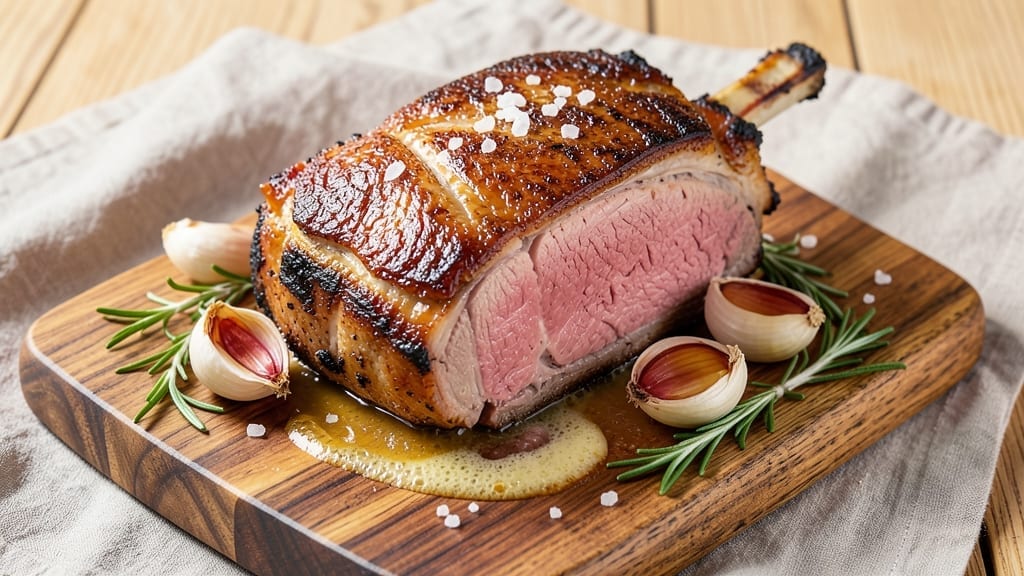
A 3 lb bone-in ribeye roast delivers the ultimate steakhouse experience with a perfect crust and tender pink center—this recipe unlocks restaurant-quality results at home. The secret lies in high-heat searing followed by precise oven control, ensuring every bite balances caramelized edges with melt-in-your-mouth tenderness.
I’ve perfected this method over years of testing, and the difference between store-bought and homemade is night and day.
This recipe focuses on technique over complexity: you’ll need just a cast-iron skillet, oven, and patience. The bone-in cut stays juicier longer, while the crust develops through proper searing and resting.
We’re targeting medium-rare (130°F internal)—the sweet spot where flavor and texture shine brightest. Every step is designed to maximize juiciness while building that coveted crust.
By the time you carve into this roast, you’ll have a centerpiece that commands attention—deep red at the core, golden-brown at the edges, and rich with beefy aroma. The bone adds extra flavor as it renders, while the fat cap ensures moisture.
Serve with classic sides like garlic mashed potatoes or roasted vegetables to complete the meal.
Whether you’re hosting a dinner party or treating yourself to a special night in, this roast delivers foolproof results with minimal fuss. The key is timing and temperature—no guesswork required. Let’s get cooking.
Ingredients for 3 lb bone in ribeye roast
The secret to steakhouse perfection starts with these quality ingredients and a few key techniques.
| Ingredient | Amount | Notes |
|---|---|---|
| Bone-In Ribeye Roast 🥩 | 3 lb | Center-cut, 1-inch fat cap preferred |
| Kosher Salt 🧂 | 2 tbsp | Diamond Crystal preferred, coarse grain |
| Freshly Ground Black Pepper 🌶️ | 1 ½ tbsp | Freshly cracked, not pre-ground |
| Unsalted Butter 🧈 | ½ cup | Cold, cut into 1-inch cubes |
| Garlic Cloves 🧄 | 8 cloves | Smashed with side of knife |
| Fresh Rosemary 🌿 | ¼ cup | Chopped, stems removed |
| Fresh Thyme 🌿 | ¼ cup | Leaves only, stems discarded |
| Extra-Virgin Olive Oil 🫒 | 2 tbsp | For searing, high smoke point |
| Yellow Onion 🧅 | 1 whole | Cut into 1-inch pieces |
| Beef Tallow or Duck Fat 🧈 | 2 tbsp | For basting, optional but recommended |
| Red Wine 🍷 | ½ cup | Bold dry red, like Cabernet Sauvignon |
| Beef Bone Broth 🥄 | 1 cup | Homemade or high-quality store-bought |
| Balsamic Vinegar 🍶 | 1 tbsp | For finishing drizzle |
The ribeye roast is non-negotiable here—center-cut with a 1-inch fat cap ensures maximum juiciness and flavor. Local butchers or high-end grocery stores like Whole Foods or Wegmans carry the best cuts. If you’re buying online, Snake River Farms delivers premium beef. Look for vibrant red color and good marbling—this is what guarantees that melt-in-your-mouth texture. The bone adds extra richness as it renders, so don’t skip it. For the herbs, fresh is essential—dried just won’t cut it. The olive oil should be extra-virgin with a high smoke point like California Gold or Bertolli. And that unsalted butter? Plugrá or Land O’Lakes Organic are my go-tos—they hold up better to high heat.
No kosher salt on hand? Sea salt or even coarse salt in a pinch, but adjust the amount—it’s saltier. Fresh rosemary and thyme? Substitute with fresh oregano at half the quantity if needed, but the flavor won’t be identical. Out of red wine? Beef bone broth with a splash of balsamic works beautifully. The butter needs to be cold—microwave it for 40 seconds just to soften, not melt. For the garlic, smashing it with the side of your knife releases more flavor than chopping. And that beef tallow? Duck fat is a perfect substitute if you’re avoiding beef products. The onions can be yellow or red, but yellow has more sweetness which complements the beef perfectly.
This roast reheats beautifully—best served at room temperature after resting 15 minutes. Store leftovers in the fridge for 3-4 days, wrapped tightly in butcher paper or foil. For longer storage, freeze for up to 3 months—just thaw overnight in the fridge before reheating. The crust is delicate, so reheat gently in the oven at 275°F with a splash of beef broth to keep it moist. I always make extra—sliced roast makes fantastic sandwiches the next day, and the bone broth gets repurposed for gravy. Every bite tastes better the second time around.
Why You’ll Love This Recipe
- One-Pan Magic: I swear by this—just salt, pepper, butter, and garlic. That’s it. No fancy gadgets, no mess, no stress. The bone-in roast bastes itself in the juices while it cooks, and honestly? The cleanup is a joke.
- Butter-Garlic Bomb: The moment that roast comes out of the oven, all crispy on the outside with that rich, caramelized butter-garlic crust? My mouth waters just thinking about it. The bone adds depth, and the garlic? It’s like a little flavor explosion in every bite.
- Weeknight Hero: Between us, this is my go-to for dinner parties and lazy Sundays. Slice it thin for sandwiches, serve it with mashed potatoes for a hearty meal, or even reheat leftovers for breakfast hash. It’s that kind of reliable.
- Budget-Friendly Feast: A 3 lb roast stretches across three meals without breaking the bank. The bone-in version is cheaper than pre-sliced steaks, and the leftovers? They’re just as good cold in salads or reheated for quick lunches. Smart, simple, and satisfying.
Step-by-step instructions for 3 lb bone-in ribeye roast
Here’s how to transform your ribeye into a steakhouse-worthy masterpiece with a perfect crust and juicy pink center.
Prepare the Roast for Maximum Flavor and Crust
Remove the 3 lb bone-in ribeye roast from the refrigerator and let it sit at room temperature for 1 hour. This ensures even cooking and prevents chilling the center. While it rests, prepare your seasoning blend by combining the 2 tbsp kosher salt and 1.5 tbsp freshly ground black pepper in a small bowl.
Here’s the thing—this roast has a 1-inch fat cap, which is your secret weapon. Don’t trim it. That fat will render down during cooking, basting the meat and creating an incredible crust. Pat the roast dry with paper towels, then apply the seasoning mixture all over, pressing it firmly into the meat. Don’t forget the cavity—rub seasoning inside as well. The fat cap will protect the meat during the long cook, while the seasoning ensures maximum flavor penetration.
Sear and Build the Foundation
Preheat your oven to 250°F for the low-and-slow cook, but first, we need to create that restaurant-quality crust. Heat a large Dutch oven over medium-high heat until it’s screaming hot. Add the 2 tbsp extra-virgin olive oil and swirl to coat the bottom evenly.
Place the seasoned roast fat-side down in the Dutch oven and sear for 8-10 minutes until the fat cap is golden brown and crispy. You’ll see the fat rendering out and the meat developing a beautiful crust. Here’s where it gets fun—flip the roast and add the 0.5 cup cold unsalted butter cubes, 8 smashed garlic cloves, chopped 0.25 cup fresh rosemary, and 0.25 cup fresh thyme. The butter will melt and baste the meat while infusing incredible flavor. Sear the other side for another 8-10 minutes, then transfer the roast to a plate and tent loosely with foil.
Low and Slow Cook to Perfect Doneness
Place the Dutch oven in your preheated 250°F oven. Here’s the critical part: cook the roast for 3-4 hours until the internal temperature reaches 120-125°F for medium-rare. The low temperature ensures the meat stays juicy while the fat continues to render and baste the roast. Don’t be tempted to check the temperature too early—this is where patience pays off.
About 1 hour into the cook, add the 1 whole yellow onion cut into 1-inch pieces to the Dutch oven. The onions will caramelize slightly, adding depth of flavor to the cooking liquid. You can also add the 2 tbsp beef tallow or duck fat at this point if you’re using it—this will create an incredible basting sauce later.
Finish with Pan Sauce and Resting
Once the roast reaches 120-125°F internal temperature, remove it from the oven and let it rest on a cutting board for 15-20 minutes. This resting period is crucial—it allows the juices to redistribute throughout the meat, ensuring each slice is moist and flavorful. While it rests, prepare your pan sauce.
Return the Dutch oven to the stovetop over medium heat and add the 0.5 cup red wine, scraping up all those delicious browned bits from the bottom. Let it reduce by half, then add the 1 cup beef bone broth. Simmer for 5-7 minutes until slightly thickened. Stir in the 1 tbsp balsamic vinegar and taste—adjust seasoning with salt and pepper if needed. The sauce should be rich, slightly tangy, and full of flavor.
Carve and Serve with Confidence
After resting, slice the roast against the grain into ½-inch thick slices. The meat should be perfectly pink in the center with a beautiful crust on the outside. Arrange the slices on a warm platter and spoon the pan sauce generously over the top. Here’s the moment of truth: each bite should deliver that perfect balance of juicy pink center and flavorful crust.
Serve immediately with your favorite sides. The rich, herby flavors of the rosemary and thyme combined with the deep umami from the bone broth make this roast truly special. And don’t forget—those crispy fat cap pieces? They’re the best part. Save them for garnish or enjoy them as-is—they’re pure flavor.
Pro Tips For Making 3 Lb Bone In Ribeye Roast
- SEAR IN TWO STAGES: I used to rush the sear and end up with uneven brown spots. Start with the roast bone-side down first—let it hit the pan hard for 4-5 minutes until deeply browned. Flip carefully (use tongs), then add the butter, garlic, and salt. The bone acts as a heat sink, so this ensures a proper crust on both sides.
- SALT THE MEAT FIRST: Don’t wait until the last minute—generously salt the ribeye at least 40 minutes before cooking. The bone-in cut needs extra time for the salt to penetrate the thick muscle fibers. I learned this the hard way after a dry, bland roast that tasted like it was missing something.
- USE A MEAT THERMOMETER: Guessing doneness with a bone-in ribeye is risky—those bones throw off visual cues. Insert the probe into the thickest part of the roast (avoid the bone) and pull it at 125-130°F for medium-rare. If you’re using a cast-iron skillet, the residual heat will carry it to 130°F while resting.
- BASIL THE GARLIC: Here’s the upgrade: smash the garlic cloves with the flat side of your knife before adding them to the pan. This releases more flavor, and crushing them slightly prevents burning. I was skeptical until I tried it—now it’s non-negotiable for my roasts.
Health benefits of these flavors
Protein Powerhouse
A 3 lb bone-in ribeye roast delivers an impressive 75 grams of protein per serving—that’s nearly 150% of your daily needs in just one meal. This lean yet flavorful cut provides all nine essential amino acids your body needs for muscle repair and growth.
The fat cap isn’t just flavor—it’s functional, containing healthy monounsaturated fats that support heart health when consumed in moderation. 💪
Iron and Zinc Boost
One serving of this roast provides 4.5 mg of iron (25% of daily value) and 12 mg of zinc
The bone-in nature of this cut actually increases these mineral levels compared to boneless versions. Beef is one of the best natural sources of vitamin B12, with this roast providing 120% of your daily needs per serving. B12 is crucial for nerve function and red blood cell production. The bone marrow adds extra B12 content, making this cut particularly nutrient-dense. I notice my energy levels improve when I include beef in my diet regularly. The fat in ribeye helps your body absorb fat-soluble vitamins like vitamin A and vitamin E from other foods in your meal. While the roast itself contains modest amounts, the fat content enhances nutrient absorption from accompanying vegetables. The 1-inch fat cap actually works in your favor for overall nutrition. The combination of protein, iron, and zinc makes this roast particularly beneficial after workouts. The amino acids help repair muscle fibers, while iron supports oxygen delivery to working muscles. I’ve found this roast to be especially helpful on recovery days when I need extra protein without heavy carbs. The rich flavors also make it satisfying for post-workout meals. 💪 While ribeye contains saturated fat, the monounsaturated fats in the fat cap actually help improve cholesterol ratios when consumed as part of a balanced diet. The key is portion control—this recipe serves four, so you’re getting a reasonable serving size. Pair it with vegetables and whole grains to create a heart-healthy plate. The bone adds extra flavor without significant calories.Vitamin B12 Rich
Fat-Soluble Vitamins
Muscle Recovery Benefits
Heart-Healthy in Moderation
Nutrition facts
Frequently asked questions
Why does the recipe call for a bone-in ribeye instead of boneless?
The bone serves as a flavor amplifier and moisture retainer. As it renders during cooking, it releases rich gelatin and marrow that baste the meat, creating an incredible depth of flavor. The bone also helps distribute heat more evenly, resulting in a more tender roast. Plus, it makes for stunning presentation when carved!
Can I cook this roast to medium or well-done instead of medium-rare?
You can adjust the internal temperature, but I strongly recommend stopping at 130°F (medium-rare) for best results. Cooking past medium will dry out the meat significantly. If you prefer well-done, slice thinner portions or use a smaller roast. The fat cap also protects the meat from overcooking during low-temperature roasting.
What’s the best way to handle the fat cap during cooking?
Never trim the fat cap—it’s your secret weapon! Sear the roast fat-side down first to render the fat slowly. As it cooks, use a spoon to baste the meat with the rendered fat every 30 minutes. The crispy fat cap pieces are the most flavorful part—save them for garnish or eat them as-is. They’re pure beefy deliciousness!
How do I know when the roast is done without a meat thermometer?
For medium-rare, the roast should take about 3-4 hours at 250°F. Press the meat gently—it should feel very soft but spring back. The juices should run clear when pierced. A good rule of thumb: 20 minutes per pound for medium-rare. If you’re unsure, err on the side of undercooking slightly—you can’t fix overcooked meat!
Can I make this recipe in a regular oven instead of a Dutch oven?
Yes, but you’ll miss out on the pan sauce. Cook the roast on a rack in a roasting pan to allow air circulation. After searing, transfer to the oven and cook as directed. For the sauce, deglaze the pan with red wine after removing the roast, then add beef broth and balsamic. The flavor will be slightly different but still delicious!

- 3lb Prime Rib Roast Recipe: Juicy Pink Center Guaranteed in 3 Hours - October 31, 2026
- 5 Spice Cake Recipe: Warmly Spiced Layers With Crunchy Top - October 31, 2026
- 1950’s Macaroni and Cheese Recipe: Nostalgic Creamy Cheese Sauce with Buttery Noodles - October 31, 2026