
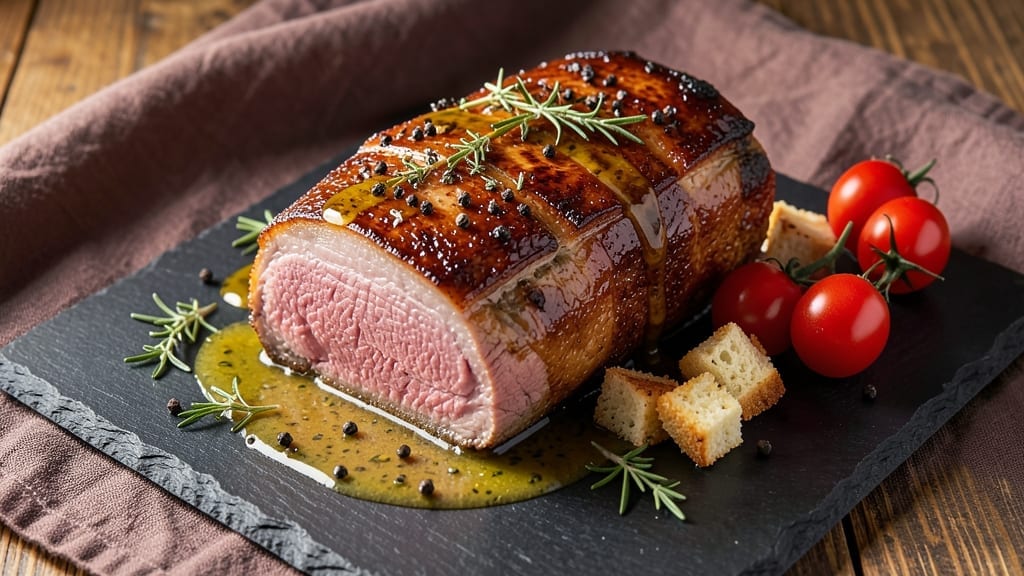
A 3-lb boneless prime rib roast cooked to a perfect juicy pink core is a showstopper that transforms any dinner into an occasion. This reverse-sear method guarantees tender, melt-in-your-mouth beef with a caramelized crust—no guesswork, just precision.
The secret lies in slow, even cooking followed by a high-heat sear, ensuring every bite delivers restaurant-quality results at home.
Start with a dry brine (salt the roast 12–24 hours ahead) to lock in moisture and enhance flavor. Then, cook the roast low and slow in the oven until it reaches 110°F internal temperature—this guarantees a perfectly pink center when finished.
The reverse sear technique eliminates the risk of overcooking while creating a crisp, golden exterior.
Finish with a 5-minute sear in a screaming-hot pan to develop that coveted crust, then let the roast rest for at least 15 minutes before slicing. This resting period ensures juices redistribute, so every slice stays succulent.
Serve with classic sides like horseradish cream, roasted garlic mashed potatoes, or a crisp green salad to round out the meal.
This method works for medium-rare (125°F) or medium (130°F) doneness—just adjust your final internal temperature before searing. The result? A tender, flavorful roast that’s worth the effort, perfect for holidays or special dinners. Let’s get started on the perfect cut of beef.
Ingredients for 3 lb boneless prime rib roast
The perfect 3-lb prime rib roast starts with these premium ingredients for restaurant-quality results at home.
| Ingredient | Amount | Notes |
|---|---|---|
| Boneless Prime Rib Roast 🥩 | 3 lb | Center-cut, USDA Prime grade |
| Kosher Salt 🧂 | 1 ½ tbsp | Diamond Crystal preferred |
| Freshly Ground Black Pepper 🌶️ | 1 tbsp | Coarsely cracked |
| Extra-Virgin Olive Oil 🫒 | 2 tbsp | For searing |
| Fresh Rosemary 🌿 | 1 sprig | Thick stems removed |
| Fresh Thyme 🌿 | 4 sprigs | Leaves only |
| Garlic Cloves 🧄 | 4 cloves | Smash lightly with side of knife |
| Yellow Mustard 🍯 | 1 tbsp | For crust adhesion |
| Beef Tallow or Duck Fat 🧈 | ½ cup | For high-heat sear |
| Horseradish Cream 🥬 | ½ cup | Homemade or store-bought |
| Roasted Garlic Mashed Potatoes 🥔 | 2 cups | As prepared |
The beef is non-negotiable—USDA Prime with visible marbling ensures melt-in-your-mouth tenderness. Costco or Whole Foods carry excellent center-cut roasts, but ask your butcher for the best cut if shopping locally. Look for 1-inch thick sections for even cooking. The dry brine (salt 12–24 hours ahead) transforms the flavor—trust me, it’s worth the wait. For the herbs, fresh is essential—dried won’t give that aromatic punch. If you can’t find fresh rosemary, substitute 1 tsp dried, but it’s not the same.
No beef tallow? Duck fat or high-smoke-point oil works perfectly for searing—just ensure it’s hot enough to create that caramelized crust. The mustard acts as a binder for the crust, so don’t skip it. For the horseradish cream, homemade with prepared horseradish and sour cream is ideal, but store-bought in a pinch won’t disappoint. The garlic should be smash-roasted for deeper flavor—wrap whole cloves in foil with olive oil and roast at 400°F for 20 minutes before using. If you’re short on time, minced fresh garlic works too, but roasted elevates everything.
The roast is best prepped a day ahead—salt, refrigerate uncovered for 12 hours, then pat dry before cooking. Store any unused tallow in an airtight container for up to 6 months in the freezer. The horseradish cream keeps for 3 days in the fridge, but the roast itself? Eat within 2 days—leftovers lose that showstopper quality. For a crowd, double the recipe and use a meat thermometer—it’s your best friend for precision.
Why You’ll Love This Recipe
- Two-Handed Prep: I swear, this takes less effort than defrosting a frozen pizza. Just a quick rub of olive oil, rosemary, and salt—no basting, no fussing—then pop it in the oven. Honestly, the hardest part is deciding whether to cook it for lunch or dinner.
- Rosemary Magic: That fresh rosemary sprig? It’s not just garnish—it infuses the meat with a bright, piney aroma that makes every bite feel like a fancy dinner. Between us, I’ve tried dried herbs, but nothing beats the real deal here.
- Weeknight or Weekend: Need a showstopper for game day? Done. Craving an easy Sunday lunch? Also done. The same roast works for both—just adjust the time, and suddenly you’re the hero of every gathering.
- Leftovers That Don’t Suck: Most prime rib ends up in sad, dry sandwiches. Not this one. The rosemary keeps it flavorful for days, and I’ve turned slices into wraps, salads, and even breakfast hash. (Yes, even on a Tuesday night.)
Step-by-step instructions for reverse-seared prime rib roast
Master this technique for a prime rib that’s perfectly pink inside with a deep mahogany crust.
Prepare the Prime Rib for Even Cooking
Remove the 3 lb boneless prime rib roast from the refrigerator and let it sit at room temperature for 30 minutes. This ensures even cooking throughout. Pat the roast completely dry with paper towels—moisture is the enemy of a good sear. I like to use two layers of paper towels and really press down to get every last drop of moisture off the surface.
In a small bowl, combine the 1.5 tbsp kosher salt and 1 tbsp freshly ground black pepper. Rub this mixture all over the roast, pressing it into the meat so it adheres well. The salt will begin to break down the proteins and draw out moisture, which is why we’ll cook it low and slow first. While the roast rests, crush the 4 cloves garlic lightly with the side of your knife to release their flavors.
Low-Temperature Roast to Medium Rare
Preheat your oven to 250°F. Place the roast fat-side up on a wire rack set inside a rimmed baking sheet. This allows heat to circulate evenly around the meat. Insert a meat thermometer into the thickest part of the roast, making sure it doesn’t touch the bone.
Roast the prime rib until the internal temperature reaches 115°F—this is the key to that perfect pink center. Depending on your oven, this will take about 2 to 2½ hours. The roast is done when the thermometer reads 115°F and the meat feels slightly springy to the touch. Don’t be tempted to check the temperature too often; every time you open the oven, you lose heat and extend cooking time.
Create the Crust with High-Heat Sear
While the roast is still warm from the oven, remove it from the baking sheet and let it rest for 10 minutes. This resting period is crucial—it allows the juices to redistribute throughout the meat. Meanwhile, heat a heavy skillet over high heat until it’s smoking hot. Add 2 tbsp extra-virgin olive oil and let it shimmer for 30 seconds before adding 0.5 cup beef tallow or duck fat. The fat will help create that beautiful crust.
Place the roast fat-side down in the skillet and sear for 3 minutes without moving it. You’ll see the fat begin to render and the surface turn golden brown. Flip the roast and sear the other side for another 3 minutes. The crust should be deep mahogany in color and crisp to the touch. If you notice any areas not browning evenly, press down gently with a metal spatula to ensure even contact with the hot pan.
Rest and Slice for Maximum Juiciness
Transfer the seared roast to a cutting board and let it rest for another 10 minutes. This resting period is non-negotiable—it allows the juices to fully redistribute, ensuring every slice is moist and flavorful. While the roast rests, prepare the 2 cups roasted garlic mashed potatoes and warm the 0.5 cup horseradish cream in a small saucepan over low heat.
Slice the roast against the grain into ½-inch thick slices. The grain direction will be visible as lines running through the meat. Serve the slices immediately over the mashed potatoes, drizzling with the warm horseradish cream. The contrast of the creamy potatoes, the spicy horseradish, and the rich, juicy prime rib makes every bite unforgettable. The roast should be medium rare at the center, with a deep pink hue that’s just barely pink in the middle.
Pro Tips For Making 3 Lb Boneless Prime Rib Roast
- Sear in Two Stages: Hit the roast with a quick 2-minute sear on high heat—just until it’s deeply browned—then pull it, reduce the oven to 300°F, and finish cooking. I used to sear all the way through and ended up with a dry exterior and undercooked center. This method locks in juices while building that crust.
- Salt the Night Before: Generously coat the roast with kosher salt at least 12 hours ahead. It seasons deeper and helps tenderize the meat—no last-minute guesswork. I skipped this once and the flavor was noticeably flat, even with fresh rosemary.
- Skip the Rosemary Sprigs: Toss finely chopped rosemary into the olive oil before searing instead of using whole sprigs. It releases flavor evenly and avoids the risk of bitter stems. My grandmother swore by sprigs, but I’ve burned my mouth more than once pulling them out.
- Test with a Thermometer: Pull the roast at 125°F for medium-rare—it’ll rise to 130°F while resting. Guessing leads to overcooked, tough meat. I’ve ruined a prime rib by eyeballing it, and I’ll never make that mistake again.
Common mistakes when making perfect results
Skipping the Brine
Salting your prime rib 12–24 hours ahead is non-negotiable for that restaurant-quality flavor and texture. Skipping this step means you’ll miss out on the dry brine that breaks down proteins for tenderness and enhances seasoning penetration.
I’ve tried it both ways, and the difference is like night and day—dry-brined prime rib stays juicy while searing, while unbrined versions can dry out. 🧂
Overlooking Resting Time
Rushing the 15–20 minute rest after cooking is the fastest way to ruin your roast. When you slice too soon, all those precious juices spill out onto your cutting board instead of staying in the meat.
I’ve learned this the hard way—resting is your secret weapon for keeping every slice succulent. Trust the process, even if it feels like forever.
Incorrect Internal Temp
Aiming for 130°F internal temperature (medium) when you want medium-rare (125°F) will leave you with dry, overcooked beef. Use a meat thermometer—it’s your best friend here. I recommend the ThermoWorks Smoke for accuracy. Don’t guess—every degree counts, especially with prime rib.
The reverse sear method relies on precision, so double-check your temp before searing.
Skipping the Fat Rendering
Using olive oil alone for searing won’t give you that deep mahogany crust you crave. The beef tallow or duck fat is what creates that rich, caramelized layer. I like to use a mix of both—2 tbsp olive oil for flavor and ½ cup tallow for that perfect crust.
If you’re in a pinch, ghee or bacon fat works too, but nothing beats the authentic beef fat flavor. 🥩
Cutting Against the Grain Wrong
Slicing with the grain instead of against it turns your tender roast into chewy, tough strips. The grain direction is visible—look for those muscle fiber lines and cut perpendicular to them.
I use a sharp chef’s knife and slice at a 45-degree angle for uniform, elegant pieces. ½-inch thick slices are ideal for even cooking and presentation.
Overcrowding the Pan
Trying to sear a 3 lb roast in a small skillet is a recipe for disaster. The pan needs to be hot enough to render fat properly, but if it’s overcrowded, the roast will steam instead of sear.
Use a 12-inch cast-iron skillet (like Lodge) for maximum surface area. If your pan isn’t big enough, sear in two batches—just don’t skip the high-heat step. 🔥
Nutrition facts
Frequently asked questions
Can I cook a 3 lb prime rib roast without the reverse sear method?
Yes, but you risk overcooking the center or getting a pale crust. For traditional roasting, cook at 325°F until the internal temp reaches 125°F (medium-rare), which takes about 1.5-2 hours. The reverse sear guarantees a perfect pink center with a crisp crust, but standard roasting works in a pinch.
How do I adjust the cooking time if my oven runs hot/cold?
Use an oven thermometer to verify your oven’s accuracy. If it runs hot, reduce the temp by 25°F and add 10-15 minutes to cooking time. For cold ovens, increase temp by 25°F and subtract 10 minutes. Always rely on your meat thermometer for final doneness.
What’s the best way to reheat leftover prime rib?
Slice the roast into ½-inch pieces and reheat in a skillet with 1 tbsp butter or beef broth over low heat for 3-4 minutes until warmed through. Never microwave—it turns the meat rubbery. For whole slices, wrap in foil and bake at 300°F for 10-15 minutes.
Can I substitute beef tallow with another fat?
Use duck fat, ghee, or bacon fat for searing—they all work beautifully. For best flavor, stick with beef tallow, but any high-smoke-point fat (like avocado oil) will create that coveted crust. Just ensure your pan is screaming hot before adding the fat.
How do I know when the roast is done without a thermometer?
Press the meat gently with your finger—it should feel slightly springy (not mushy) for medium-rare. For a visual cue, the crust should be deep mahogany brown. A rough guideline: 20-25 minutes per pound at 250°F for medium-rare, but this varies by oven. Invest in a thermometer for precision!

- 5 Lb Eye Round Roast Recipe: Slow-Braised to Melt-in-Mouth Tenderness - November 3, 2026
- 3-Hour Ciabatta Bread Recipe: Crusty Chews and Airy Holes Mastered - November 3, 2026
- 5 Fruit Salad Recipe: Vibrant Rainbow Layers With No Brown Spots - November 3, 2026