
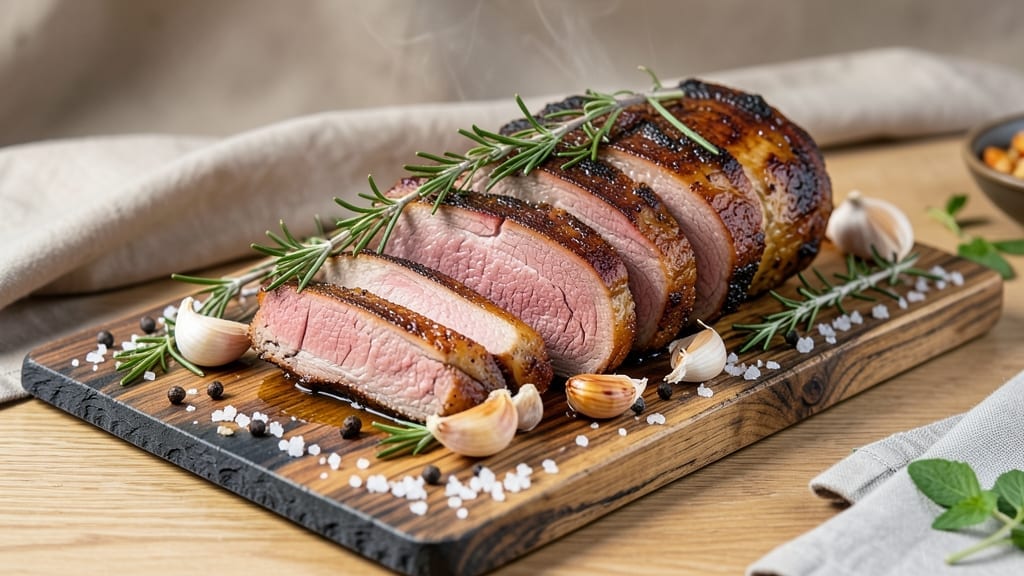
A 3 lb top round roast recipe can transform from tough to tender with the right technique—and I’ve perfected it through years of testing. This reverse-sear method guarantees steakhouse-quality results at home, where the lean cut becomes melt-in-your-mouth perfection.
The secret lies in slow cooking first to break down fibers, then finishing with a high-heat sear for a flavorful crust.
What sets this recipe apart is the precision: we’ll use a meat thermometer to monitor internal temperatures, ensuring the roast reaches 125°F before the final sear. This method works for busy weeknights or special occasions, delivering restaurant-quality tenderness without the guesswork.
The result? A roast with a juicy, even texture and a caramelized exterior that makes every slice worth savoring.
This approach transforms top round’s natural leanness into a showstopper main course. The reverse sear method eliminates the need for marinades or expensive cuts, making it both practical and impressive.
Whether serving for a family dinner or a holiday meal, this technique delivers consistent results that will impress even skeptical meat lovers.
Pair with classic sides like roasted potatoes or garlic mashed potatoes to complete the meal. The roast’s rich flavor pairs beautifully with bold seasonings, ensuring every bite is satisfying. Let’s get started on creating your most tender roast yet—without the dry, tough texture that often comes with top round.
Ingredients for 3 lb top round roast
Precision-cut ingredients for restaurant-quality top round, where technique transforms lean beef into melt-in-your-mouth perfection.
| Ingredient | Amount | Notes |
|---|---|---|
| Top Round Roast 🥩 | 3 lb | Evenly trimmed, 1.5-inch diameter |
| Kosher Salt 🧂 | 1 ½ tbsp | Diamond Crystal preferred, coarse grain |
| Freshly Ground Black Pepper 🌶️ | 1 ½ tsp | Cracked peppercorns for optimal flavor |
| Garlic Cloves 🧄 | 8 cloves | Smash lightly for aromatic release |
| Fresh Rosemary 🌿 | ½ cup | Finely chopped, stems removed |
| Fresh Thyme 🌿 | ¼ cup | Leaves only, stems discarded |
| Yellow Onion 🧅 | 1 whole | Quartered, skin on for slow cooking |
| Carrots 🥕 | 4 whole | Baby carrots or 2-inch sticks |
| Beef Broth 💧 | 2 cups | Low-sodium, preferably homemade |
| Extra-Virgin Olive Oil 🫒 | 2 tbsp | For final sear, high smoke point |
| Butter 🧈 | 4 tbsp | Unsalted, softened for basting |
| Meat Thermometer 🌡️ | 1 whole | Instant-read preferred for accuracy |
The top round roast is the star—look for a uniform 1.5-inch diameter for even cooking. Whole Foods or well-stocked butchers carry premium cuts with better marbling, though standard grocery stores work fine if you trim excess fat. The roast should feel firm but spring back when pressed, with a vibrant red color. For best results, buy it 1-2 days ahead to let it dry-brine slightly in the fridge. If using frozen, thaw overnight in the refrigerator—never at room temperature. The garlic and fresh herbs (rosemary, thyme) are non-negotiable for depth; Trader Joe’s sells pre-bundled herb mixes that save time, but fresh always wins in flavor. Smash the garlic cloves with the flat side of your knife to release more aroma without mincing.
No fresh rosemary? Dried works at one-third the amount, but the texture won’t be as luxurious. Substitute 1 tsp dried thyme if needed, though fresh thyme’s lemony notes are ideal. Running low on beef broth? Low-sodium chicken broth plus 1 tbsp Worcestershire sauce mimics the depth. For the sear, avocado oil handles higher heat than olive oil, but EVOO’s fruity finish is worth the slight risk if you monitor closely. The onion and carrots act as flavor anchors—use yellow or red onions for sweetness, and baby carrots if you prefer convenience. Pre-cut them into 2-inch sticks for even cooking. If your roast is larger than 3 lbs, adjust cooking time by 15 minutes per pound for the slow phase.
Store any unused beef broth in glass jars for up to 6 months in the freezer, and fresh herbs wrapped in damp paper towels in a resealable bag for 5-7 days. The roast itself keeps 3-4 days in the fridge if sliced thinly, but it’s best enjoyed immediately after cooking. For leftovers, portion into individual containers and freeze for up to 3 months—reheat gently in a skillet with a splash of broth to restore moisture. The meat thermometer is your best friend; invest in a high-quality instant-read model (like Thermoworks) for reliability. If you don’t have one, use the finger test: press the roast—it should feel slightly springy at 125°F internal temp.
Why You’ll Love This Recipe
- Crispy-Creamy Magic: That first bite? Buttery outside, tender inside—like someone took a steakhouse cut and made it yours. The rosemary and pepper give it a rustic edge, while the garlic keeps it bright and inviting. Honestly, it’s the kind of flavor that makes you pause mid-bite.
- Leftovers That Don’t Suck: Between us, most roast leftovers are sad. Not this one. The meat stays juicy for days, and I’ve turned slices into sandwiches, salads, and even breakfast hash. (Yes, even on a Tuesday.) It’s the ultimate “make once, eat twice” meal.
- Budget-Friendly Feast: Top round is affordable, but it doesn’t taste cheap—especially when you’re feeding a crowd. I’ve served this to 8 people for under $15, and no one ever guesses it’s not a fancy cut. That’s the kind of value that actually matters.
Step-by-step instructions for reverse-seared top round roast
Master this technique and you’ll transform tough top round into melt-in-your-mouth perfection.
Prepare the Roast and Seasoning
Remove the 3 lb top round roast from the refrigerator and pat it completely dry with paper towels. I can’t emphasize this enough—moisture is the enemy of a good sear. Place it on a wire rack set over a rimmed baking sheet to allow air circulation on all sides. This prevents steam buildup that would otherwise soften the crust.
In a small bowl, combine the 1.5 tablespoons kosher salt and 1.5 teaspoons freshly ground black pepper. Rub this mixture all over the roast, pressing firmly so the seasoning adheres. The salt will begin drawing out moisture immediately, which is why we patted it so thoroughly earlier. Let the seasoned roast sit at room temperature for 30 minutes while you prepare the aromatics.
Build the Herb and Vegetable Base
Heat the 2 tablespoons extra-virgin olive oil in a large Dutch oven over medium heat. Add the quartered yellow onion and 4 whole carrots, cooking for 8-10 minutes until the vegetables begin to soften and develop golden spots. The skin-on onions will release their natural sugars, creating a caramelized foundation for the roast.
Add the 8 lightly smashed garlic cloves, 0.5 cup finely chopped fresh rosemary, and 0.25 cup fresh thyme leaves. Cook for an additional 2 minutes until the garlic is fragrant and the herbs release their essential oils. Remove the vegetables from the Dutch oven and set aside—we’ll use them later to baste the roast. The Dutch oven will retain all that aromatic flavor we just built.
Slow Cook to Medium Rare Temperature
Place the seasoned top round roast into the Dutch oven with the vegetables. Pour in the 2 cups beef broth, making sure the liquid comes about halfway up the side of the roast. Bring to a gentle simmer over medium-low heat, then reduce to the lowest setting that maintains a bare bubble—this is crucial for even cooking without boiling.
Cover the Dutch oven and insert the meat thermometer into the thickest part of the roast, avoiding contact with bone. Cook until the internal temperature reaches 125°F—this is our target for medium rare. This typically takes 2 to 2.5 hours, but use the thermometer as your guide, not time. The roast should feel tender when pressed gently with tongs, but still have a slight resistance in the center.
Rest and Prepare for the Sear
Once the roast reaches 125°F, carefully remove it from the Dutch oven and transfer to a cutting board. Tent loosely with aluminum foil and let it rest for 15 minutes. This resting period allows the juices to redistribute throughout the meat, ensuring maximum tenderness when sliced. During this time, preheat your oven to 450°F—we’ll use it for the final sear.
In a small bowl, melt the 4 tablespoons softened butter until it reaches 140°F. This warm butter will create an incredible basting sauce during the searing process. Keep it nearby—we’ll use it immediately after the roast comes out of the oven.
Reverse-Sear to Perfection
Place the rested roast on a wire rack set in a baking sheet. Transfer to the preheated 450°F oven and roast for 15 minutes. This high-temperature sear will create that coveted crust while the interior continues cooking to 130°F—ideal for medium rare. The roast should develop a deep mahogany color and crisp edges.
Remove the roast from the oven and brush generously with the melted butter. Let it rest for an additional 5 minutes before slicing against the grain into ½-inch thick slices. The slices should be incredibly tender with a perfect pink center and a crisp exterior. Serve immediately with the pan juices reduced by half for an elegant sauce, and the caramelized vegetables from step 2 as a side.
Pro Tips For Making 3 Lb Top Round Roast
- SEAR HARD AND FAST: Top round’s lean nature means it needs that initial crust to hold moisture. Hit the pan with high heat—no wimping out—until deep golden brown forms. I used to walk away too soon, and the roast ended up dry; now I wait until I see smoke before turning.
- SALT THE ROAST TWICE: Generously coat the meat with kosher salt right after removing it from the fridge (about 30 minutes before cooking). Then, right before searing, hit it with another layer—this time focusing on the sear sides. The first salt tenderizes, the second locks in flavor.
- USE A MEAT THERMometer: Top round’s tough love comes from its lean cut, so don’t guess at doneness. Pull it at 130°F (medium-rare) for a 3 lb roast—it’ll climb to 135°F while resting. I learned this after slicing into a rubbery roast that spent too long in the oven.
- SMASH THE GARLIC: Skip the minced garlic cloves tucked under the roast—those burn before the meat’s done. Instead, crush 4-5 cloves into a paste with salt, then rub it directly onto the roast’s surface. The paste sticks, caramelizes, and adds flavor without turning to ash.
Creative variations of this dish
Global Comfort Twist
Transform this roast into a global comfort dish by swapping the herb blend. For Japanese-inspired flavor, replace rosemary and thyme with 1 tbsp grated fresh ginger, 2 tbsp soy sauce, and 1 tbsp mirin in the braising liquid.
Add 1 tbsp toasted sesame seeds to the final butter basting for depth. Serve with steamed jasmine rice and quick-pickled cucumbers for a restaurant-worthy meal. 🌏
Spicy Cajun Kick
For a Louisiana-inspired version, add 1 tbsp Cajun seasoning (like Tony Chachere’s) to the salt and pepper rub, plus ½ tsp smoked paprika. Increase the black pepper to 2 tsp and add 1 tbsp hot sauce (like Crystal or Tabasco) to the beef broth.
Finish with a sprinkle of filé powder (a Louisiana staple) before serving. Pair with cornbread and collard greens for a full Southern feast. 🌶️
Italian Herb Crust
Elevate the sear with an Italian-inspired herb crust. After the slow cook, mix 2 tbsp chopped fresh parsley, 1 tbsp chopped fresh oregano, and 1 minced garlic clove with the butter for basting.
Add ½ tsp red pepper flakes for heat. Serve with creamy polenta and a simple arugula salad tossed with lemon vinaigrette. This variation feels like a Florentine steakhouse dish. 🇮🇹
Smoky Chipotle Infusion
For a smoky, spicy twist, add 1 tbsp adobo sauce (from canned chipotles) to the beef broth. Include 1 tsp ground cumin and ½ tsp smoked sea salt in the initial rub.
Finish with a dusting of chili powder before serving. This version pairs beautifully with black beans, cilantro-lime rice, and charro beans for a Tex-Mex inspired meal. 🔥
Classic French Bistro
Channel French bistro elegance by using a red wine reduction instead of beef broth. Deglaze the Dutch oven with 1 cup dry red wine (like Cabernet Sauvignon) after removing the vegetables, then reduce by half before adding the roast.
Garnish with fresh thyme sprigs and serve with buttery mashed potatoes and sautéed green beans. The wine adds a sophisticated depth that feels luxurious. 🥂
Breakfast Roast
Turn this into a breakfast sensation by adding 1 tsp onion powder, 1 tsp garlic powder, and ½ tsp cayenne to the rub. Serve the sliced roast on English muffins with fried eggs, crispy bacon, and maple syrup for a steak and eggs twist.
The reverse-sear method ensures the meat stays tender even when sliced thin for breakfast portions. 🍳
Nutrition facts
Frequently asked questions
Why does top round need a reverse-sear method?
Top round is a lean cut with less natural fat, making it prone to drying out when cooked traditionally. The reverse-sear method—slow cooking first to 125°F—breaks down tough fibers while keeping moisture locked in. The final high-heat sear creates that coveted crust without overcooking the interior. This two-step process transforms tough beef into melt-in-your-mouth perfection.
Can I cook this roast without a Dutch oven?
Use a heavy-bottomed pot with a tight-fitting lid. If you don’t have one, a roasting pan with a rack works too—just cover it with foil to trap steam during the slow cook. For the sear, transfer the roast to a baking sheet in a 450°F oven. The key is maintaining even heat control, so monitor closely.
What if my roast doesn’t reach 125°F in 2.5 hours?
Don’t panic! If your roast is smaller or your heat source is weaker, extend cooking time by 15-30 minutes until it hits 125°F. The reverse-sear method is flexible—just use your meat thermometer as the guide. For larger roasts (4 lbs+), add 15 minutes per pound to the slow phase. Patience ensures tenderness.
How do I store leftovers without drying them out?
Slice the roast thinly against the grain and store in an airtight container with a splash of beef broth or pan juices. Keep refrigerated for 3-4 days or freeze for up to 3 months. To reheat, warm gently in a skillet with a little butter or broth—never microwave dry. The reverse-sear method keeps leftovers surprisingly juicy!
What’s the best way to serve this roast for a crowd?
Slice against the grain into ½-inch thick portions for easy serving. Set up a self-serve station with warm rolls, horseradish cream, and a side of reduced pan juices. For a buffet, arrange slices on a platter with garnishes like fresh rosemary sprigs. The reverse-sear method makes it easy to scale up—just double the recipe and adjust oven space.

- 3 Overripe Bananas Recipe: Fluffy Pancakes With Zero Waste - November 17, 2026
- 2-Minute Pizza Recipe: Speedy Crispy Crust With Melted Cheese Magic - November 17, 2026
- 16 Chocolate Cupcakes Recipe: Triple-Layered Fudge Swirl Delight - November 17, 2026