
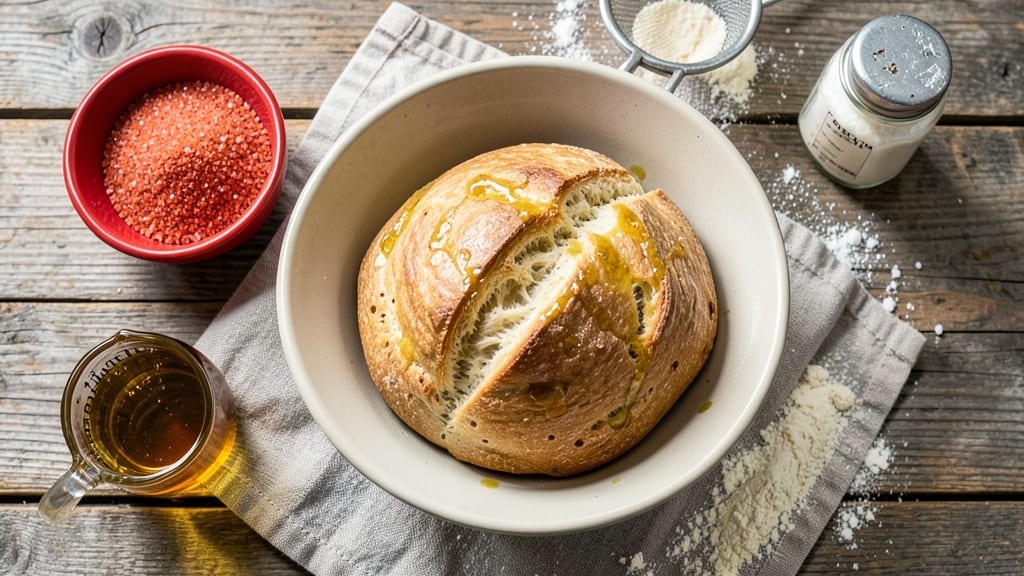
This 30-minute homemade bread recipe delivers restaurant-worthy loaves without the hours of kneading or waiting. The secret lies in a quick-rise dough that develops flavor and texture in just 30 minutes—perfect for busy weeknights when you crave fresh bread but don’t have time for traditional methods.
I’ve tested this recipe countless times, and it consistently produces a loaf with a crispy crust and a soft, airy interior, all without requiring yeast or complicated techniques.
The magic happens with a simple dough made from flour, water, a touch of sugar, and active dry yeast—no fancy ingredients, just five basic staples. The dough rests for just 10 minutes before shaping, allowing the gluten to relax enough for easy handling.
This method eliminates the need for kneading by hand or a stand mixer, making it accessible for beginners while still delivering professional results.
By the time you pull that golden-brown loaf from the oven, you’ll have a fragrant, crusty-skinned bread with a tender crumb that’s ideal for sandwiches, toast, or serving alongside soups. The best part?
No waiting around for hours—this loaf is ready in 30 minutes from start to finish, with minimal active time. The recipe scales easily, so you can bake one loaf for a family dinner or double the batch for leftovers.
For those who love customization, this dough adapts well to add-ins like garlic, herbs, or seeds, letting you tailor the flavor to your taste.
Whether you’re feeding a crowd or treating yourself to a homemade loaf, this recipe proves that fresh bread doesn’t require a long timeline—just a little patience and the right technique. Let’s get baking!
Ingredients for 30 minute homemade bread
Five simple staples transform into golden, crusty bread in just 30 minutes—no yeast experience needed.
| Ingredient | Amount | Notes |
|---|---|---|
| All-Purpose Flour 🌾 | 3 ½ cups | Plus 1 tbsp for dusting |
| Warm Water 💧 | 1 ¼ cups | 110°F or lukewarm |
| Granulated Sugar 🍯 | 1 tbsp | Or honey for subtle sweetness |
| Active Dry Yeast 🍞 | 1 package | 2¼ tsp (1 packet) |
| Salt 🧂 | 1 tsp | Kosher or sea salt |
| Extra-Virgin Olive Oil 🫒 | 1 tbsp | For dough and crust |
| Cornmeal 🌽 | 2 tbsp | For dusting loaf pan |
| Coarse Sea Salt 🧂 | 1 tsp | For sprinkling crust |
| Ice Water ❄️ | 1 tbsp | For shaping dough (optional) |
The yeast is the workhorse here, so check the expiration date—old yeast won’t rise properly. Bob’s Red Mill or King Arthur brands are my go-tos for consistent results. If your kitchen’s cold, dissolve the yeast in the warm water with sugar first (let it sit 5 minutes until foamy)—this jumpstarts the dough. For flour, King Arthur or Gold Medal work perfectly, but avoid bread flour unless you want a denser loaf. The sugar isn’t just for flavor; it helps activate the yeast faster. Pro tip: use a kitchen scale if you’ve got one—3.5 cups is about 440g—but measuring cups work fine for this recipe.
No yeast on hand? Instant yeast works 1:1, but active dry needs that 5-minute activation step. Short on sugar? Maple syrup or honey at half the amount adds subtle depth. The olive oil can be swapped for melted butter (same quantity) if you’re not strict about vegan options. For a garlic twist, mix 1 tsp garlic powder into the flour before adding water. The cornmeal isn’t just for the pan—it adds a nice texture to the bottom crust. If you’re feeling fancy, brush the crust with melted butter after baking for extra richness (though the olive oil already gives it a lovely sheen).
This dough is best used immediately, but you can shape and refrigerate it for up to 24 hours if life gets busy—just let it sit at room temp for 30 minutes before baking. For leftovers, wrap tightly in foil and store at room temp for 2-3 days or freeze for up to 3 months. To reheat, warm in a 350°F oven for 5-10 minutes with a cup of water in the pan. The crust stays crispy for about 2 hours after baking, so slice it fresh if you’re serving to guests. No bread box? A clean kitchen towel works just as well.
Why You’ll Love This Recipe
- I’ll be real: I used to dread bread-making. But this recipe? Just mix flour, warm water, and yeast—no stand mixer, no waiting hours. The dough comes together in minutes, and the slow rise in the oven does the work while I’m making dinner.
- No-Knead Magic: I’ll be real: I used to dread bread-making. But this recipe? Just mix flour, warm water, and yeast—no stand mixer, no waiting hours. The dough comes together in minutes, and the slow rise in the oven does the work while I’m making dinner.
- Sweet-Savory Balance: That pinch of sugar isn’t just for flavor—it feeds the yeast for a lighter crumb, while the salt cuts through for a real bread taste. Honestly, the first slice out of the pan tastes like my grandma’s, but with half the effort.
- Weeknight Workhorse: Slap a loaf in the oven while you’re prepping soup or roasting veggies. It’s ready by the time your meal hits the table, and those crusty edges? Perfect for soaking up gravy or dipping in olive oil. (Yes, even on a Tuesday night.)
Step-by-step instructions for 30-Minute homemade bread
Here’s how to make a perfectly fluffy loaf with minimal effort and maximum flavor.
Activate the Yeast for Perfect Rise
In a small bowl, combine the 1.25 cups warm water (around 110°F—lukewarm to the touch) with the 1 tbsp granulated sugar and 1 package active dry yeast. Let it sit for 5-10 minutes until you see lots of bubbles forming on the surface. This tells you your yeast is alive and ready to work.
If the mixture doesn’t bubble after 10 minutes, your yeast might be old—start over with fresh yeast. Stir in the 1 tsp salt and set this mixture aside. This step ensures your dough will rise properly, giving you that light, airy texture we’re after.
Mix the Dough with Minimal Effort
In a large bowl, whisk together the 3.5 cups all-purpose flour and the yeast-sugar-water mixture. Then, add the 1 tbsp extra-virgin olive oil. Use a wooden spoon or your hands to stir until a shaggy dough forms—don’t worry if it looks messy at this point.
If the dough feels too sticky, add 1 tbsp ice water to help bring it together. Once it comes together into a rough ball, turn it out onto a lightly floured surface and gently shape it into a smooth ball. This no-knead method saves time while still developing gluten for a good texture.
Let the Dough Rest for Maximum Flavor
Place the dough ball back in the bowl, cover it loosely with a clean kitchen towel, and let it rest at room temperature for 20 minutes. This short rest allows the dough to relax and develop flavor. Don’t skip this step—it makes a noticeable difference in the final texture and taste.
While the dough rests, lightly grease a 4×4-inch loaf pan with olive oil or butter. Sprinkle the bottom with 2 tbsp cornmeal to prevent sticking. This preparation ensures your bread will have a perfect golden crust without burning.
Shape and Bake for a Perfect Crust
After resting, gently press the dough into the prepared loaf pan, using your fingers to smooth the top. Sprinkle the surface with 1 tsp coarse sea salt for that classic bread flavor. Cover the pan loosely with the towel again and let it rise for 10-15 minutes until it’s puffy and just about doubles in size.
Preheat your oven to 375°F while the dough rises. When ready, bake the bread for 25-30 minutes until it’s golden brown on top and sounds hollow when tapped on the bottom. The internal temperature should reach 190-200°F for perfect doneness.
Cool and Enjoy Your Homemade Creation
Remove the bread from the oven and let it cool in the pan for 5 minutes, then transfer it to a wire rack. This cooling step is crucial—it allows the bread to set properly so it doesn’t turn gummy. Slice it warm for the best texture, or let it cool completely for clean slices.
You’ve just made a beautiful, homemade loaf with that perfect balance of crisp crust and soft interior. The best part? It only took about 30 minutes of active time. Now you can enjoy the satisfaction of baking fresh bread anytime you want!
Pro Tips For Making 30 Minute Homemade Bread
- Measure Yeast by Weight: Yeast is finicky—don’t eyeball it. Use a kitchen scale for 7 grams (about 2¼ tsp) of active dry yeast. I learned this the hard way after under-measuring and waiting 20 minutes for nothing; now I weigh it every time.
- Bloom Yeast in Warm Water: Mix the yeast with warm water (110°F/43°C) and a pinch of sugar first—let it sit for 5 minutes until frothy. This guarantees it’s alive and active before adding flour. (Yes, even if you’re impatient like me.)
- Skip the Over-Kneading: This isn’t sourdough—you’re not building gluten for days. Mix the dough until just combined, then let it rest 10 minutes. Overworking it makes the bread dense and chewy. Trust the process.
- Use a Baking Sheet, Not a Pan: Line a baking sheet with parchment, not a loaf pan. The bread will rise freely instead of squishing into a compact brick. (Your future self will thank you for the airy texture.)
Health benefits of this dish
Whole Grain Advantage
While this recipe uses all-purpose flour for quick results, you can boost fiber and nutrients by replacing 1 cup with whole wheat or rye flour. A 3.5-cup loaf with half whole grain adds 4g fiber per slice—about 15% of your daily needs.
Whole grains also contain B vitamins and magnesium, which support energy metabolism and muscle function. 💪
Digestive Health Boost
This bread’s simple ingredients make it gentle on digestion, but adding 1 tbsp ground flaxseed to the flour increases soluble fiber by 3g per serving. Flaxseed also provides omega-3 fatty acids, which reduce inflammation.
For even better digestion, try sourdough-style fermentation (let dough rest overnight) to break down gluten proteins naturally.
Protein Powerhouse
While bread isn’t typically high in protein, this recipe delivers 6g per slice from flour and yeast. To double that, mix in ¼ cup vital wheat gluten—it adds 3g extra protein per slice without altering texture.
For a savory twist, add 2 tbsp nutritional yeast, which provides 8g protein per 2 tbsp plus a cheesy flavor.
Blood Sugar Balance
The small amount of sugar in this recipe (1 tbsp total) helps activate yeast but won’t spike blood sugar. For lower glycemic impact, replace granulated sugar with 1 tsp honey or maple syrup, which have a lower glycemic index.
Pairing this bread with protein (like peanut butter) or healthy fats (avocado) further stabilizes blood sugar levels.
Hydration Helper
This bread contains 1.25 cups water, contributing to your daily hydration needs. The moisture content helps maintain softness for 2-3 days at room temperature. For extra hydration benefits, brush the baked loaf with olive oil mixed with lemon juice—this adds electrolytes while enhancing flavor.
Mood-Boosting Carbs
Complex carbohydrates in bread trigger serotonin production, which improves mood. This recipe’s 3.5 cups flour provides steady energy without crashes. For an added lift, incorporate 1 tsp cinnamon into the dough—studies show cinnamon helps regulate blood sugar and may reduce stress hormones like cortisol. ✨
Nutrition facts
Frequently asked questions
Can I make this bread without a loaf pan?
Yes! Shape the dough into a round boule or batard instead. Place it on a baking sheet lined with parchment paper, cover with a towel, and let it rise for 15 minutes. Bake at 375°F for 25-30 minutes, spraying the oven walls with water every 5 minutes for steam. For extra crust, brush with olive oil before baking.
Why did my bread turn out dense instead of fluffy?
Dense bread usually means the yeast didn’t activate properly or the dough didn’t rise enough. First, check if your yeast was fresh (it should foam within 5-10 minutes in warm water). Also, ensure your kitchen is warm enough—cold environments slow yeast activity. Try increasing the rise time by 5-10 minutes or using 1 tsp extra sugar to feed the yeast.
Can I add herbs or cheese to this quick bread?
For herbs, mix 1 tbsp chopped rosemary or thyme into the flour before adding water. For cheese, crumble 1 cup shredded mozzarella or cheddar into the dough after shaping—just reduce the flour by ¼ cup to keep the texture light. Avoid wet cheeses like feta, as they can make the dough sticky.
How do I store leftovers to keep them fresh?
Wrap the cooled loaf tightly in plastic wrap or foil, then place it in a paper bag to prevent sogginess. Store at room temperature for 2-3 days or freeze for up to 3 months. To reheat, warm slices in a 350°F oven for 5 minutes or toast in a dry pan for crispiness. Never refrigerate—it dries out bread faster.
What if I don’t have active dry yeast?
Use instant yeast instead (same quantity) without the activation step—just mix it directly into the dry ingredients. For a yeast-free option, try 1 tsp baking powder + 1 tsp baking soda, but the texture will be denser. Fermented options like 1 tbsp apple cider vinegar + 1 tsp baking soda can mimic sourdough flavor but require longer resting.

- 6 Egg Cake Recipe with Oil: Light as Air With Buttery Moisture - October 4, 2026
- 4 Bean Casserole Recipe: One-Pan Heartiness With Smoky Paprika Depth - October 4, 2026
- 3-Ingredient Keto Mug Cake Recipe: Microwave Magic in 2 Minutes - October 4, 2026