
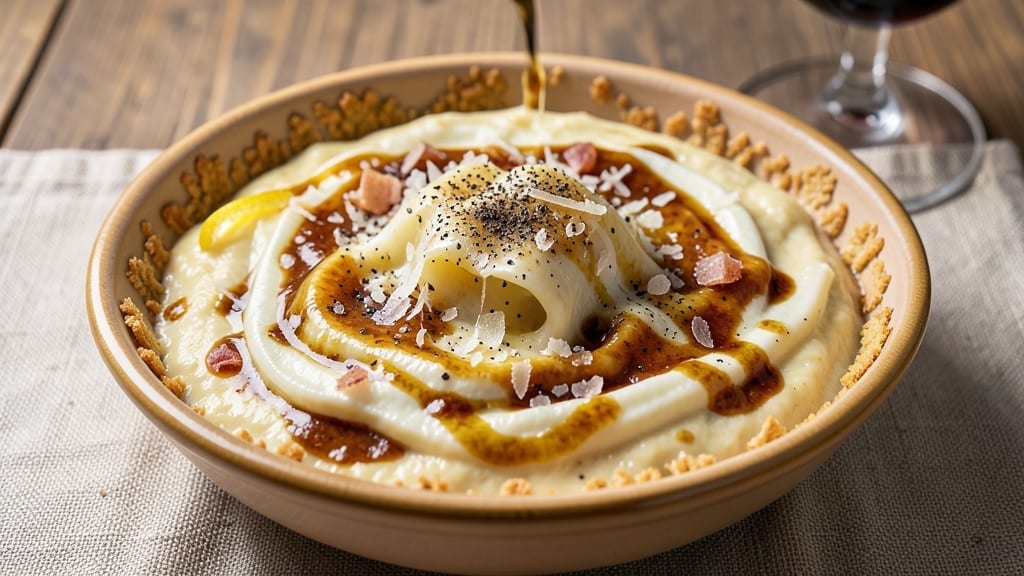
This 4 cheese alfredo recipe delivers restaurant-quality creaminess without the traditional roux—just four cheeses working together for a sauce so rich it’ll make you question every jarred version you’ve ever bought.
The secret lies in the cheese blend: sharp Parmesan for depth, nutty Romano for texture, creamy cream cheese for body, and mild mozzarella to balance the richness. What sets this apart is how the cheeses melt together into a velvety, clingy sauce that coats every strand of pasta perfectly.
The magic happens in the technique: we’re melting the cheeses directly into warm milk and cream, creating a silky emulsion without any lumps or separation. No heavy cream? No problem—the combination of cheeses creates enough natural fat to achieve that signature alfredo texture.
The result is a sauce that’s luxurious enough for special occasions but simple enough for weeknight dinners, with a flavor profile that’s both comforting and sophisticated.
What you’ll end up with is a sauce so creamy it practically melts on your tongue, with just the right balance of tangy, nutty, and buttery notes. The best part? It’s foolproof—no complicated steps, no risk of curdling, and no need for expensive ingredients.
This isn’t your basic alfredo; it’s the kind of sauce that transforms ordinary pasta into something extraordinary, with a richness that’ll have everyone asking for seconds.
Use it immediately over fettuccine, penne, or even as a creamy dip, or store it in the fridge for up to 5 days. The flavor actually improves as it sits, developing deeper complexity with each passing day. Here’s how to make it—no roux required.
Ingredients for 4 cheese alfredo
Four cheeses, two liquids, and a touch of butter—this is all you need for velvety perfection.
| Ingredient | Amount | Notes |
|---|---|---|
| Extra-Sharp Parmesan Cheese 🧀 | ¾ cup | Freshly grated from block preferred |
| Pecorino Romano Cheese 🧀 | ½ cup | Finely grated for nutty depth |
| Cream Cheese 🧈 | 8 oz | Full-fat for ultra-creamy texture |
| Mild Mozzarella Cheese 🧀 | 4 oz | Fresh mozzarella, sliced thin |
| Whole Milk 🥛 | 1 ½ cups | Warm before combining with cheeses |
| Heavy Cream 🥛 | ½ cup | Optional for extra richness |
| Unsalted Butter 🧈 | 2 tbsp | Cold cubes for smooth melting |
| Garlic Cloves 🧄 | 2 cloves | Minced for subtle aromatic base |
| Salt 🧂 | ½ tsp | Diamond Crystal preferred |
| Black Pepper 🌶️ | ¼ tsp | Freshly ground for warmth |
| Nutritional Yeast 🌿 | 1 tbsp | Optional for cheesy umami boost |
The cheeses are the stars here, so don’t cut corners. Parmigiano-Reggiano and Pecorino Romano from the deli counter (the good stuff, not the pre-shredded kind) make all the difference—look for blocks with vibrant color and no orange hue. Fresh mozzarella is ideal (that milky, soft kind), but low-moisture from a block works too if you shred it yourself. Cream cheese adds that signature body, but full-fat is non-negotiable here—low-fat versions won’t give you that luxurious texture. For the milk, whole milk is best, but 2% works in a pinch. The butter? Cold cubes melt more smoothly than softened butter.
No heavy cream? Skip it entirely—the cheese blend has enough fat to create that signature Alfredo texture. Short on Parmesan? Add an extra 0.25 cup of Romano to keep the nutty depth. The garlic can be minced fresh or used powdered (1/2 tsp powdered = 1 clove fresh). Want more umami? Nutritional yeast is your secret weapon—it adds that cheesy, savory punch without dairy. For a tangier sauce, add 1/2 tsp lemon juice at the end. And if you’re worried about lumps, warm the milk first—it melts the cheeses like magic.
This sauce is best used immediately, but if you need to store it, cover the surface with plastic wrap pressed directly onto the sauce to prevent a skin from forming. Keeps in the fridge for 5 days, and honestly tastes better the next day as the flavors meld. Freezes beautifully for 3 months—portion into ice cube trays for single servings. Pro tip: Reheat gently over low heat with a splash of milk to restore that silky texture. Leftovers? Toss with pasta or use as a creamy dip for bread—it’s that good.
Why You’ll Love This Recipe
- Same sauce, two vibes: toss it with fettuccine for a 20-minute weeknight dinner, or drizzle it over grilled chicken and broccoli for a fancy-ish date night dish. The leftovers? Even better reheated the next day—no clumping, no weird textures.
- No Grate, No Stress: The pecorino and parmesan blend so smoothly when softened in warm milk—no food processor or grating required. I just shred a little ahead, toss it in a bowl with the cream cheese and milk, and let the heat do the work while I chop veggies or toss pasta.
- Umami Bomb: That sharp pecorino and extra-sharp parmesan combo? It’s like a flavor explosion in every bite. The cream cheese keeps it rich but not heavy, while the mozzarella melts into silky strands—honestly, I’ve never tasted alfredo this layered before.
- Weeknight & Date Night: Same sauce, two vibes: toss it with fettuccine for a 20-minute weeknight dinner, or drizzle it over grilled chicken and broccoli for a fancy-ish date night dish. The leftovers? Even better reheated the next day—no clumping, no weird textures.
Step-by-step instructions for 4 cheese alfredo sauce
Here’s how to make the creamiest, most luxurious alfredo sauce without a single lump in sight.
Warm the Milk and Melt the Cheeses
In a medium saucepan, combine the 1.5 cups of whole milk over medium-low heat. Warm it just until tiny bubbles form around the edges—about 3-4 minutes—but don’t let it boil. While the milk warms, cut the 8 oz cream cheese into ½-inch cubes for even melting.
In a separate large bowl, add the 0.75 cup extra-sharp parmesan cheese, 0.5 cup pecorino romano cheese, 4 oz mild mozzarella cheese, and 1 tbsp nutritional yeast. The mozzarella should be sliced thin if using fresh—this ensures it melts smoothly. Once the milk reaches 160°F (just warm to the touch), slowly pour it over the cheese mixture while whisking constantly. The heat from the milk will begin melting the cheeses immediately.
Incorporate Butter and Garlic
Return the cheese-milk mixture to the saucepan and add the 2 tbsp unsalted butter and 2 minced garlic cloves. Stir over low heat for 5-7 minutes until the butter melts completely and the cheeses dissolve into a thick, velvety sauce. You’ll smell that rich, garlicky aroma—this is where the magic happens.
Here’s the thing—if you see any unmelted cheese, lower the heat to lowest setting and whisk vigorously for another 2 minutes. The sauce should coat the back of a spoon smoothly, with no graininess. If it’s too thick, add 1-2 tablespoons of warm milk to reach your desired consistency.
Season and Finish with Cream
Remove the sauce from heat and stir in the 0.5 cup heavy cream, 0.5 tsp salt, and 0.25 tsp black pepper. Taste and adjust seasoning—this is where you can really make it your own. I like to add a pinch more salt if using pre-shredded cheeses, as they often contain anti-caking agents that need balancing.
For extra richness, you can whisk in 1 tablespoon of the reserved pasta water (if making this for pasta) or an additional 1 tablespoon of heavy cream. The sauce should be thick enough to coat the back of a spoon but still flow smoothly. If it’s too thin, simmer gently for another 1-2 minutes to thicken slightly.
Keep Warm and Serve Immediately
Transfer the sauce to a clean saucepan and keep it warm over lowest heat, stirring occasionally. The sauce will thicken as it cools, so don’t over-worry if it looks perfect right now—it’ll hold its consistency when tossed with hot pasta. If serving immediately, pour it over your favorite pasta and toss gently to coat.
This sauce is best served right away, but if you need to hold it, keep it at 160°F or below. For the creamiest results, I always serve it with freshly cooked fettuccine or linguine, tossing it gently to avoid breaking the strands. The combination of creamy textures and nutty cheeses makes every bite feel like a restaurant-quality indulgence.
Pro Tips For Making 4 Cheese Alfredo
- Melt Cheese Slowly: I learned this the hard way—dumping all four cheeses into simmering milk at once makes a grainy, clumpy mess. Instead, whisk in the Parmesan and Pecorino first until fully dissolved, then add the cream cheese and mozzarella in small batches while stirring constantly. The sauce should thicken like a dream, not separate like a science experiment.
- Grate Your Own Cheese: Pre-shredded cheese is coated in anti-caking agents that turn your alfredo into a sad, stringy sludge. Grab a box grater and freshly grate the Parmesan and Pecorino—especially the Pecorino, which packs more salt and flavor when fresh. Skip the mozzarella if you’re impatient; it’s the only one that holds up pre-shredded.
- Keep the Milk Warm: Cold milk shocks the cheese and guarantees lumps, no matter how much you whisk. Heat the whole milk to just under a simmer (around 160°F) before adding the cheese—it should feel warm to the touch but not scalding. This ensures the cream cheese melts smoothly and the sauce comes together without effort.
- Finish with Butter: Sounds weird, but it works: Stir in 1 tablespoon of cold butter at the very end. It coats the sauce, giving it a silky finish and cutting through the richness of the cream cheese. I was skeptical until I tried it—now I never skip this step.
Troubleshooting this dish
Lumpy Cheese Nightmare
If your sauce has grainy bits, it’s usually from unmelted cheese or adding cold ingredients too quickly. Always warm your milk to 160°F first—this helps melt the cheeses smoothly. For stubborn lumps, whisk vigorously over low heat for 2-3 extra minutes while adding 1 tbsp warm milk at a time.
I’ve found that cutting cream cheese into ½-inch cubes (not chunks) prevents clumping. 🧀
Sauce Too Thick?
Thick alfredo is common when it cools, but if it’s too stiff right away, you’ve likely overcooked it or used too much cheese. Thin with 1-2 tbsp warm milk while whisking constantly. For extra insurance, keep the sauce at 160°F or below—high heat causes separation.
If it’s still too thick after reheating, stir in 1 tbsp heavy cream or reserved pasta water to restore silky texture.
Separation Issues
Sauce splitting? This happens when fat and liquid separate, usually from overheating or sudden temperature changes. Remove from heat immediately and whisk in 1 tbsp cold butter while stirring vigorously. For stubborn separation, blend the sauce briefly with an immersion blender—this re-emulsifies the fat.
I’ve also had success adding 1 tsp cornstarch mixed with 1 tbsp cold water and simmering for 1 minute to stabilize the emulsion.
Weak Flavor Profile
If your sauce tastes bland, it’s likely under-seasoned or used low-quality cheeses. Always use freshly grated Parmesan and Romano (pre-shredded loses flavor). Boost umami with 1 tbsp nutritional yeast or ½ tsp white miso paste.
For extra depth, add 1 tsp lemon juice or a pinch of smoked paprika at the end. Taste as you go—Alfredo should have a perfect balance of tangy, nutty, and buttery notes.
Curling Pasta Problem
If your pasta keeps sticking together when tossed with sauce, it’s usually from too much starch or insufficient tossing. Cook pasta 1 minute less than package instructions (it’ll finish cooking in the sauce). Use a large, deep skillet and toss vigorously with tongs.
For extra insurance, reserve ½ cup pasta water and add it to the sauce before tossing—this creates a natural slippery barrier. I swear by this trick for perfectly coated strands every time. 🍝
Storage Gone Wrong
Sauce developing a skin or separating after refrigeration? Always press plastic wrap directly onto the sauce surface to prevent oxidation. For reheating, warm gently over low heat while whisking constantly. If it thickens too much, add 1-2 tbsp warm milk to restore consistency.
Never microwave—this causes uneven heating and separation. The sauce actually improves overnight, so I recommend making it a day ahead for deeper flavor development.
Nutrition facts
Frequently asked questions
Why does this recipe use cream cheese in Alfredo sauce?
Cream cheese adds the signature body and creaminess that traditional Alfredo sauce needs without requiring a roux. The fat content helps create that velvety texture while balancing the sharpness of the Parmesan and Romano. It also prevents the sauce from separating when reheated.
Can I make this sauce without heavy cream?
The combination of cheeses provides enough natural fat for a rich, creamy texture. Skip the heavy cream if you prefer, but if you want extra richness, use ½ cup whole milk instead—it’ll still taste luxurious. The sauce’s thickness comes from the cheeses melting together, not just the cream.
What’s the best pasta shape for this sauce?
Fettuccine or linguine work perfectly—their flat, wide surfaces catch the sauce beautifully. For extra drama, try pappardelle or tagliatelle. Avoid small shapes like penne or rigatoni, as they can get overwhelmed by the sauce and turn mushy when tossed.
How do I prevent the sauce from getting grainy?
Always warm your milk to 160°F before adding cheeses, and cut cream cheese into ½-inch cubes (not chunks). Whisk constantly over low heat until fully melted. If lumps appear, add 1 tbsp warm milk and whisk vigorously for 2 minutes—this melts stubborn bits every time.
Can I make this sauce ahead of time?
Yes! The flavor actually improves overnight. Store it in an airtight container with plastic wrap pressed directly on the surface. Reheat gently over low heat while whisking constantly, adding 1-2 tbsp warm milk if it thickens too much. Never microwave—it causes separation.

- 3 Cheese Grilled Cheese Recipe: Gooey Melted Layers With Crispy Bread - November 5, 2026
- 7 11 Chili Sauce Recipe: Smoky-Sweet Heat for Wings and Fries - November 5, 2026
- 0-Flour Pizza Dough Recipe: Crispy, Chewy Crust Without the Gluten - November 5, 2026