
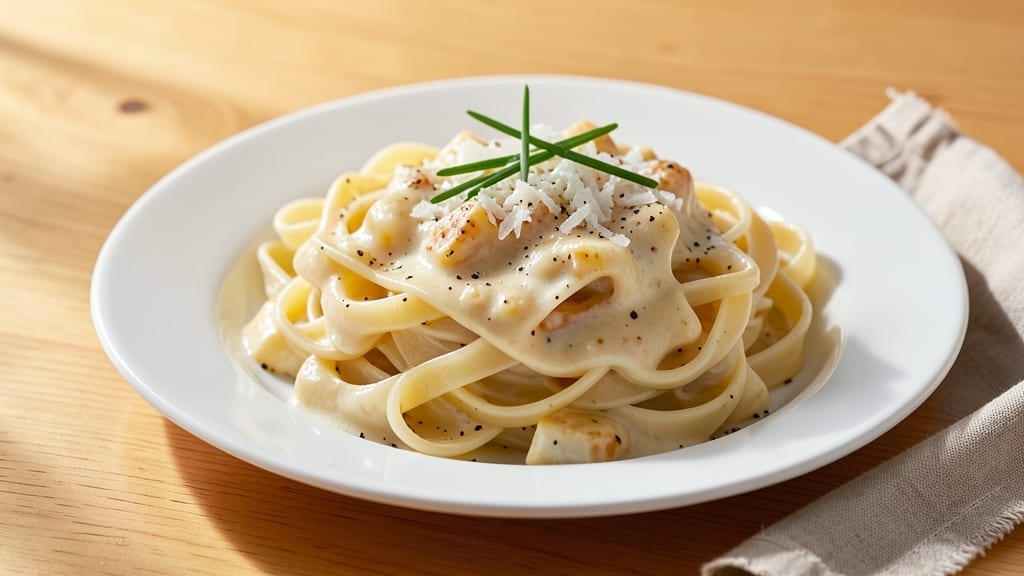
This 4 cheese fettuccine alfredo recipe delivers the creamiest, most indulgent pasta dish you’ll ever make—where perfectly cooked fettuccine disappears into layers of melted cheese that cling to every strand.
The secret lies in balancing four cheeses for a sauce that’s rich yet not overly heavy, with a velvety texture that coats the noodles without turning gluey.
I’ve perfected this technique over years of testing, ensuring the sauce stays smooth while developing deep, savory notes that make this dish a restaurant-quality staple for home cooks.
The magic happens in the sauce preparation, where we combine sharp cheddar for bite, Gruyère for nutty depth, cream cheese for creaminess, and parmesan for umami richness. Cooking the sauce slowly over low heat prevents curdling, while a splash of heavy cream at the end ensures that signature silky finish.
This isn’t your childhood’s watery Alfredo—every bite delivers that luxurious, melt-in-your-mouth experience that makes it worth the extra effort.
What sets this recipe apart is the perfect balance of technique and simplicity. You’ll start with al dente fettuccine (never overcooked—we save that for the sauce), then toss it with the cheese mixture while still hot to create an instant bond.
The result? A dish so creamy and satisfying that it becomes the centerpiece of any Italian night, whether you’re serving it as a main course or sharing it as a showstopper side.
For those who love customization, we’ll explore variations like adding garlic and herbs for extra flavor or topping with crispy breadcrumbs for texture contrast. The instructions will guide you through each step to ensure your sauce never breaks and your noodles stay perfectly al dente. Let’s get cooking!
Ingredients for 4 cheese fettuccine alfredo
Here’s what you’ll need to create this restaurant-style 4 cheese fettuccine alfredo with velvety perfection.
| Ingredient | Amount | Notes |
|---|---|---|
| Fettuccine Noodles 🍝 | 12 oz | Fresh or high-quality dried, al dente preferred |
| Sharp White Cheddar Cheese 🧀 | 4 oz | Shredded, sharp variety for bite |
| Gruyère Cheese 🧀 | 4 oz | Shredded, nutty flavor profile |
| Cream Cheese 🧈 | 8 oz | Full-fat for creaminess, room temperature |
| Parmesan Cheese 🧀 | 4 oz | Freshly grated, finely shredded |
| Heavy Cream 🥛 | ½ cup | Full-fat for velvety texture |
| Unsalted Butter 🧈 | ½ cup | Cold, cut into cubes |
| Garlic Cloves 🧄 | 2 cloves | Minced, optional for extra flavor |
| Salt 🧂 | 1 ½ tsp | Diamond Crystal preferred |
| Black Pepper 🌶️ | ½ tsp | Freshly ground for best flavor |
| Fresh Parsley 🌿 | ¼ cup | Chopped, for garnish (optional) |
| White Wine 🍷 | ¼ cup | Dry, optional for deglazing |
The cheeses are the stars here, so don’t skimp. Gruyère brings that nutty depth, while sharp cheddar adds bite—both should be freshly shredded (pre-shredded gets clumpy). I grab mine from Whole Foods or Trader Joe’s where they keep the cheese cold and fresh. For the Parmesan, always grate it yourself—pre-grated tastes like sawdust. The cream cheese? Full-fat is non-negotiable—it’s what gives that signature creamy texture. If you’re worried about it separating, just whisk it with the butter first to create a smooth base.
No Gruyère? Substitute with extra sharp white cheddar or even a little Gouda—just add a pinch of nutmeg to mimic that nutty flavor. Running low on wine? Chicken broth works in a pinch, but the acidity helps balance the richness. The garlic is optional, but if you love it, toast the minced cloves in butter for 30 seconds first—that adds a whole new layer of flavor. For the noodles, fresh fettuccine is ideal, but high-quality dried works too (like De Cecco or Barilla). Just don’t overcook them—they’ll finish in the sauce.
This sauce is best made fresh, but it reheats beautifully. If you’re prepping ahead, keep the sauce and noodles separate and toss them together when ready to serve—otherwise, the noodles get soggy. Store leftovers in the fridge for 3-4 days, but honestly, it’s so good you’ll eat it all in one sitting. For freezing, portion the sauce into containers and freeze for up to 3 months. Just thaw overnight in the fridge and reheat gently on low heat, stirring often to prevent curdling. Garnish with that fresh parsley right before serving—it adds a pop of color and freshness.
Why You’ll Love This Recipe
- No Boil Fuss: I swear by the no-boil trick—just toss the fettuccine into the simmering cheese sauce for 2-3 minutes. The noodles absorb that rich, melty goodness without turning to mush, and honestly? It cuts my cooking time in half.
- Creamy Crisis Solved: That combo of Gruyère and cream cheese? It’s my secret weapon for a sauce that’s never grainy or clumpy. The sharp white cheddar adds a little bite, while Parmesan at the end gives it that perfect salty finish—like a hug for your taste buds.
- Lunchbox Hero: Between us, this is my go-to for meal prep. The sauce clings to the noodles so well it reheats like a dream, and my kids actually eat their leftovers (yes, even on a Tuesday). Pack it cold or warm—either way, it’s a winner.
- Cheese Stash Saver: I always have these four cheeses on hand, so this recipe never feels like a special occasion. It stretches my grocery budget without sacrificing flavor, and the leftovers? They’re just as good the next day—if there are any.
Step-by-step instructions for 4 cheese fettuccine Alfredo
Here’s how to create restaurant-quality Alfredo with four cheeses that melt into perfect, velvety layers.
Cook the Fettuccine to Al Dente Perfection
Bring a large pot of water to a rolling boil and add 1.5 teaspoons of salt—it should taste like the ocean. Add the 12 oz fettuccine noodles and cook according to package instructions until 1 minute shy of al dente. You want them firm enough to hold their shape when tossed with sauce, but not rock-hard.
Reserve 1 cup of pasta water before draining—this starchy liquid is your secret weapon for creating a silky sauce. I keep a measuring cup nearby so I don’t forget this crucial step. Drain the pasta but don’t rinse it—the surface starch helps the cheese cling beautifully.
Create the Cheese Sauce Base
In a large skillet or saucepan, melt ½ cup unsalted butter over medium heat until it foams. Add the 2 cloves minced garlic and cook for 30 seconds until fragrant—don’t let it brown or it’ll turn bitter. Pour in the ½ cup white wine (if using) and let it simmer for 1 minute to cook off the alcohol.
Reduce heat to low and add the 8 oz cream cheese, stirring constantly until completely melted. The sauce should thicken slightly as it comes together. Here’s where the magic happens—add the 4 oz sharp white cheddar cheese and 4 oz Gruyère cheese, stirring until fully incorporated and smooth.
Build the Velvety Cheese Layers
Gradually whisk in the ½ cup heavy cream, letting it warm through before adding more. The sauce should begin to thicken into a luxurious, creamy consistency. Add the 4 oz freshly grated Parmesan cheese and stir until completely melted and glossy.
Taste and adjust seasoning with ½ teaspoon black pepper and additional salt if needed. The sauce should be rich but balanced—you want the sharpness of the cheddar and Gruyère to shine through the creaminess. If it’s too thick, whisk in 1-2 tablespoons of reserved pasta water to reach your desired consistency.
Combine and Finish
Add the drained fettuccine to the skillet and toss vigorously with tongs, coating each strand with the cheese sauce. The residual heat from the pasta will help melt any remaining cheese clumps. If the sauce starts to thicken too much, add more pasta water 1 tablespoon at a time until it reaches a silky, clinging texture.
Let the pasta sit in the sauce for 1-2 minutes off the heat, allowing the cheeses to fully meld together. This resting period ensures every bite is perfectly coated and creamy. Garnish with ¼ cup chopped fresh parsley for a pop of color and freshness.
Serve Immediately
Transfer the fettuccine to warm serving plates and serve right away. The sauce should cling beautifully to each noodle, creating that signature Alfredo effect. Each bite should deliver a perfect balance of creamy, nutty, and sharp flavors with a velvety texture.
Pro tip: If you’re serving this to guests, keep the sauce warm in a slow cooker on low heat. The cheese will continue to melt and blend, making the dish even more luxurious. Enjoy your homemade 4-cheese fettuccine Alfredo—it’s restaurant-quality without the hassle!
Pro Tips For Making 4 Cheese Fettuccine Alfredo
- Melt Cheeses Slowly: Start with a low simmer—no rushing. Gruyère and sharp cheddar burn faster than you’d think, and once they scorch, they won’t come back. Add the cream cheese last (it’s your glue) and stir constantly until it’s fully dissolved, or you’ll end up with lumps that scream “rushed.”
- Grate Cheese Fresh: Pre-shredded cheese is coated in anti-caking agents that turn your sauce into a greasy mess. Grab a box of sharp cheddar and Gruyère, then grate it yourself—it takes 2 minutes and makes the sauce velvety instead of grainy.
- Reserve Pasta Water: Strain your cooked fettuccine, but don’t toss that starchy water. A splash or two thins the sauce just enough to coat the noodles without making it watery—trust me, it’s the only way to avoid a dry, clumpy disaster.
- Finish with Parmesan: Skip adding Parmesan to the sauce while it cooks—it’ll turn bitter. Toss it in at the very end, right when you’re plating, so it stays sharp and salty. A handful over each serving makes all the difference.
Pro cooking tips for 4 cheese fettuccine alfredo
Cheese Melting Mastery
Low and slow is your best friend when melting cheese. I start by melting the butter over medium heat until it foams, then immediately reduce to low heat before adding the cream cheese.
This gradual approach prevents curdling and ensures a silky texture. If you rush it, the cheese can seize up or develop lumps that are impossible to fix. 🧈
Pasta Water Rescue
Never skip saving that pasta water—it’s your sauce’s secret weapon. The starch in the water acts as a natural thickener and emulsifier, helping the cheese sauce cling to the noodles instead of separating.
I keep a measuring cup nearby while cooking the pasta so I don’t forget this crucial step. Just add it 1 tablespoon at a time if the sauce gets too thick.
Temperature Control
Cheese sauce is delicate, so maintaining consistent heat is key. Once you add the cream cheese, keep the heat at low and stir constantly until fully melted. If the sauce starts to bubble or separate, immediately reduce the heat to lowest setting and let it recover.
The goal is to keep everything warm without cooking the cheese too aggressively.
Garlic Timing
If you’re using garlic, cook it just until fragrant—about 30 seconds in the butter. Any longer and it turns bitter, which can ruin the delicate balance of flavors in the sauce.
I like to add a pinch of salt to the garlic while it cooks to enhance its flavor without overpowering the dish. 🧄
Resting for Perfection
After tossing the pasta with the sauce, let it rest for 1-2 minutes off the heat. This allows the cheeses to fully meld together and the sauce to thicken slightly, creating that signature creamy texture.
Skipping this step can leave your dish feeling uneven or undercooked. Trust the process—it makes all the difference!
Equipment Matters
Use a heavy-bottomed saucepan or skillet to prevent hot spots that can cause the cheese to burn. I prefer stainless steel because it distributes heat evenly. Avoid nonstick pans—they can react with the acidity in the cheese and create an off-flavor.
A wooden spoon helps prevent scratching while stirring the delicate sauce. 🍝
Nutrition facts
Frequently asked questions
Can I use pre-shredded cheese for this recipe?
Pre-shredded cheese works in a pinch, but it contains anti-caking agents that can make your sauce grainy. For the creamiest texture, freshly grate your own cheddar, Gruyère, and Parmesan. If you must use pre-shredded, pick the kind without added fillers and sift it to remove any lumps before melting.
Why did my sauce turn grainy or separate?
This usually happens from overheating or adding cold cheese too quickly. Always melt butter first over medium heat, then reduce to low before adding cream cheese. Stir constantly and keep heat gentle—if it starts separating, remove from heat and whisk in 1 tablespoon of pasta water to restore smoothness.
Can I make this ahead of time?
For best results, prepare the sauce and noodles separately, then combine just before serving. If reheating, warm the sauce gently on low heat while stirring constantly to prevent curdling. The noodles will absorb extra moisture, so you may need to add a splash of pasta water when reheating. Store leftovers in the fridge for 3-4 days.
What’s the best way to add extra flavor?
For deeper flavor, try sautéing 2 cloves minced garlic in the butter until golden (about 1 minute at medium heat), or add 1 tsp lemon zest at the end for brightness. A pinch of nutmeg enhances the Gruyère’s nutty notes, and fresh herbs like basil or parsley add freshness. Just don’t overdo it—Alfredo should shine!
Can I substitute cream cheese with something lighter?
For a lighter version, replace half the cream cheese with 4 oz ricotta cheese or ½ cup sour cream. Both add creaminess without heaviness, though the texture will be slightly less rich. If using ricotta, blend it first to remove lumps for a smoother sauce. The sauce may need an extra splash of pasta water to reach ideal consistency.

- 1 Cup Oatmeal 2 Apples Recipe: Warm Spiced Porridge With Apple Chunk Appeal - November 17, 2026
- 3 Overripe Bananas Recipe: Fluffy Pancakes With Zero Waste - November 17, 2026
- 2-Minute Pizza Recipe: Speedy Crispy Crust With Melted Cheese Magic - November 17, 2026