
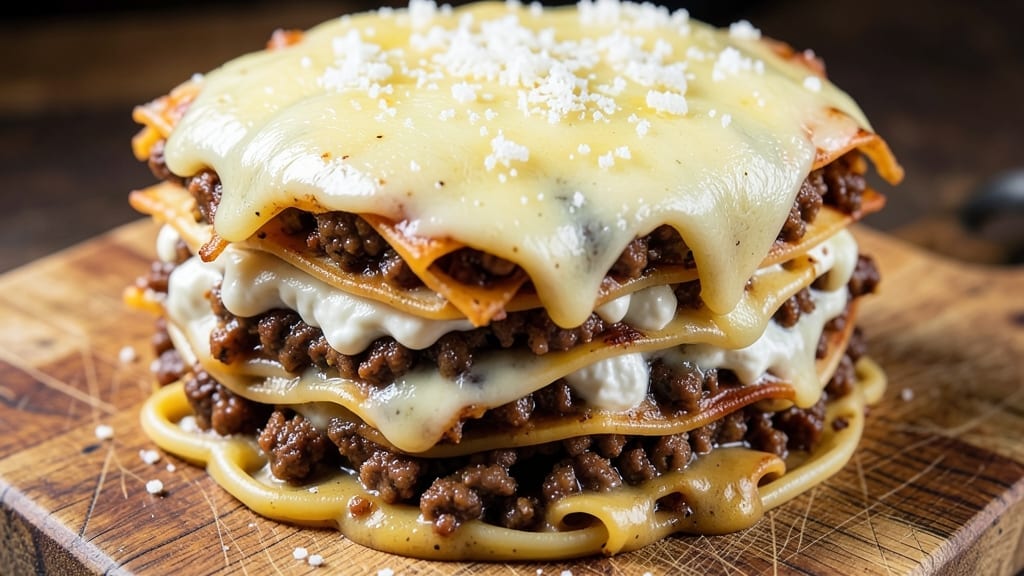
This 4 cheese lasagna hamburger helper recipe transforms two comfort food classics into one one-pan wonder that’s impossible to resist. 🧀 The magic happens when creamy hamburger helper sauce meets layers of melted mozzarella, ricotta, parmesan, and provolone—creating a dish that’s equal parts hearty and indulgent.
I developed this recipe during a particularly busy week when I needed dinner on the table fast, but still wanted that restaurant-quality cheesy pull you get from lasagna.
The beauty of this fusion dish lies in its simplicity: no boiling pasta separately, no fussing with multiple pans. You’ll start with a rich hamburger helper base, then layer in cooked noodles and that gooey cheese blend until it’s golden, bubbling perfection.
The ground beef adds protein and depth, while the four cheeses create a creamy, stretchy texture that’s hard to stop eating. It’s the kind of meal that disappears faster than you can say “seconds, please?”
What sets this apart is how the flavors come together—tangy tomato sauce from the hamburger helper balances the richness of the cheese, while the ground beef adds a savory backbone.
The result is a dish that’s comforting yet satisfying, with each bite delivering melty cheese, tender pasta, and hearty meat. Best of all, it’s ready in under an hour, making it perfect for weeknights or meal prep.
Serve with garlic bread for dipping or a simple side salad to balance the richness. The leftovers reheat beautifully, too—just a quick pop in the oven to restore that perfectly melted cheese texture. Let’s get cooking!
Ingredients for 4 cheese lasagna hamburger helper
Four cheeses, one pan, and the ultimate cheesy comfort mashup you’ll crave weekly.
| Ingredient | Amount | Notes |
|---|---|---|
| Ground Beef (80% Lean) 🥩 | 1 ½ lb | Finely ground for even cooking |
| Lasagna Noodles 🍝 | 12 pieces | No-boil or pre-cooked preferred |
| Hamburger Helper (Cheese Sauce Mix) 🧀 | 2 oz | Standard box size (2 oz) |
| Mozzarella Cheese (Shredded) 🧀 | 2 cups | Part-skim for meltiness |
| Ricotta Cheese 🧀 | 1 ½ cups | Whole milk for creaminess |
| Parmesan Cheese (Grated) 🧀 | ½ cup | Freshly grated preferred |
| Provolone Cheese (Shredded) 🧀 | 1 cup | Mild or smoked variety |
| Onion (Yellow) 🧅 | 1 whole | Diced, medium size |
| Garlic Cloves 🧄 | 3 cloves | Minced, fresh preferred |
| Tomato Sauce (Canned) 🍅 | 1 cup | San Marzano preferred |
| Extra-Virgin Olive Oil 🫒 | 2 tbsp | For sautéing vegetables |
| Dried Basil 🌿 | 1 tsp | Or 1 tbsp fresh |
| Salt 🧂 | 1 ½ tsp | Kosher or sea salt |
| Black Pepper 🌶️ | ½ tsp | Freshly ground preferred |
The cheese blend is where this dish shines—Parmigiano-Reggiano for depth, ricotta for creaminess, and provolone for that melty pull. Grab pre-shredded mozzarella from Kroger or Trader Joe’s—the kind in bags melts better than pre-grated. For the hamburger helper, any brand works, but the cheese sauce mix is non-negotiable. The lasagna noodles? No-boil saves time, but regular noodles work if you par-cook them. Ground beef should be 80% lean—leaner gets tough when layered with cheese. If you can’t find no-boil noodles, cook them al dente and drain well, or they’ll turn mushy in the oven.
No ricotta? Cottage cheese blended smooth works in a pinch, though it’s not identical. Short on provolone? Extra mozzarella plus a sprinkle of smoked paprika mimics that smoky depth. The hamburger helper box calls for water, but beef broth adds richness—use it if you’ve got it. Fresh garlic and onion are ideal, but jarred minced garlic (the good stuff, not the sad little jar) saves time. For the tomato sauce, San Marzano cans are worth the splurge—they’re sweeter and less acidic, letting the cheese flavors shine. If you’re making this ahead, assemble it the night before and refrigerate uncovered so the noodles don’t stick.
This reheats like a dream—just 10 minutes at 375°F covered with foil, then 5 minutes uncovered to get that golden crust. Keeps for 4 days in the fridge, though I’ve never had leftovers last that long. For meal prep, portion into individual baking dishes before freezing—microwave from frozen for 3-4 minutes covered. The cheese gets even gooier when reheated, so embrace it. Store any extra hamburger helper mix in an airtight container for up to 6 months—it’s great for quick pasta or potato dishes too.
Why You’ll Love This Recipe
- No-Fuss Assembly: That box of Hamburger Helper does all the heavy lifting—just brown the beef, mix in the sauce, and layer it like a lazy lasagna. I swear, my kids think I’m a short-order cook after school.
- Cheese Overload Magic: The ricotta adds that creamy, stretchy texture while the mozzarella melts into gooey perfection. Honestly, the first time I made this, I ate a slice straight from the pan.
- Game for Any Night: Toss it together for a weeknight dinner or double the batch for a potluck. The lasagna noodles hold up great reheated, and it’s the kind of dish that disappears fast—no leftovers, just happy stomachs.
- Budget-Friendly Feast: Ground beef and store-brand cheeses stretch this into five servings without breaking the bank. Between us, this is how I feed my family for under $15 and still feel like I’m serving something special.
Step-by-step instructions for one-pan cheesy lasagna magic
Here’s how to build this decadent lasagna without the fuss—just one pan and layers of cheesy goodness.
🍳 Step 1: Brown the Ground Beef and Sauté Vegetables
Heat the 2 tablespoons extra-virgin olive oil in a large oven-safe skillet over medium-high heat. Add the 1.5 pounds ground beef (80% lean) and cook, breaking it apart with a wooden spoon, until it’s deep brown and fully cooked through—about 5-6 minutes. This step develops rich flavor that’ll carry through your lasagna.
Drain any excess fat if needed, then add the diced onion and minced garlic. Sauté for 3-4 minutes until the onion becomes translucent and the garlic releases its fragrant aroma. You’ll know it’s ready when you can smell that sweet, savory garlic scent filling your kitchen.
👨🍳 Step 2: Prepare the Cheese Sauce Mixture
In a medium bowl, combine the 2 cups shredded mozzarella cheese, 1.5 cups ricotta cheese, 1 cup shredded provolone cheese, 0.5 cup grated parmesan cheese, 1 teaspoon dried basil, 1.5 teaspoons salt, and 0.5 teaspoon black pepper. Mix gently with a fork until just combined—you don’t want to overwork the ricotta or it’ll get grainy. This blend creates the signature lasagna texture we all love.
Now add the 2 ounces hamburger helper cheese sauce mix to the bowl and stir until fully incorporated. The hamburger helper will help bind everything together while adding that extra cheesy depth. Set this mixture aside while you prepare your noodles and tomato sauce.
🥘 Step 3: Assemble the Lasagna Layers
Spread 1 cup tomato sauce evenly over the bottom of your skillet, creating a thin base layer. Arrange 4 lasagna noodles horizontally across the skillet, slightly overlapping if needed. Spread one-third of the cheese mixture evenly over the noodles, then sprinkle with another one-third of the remaining mozzarella cheese for that perfect melted finish.
Repeat the layering process: another 1 cup tomato sauce, then 4 more lasagna noodles, followed by another one-third of the cheese mixture and one-third of the remaining mozzarella. Finish with the final 1 cup tomato sauce and the remaining 4 lasagna noodles. Top with the last one-third of the cheese mixture and all remaining mozzarella cheese. This layered approach ensures each bite delivers that perfect balance of noodles, meat, and cheese.
🔥 Step 4: Bake to Bubble Perfection
Cover the skillet tightly with aluminum foil and transfer it to a preheated 375°F oven. Bake for 25 minutes to let the layers begin to meld together. Here’s the thing—after 25 minutes, remove the foil and increase the oven temperature to 400°F. This final step creates that beautiful golden-brown crust we all crave.
Continue baking uncovered for another 15-20 minutes until the top is deep golden brown and bubbling vigorously. The edges should be crispy while the center remains creamy. You’ll know it’s done when you see that irresistible cheese pull-back effect—like a delicious blanket of melted goodness.
⏰ Step 5: Rest and Serve with Confidence
Remove the lasagna from the oven and let it rest for 10 minutes before serving. This resting period allows the layers to set slightly, making it easier to slice and preventing a messy first cut. The flavors will continue to meld during this time, creating that perfect harmony of cheeses and meat.
Slice into 6 equal portions and serve immediately. Each bite should deliver that perfect combination of tender beef, al dente noodles, and four layers of melted cheese. For extra presentation, garnish with fresh basil leaves or a sprinkle of additional parmesan. This one-pan wonder makes lasagna night effortless while delivering restaurant-quality results!
Pro Tips For Making 4 Cheese Lasagna Hamburger Helper
- Brown the Beef Well: Don’t just cook it—brown it. Break the ground beef into small chunks first, then sear them in a dry skillet over medium-high heat until the edges are dark and crispy. I used to rush this step with 80% lean beef, and the dish always tasted dry. Now I let it cook until it releases fat and develops flavor—about 5-7 minutes total.
- Pre-Cook the Noodles: Skip the soggy bottom layer by boiling the lasagna noodles just until al dente, then drain and toss them with a little olive oil to prevent sticking. I learned this the hard way—raw noodles in the oven turn to mush, and overcooked ones get gummy. Cook them to 11 minutes (or package instructions) and move fast.
- Mix Ricotta In Early: Fold the ricotta into the Hamburger Helper sauce before adding it to the beef. This keeps the ricotta from curdling under the heat and ensures it melts smoothly into the sauce. I was skeptical at first—why mess with the mix?—but now I swear by it for a creamier, more cohesive texture.
- Layer Cheese Strategically: Sprinkle half the mozzarella on top of the final sauce layer, then cover with foil to melt it slightly before the last 10 minutes of baking. This prevents a cheesy crust that burns while the middle stays cold. The remaining mozzarella goes on top at the end for that golden, bubbly finish.
Pro cooking tips for this dish
Cheese Layering Secrets
For that signature lasagna texture, distribute the cheese sauce mixture evenly across each noodle layer. I divide the 4 cups of cheese blend into three equal portions—one-third per layer. The ricotta and provolone combo creates the creamy stretch, while the mozzarella on top delivers that golden crust.
Don’t skimp on the parmesan either; its salty depth ties everything together. 🧀
Pro tip: Sprinkle extra mozzarella between layers, not just on top. This creates pockets of melt throughout, not just a cheesy crust. I like to use Kroger brand shredded mozzarella—it melts beautifully without clumping.
For even distribution, use a fine-mesh tamis sieve to dust the cheese evenly over each layer.
Meat Flavor Boost
Brown the ground beef until it’s deep brown and crispy in spots—this develops the Maillard reaction for maximum flavor. Don’t drain all the fat; leave about 1 tablespoon in the pan to keep the meat juicy. I season mine with ½ teaspoon Italian seasoning right after browning for extra depth.
For a richer flavor, deglaze the pan after browning the beef with ¼ cup beef broth or red wine. Scrape up all those browned bits from the bottom—they’re packed with flavor! This step adds complexity that separates this dish from basic hamburger helper.
Noodle Prep Tricks
If using regular lasagna noodles, par-cook them for 2 minutes less than package instructions. They’ll finish cooking in the oven, and slightly undercooked noodles hold up better to layering. For no-boil noodles, I recommend Barilla brand—they absorb sauce beautifully without turning mushy.
To prevent soggy layers, I always arrange the noodles horizontally in the pan, slightly overlapping. This creates a stable base that won’t collapse when adding cheese. For extra insurance, I press each layer gently with a spatula to eliminate air pockets that could cause uneven baking.
Oven Temperature Hack
The two-stage baking method is key: start at 375°F for 25 minutes to melt the cheese, then crank to 400°F for the final 15-20 minutes. This second burst of heat creates that perfect golden crust while keeping the center creamy.
I use an oven thermometer to ensure accuracy—many home ovens run 25°F hotter or colder than set.
For even baking, rotate the pan halfway through the uncovered baking time. This prevents hot spots and ensures the cheese melts uniformly. The dish is done when the edges are crispy and the center has that irresistible cheese pull—like a delicious blanket of melted goodness. 🔥
Resting Matters
Never skip the 10-minute rest before slicing! This allows the layers to set slightly, preventing a messy first cut. The cheese continues to melt and distribute evenly during this time, creating that perfect harmony of textures. I’ve learned this the hard way—skipping the rest leads to a runny, uneven slice.
For serving, I like to use a serrated knife and cut through the center first to create two equal halves. Then I slice each half into three portions.
This method ensures each serving gets an equal distribution of noodles, meat, and cheese. Garnish with fresh basil or extra parmesan for a restaurant-worthy finish.
Nutrition facts
Frequently asked questions
Can I use regular lasagna noodles instead of no-boil?
Yes, but you’ll need to par-cook them for 2 minutes less than package instructions. They’ll finish cooking in the oven. For best results, drain them well and press gently between paper towels to remove excess moisture before layering. Regular noodles can make the dish soggy if overcooked.
What if I don’t have all four cheeses?
No problem! Swap provolone with extra mozzarella, or use cottage cheese for ricotta (blend it smooth). For parmesan, substitute with ½ cup grated pecorino romano. The dish will still taste amazing—just the cheese profile changes slightly. Focus on getting at least 2.5 cups total cheese for that signature melt.
Can I make this in a regular baking dish instead of a skillet?
Use a 9×13-inch baking dish and adjust the layering slightly. Spread 1 cup sauce on the bottom, then add 3 noodles, ⅓ cheese mix, and repeat. The baking time will be similar, but check at 20 minutes covered and 10 minutes uncovered at 400°F. The dish may need 5-10 extra minutes to crisp up.
Why did my cheese get watery when reheating?
This usually happens when the noodles were overcooked or the dish wasn’t rested properly. Next time, par-cook noodles 2 minutes less, don’t skip the 10-minute rest, and reheat covered at 350°F for 15 minutes to re-melt the cheese. For extra insurance, add 1 tablespoon cornstarch to the cheese mixture before baking.
Can I add other veggies like spinach or mushrooms?
Yes! Sauté 2 cups chopped spinach or 1 cup sliced mushrooms with the onions and garlic. Add them to the meat mixture before assembling. For mushrooms, cook until all moisture evaporates to prevent soggy layers. Spinach wilts down beautifully and adds great color. Just don’t overfill the pan—keep layers at 1.5 inches thick maximum.

- 3lb Prime Rib Roast Recipe: Juicy Pink Center Guaranteed in 3 Hours - October 31, 2026
- 5 Spice Cake Recipe: Warmly Spiced Layers With Crunchy Top - October 31, 2026
- 1950’s Macaroni and Cheese Recipe: Nostalgic Creamy Cheese Sauce with Buttery Noodles - October 31, 2026