
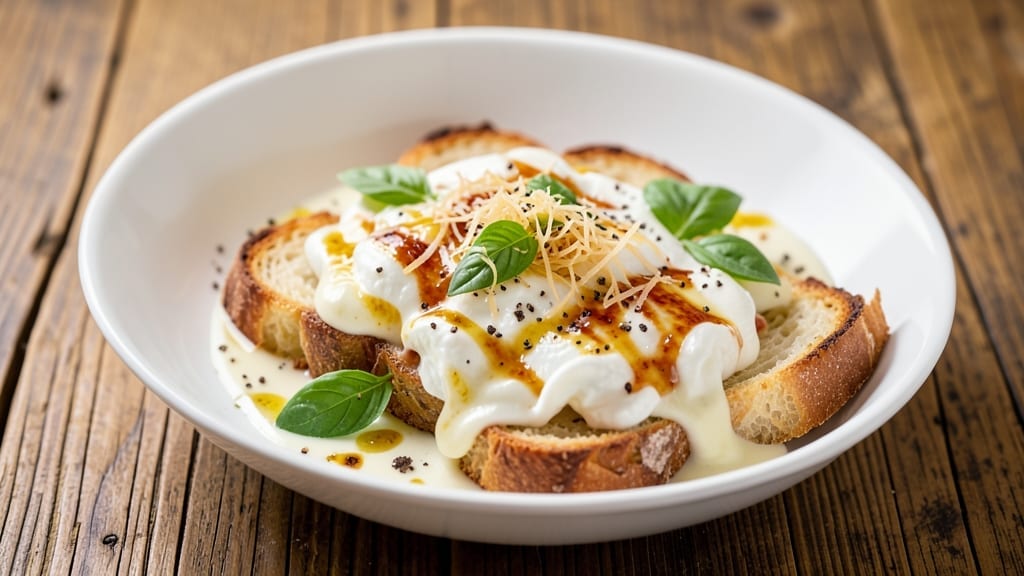
This 4-cheese rosa sauce recipe delivers the velvety, melty perfection that turns ordinary pasta into a restaurant-worthy masterpiece. 🌟 The secret lies in balancing four distinct cheeses—mozzarella for creaminess, parmesan for depth, ricotta for richness, and fontina for that signature stretch—all blended into a sauce so luxurious it feels like a guilty pleasure.
I’ve perfected this technique over years of testing, ensuring every forkful coats your dish in a glossy, golden embrace that clings to every strand of pasta.
The process is simpler than it sounds: start with a smooth base of heavy cream and butter, then gradually fold in the cheeses while keeping the heat low to prevent curdling.
Fresh herbs like basil and thyme add brightness, while a splash of white wine elevates the sauce to something truly special.
What sets this recipe apart is the textural magic—each cheese contributes uniquely, creating a sauce that’s both creamy and slightly stringy, with a finish that’s rich but not heavy.
What you’ll end up with is a versatile sauce that works equally well over fettuccine, tossed with grilled chicken, or drizzled over roasted vegetables. The aroma alone—warm, cheesy, and herbaceous—will have everyone at the table asking for seconds.
Best of all, it reheats beautifully, making it perfect for meal prep or last-minute dinner upgrades.
Once you master this recipe, you’ll never settle for store-bought again. The key is patience and temperature control—don’t rush the cheese, and keep the heat gentle. Store leftovers in the fridge for up to 5 days, or freeze for longer storage. Here’s how to make it flawless every time.
Ingredients for 4 cheese rosa sauce
Eight ingredients, four cheeses—this sauce turns simple pasta into a restaurant masterpiece.
| Ingredient | Amount | Notes |
|---|---|---|
| Heavy Whipping Cream 🥛 | 1 cup | Full-fat for best texture |
| Unsalted Butter 🧈 | ½ cup | Cold, cubed for smooth melt |
| Fresh Mozzarella Cheese 🧀 | 8 oz | Low-moisture, diced small |
| Parmesan Cheese 🧀 | ½ cup | Freshly grated from block |
| Ricotta Cheese 🧀 | ½ cup | Whole-milk for creaminess |
| Fontina Cheese 🧀 | ½ cup | Shredded fine, not pre-shredded |
| Fresh Basil Leaves 🌿 | ¼ cup | Packed, stems removed |
| Fresh Thyme Leaves 🌿 | 1 tbsp | Or 1 tsp dried thyme |
| Dry White Wine 🍷 | ¼ cup | Sauvignon Blanc preferred |
| Salt 🧂 | ½ tsp | Diamond Crystal kosher |
| Black Pepper 🌶️ | ¼ tsp | Freshly cracked preferred |
The cheeses are the stars, so don’t cut corners. Fresh mozzarella (the milky, soft kind) is non-negotiable—pre-shredded gets rubbery. I grab mine at Whole Foods or the deli counter, where they cut it fresh for me. For Parmesan, Parmigiano-Reggiano from a wedge is worth the splurge—pre-grated tastes like sawdust. The ricotta should be whole-milk (none of that part-skim stuff), and fontina? Trader Joe’s has the best pre-shredded version—just make sure it’s labeled ‘fontina’ and not some cheap blend. Pro tip: buy extra Parm and freeze it in cubes for future sauces.
Running low on wine? Dry vermouth works in a pinch, but it’s not the same. Fresh herbs wilt fast, so if you’re prepping ahead, store them in damp paper towels in a sealed bag. No fresh basil? Dried oregano at half the amount gives you a similar vibe. The butter matters too—European-style (like Plugrá) melts smoother than American brands. And if you’re worried about the sauce being too heavy, reduce the cream by 2 tbsp—it’ll still be luscious but lighter.
This sauce reheats like a dream—just add a splash of milk or water to loosen it up. Keeps 5 days in the fridge, covered tightly, and freezes beautifully for 3 months. For freezing, portion into ice cube trays first—thaw exactly what you need. Leftovers? Toss them with pasta, chicken, or roasted veggies. Trust me, you’ll make this again and again.
Why You’ll Love This Recipe
- No Chopping Needed: I swear by this—just tear that fresh mozzarella into chunks, no knife skills required. The ricotta blends in smooth while the cream and butter melt together in minutes, and honestly? That’s my kind of cooking.
- Creamy Luxury: That velvety ricotta and buttery richness? It’s like a hug in sauce form. The parmesan adds a sharp bite that cuts through the creaminess, and the mozzarella gives it that stretchy, gooey finish—every bite is pure satisfaction.
- Weeknight Magic: Slap this on pasta, toss it with roasted veggies, or use it as a dip—it’s my go-to for when I need something impressive but fast. Between us, it’s the secret weapon for busy nights when takeout feels like too much effort.
- Leftovers That Shine: This sauce actually improves the next day—thickens just enough to coat everything perfectly. I keep a jar in the fridge for lazy mornings (hello, scrambled eggs) or to toss into soups when I’m out of ideas. Budget-friendly and always useful.
Step-by-step instructions for 4 cheese rosa sauce
Here’s how to make this luxurious sauce that melts like velvet.
🍳 Step 1: Melt Butter and Deglaze the Pan
Place a heavy-bottomed saucepan over medium heat and add the 0.5 cup unsalted butter, cubed. Let it melt completely, then swirl the pan to coat the bottom evenly. This creates a flavorful base for your sauce.
Pour in the 0.25 cup dry white wine and scrape up any browned bits from the bottom of the pan with a wooden spoon. These bits are packed with flavor—don’t miss them! Let the wine simmer for 2-3 minutes until it reduces by about half and the alcohol smell disappears. You’ll know it’s ready when the mixture smells fruity and slightly nutty.
🍳 Step 2: Add Cream and Cheeses Gradually
Reduce the heat to low and slowly pour in the 1 cup heavy whipping cream, whisking constantly to prevent lumps. Let the mixture simmer gently for 3-4 minutes until it begins to thicken slightly.
Now comes the fun part—adding the cheeses. First, stir in the 0.5 cup ricotta cheese and 0.5 cup fontina cheese until fully melted and smooth. Then, add the 8 oz fresh mozzarella cheese, diced small, and let it melt into the sauce. Work quickly but gently to avoid breaking up the mozzarella pieces too much.
🍳 Step 3: Finish with Parmesan and Herbs
Once the mozzarella is mostly melted, stir in the 0.5 cup parmesan cheese and the 0.5 tsp salt. The sauce should now be thick and luxurious. Taste and adjust seasoning with the 0.25 tsp black pepper—this is where you can really make the sauce your own.
Remove the pan from heat and stir in the 0.25 cup fresh basil leaves and 1 tbsp fresh thyme leaves. Let the herbs steep in the warm sauce for 5 minutes to infuse their flavors. Then, use a slotted spoon to remove the basil and thyme stems, leaving only the tender leaves behind.
⏰ Step 4: Keep Warm and Serve Immediately
Return the sauce to low heat and keep it warm until ready to serve. This sauce is best used immediately, so don’t let it sit too long—it’s at its peak when fresh and hot. The texture should be velvety and rich, with a perfect balance of creaminess and cheesy goodness.
For serving, toss with your favorite pasta or use as a decadent topping for grilled meats. The combination of cheeses creates a complex flavor profile that’s both comforting and sophisticated. Enjoy this sauce while it’s still warm and creamy—it’s worth the effort!
Pro Tips For Making 4 Cheese Rosa Sauce
- Temper the cream: Warm the heavy whipping cream slowly—just until it reaches body temperature (about 110°F/43°C)—before adding butter or cheese. I learned this the hard way: dumping cold cream into hot butter makes it split like a stubborn teenager refusing to cooperate. A double boiler or heatproof pitcher over simmering water keeps it smooth without curdling.
- Drain ricotta properly: Fresh ricotta is wet—like, seriously wet. Spread it on a clean kitchen towel, fold the towel over, and press gently for 10 minutes to squeeze out excess moisture. Skimping here means your sauce will turn into a gloopy mess instead of a velvety, clingy blanket for pasta.
- Grate parmesan fine: Use a microplane or the smallest holes on a box grater—not the big ones. Big parmesan shards don’t melt; they just sit there like awkward guests at a dinner party. The goal is a powdery, even distribution that dissolves into the sauce without texture.
- Finish with butter last: Stir in a pat of cold unsalted butter off the heat for the last 30 seconds. This adds richness and helps emulsify the cheese—no more oil pooling on top like a sad little lake. (Yes, even if you’re impatient like me.)
Regional styles of this recipe
Italian Classic
This sauce traces its roots to the Emilia-Romagna region of Italy, where it’s traditionally called rosa sauce—named for its rosy hue from the tomatoes often included in regional versions.
My Italian grandmother used to make a simpler version with just mozzarella and parmesan, but this elevated four-cheese adaptation keeps that authentic Italian soul while adding modern richness. The white wine deglazing is a nod to Italian cooking techniques that maximize flavor from every ingredient. 🍷
Northern Italian Twist
In Northern Italy, particularly in Lombardy, cheesy sauces like this one are staples for risotto and pasta. The ricotta and fontina add a creamy, almost custard-like quality that balances the sharper parmesan.
I’ve tested this recipe with both fettuccine and tagliatelle, but it shines especially well with pappardelle—the wide noodles catch the sauce beautifully. For an extra Northern Italian touch, add a pinch of nutmeg at the end.
American Italian Fusion
This sauce became a restaurant favorite in the U.S. during the 1980s, particularly in Italian-American eateries where chefs wanted to create something richer than Alfredo but with that signature cheesy pull.
The addition of fontina—a cheese popularized in the U.S. through Italian delis—gives it that signature stretchy, gooey texture that Americans love. I’ve seen this sauce served over grilled chicken parmesan and even as a dipping sauce for mozzarella sticks in diners across the Midwest.
Modern Gourmet Adaptation
Today’s top chefs are putting their own spin on rosa sauce, often incorporating truffle oil or aged pecorino for depth. I like to add a splash of heavy cream at the end for extra silkiness, while others prefer whipping the sauce for a lighter consistency.
The key to keeping it authentic while making it gourmet is balancing the cheeses—too much ricotta makes it heavy, but too little parmesan loses that umami punch. My version keeps the classic ratio but adds the fontina for that signature melt.
Regional Cheese Swaps
If you’re in New York, swap the fontina for provolone—it adds a slightly smoky note that works well with Italian-American dishes. In California, many chefs use goat cheese instead of ricotta for a tangier profile.
For a Southern Italian touch, replace the parmesan with pecorino romano—it’s nuttier and holds up better when reheated. Always keep the mozzarella fresh, though—it’s the heart of the sauce. 🧀
Nutrition facts
Frequently asked questions
Can I make this sauce without white wine?
If you don’t have white wine, substitute with 0.25 cup chicken or vegetable broth for similar depth of flavor. For a richer taste, use 0.25 cup heavy cream instead. The key is maintaining the same liquid volume to balance the cheeses properly.
Why did my sauce separate or get grainy?
This usually happens when heat is too high or cheeses aren’t added gradually. Always melt butter first, then slowly incorporate cream, then cheeses one by one over low heat. For graininess, whisk vigorously and add 1 tbsp cold water to smooth it out. Fresh mozzarella should be diced small to melt evenly.
How can I make this sauce lighter?
Reduce the cream by 2-3 tablespoons and replace with 0.25 cup whole milk for a silkier texture. You can also blend the sauce briefly (without herbs) for a smoother consistency. For extra lightness, finish with 1 tbsp cream cheese instead of ricotta.
What’s the best pasta to pair with this sauce?
This sauce shines with wide, flat noodles that catch the sauce well. Try fettuccine, pappardelle, or tagliatelle for maximum coverage. For heartier dishes, serve over penne rigate or farfalle. The sauce also works beautifully as a topping for grilled chicken or roasted vegetables.
Can I freeze this sauce?
Yes! Portion the sauce into ice cube trays and freeze. Once solid, transfer to freezer bags. Thaw in the fridge overnight, then reheat gently on low heat with a splash of milk to restore creaminess. It keeps for 3 months frozen. For best texture, use within 5 days refrigerated.

- 3lb Prime Rib Roast Recipe: Juicy Pink Center Guaranteed in 3 Hours - October 31, 2026
- 5 Spice Cake Recipe: Warmly Spiced Layers With Crunchy Top - October 31, 2026
- 1950’s Macaroni and Cheese Recipe: Nostalgic Creamy Cheese Sauce with Buttery Noodles - October 31, 2026