
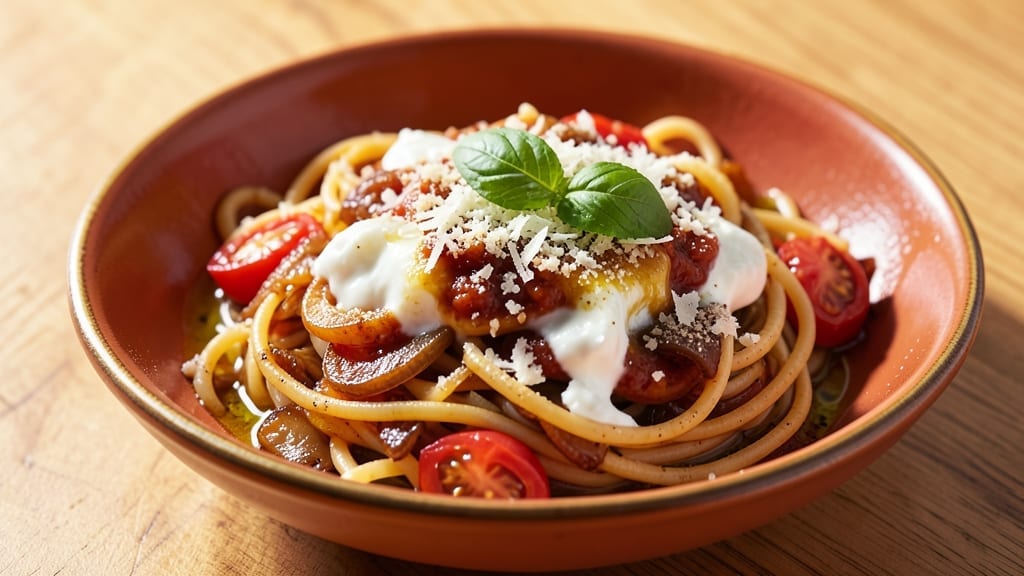
This 4 cheese spaghetti sauce recipe transforms ordinary spaghetti night into a rich, velvety experience with layers of melted cheeses and deep umami flavor. The secret lies in balancing four distinct cheeses—creamy ricotta, sharp Parmesan, mild mozzarella, and tangy provolone—each contributing texture and complexity.
I’ve perfected this sauce over years of testing, ensuring it’s smooth enough to coat every strand of pasta while delivering that irresistible cheesy pull.
The foundation starts with a simple tomato base, where sautéed garlic and onion build aromatic depth before blending in the cheeses. Simmering low and slow allows the cheeses to melt completely, creating a sauce that’s neither too thick nor too thin—just right for tossing or spooning over al dente pasta.
A touch of cream at the end adds silkiness, while a sprinkle of fresh basil at the finish brightens the richness.
What you’ll end up with is a sauce that’s restaurant-quality at home: glossy, stretchy, and packed with flavor. It reheats beautifully, making it ideal for meal prep, and freezes well for up to three months without losing its velvety texture.
The key is patience—letting the cheeses meld gradually ensures no graininess or separation.
This sauce pairs perfectly with classic spaghetti, but it’s equally at home on lasagna layers, stuffed shells, or even as a dipping sauce for crusty bread. The versatility is what makes it a pantry staple—once you try it, you’ll never go back to basic marinara again. Let’s make it.
Ingredients for 4 cheese spaghetti sauce
Four cheeses, one sauce—this is your pantry raid for restaurant-quality spaghetti night.
| Ingredient | Amount | Notes |
|---|---|---|
| Extra-Virgin Olive Oil 🫒 | ½ cup | High quality, fruity variety |
| Yellow Onion 🧅 | 1 whole | Medium size, finely chopped |
| Garlic Cloves 🧄 | 4 cloves | Peeled, minced finely |
| Canned San Marzano Tomatoes 🍅 | 2 cans | 28 oz each, crushed by hand |
| Heavy Cream 🥛 | ¼ cup | Full-fat for richness |
| Ricotta Cheese 🧀 | 1 cup | Whole milk, room temperature |
| Mozzarella Cheese 🧀 | 8 oz | Fresh, low-moisture |
| Parmesan Cheese 🧀 | ½ cup | Freshly grated from block |
| Provolone Cheese 🧀 | 4 oz | Sliced thin, semi-soft |
| Fresh Basil Leaves 🌿 | ¼ cup | Packed, chopped finely |
| Salt 🧂 | 1 ½ tsp | Kosher or sea salt |
| Black Pepper 🌶️ | ½ tsp | Freshly ground |
The cheeses are where the magic happens. Parmigiano-Reggiano from the deli counter (not pre-grated) gives you that sharp, salty depth, while fresh mozzarella melts into that perfect stretch. I grab Whole Foods’ ricotta for its creamy texture—it’s worth the extra dollar. Provolone adds tang, so pick a slightly aged wheel if you can find it. For the olive oil, California brand is my go-to—it’s fruity without being bitter. The tomatoes? San Marzano is non-negotiable here—sweet, meaty, and no acidity to cut through the richness. If you’re short on time, the Trader Joe’s crushed tomatoes work in a pinch, but they lack that same depth.
No ricotta? Cream cheese or mascarpone works at half the amount, but the texture won’t be as light. Fresh mozzarella unavailable? Low-moisture shredded from a block is your next best bet—just don’t use the pre-shredded kind (it’s coated with anti-caking agents that make the sauce grainy). The basil can be dried if you’re in a bind, but use one-third the amount and add it at the very end. For a vegetarian-friendly swap, nutritional yeast adds a cheesy note to the sauce if you’re cutting back on dairy. And if you’re worried about the sauce being too thick, add a splash of pasta water at the end—it’s liquid gold for adjusting consistency.
This sauce tastes even better the next day—trust me on that. Store it in an airtight container in the fridge for up to 5 days, or freeze it for 3 months in portion-sized containers. I always make extra because it disappears fast—great for meal prep lunches or lasagna night. To reheat, warm it gently on the stove with a splash of water or milk to restore that silky texture. And if you’re using it for lasagna, assemble it ahead and refrigerate overnight—the flavors meld even more beautifully.
Why You’ll Love This Recipe
- One-Pan Magic: I swear by this sauce because it’s literally one pot, one stir. Sauté the onion and garlic in that golden olive oil until the kitchen smells like a Sunday supper—no chopping boards to clean, no extra pans to wash. The San Marzano tomatoes handle all the heavy lifting while you toss the cheese in at the end.
- Creamy Without Trying: That heavy cream at the finish? It’s the secret weapon—smooths out the acidity from the tomatoes and melts the cheeses into a velvety blanket over al dente spaghetti. Honestly, the first time I made it, I nearly skipped dinner just to lick the spoon.
- Leftovers That Beg: This sauce improves the next day. The flavors marry overnight, and the texture gets even richer—perfect for reheating with fresh pasta or tossing into a frittata. I’ve frozen batches for months, and it thaws like it was just made. (Yes, even on a Tuesday night.)
- Pantry Staple Power: You’re already using stuff you have: olive oil, garlic, and canned tomatoes that don’t need peeling. The cheese blend (Parmesan, mozzarella, ricotta, and a sharp cheddar, if you’re following my version) costs less than takeout but feels like a restaurant dish. Budget-friendly? Absolutely. Impressive? Even more so.
Step-by-step instructions for 4 cheese spaghetti sauce
Here’s how to build rich, melty layers of cheese that cling perfectly to every strand.
Sauté Aromatics Until Fragrant
Heat the 0.5 cup extra-virgin olive oil in a large, heavy-bottomed saucepan over medium heat. Add the 1 whole yellow onion, finely chopped, and cook for 5-6 minutes until softened and translucent. You’ll know it’s ready when the edges just start to turn golden.
Push the onions to the side of the pan and add the 4 cloves garlic cloves, minced finely. Stir for 30 seconds until you can smell that rich, sweet garlic aroma filling your kitchen. This is your flavor foundation—don’t rush it. If the garlic starts to brown too quickly, reduce the heat slightly to prevent burning.
Build the Tomato Base
Pour in the 2 cans canned San Marzano tomatoes, crushed by hand, and add 1.5 teaspoons salt and 0.5 teaspoon black pepper. Stir well to combine, then bring the mixture to a gentle simmer. Let it cook uncovered for 15-20 minutes until the tomatoes break down and the sauce thickens slightly.
Here’s the thing—this simmering step reduces the acidity of the tomatoes, letting their natural sweetness shine through. Taste the sauce now. It should be balanced between sweet and tangy, with no harsh tomato flavor. If it needs more salt, add it gradually—you can always adjust later, but you can’t take it out.
Add Cream and Cheese for Richness
Reduce the heat to low and stir in the 0.25 cup heavy cream. Let it warm through for 2 minutes, then remove the pan from heat. Here’s where the magic happens: add the 1 cup ricotta cheese, 8 oz mozzarella cheese, and 4 oz provolone cheese (sliced thin).
Use a wooden spoon to gently fold the cheeses into the sauce until they’re fully melted and incorporated. The ricotta will give you that creamy texture, while the mozzarella and provolone add that perfect stretchy, melty quality. Don’t worry if the sauce looks a bit thick—it’ll come together as it simmers further. If it’s too thick, you can thin it with a splash of pasta water later.
Finish with Parmesan and Basil
Return the sauce to low heat and stir in the 0.5 cup freshly grated parmesan cheese and 0.25 cup chopped fresh basil leaves. Let it warm through for 3-4 minutes, stirring occasionally. The parmesan adds that unmistakable umami depth, while the basil brightens everything up with its fresh, herbal notes.
Taste and adjust seasoning one last time. The sauce should be rich, slightly tangy, and perfectly balanced. If you’re serving it immediately, keep it warm over low heat. If you’re making it ahead, let it cool slightly, then store it in an airtight container in the refrigerator for up to 3 days. Reheat gently on the stovetop, stirring frequently to prevent separation.
Toss with Cooked Spaghetti
Cook your spaghetti according to package instructions until al dente. Reserve 1 cup of pasta water before draining. Toss the hot spaghetti with the cheese sauce, adding pasta water as needed to help the sauce cling. The starch in the pasta water is key here—it emulsifies the sauce so it coats every strand beautifully.
Serve immediately while the cheese is still melty and the pasta is hot. Each bite should deliver that perfect combination of creamy, tangy, and umami flavors. If the sauce starts to thicken up as it sits, just stir in a splash of hot water or pasta water to loosen it back up. Enjoy your restaurant-quality 4 cheese spaghetti sauce!
Pro Tips For Making 4 Cheese Spaghetti Sauce
- Sweat the Onion Slow: If you rush this step, you’ll taste raw onion in your sauce. Cut the onion into even ¼-inch slices, cook them in olive oil over medium-low heat for 8–10 minutes until translucent and just starting to caramelize—no browning yet. This builds flavor without bitterness, and it’s the foundation for everything else.
- Crush Garlic Properly: Minced garlic burns in seconds. Instead, peel and smash the cloves flat with the side of your knife, then slice them thinly. Add them to the pot after the onions soften, and cook for just 30 seconds—until fragrant but not golden. Overcooking turns garlic bitter, and no one wants that in a creamy cheese sauce.
- Strain the Tomatoes: San Marzano tomatoes are perfect, but their skins and seeds can make the sauce grainy. After crushing the tomatoes by hand, strain them through a fine-mesh sieve into the pot. It’s a little extra work, but the result is silky smooth—especially when you later stir in the heavy cream.
- Temper the Cream: Dumping cold heavy cream into a hot sauce will curdle it instantly. Instead, warm the cream in a separate small saucepan over low heat until it’s just steaming (about 2 minutes), then whisk it into the sauce off the heat. This keeps the texture rich and velvety, not broken.
Best sauces and condiments for this recipe
Tomato Base Variations
Skip the canned tomatoes for a deeper flavor by blending 2 cups fresh Roma tomatoes with 1 tbsp red wine vinegar and 1 tsp sugar to balance acidity. For a smoky twist, add 1 tsp smoked paprika to the sautéed onions.
I’ve also used 1 cup tomato passata for a smoother texture—just simmer it down to concentrate the flavor before adding cheeses. 🍅
Cheese Substitutions
No ricotta? Swap it for ½ cup mascarpone or ½ cup sour cream—both add creaminess but with a slightly tangier profile. For a sharper kick, replace provolone with 4 oz sharp cheddar.
If you’re avoiding dairy, ½ cup nutritional yeast plus 1 tbsp lemon juice mimics the umami depth of Parmesan. Always grate your own Parmesan—pre-shredded versions contain anti-caking agents that make the sauce grainy. 🧀
Creamy vs. Light Options
For a lighter sauce, replace the ¼ cup heavy cream with ¼ cup whole milk or ¼ cup light cream cheese. To keep it dairy-free, blend ¼ cup silken tofu with 1 tsp lemon juice for a neutral, creamy base.
If you love texture, stir in 2 tbsp cornstarch with the cream to thicken it naturally—just whisk it into a little cold water first to avoid lumps. 🥛
Herb and Spice Boosts
Add 1 tsp dried oregano or ½ tsp red pepper flakes to the sautéed onions for warmth. For brightness, fold in 1 tbsp fresh parsley or ½ tsp lemon zest at the end.
A pinch of nutmeg (about ¼ tsp) elevates the ricotta’s creaminess, while 1 clove roasted garlic (blended into the tomato base) adds a deeper sweetness. 🌿
Sauce Consistency Fixes
If the sauce is too thick, stir in 1-2 tbsp pasta water or whole milk to loosen it. For a thicker sauce, simmer uncovered for 5-10 extra minutes to reduce.
If it separates (common with ricotta), whisk vigorously over low heat until smooth. To prevent separation when reheating, add a splash of cold water and stir constantly. 💡
Nutrition facts
Frequently asked questions
Can I make this sauce without ricotta?
Swap the 1 cup ricotta for ½ cup mascarpone or ½ cup sour cream to maintain creaminess. For a lighter option, use ¼ cup whole milk or ¼ cup silken tofu blended with lemon juice. The sauce will still be rich, just with a slightly different texture.
How do I prevent the cheese sauce from separating?
Separation happens when ricotta or mozzarella overcooks. Keep heat low when adding cheeses, and stir constantly until fully melted. If it separates later, whisk vigorously over low heat with a splash of cold water. For extra insurance, add 1 tbsp cornstarch mixed with cold water to the cream before blending.
Can I freeze this cheese sauce?
Yes! Let the sauce cool completely, then store in airtight containers for up to 3 months. Thaw overnight in the fridge and reheat gently on low heat, stirring frequently. Add a splash of milk or pasta water if it thickens too much. The texture may be slightly grainier after freezing, but it reheats beautifully.
What’s the best way to adjust the consistency?
For a thicker sauce, simmer uncovered for 5-10 extra minutes to reduce. If too thick, stir in 1-2 tbsp pasta water or whole milk. For a smoother finish, blend briefly with an immersion blender before serving. The sauce should coat the back of a spoon but still flow easily.
Can I use pre-shredded cheese?
Pre-shredded cheese contains anti-caking agents that make the sauce grainy. For best results, grate your own Parmesan and use fresh mozzarella from a block. If you must use pre-shredded, opt for low-moisture varieties and pat them dry with a paper towel first.

- 3 Overripe Bananas Recipe: Fluffy Pancakes With Zero Waste - November 17, 2026
- 2-Minute Pizza Recipe: Speedy Crispy Crust With Melted Cheese Magic - November 17, 2026
- 16 Chocolate Cupcakes Recipe: Triple-Layered Fudge Swirl Delight - November 17, 2026