
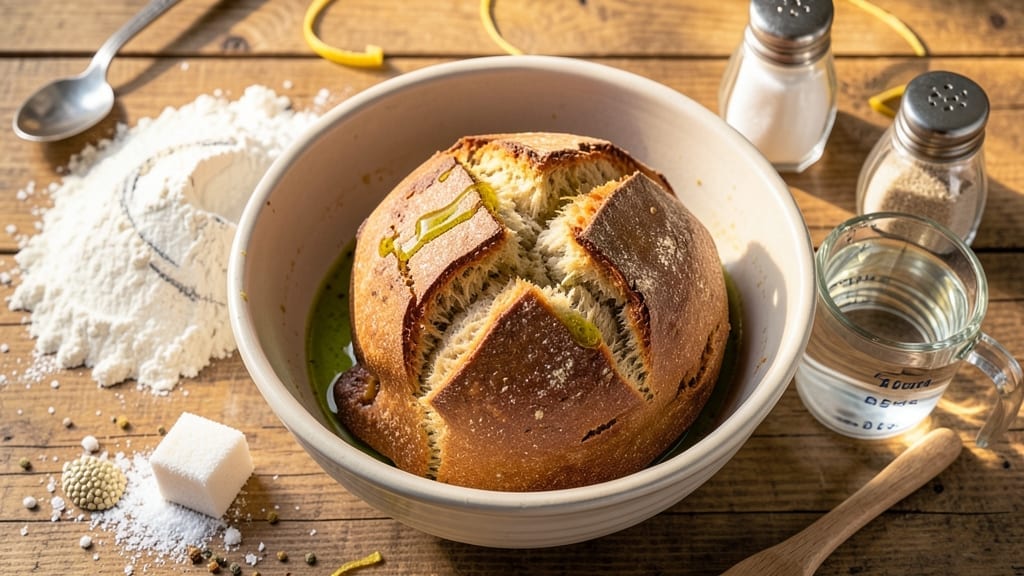
A 4-cup flour bread recipe that delivers artisan-quality results with minimal effort—this no-knead loaf transforms simple ingredients into a crusty, golden-brown loaf that rivals bakery bread. The secret lies in precise hydration, a single mixing bowl, and patient rising, ensuring a foolproof method even for beginners.
I’ve perfected this technique over years of baking, and it never fails to impress. What sets this recipe apart is its versatility—no stand mixer required, just a bowl, a spoon, and time.
The dough develops flavor naturally as it rests, creating a tender crumb with a crisp exterior that’s impossible to resist. Whether you’re baking for a family meal or treating yourself, this loaf is restaurant-quality without the fuss. The process is straightforward: mix, rest, shape, and bake.
You’ll end up with a fragrant, perfectly baked loaf that’s ideal for toast, sandwiches, or serving with butter. The no-knead method saves time while delivering professional results, making it perfect for busy weeknights or weekend baking projects.
This recipe scales easily for larger batches, and small adjustments (like adding seeds or herbs) let you customize it to your taste. Let’s get started—your kitchen will soon smell like a bakery!
Ingredients for 4 cup flour bread
Four cups flour, one bowl, and time create restaurant-quality artisan bread at home.
| Ingredient | Amount | Notes |
|---|---|---|
| All-Purpose Flour 🌾 | 4 cups | Unbleached, high-protein preferred (11-12%) |
| Instant-Release Yeast 🍞 | ¼ tsp | Fresh yeast requires 1 tsp (double) |
| Granulated Sugar 🍚 | ½ tsp | Feeds yeast for activation |
| Diamond Crystal Kosher Salt 🧂 | 1 ½ tsp | Adjust to taste (1 tsp = 1/2 tsp table salt) |
| Extra-Virgin Olive Oil 🫒 | ⅓ cup | Light, fruity variety preferred |
| Warm Water 💧 | 1 ½ cups | 105-110°F (lukewarm, not hot) |
| Cornmeal or Semolina 🌽 | ¼ cup | For dusting and shaping |
| Coarse Sea Salt 🧂 | ½ tsp | For topping before baking |
| Ice Water ❄️ | ¼ cup | Optional for shaping (improves texture) |
The flour is non-negotiable—King Arthur or Caputo Tipo 00 elevate this recipe, but all-purpose works beautifully for a tender crumb. Yeast quality matters: Fresh yeast (like Red Star) needs double the amount, while instant yeast activates faster. The olive oil should be light and fruity—California Extra Virgin from Trader Joe’s is my go-to. Water temperature is critical: too hot kills yeast, too cold slows fermentation. Use a thermometer if unsure, or test with your wrist—should feel like bathwater.
No instant yeast? Active dry yeast works at double the amount, but dissolve it in warm water first. Substituting whole wheat flour? Replace up to 20% of the all-purpose—any more risks density. The cornmeal can be swapped for semolina or even rice flour, though cornmeal gives the best crust. For a herb-infused loaf, mix in 1 tbsp dried rosemary or thyme with the flour. The ice water is optional but helps shape the dough—use it if your kitchen is warm or the dough feels too sticky.
Store the unbaked dough in an airtight container for up to 24 hours in the fridge, letting it rise overnight for deeper flavor. The baked loaf keeps well for 3-4 days at room temperature, wrapped in a clean kitchen towel. For longer storage, slice and freeze portions—6 months in a sealed bag. Reheat slices in a toaster or oven for maximum crispiness. The crust freezes beautifully too, perfect for croutons or breadcrumbs.
Why You’ll Love This Recipe
- No-Knead Magic: I swear by this—just mix the flour, yeast, sugar, and a splash of olive oil, let it rise once, and bake. The dough is so forgiving that even if I forget to punch it down, it still turns out tender and golden. That instant-release yeast? It’s my secret for bread that’s ready faster than takeout.
- Olive Oil Crust Love: The extra-virgin olive oil in the dough gives it a subtle richness that’s chef’s kiss—crisp edges with a soft, almost buttery crumb. Honestly, I’ve tried other bread recipes, but this one has a depth that makes it feel special without extra fuss. (Yes, even on a Tuesday night.)
- Meal Prep MVP: This bread freezes like a dream—slice it fresh, wrap it tightly, and reheat straight from frozen. I keep a loaf on hand for toast, sandwiches, or even garlic bread. Between us, it’s the only bread I bake when I’m swamped, and it never lets me down.
- Budget-Friendly Staple: Four cups of flour, a pinch of salt, and a spoonful of sugar—that’s it. No fancy ingredients, no markup, just reliable, delicious bread that costs pennies per slice. I’ll be real: it’s the kind of recipe that makes me feel like I’m feeding my family well, even on tight weeks.
Step-by-step instructions for no-knead artisan loaf
This method delivers professional-quality bread with minimal effort—just one bowl and patience.
Activate the Yeast and Mix the Dough
In a large bowl, combine the 1.5 cups warm water (should feel like bathwater, not hot) with the 0.5 tsp granulated sugar and 0.25 tsp instant-release yeast. Let sit for 5-10 minutes until frothy—this confirms your yeast is active. If nothing happens, your yeast may be dead or the water too hot.
Add the 4 cups all-purpose flour and 1.5 tsp Diamond Crystal kosher salt to the bowl. Using a wooden spoon, stir vigorously until a shaggy dough forms. Then add the 0.33 cup extra-virgin olive oil and mix until fully incorporated. The dough will be sticky but manageable—this is normal for no-knead bread.
Rest and Develop the Dough
Cover the bowl tightly with plastic wrap and let the dough rest at room temperature for 12-18 hours. This long fermentation develops deep flavor and proper texture. I place mine in a warm spot (like on top of the fridge) to encourage even rising. After 8 hours, the dough should have visibly increased in volume and feel slightly puffy.
During this time, the yeast slowly breaks down the starches, creating a more complex flavor profile than quick breads. The dough will be very sticky—this is crucial for the final texture. If your kitchen is cold, the fermentation may take longer; if it’s warm, it may rise faster.
Shape and Prepare for Baking
Lightly dust a work surface with 0.25 cup cornmeal or semolina. Wet your hands slightly and gently shape the dough into a round loaf. For better texture, I often use the 0.25 cup ice water to wet my hands—this prevents sticking and helps create a smooth surface. Place the shaped dough on a parchment-lined baking sheet, seam-side up.
Cover loosely with plastic wrap and let rise for another 1-2 hours until nearly doubled in size. The dough should spring back slowly when gently pressed. Preheat your oven to 450°F during this final rise—you want it fully heated by baking time.
Score and Bake to Perfection
Using a sharp razor blade or serrated knife, score the top of the dough with a ½-inch deep cross. This prevents over-expansion and creates a beautiful crust. Sprinkle generously with 0.5 tsp coarse sea salt for flavor and presentation.
Bake at 450°F for 25-30 minutes until the crust is deep golden brown and sounds hollow when tapped on the bottom. For even browning, rotate the pan halfway through baking. The internal temperature should reach 205-210°F when measured with an instant-read thermometer.
Cool and Enjoy
Remove the bread from the oven and let it cool on a wire rack for at least 1 hour. This resting period allows the steam to escape, preventing a gummy interior. The bread will continue to develop flavor as it cools—this is when the magic happens.
Slice with a serrated knife for clean cuts. The interior should be soft and slightly chewy with an open crumb structure, while the exterior boasts a crisp, crackly crust. Store wrapped at room temperature for 3-4 days or freeze for up to 3 months for freshness.
Pro Tips For Making 4 Cup Flour Bread
- Measure Salt by Volume: Diamond Crystal kosher salt clumps like crazy—use 2 tablespoons (not 1) for this recipe. I learned this the hard way when my bread tasted bland because the scale was off. Fill a measuring spoon and level it with the back of a knife for accuracy.
- Bloom Yeast in Warm Oil: Mix the yeast with ¼ cup warm olive oil (not water) before adding to the flour. The fat helps activate it faster and creates a richer dough—no waiting for water to hit the right temp. (Yes, even if you’re impatient like me.)
- Skip Over-Kneading: This dough doesn’t need 10 minutes of punching and folding. After mixing, let it rest 10 minutes, then do 3-4 gentle stretches—just until it feels cohesive. Overworking it makes the crumb tough, and this recipe isn’t built for brute force.
- Proof at Room Temp: Place the dough in a lightly oiled bowl, cover it with a damp towel (not plastic), and let it rise in a spot that’s 75°F (24°C). If your kitchen’s colder, proof it near the oven with the light on—consistent warmth is the thing that matters most. No guesswork.
Creative variations of 4 cup flour bread
Herb-Infused Loaves
Transform your basic loaf into a fragrant herb garden by mixing 1 tablespoon dried rosemary or 1 tablespoon dried thyme directly into the flour before mixing.
For a fresher twist, finely chop 2 tablespoons fresh rosemary or 3 sprigs fresh thyme and fold them into the dough after the initial mix. I love adding 1 teaspoon lemon zest for brightness—it pairs beautifully with the olive oil. 🌿
Seeded Crunchy Crust
For texture lovers, sprinkle 1 tablespoon sesame seeds, 1 tablespoon poppy seeds, or 1 tablespoon flaxseeds on top of the shaped dough before baking. These seeds toast beautifully in the oven, adding crunch to every bite.
For a savory twist, mix 1 tablespoon everything bagel seasoning into the flour before mixing. The seeds also create a stunning visual contrast against the golden crust.
Sweet Variations
Create a cinnamon-raisin loaf by adding ½ cup raisins and 1 teaspoon cinnamon to the dough. For a sweeter treat, replace ½ cup flour with ½ cup sugar and add ½ cup chocolate chips or ½ cup chopped dates.
These variations work best when baked in a 9×5-inch loaf pan instead of free-form. The sweetness balances beautifully with the crusty exterior.
Whole Wheat Boost
For a nuttier, heartier loaf, replace 1 cup all-purpose flour with 1 cup whole wheat flour. To maintain texture, add 1 extra tablespoon olive oil to compensate for the whole wheat’s absorbency.
I recommend King Arthur whole wheat flour for the best results—it blends seamlessly without making the dough too dense. The flavor deepens with each bite, and the crumb becomes slightly more open and moist. 🌾
Garlic and Parmesan Twist
Add 2 minced garlic cloves and ½ cup grated Parmesan cheese to the dough for an Italian-inspired flavor. The garlic infuses the dough with aroma during fermentation, while the Parmesan adds a savory depth.
For extra richness, brush the baked loaf with 1 tablespoon melted butter mixed with ½ teaspoon garlic powder after baking. This variation pairs perfectly with soups or as a side for pasta dishes.
Multigrain Mix-Ins
Create a rustic multigrain loaf by replacing 1 cup all-purpose flour with a mix of ½ cup whole wheat flour, ½ cup oat flour, and ½ cup rye flour. Add ¼ cup chopped walnuts or ¼ cup sunflower seeds for extra texture.
The grains add a satisfying bite and a deeper, earthier flavor. This variation works especially well when baked in a Dutch oven for an even crispier crust.
Nutrition facts
Frequently asked questions
Why does this recipe use such a long fermentation time?
The 12-18 hour rest develops deeper flavor and a better crumb structure than quick breads. This slow fermentation breaks down starches, creating that artisan-quality taste without kneading. Think of it like steeping tea—more time equals richer flavor!
Can I make this bread without a stand mixer?
This recipe is designed for one bowl, no-knead simplicity. Just use a wooden spoon for mixing—no mixer required. The dough’s stickiness is normal and actually helps create that perfect texture.
What if my dough doesn’t rise properly?
Check these first: Yeast freshness (test in warm water with sugar), water temperature (should be 105-110°F), and room temperature (warm spots help). If your kitchen is cold, try placing the bowl on top of the fridge. If all else fails, try fresh yeast—sometimes old yeast just needs replacing.
How do I know when the bread is fully baked?
Look for three signs: Deep golden brown crust, a hollow sound when tapped on the bottom, and an internal temperature of 205-210°F. The crust should crackle slightly when touched. For extra assurance, use an instant-read thermometer—it’s the most reliable method.
Can I make this in a Dutch oven for a better crust?
Yes! For an even crispier crust, shape the dough into a round and bake in a preheated Dutch oven at 475°F for 20-25 minutes. The enclosed environment traps steam, creating that perfect baguette-style crust. Just be sure to score the dough before baking.

- 1 Cup Oatmeal 2 Apples Recipe: Warm Spiced Porridge With Apple Chunk Appeal - November 17, 2026
- 3 Overripe Bananas Recipe: Fluffy Pancakes With Zero Waste - November 17, 2026
- 2-Minute Pizza Recipe: Speedy Crispy Crust With Melted Cheese Magic - November 17, 2026