
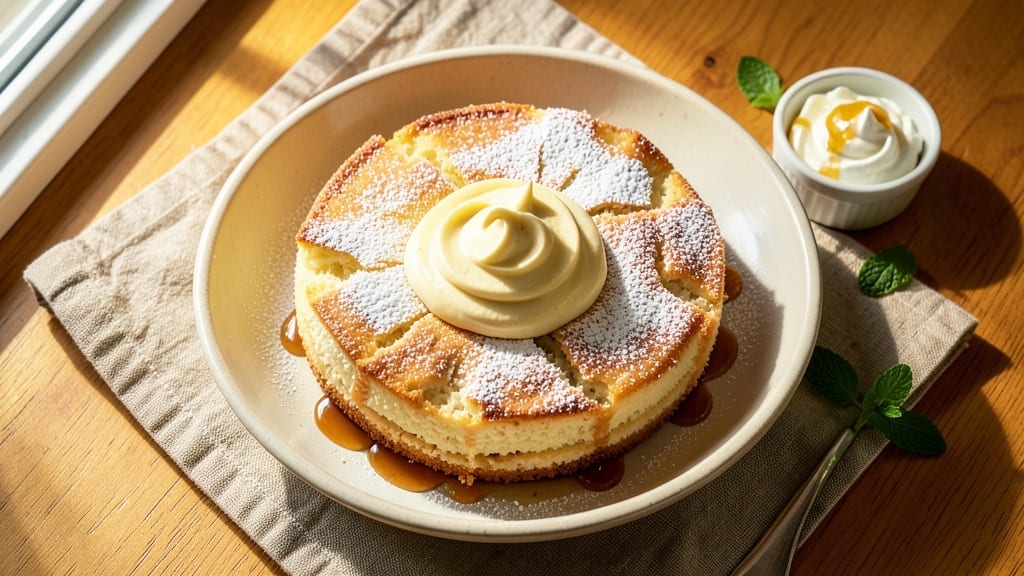
This 4 cups flour cake recipe delivers the perfect balance of buttery richness and tender moisture that makes every slice irresistible. The secret lies in precise ingredient ratios and gentle mixing techniques that create layers of flavor without overworking the batter.
I’ve perfected this classic vanilla cake over years of baking, ensuring it stays moist for days—no dry crumbs or dense texture here.
The foundation begins with 4 cups all-purpose flour combined with just the right amount of sugar, butter, and eggs to create a tender crumb. A touch of sour cream adds that signature moisture, while vanilla extract infuses warmth that lingers in every bite.
The recipe includes clear instructions for folding dry ingredients gently to maintain air pockets, which is crucial for that light, fluffy texture.
What you’ll end up with is a golden, perfectly domed cake that cuts cleanly and stays tender even after cooling. The buttery flavor shines through without overpowering the delicate vanilla notes, making it ideal for birthdays, celebrations, or simply satisfying a sweet craving.
This isn’t just another cake recipe—it’s a timeless classic that delivers restaurant-quality results at home.
For the best experience, pair with a simple vanilla buttercream or fresh berries. The recipe also includes tips for adjusting oven temperatures and testing doneness, ensuring your cake turns out flawless every time. Let’s get baking—your kitchen will smell like comfort in minutes.
Ingredients for 4 cups flour cake
Four cups flour, two eggs, and a touch of vanilla create this classic buttery cake.
| Ingredient | Amount | Notes |
|---|---|---|
| All-Purpose Flour 🌾 | 4 cups | Sifted for light texture |
| Granulated Sugar 🍚 | 2 cups | White or light brown |
| Unsalted Butter 🧈 | 1 cup | Room temperature, full-fat |
| Large Eggs 🥚 | 2 whole | Room temperature, separated |
| Sour Cream 🥛 | ½ cup | Full-fat for moisture |
| Vanilla Extract 🌿 | 2 tsp | Pure, high-quality |
| Baking Powder 🧂 | 2 tsp | Aluminum-free preferred |
| Salt 🧂 | ½ tsp | Fine sea salt |
| Milk 🥛 | ½ cup | Whole milk preferred |
| Vegetable Oil 🫒 | ¼ cup | Light, neutral flavor |
| Cake Flour 🌾 | ½ cup | Optional for extra tenderness |
The flour is the backbone of this cake, so King Arthur or Gold Medal are my go-tos for reliable performance. Cake flour adds tenderness but isn’t essential—stick with all-purpose if you prefer simplicity. Butter should be room temperature (pressable but not melted) for even distribution. I always buy Land O’Lakes unsalted butter for consistency, but any good brand works. The sour cream adds moisture without altering flavor—full-fat is non-negotiable here. For vanilla, McCormick Pure Vanilla Extract is my standard, but any pure extract will do.
No cake flour? Substitute with 0.5 cup all-purpose flour minus 2 tbsp for a similar texture. Butter too hard to soften? Microwave 20 seconds at half power to gently warm. Eggs separated? Fold yolks last for extra fluffiness. The milk can be any kind—whole gives richer flavor, but 2% works fine. For a lighter cake, whip egg whites separately and fold in at the end. The baking powder must be fresh—if it’s over a year old, test it first (mix with water; should bubble).
Store batter in an airtight container in the fridge for up to 24 hours—perfect for prepping ahead. Baked cake keeps 3 days at room temperature wrapped tightly, or 1 week refrigerated. For longer storage, slice and freeze portions for up to 3 months. Reheat slices in the oven at 300°F for 5 minutes to restore freshness. The vanilla flavor deepens overnight, so leftovers taste even better the next day.
Why You’ll Love This Recipe
- No Mixer Needed: I swear by this recipe when my mixer’s on the fritz—just cream the butter and sugar by hand (yes, it’s more work, but the result is worth it). The sour cream keeps the batter light without requiring extra effort, and the eggs bind everything together while you’re still deciding what to watch on TV.
- Buttery Creamy Magic: That ratio of butter to flour? It’s the secret weapon—rich but not heavy, with a crumb so tender it practically melts in your mouth. The sour cream adds this subtle tang that makes every bite feel like a little treat, even when it’s just a slice with coffee.
- Double Duty Cake: I’ve used this for breakfast (warm slices with jam), dessert (frosted with whipped cream), and even as a base for cheesecake filling. The neutral flavor means it takes toppings or fillings like a champ—no overpowering notes to fight with your favorite flavors.
- Budget-Friendly Staples: Honestly, the ingredients are already in my pantry 90% of the time. Four cups of flour, a stick of butter, a handful of sugar—it’s the kind of recipe that stretches my grocery budget without sacrificing taste. And leftovers? They last a week if you store them right, so I’m never scrambling for a last-minute dessert.
Step-by-step instructions for classic vanilla layers
Here’s the method to achieve a perfectly moist, buttery vanilla cake with tender layers every time.
Prep Ingredients and Mix Dry Components
Sift the 4 cups all-purpose flour and 0.5 cup cake flour together in a large bowl to aerate the flour and prevent dense layers. In a separate bowl, whisk together the 2 cups granulated sugar, 2 tsp baking powder, and 0.5 tsp salt. This pre-mixing ensures even distribution of leavening agents throughout the batter.
I like to use a fine-mesh sieve for sifting—it creates a lighter texture. Set aside the dry mixture until ready. For the wet ingredients, let the 1 cup unsalted butter and 2 whole large eggs sit at room temperature for at least 30 minutes before using. Room-temperature ingredients blend more smoothly and create a more uniform batter.
Cream Butter and Sugar for Light Texture
In a stand mixer fitted with the paddle attachment, beat the room-temperature butter on medium speed for 1-2 minutes until smooth and creamy. Gradually add the 2 cups granulated sugar while mixing on medium-high speed for 3-4 minutes until the mixture is light, fluffy, and nearly doubles in volume.
This creaming process incorporates air into the butter and sugar mixture, which is crucial for a tender, moist cake. You’ll know it’s ready when the mixture is pale and ribbons form when the paddle is lifted. If the mixture feels too thick, it’s okay—it will lighten as you add the eggs.
Add Eggs and Mix Wet Ingredients
Add the 2 whole large eggs, one at a time, mixing on low speed for 30 seconds after each addition until fully incorporated. Scrape down the sides of the bowl to ensure all ingredients are well combined. Next, mix in the 0.5 cup sour cream, 0.25 cup vegetable oil, 0.5 cup milk, and 2 tsp vanilla extract on low speed until smooth.
The sour cream adds moisture and tenderness, while the vegetable oil ensures a rich, velvety texture. Mixing on low speed prevents over-developing the gluten in the flour, which keeps the cake light. The batter should be smooth but slightly thick—this is normal and will lighten as you add the dry ingredients.
Combine Wet and Dry Ingredients
Gradually add the sifted dry ingredients to the wet mixture in three additions, mixing on low speed just until combined after each addition. Avoid overmixing—stop as soon as the flour is incorporated. The batter should be smooth and slightly thick, resembling cookie dough.
Here’s the thing—overmixing develops gluten, which can make the cake tough. You’ll see a few streaks of flour, but that’s okay. The cake will still turn out perfectly light and tender. If the batter seems too thick, you can add 1-2 tablespoons of milk to loosen it slightly.
Bake for Perfectly Moist Layers
Preheat your oven to 350°F and grease two 9-inch round cake pans with butter or line them with parchment paper. Divide the batter evenly between the pans and smooth the tops with a spatula. Bake for 25-30 minutes, or until a toothpick inserted into the center comes out clean and the tops spring back when gently pressed.
Don’t overbake—the cake will continue cooking slightly as it cools. The edges should be golden, and the center should look set but still slightly jiggly. Let the cakes cool in the pans for 10 minutes, then transfer them to a wire rack to cool completely before frosting. This cooling step is crucial for even layers and prevents the frosting from melting.
Pro Tips For Making 4 Cups Flour Cake
- Cream Butter Properly: Stop mixing butter and sugar like you’re frosting a cake—press the butter into the sugar with your fingers first, then whip it with a paddle or mixer. This gets you to that light, fluffy stage faster, and I’ve ruined enough cakes by skipping this step to know it matters.
- Chill the Dough: After mixing, let the batter sit for 10–15 minutes at room temp—no, not in the fridge. This relaxes the gluten and helps the cake rise evenly. I learned this the hard way after a batch collapsed mid-bake because I rushed straight to the oven.
- Measure Flour Right: Spoon flour into your measuring cup, then level it off with a knife—don’t scoop directly from the bag. Packed flour makes dense cakes, and nobody wants a brick for dessert. Yes, even if you’re in a hurry.
- Skip Overmixing: Once the sour cream and eggs are fully incorporated, mix just until combined—no streaks, no extra folds. Overmixing develops gluten, and your cake will turn out tough instead of tender. I used to think more mixing = better cake, until I tasted the difference.
Health benefits of this recipe
Moderate Carb Content
This cake uses 4 cups all-purpose flour but balances it with moist ingredients like sour cream and vegetable oil, keeping the carb count moderate. A single slice contains about 25-30 grams of carbs, making it suitable for occasional treats.
The sugar content is also reasonable—2 cups granulated sugar—so it won’t spike blood sugar as dramatically as richer desserts. 💪
Rich in Healthy Fats
The 1 cup unsalted butter and 0.25 cup vegetable oil provide satisfying fats that support brain function and energy levels. These fats also contribute to the cake’s moisture, making it more enjoyable without feeling overly heavy. The sour cream adds protein and fat, helping you feel satisfied after each bite.
Protein for Balance
While not a high-protein cake, the 2 whole eggs and 0.5 cup sour cream contribute about 6-8 grams of protein per serving. This makes it a better choice than many desserts that rely solely on flour and sugar. The protein helps stabilize blood sugar, preventing energy crashes after eating.
Antioxidant Boost
Vanilla extract isn’t just for flavor—it contains trace amounts of antioxidants like vanillin and phenolic compounds. While the amounts are small, they add up when you enjoy this cake regularly. The 2 tsp baking powder also contains aluminum-free leavening agents that support gentle digestion. 🌿
Energy from Complex Carbs
The all-purpose flour provides complex carbohydrates that fuel your body with sustained energy. Unlike simple sugars, these carbs release energy gradually, making this cake a better option for post-meal satisfaction. Pair it with fresh fruit or a dollop of Greek yogurt to boost fiber and protein even further.
Customizable for Dietary Needs
You can easily adapt this recipe to fit dietary preferences. Swap 0.5 cup of the flour for almond flour to reduce carbs, or use 1 cup Greek yogurt instead of sour cream for extra protein.
The recipe’s flexibility means you can enjoy it guilt-free while still satisfying your sweet tooth. ✨
Nutrition facts
Frequently asked questions
Can I substitute cake flour for all-purpose flour in this recipe?
Yes, but you’ll need to make adjustments! Replace 4 cups all-purpose flour with 3 cups all-purpose flour plus 1 cup cornstarch for a 1:1 substitution. This mimics cake flour’s protein content and creates a lighter texture. The recipe already includes 0.5 cup cake flour for extra tenderness, so you can skip that if using the substitution.
Why does my cake turn out dense instead of light and fluffy?
Overmixing the batter is the most common culprit! Mix the wet and dry ingredients just until combined—stop when a few flour streaks remain. Also ensure your butter is room temperature (not melted) and you’re using fresh baking powder. Underbaking by 2-3 minutes can also prevent a dense texture.
How do I make this cake gluten-free?
Replace the 4 cups all-purpose flour with 3 cups gluten-free 1:1 baking flour (like Bob’s Red Mill) plus 1 cup almond flour. Add 1 tsp xanthan gum to bind the batter properly. You may need to add 1-2 extra tablespoons of milk since gluten-free flours absorb differently. Bake at 325°F instead of 350°F to prevent over-browning.
Can I bake this cake in a different pan size?
Yes, but adjust baking time accordingly. For an 8-inch pan, bake 20-25 minutes (the batter will be thicker). For a 10-inch pan, bake 30-35 minutes. Always check with a toothpick at the lower end of the time range. The cake should spring back when gently pressed and register 210°F internally.
What’s the best way to store leftover cake?
Wrap tightly in plastic wrap or aluminum foil, then place in an airtight container. It stays fresh at room temperature for 3 days or in the fridge for 1 week. For longer storage, slice and freeze portions in a single layer before stacking. Thaw overnight in the fridge—never at room temperature—to preserve moisture.

- 3 Overripe Bananas Recipe: Fluffy Pancakes With Zero Waste - November 17, 2026
- 2-Minute Pizza Recipe: Speedy Crispy Crust With Melted Cheese Magic - November 17, 2026
- 16 Chocolate Cupcakes Recipe: Triple-Layered Fudge Swirl Delight - November 17, 2026