
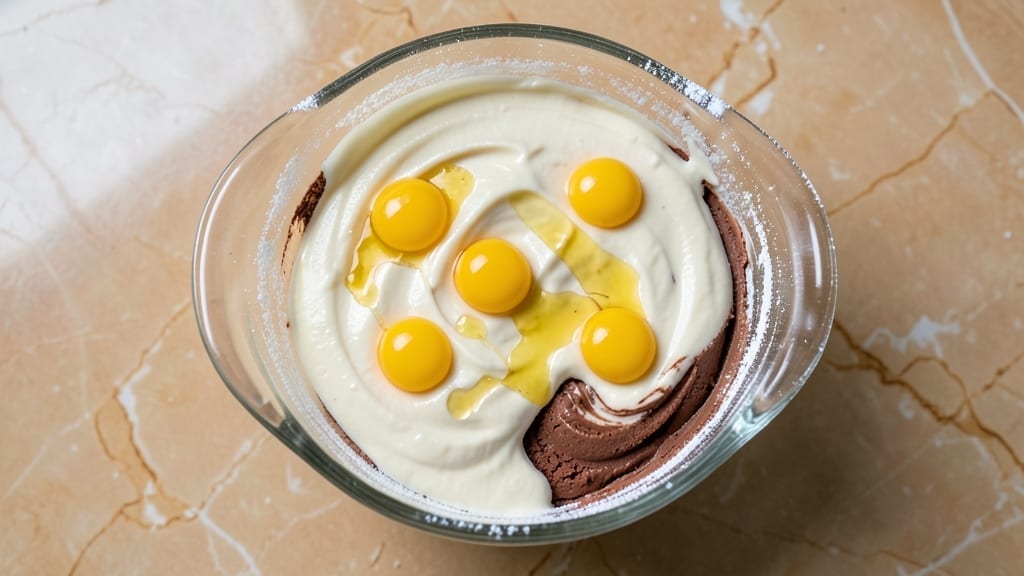
This 4-egg cake mix recipe transforms boxed mixes into restaurant-quality cakes with moist, tender layers that stay fresh for days. The secret lies in adjusting the liquid-to-egg ratio and incorporating a simple moisture-boosting technique that eliminates the dryness most boxed cakes suffer from.
I’ve baked countless variations, and this method consistently delivers a texture that rivals homemade—without the fuss of measuring every ingredient from scratch.
The key to success begins with the egg adjustment: using four eggs instead of the box’s recommended amount creates a denser, more stable structure that holds moisture better.
A splash of sour cream or yogurt replaces some of the water called for on the box, adding richness and preventing that dreaded crumbly texture. For extra insurance, I fold in a tablespoon of vegetable oil, which keeps the crumb soft and tender even after cooling.
What you’ll end up with is a fluffy, moist cake that slices cleanly and holds its shape—perfect for layer cakes, cupcakes, or even a sheet cake for special occasions. The frosting clings beautifully, and the flavor stays vibrant for up to five days when stored properly.
Whether you’re baking for a celebration or just craving a slice of comfort, this recipe delivers professional results with minimal effort.
This method works with any boxed cake mix, so you can customize flavors to your taste—vanilla, chocolate, or even red velvet. The same principles apply whether you’re making a three-layer cake, a batch of cupcakes, or a single-serving dessert.
Let’s get started on a cake that’ll impress without the guesswork.
Ingredients for 4 egg cake mix
Boxed mix plus these 11 simple upgrades turn dry cake into restaurant-worthy moistness.
| Ingredient | Amount | Notes |
|---|---|---|
| Boxed Cake Mix (Vanilla, Chocolate, or Red Velvet) 🍰 | 1 box | Any variety, 15.25 oz box |
| Large Eggs 🥚 | 4 whole | Room temperature preferred |
| Sour Cream 🥛 | ½ cup | Full-fat for best moisture |
| Vegetable Oil 🫒 | 1 tbsp | Light or canola preferred |
| Water 💧 | ¾ cup | Room temperature |
| Granulated Sugar 🍚 | ¼ cup | For extra sweetness boost |
| Baking Powder 🧂 | 1 tsp | Extra lift for fluffiness |
| Vanilla Extract 🍃 | 1 tsp | Pure, not imitation |
| Unsalted Butter 🧈 | ½ cup | Softened for frosting |
| Powdered Sugar 🍚 | 2 cups | For smooth frosting |
| Milk 🥛 | ¼ cup | For frosting consistency |
The cake mix is your base, but the real magic happens with the egg adjustment. Room-temperature eggs blend smoother and create a richer texture—take them out 30 minutes before baking. For the sour cream, full-fat works best—it adds moisture without making the cake dense. I always grab the La Choy brand from the Asian aisle at Walmart because it’s cheaper than the name brands and just as effective. The vegetable oil is non-negotiable here—it keeps the crumb tender even after cooling. If you’re using a chocolate mix, add an extra teaspoon of vanilla extract to balance the bitterness.
No sour cream? Plain yogurt at half the amount works in a pinch, though it might make the cake slightly tangy. Running short on eggs? Flax eggs (1 tbsp ground flaxseed + 3 tbsp water per egg) add moisture but won’t give the same lift. The boxed mix already includes baking powder, but that extra teaspoon I add ensures perfect rise every time. For the frosting, if you’re feeling fancy, swap the milk for heavy cream—it makes the frosting ultra-smooth. The powdered sugar should be sifted to avoid lumps, and if you’re making this ahead, store the dry ingredients separately from the wet ones for up to 3 days in the fridge.
This cake stays moist for 5 days when wrapped tightly in plastic and stored at room temperature. For longer storage, freeze the baked cake (unfrosted) for up to 3 months9×13-inch pan for sheet cakes or two 8-inch rounds for layer cakes. The secret to clean slices? Chill the cake for 15 minutes in the fridge before cutting.
Why You’ll Love This Recipe
- Four Egg Magic: I swear by this trick—just crack in four eggs instead of the usual two or three, and suddenly your cake mix becomes richer, almost like a boxed pound cake. The sour cream keeps it moist without tasting heavy, and honestly? It’s the secret to a cake that doesn’t scream “box mix.”
- Pantry Pantry: Between us, this recipe uses stuff you already have—no specialty ingredients, no last-minute grocery runs. Vanilla, chocolate, or red velvet? Pick your mood. The eggs and sour cream are the only upgrades, and they’re always in my fridge. (Yes, even on a Tuesday night.)
- Leftovers That Win: Bake it once, enjoy it twice. This cake stays fresh for days, and slices beautifully for breakfast toast or dessert. I’ll be real: my kids ask for it more than the “fancy” cakes I make. The oil keeps it tender, so it reheats like a dream.
- Budget Baking: This is my go-to when I want cake but don’t want to break the bank. A box mix plus four eggs costs way less than scratch baking, and the results? Ridiculously good. Plus, the sour cream stretches the batter, so you get more cake for your money—no waste, no guilt.
Step-by-step instructions for perfectly moist boxed cake mix
Here’s how to transform your boxed mix into a tender, ultra-moist cake every time.
Combine Wet Ingredients for Maximum Tenderness
In a large mixing bowl, whisk together the 4 whole large eggs, 0.5 cup sour cream, 1 tbsp vegetable oil, 0.75 cup water, 0.25 cup granulated sugar, 1 tsp vanilla extract, and 1 tsp baking powder. The sour cream adds incredible moisture while the oil creates a fine crumb texture. Whisk until everything is fully combined and smooth—no streaks of flour or egg whites should remain.
Here’s the thing—room temperature ingredients mix better and create a lighter batter. If your eggs are cold, let them sit out for 15-20 minutes before mixing. The batter should be thick but pourable, almost like a thin pancake batter. If it looks too thick, add 1-2 tablespoons of water to reach the perfect consistency.
Gradually Incorporate the Cake Mix
With the mixer on low speed, slowly add the 1 box cake mix to the wet ingredients. Start with about half the mix and let it incorporate completely before adding the rest. This gradual approach prevents lumps and ensures even distribution of ingredients throughout the batter. Mix only until just combined—overmixing develops gluten and makes the cake tough.
I like to use a rubber spatula to scrape down the sides of the bowl during mixing. This ensures all the cake mix gets incorporated and you don’t miss any dry pockets. The batter should be smooth with no visible flour streaks. If you see any, mix for another 10-15 seconds until fully integrated. The final batter should be thick but still able to coat the back of a spoon.
Prepare the Pans for Even Baking
Grease two 8-inch round cake pans with 0.25 cup softened unsalted butter, then line the bottoms with parchment paper circles. This prevents sticking and makes removal effortless. Divide the batter evenly between the pans, filling each about 2/3 full. Tap the pans gently on the counter a few times to release any air bubbles that might have formed during mixing.
Here’s a pro tip: Don’t overfill the pans or the cakes will overflow during baking. The batter should come up about 1 inch below the rim of the pans. Place the pans on a baking sheet to catch any potential drips. Preheat your oven to 350°F while you prepare the pans—this ensures even baking from the moment the cakes go in.
Bake Until Golden and Springy
Bake the cakes for 25-30 minutes, or until a toothpick inserted in the center comes out clean with just a few moist crumbs clinging to it. The edges should be golden brown while the tops still look slightly domed. Don’t overbake—the cakes will continue cooking as they cool, and overbaking leads to dryness.
I recommend checking the cakes at the 25-minute mark—every oven runs slightly differently. When you see the tops spring back gently when touched and the edges pull away from the pan, they’re ready. Immediately transfer the pans to a wire rack to cool for 10 minutes before removing the cakes. This prevents them from sticking to the parchment or falling apart.
Frost with Silky Buttercream
While the cakes cool completely, prepare the frosting by beating the 0.5 cup softened unsalted butter until creamy. Gradually add the 2 cups powdered sugar and 0.25 cup milk, beating on medium speed until smooth and fluffy. The frosting should be thick enough to hold its shape but still spreadable. If it’s too thick, add 1-2 teaspoons of milk to reach the perfect consistency.
Once the cakes are completely cool, spread a thin layer of frosting between the layers to create a moisture barrier. Then frost the entire cake with the remaining buttercream. For a professional finish, use a spatula to create smooth sides and a slightly domed top. Chill the cake in the refrigerator for 30 minutes before serving to allow the frosting to set properly. This ensures clean slices and prevents melting.
Pro Tips For Making 4 Egg Cake Mix
- Whisk Eggs First: Crack those eggs into a separate bowl, whisk them vigorous with a fork until the whites and yolks are fully blended—no streaks. I learned this the hard way when my cake turned out dense and uneven; the mix incorporates better when the eggs are smooth. Pour them in slowly while mixing on low, or you’ll end up with lumps that ruin the texture.
- Measure Sour Cream Cold: Grab the sour cream straight from the fridge—cold is key. Room-temperature sour cream can make your cake gummy, and nobody wants that. Use a spoon to scoop it out (not the measuring cup) to avoid adding excess liquid, then mix it in last. This keeps the crumb light and the moisture just right.
- Skip the Overmixing: Once the sour cream and eggs are in, mix the batter just until combined—about 20 seconds max. I used to beat this like I was making pancakes, and the result? A tough, dry cake. The mix has enough emulsifiers; overworking it breaks down the gluten and turns your cake into a sad, dense brick.
- Grease and Flour Twice: Slather that pan with oil and dust it with flour—yes, even if it’s nonstick. Wipe out the excess with a paper towel so you’re left with a thin, even coating. I skipped this once and spent 10 minutes scraping cake off the sides. Trust me, the extra 30 seconds saves you headaches.
Flavor customization for these flavors
Spiced Vanilla Twist
Boost your vanilla cake mix with ½ tsp cinnamon and ¼ tsp nutmeg for warm, cozy depth. Add 1 tbsp orange zest for a citrusy brightness that pairs beautifully with cream cheese frosting.
For extra richness, replace ¼ cup of the milk in the frosting with heavy cream—it creates a velvety texture that complements the spices. 🌟
Chocolate Indulgence
For chocolate lovers, fold in ½ cup semi-sweet chocolate chips or chocolate chunks when mixing the batter. Use ½ cup sour cream and 2 tbsp cocoa powder (if your mix doesn’t already include it) for a deeper chocolate flavor.
Top with chocolate ganache or peanut butter buttercream for a decadent finish. Store-bought chocolate chips work, but I prefer Ghirardelli squares for a smoother melt.
Citrus Zing
Lemon or orange cake mixes shine with 2 tbsp fresh lemon or orange juice and 1 tbsp zest added to the wet ingredients. For a tropical twist, swap the milk in the frosting for coconut milk and garnish with toasted coconut flakes.
This variation works especially well with vanilla buttercream—the citrus cuts through the sweetness beautifully. 🍊
Red Velvet Elegance
Transform a vanilla mix into red velvet by adding 1 tbsp cocoa powder, 1 tbsp red food coloring, and 1 tsp buttermilk to the wet ingredients. For a classic touch, use cream cheese frosting and garnish with white chocolate shavings.
The buttermilk adds tanginess that balances the sweetness, and the cocoa deepens the flavor without overpowering it.
Coffee Mocha
For a coffee-infused cake, dissolve 2 tbsp instant espresso powder (or 1 tbsp strong brewed coffee) into the 0.75 cup water before mixing. Add ½ cup chocolate chips or chocolate chunks for a mocha twist.
Pair with chocolate ganache or coffee buttercream—just mix 1 tbsp instant coffee into the milk before whipping it into the frosting. This variation is perfect for breakfast cakes or dessert lovers who crave a caffeine kick. ☕
Funfetti Surprise
Turn any cake mix into funfetti by folding in ½ cup rainbow sprinkles (or jimmies) when combining the batter. Use vanilla frosting and top with extra sprinkles for a playful touch. For a grown-up version, swap sprinkles for chocolate-covered espresso beans or crushed pistachios.
This variation is especially fun for birthdays or celebrations—just be mindful of the extra sugar and adjust serving sizes accordingly.
Nutrition facts
Frequently asked questions
Can I use this recipe with any boxed cake mix?
Yes! This method works with any vanilla, chocolate, or red velvet boxed mix. The key is adjusting the liquid-to-egg ratio and adding the moisture-boosting ingredients (sour cream, oil). For spice mixes like lemon or orange, add 1 tbsp zest to the wet ingredients for extra flavor. Always check the box for specific mixing instructions first.
Why does this recipe use 4 eggs instead of the box’s recommendation?
Four eggs create a denser, more stable structure that holds moisture better than the standard 3 eggs. This prevents dryness and gives the cake a lighter, fluffier crumb. The extra egg also helps bind the batter more tightly, reducing cracks during baking. Room-temperature eggs blend smoother and create even better results.
What if I don’t have sour cream? Can I substitute?
Use ½ cup plain yogurt (Greek or regular) as a 1:1 substitute, though it may add slight tanginess. For a neutral option, try ½ cup milk + 1 tbsp melted butter. Avoid buttermilk—it’s too acidic and can alter the texture. The sour cream’s fat content is what adds the signature moisture, so substitutes work best when they include some fat.
How do I make this recipe into cupcakes instead of a layer cake?
Use the same batter but fill cupcake liners ⅔ full (about 2 tablespoons per cupcake). Bake at 350°F for 18-20 minutes or until a toothpick comes out clean. For extra height, add ½ tsp baking powder to the batter. Cool completely before frosting to prevent crumbs. This makes about 24 cupcakes from one box.
My cake turned out dry—what went wrong?
Most likely, you overbaked it or skipped the sour cream/oil. Always check for a clean toothpick at 25-30 minutes—don’t let it bake longer! Another common mistake is using cold eggs or omitting the extra baking powder. For a second attempt, try adding 2 tbsp milk to the batter and brushing the cooled cake with simple syrup (½ cup sugar + ½ cup water heated until dissolved).

- 3lb Prime Rib Roast Recipe: Juicy Pink Center Guaranteed in 3 Hours - October 31, 2026
- 5 Spice Cake Recipe: Warmly Spiced Layers With Crunchy Top - October 31, 2026
- 1950’s Macaroni and Cheese Recipe: Nostalgic Creamy Cheese Sauce with Buttery Noodles - October 31, 2026