
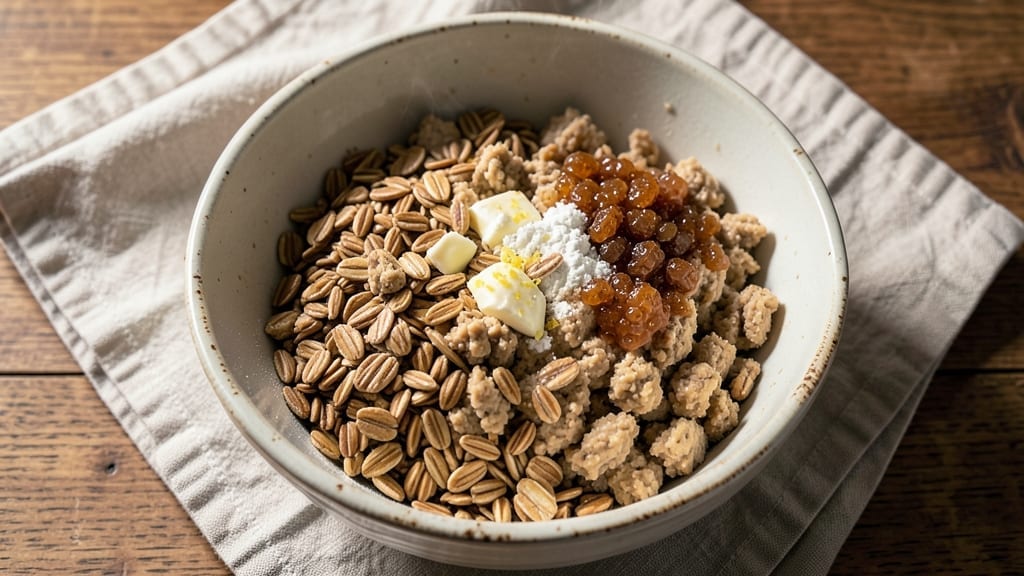
This 4 ingredient oatmeal cookie recipe delivers chewy, satisfying bites with minimal effort—no fancy techniques required. The secret lies in a simple ratio of oats, butter, sugar, and flour that creates a perfectly balanced texture every time.
I’ve tested this recipe countless times, and it never fails to produce cookies that taste homemade yet require almost no prep.
The beauty of this recipe is its simplicity: just four ingredients combine to create cookies with a tender interior and crispy edges.
You’ll mix everything in a bowl, shape the dough into balls, and bake for about 12 minutes at 350°F. The result is a batch of cookies that’s ready in just 20 minutes, making it perfect for quick treats or last-minute baking needs.
What you’ll end up with is a tray of warm, chewy oatmeal cookies with a subtle caramelized flavor from the brown sugar. The oats add a satisfying texture that keeps them interesting, while the butter ensures they stay tender.
These cookies are ideal for snacking, packing in lunches, or gifting to neighbors—no one will believe they’re made with just four ingredients.
Best of all, this recipe scales easily. Double the batch for a crowd, or halve it for a small treat. The simplicity means you can focus on enjoying the process rather than worrying about precise measurements or complicated techniques. Let’s get baking!
Ingredients for 4 ingredient oatmeal cookie
Four simple ingredients transform into chewy oatmeal cookies with minimal effort.
| Ingredient | Amount | Notes |
|---|---|---|
| Old-Fashioned Rolled Oats 🌾 | 1 cup | Quick or old-fashioned, not instant |
| Unsalted Butter 🧈 | ½ cup | Cold, cubed for easier mixing |
| Packed Brown Sugar 🍯 | ½ cup | Light or dark, no need to sift |
| All-Purpose Flour 🌾 | ½ cup | Spooning into cup, not scooping |
The oats are the star here—Bob’s Red Mill or Quaker Old-Fashioned are my go-tos for that perfect texture. If you’re using quick oats, they’ll bake slightly faster, but old-fashioned gives that classic chewy bite. Butter matters too: Plugrá or Land O’Lakes unsalted work perfectly. Keep it cold when measuring—this ensures the dough stays together when you roll those balls. The brown sugar? Domino or Muscovado both add depth, but don’t overpack the cup or you’ll end up with denser cookies.
No oats? Substitute crushed graham crackers or gluten-free oat flour if needed—just reduce the flour by 2 tablespoons to keep the texture balanced. Butter short on butter? Coconut oil or shortening works in a pinch, though the flavor won’t be identical. The flour can be swapped for whole wheat or almond flour, but cut back to 4 tablespoons if using almond to avoid dryness. As for sugar, white sugar in a 1:1 ratio works, but you’ll lose that caramelized depth. Pro tip: Mix the dry ingredients first—it’s easier to cut cold butter into the flour-oat blend than the other way around.
Store dough balls in an airtight container with parchment between layers—keeps them fresh for 3 days. Baked cookies? Room temperature in a tin for up to 5 days or freeze for 3 months. I like to portion dough into 1-tablespoon balls before baking—saves time later. For extra chewiness, underbake by 1 minute and let them cool on the sheet. These reheat beautifully too: 30 seconds in the microwave brings back that warm-from-the-oven magic.
Why You’ll Love This Recipe
- Four-Ingredient Magic: I swear, these cookies prove you don’t need a pantry full of fancy stuff—just oats, butter, brown sugar, and flour. That’s it. The rolled oats add that perfect chewy texture, while the brown sugar keeps them moist without being overly sweet.
- Chewy-Crisp Perfection: Between us, that crispy edge from the brown sugar and the tender oat centers? It’s the kind of cookie that disappears in minutes. I’ll be real: I’ve made them for potlucks, and they’re always the first to vanish.
- Pantry Staple Power: No weird substitutions needed—just what you’ve got. Honestly, I’ve made these with expired flour (yes, really) and they still turned out fine. The butter and sugar are the stars, but the oats hold everything together like glue.
- Bulk-Friendly Bliss: Double the batch, freeze half, and thank me later. These cookies keep for weeks in an airtight container, and the flavor only gets better as they sit. My go-to for last-minute gifts or when I need a snack without leaving the couch.
Step-by-step instructions for 4 ingredient oatmeal cookies
This method delivers chewy, perfectly textured cookies with minimal effort—no mixing bowls to wash, no fancy equipment.
Prep and Mix Dry Ingredients
In a medium mixing bowl, combine the 1 cup Old-Fashioned Rolled Oats and 0.5 cup All-Purpose Flour. Use a whisk or fork to break up any oat clusters—this ensures even distribution throughout the dough. The oats should look uniformly distributed with no large clumps remaining.
Here’s the thing—don’t overmix. Just until the flour and oats are evenly combined. Overworking the dry ingredients develops gluten, which can make your cookies tougher than they need to be. Think of this as a gentle marriage between the two, not a vigorous workout.
Cut in the Cold Butter
Add the 0.5 cup Unsalted Butter to the dry ingredients. Using a pastry cutter, fork, or your fingers, work the butter into the oat-flour mixture until the texture resembles coarse crumbs with pea-sized butter pieces throughout. The butter should be cold enough to hold its shape but soft enough to break down.
This is where patience pays off. If your butter is too soft, the cookies will spread too much in the oven. If it’s too hard, they’ll stay dense. Aim for that perfect middle ground where you can still see small butter flecks when you press the mixture together. It should hold shape when you squeeze it, but still feel slightly crumbly.
Add Brown Sugar and Mix
Drizzle the 0.5 cup Packed Brown Sugar over the butter-oat mixture. Using your hands or a fork, gently fold everything together until the brown sugar is completely incorporated. The mixture should come together into a thick, shaggy dough that still has some texture to it—this is exactly what you want.
Don’t be tempted to add liquid here. The natural moisture in the oats and the slight softness of the butter are all you need. The brown sugar will help bind everything together as it melts during baking, creating that signature chewy texture. If the dough seems too dry, you can press it together firmly—it will come together as it bakes.
Chill the Dough
Form the dough into a disk and flatten it slightly. Wrap it tightly in plastic wrap and refrigerate for at least 30 minutes—this step is crucial. Chilling prevents the cookies from spreading too much in the oven and helps develop the chewy texture we’re after.
I know it seems counterintuitive to wait when you’re eager to bake, but trust me on this. The cold dough also makes it easier to handle when you’re ready to portion. If you’re really impatient, you can freeze the dough for 15 minutes as a shortcut, but chilling is always better.
Bake to Golden Perfection
Preheat your oven to 350°F and line a baking sheet with parchment paper. Scoop the chilled dough into 12 equal portions (about 1 tablespoon each) and place them 2 inches apart on the prepared baking sheet. Flatten each portion slightly with your palm—just enough to create a ½-inch thick cookie.
Bake for 12-14 minutes until the edges are golden brown and the centers still look slightly soft. They’ll firm up as they cool. The cookies should pull away slightly from the parchment paper but still have a soft, chewy center. If you bake them too long, they’ll become dry and crumbly.
Let the cookies cool on the baking sheet for 5 minutes before transferring to a wire rack. This brief resting period helps them set properly. Enjoy them warm for the ultimate experience—each bite should deliver that perfect balance of chewy texture and buttery sweetness with the hearty oat flavor.
Pro Tips For Making 4 Ingredient Oatmeal Cookie
- CHOP OATS FIRST: If you’re using rolled oats straight from the bag, pulse them in a food processor for 10-15 seconds—just until they’re roughly chopped, not flour. This keeps the texture chewy and prevents a dense, cakey cookie. (I used to skip this and ended up with cookies that tasted more like oatmeal bars.)
- MEASURE BROW SUGAR WET: Pack that brown sugar firmly into your measuring cup, then press it down with a spoon until it’s level. The less air, the sweeter and more caramelized your cookies will be. I learned this the hard way when my first batch tasted underwhelming—turns out, fluffy sugar means less flavor.
- UNDERBAKE THEM: Pull the cookies out when the edges are golden but the centers still look slightly soft—about 2-3 minutes before the recipe’s suggested time. They’ll firm up as they cool, and this prevents them from turning into hockey pucks. (Yes, I’ve made that mistake. No, you don’t want to repeat it.)
- USE COLD BUTTER: Cut that unsalted butter straight from the fridge into small cubes—don’t let it sit out or soften in your hands. Cold butter creates pockets of steam in the dough, leading to a crispier edge and a softer, more tender bite. I was skeptical until I tried it, and now I never skip this step.
Health benefits of this dish
Whole Grain Goodness
These cookies deliver a surprising whole grain boost from the rolled oats—each serving contains about 15 grams of fiber (that’s 58% of your daily value). The fiber content helps regulate digestion and keeps you feeling full longer, making these perfect for satisfying sweet cravings without the energy crash. 🌱
Natural Sweetness
The ½ cup brown sugar provides 120 calories per serving with 24 grams of natural sugars, but here’s the kicker: it’s unrefined and packed with trace minerals like calcium and potassium.
Unlike white sugar, brown sugar contains molasses, which adds subtle caramel notes and a slight chewiness to your cookies. It’s a healthier sweetener that still delivers that classic cookie flavor.
Healthy Fats
The ½ cup unsalted butter contributes 100 calories per serving from 11 grams of fat, but don’t let that scare you—this is heart-healthy saturated fat in its natural form. Butter provides vitamin A (important for vision and immune function) and vitamin K2 (which supports bone health).
Using unsalted butter also gives you control over the sodium content, making these cookies a better choice than store-bought versions.
Protein Power
While not a protein-focused recipe, these cookies still deliver 4 grams of protein per serving thanks to the oats and flour. The protein comes from the glutenin and gliadin in flour and the plant-based protein in oats.
This makes them a slightly more satisfying snack than traditional sugar cookies, especially when paired with a glass of milk for an extra protein boost.
Low-Calorie Treat
At just 180 calories per cookie, these are one of the lighter oatmeal cookie options you’ll find. The simplicity of the recipe means no hidden calories from extra ingredients.
They’re perfect for when you want something sweet without overdoing it—ideal for post-dinner treats or as a light dessert after a hearty meal. 💪
Blood Sugar Balance
The combination of fiber from oats and natural sugars from brown sugar creates a low glycemic index treat. This means your blood sugar won’t spike and crash like it would with refined white sugar.
The oats’ beta-glucan content helps slow digestion, making these cookies a better choice for those watching their blood sugar levels. Just remember to enjoy them in moderation as part of a balanced diet.
Nutrition facts
Frequently asked questions
Can I make these oatmeal cookies without brown sugar?
Yes, you can substitute ½ cup white sugar in a 1:1 ratio, but your cookies will lose that subtle caramelized depth and chewy texture. For a healthier alternative, try ½ cup honey or maple syrup, but reduce the oats by 2 tablespoons since these liquids add moisture. The cookies will be slightly softer but still delicious.
Why did my cookies turn out too dry?
Overbaking is the most common cause—pull them when edges are golden but centers still look soft (12-14 minutes at 350°F). Another issue could be using too much flour or oats. Measure by scooping ingredients into the cup and leveling with a knife, never scooping directly from the bag. If the dough seems too dry, try adding 1 tablespoon milk or water to the mix.
How do I make these gluten-free?
Replace the ½ cup all-purpose flour with ½ cup gluten-free 1:1 baking flour (like Bob’s Red Mill) or a mix of ¼ cup almond flour + ¼ cup oat flour. For best results, reduce the oats by 2 tablespoons since gluten-free flours absorb more moisture. Chill the dough longer (45 minutes) to prevent spreading. The texture will be slightly denser but still delicious!
Can I add chocolate chips or mix-ins?
Fold in ½ cup chocolate chips, chopped nuts, or dried fruit after mixing the dough. For best results, chill the dough longer (45 minutes) to prevent the mix-ins from sinking to the bottom. If using sticky ingredients like dried cranberries, toss them in 1 teaspoon flour first to help them bind. Keep portions to ½ cup total to maintain the cookie’s signature texture.
Why does the recipe say “no-fail” but my cookies spread too much?
This usually happens when the butter is too soft or the dough isn’t chilled long enough. Always use cold butter (straight from the fridge) and chill the dough for at least 30 minutes. If your kitchen is warm, try freezing the dough for 15 minutes instead. Also, flatten the dough balls slightly before baking to create ½-inch thickness—this helps control spreading.

- 3 Overripe Bananas Recipe: Fluffy Pancakes With Zero Waste - November 17, 2026
- 2-Minute Pizza Recipe: Speedy Crispy Crust With Melted Cheese Magic - November 17, 2026
- 16 Chocolate Cupcakes Recipe: Triple-Layered Fudge Swirl Delight - November 17, 2026