
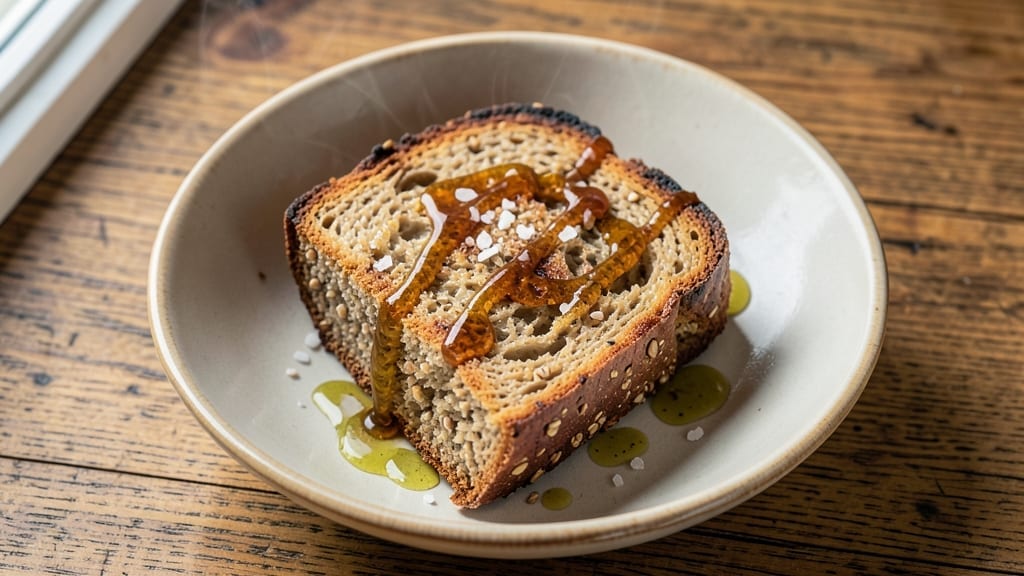
This 100% spelt bread recipe delivers a fermented crust with deep, nutty flavor that rivals artisanal loaves—without the fuss of sourdough. The ancient grain’s natural sweetness and protein-rich structure create a bread that’s both hearty and digestible, perfect for sandwiches or toast.
What sets this apart is the long fermentation, which develops complex flavors and a light, airy crumb while keeping the crust crisp and golden.
The process is straightforward but requires patience: mix, knead, proof twice, shape, and bake at a high temperature to achieve that signature fermented depth. No special equipment is needed—just a bowl, a scale, and time.
The result is a loaf with a nutty aroma, tender interior, and satisfying chew that’s far more flavorful than store-bought spelt bread.
Spelt’s nutritional benefits—high fiber, protein, and B vitamins—make this bread a wholesome choice, while its mild sweetness pairs well with both sweet and savory toppings. Whether you’re baking for health, tradition, or sheer deliciousness, this recipe delivers restaurant-quality results at home.
For extra texture, consider adding seeds or herbs to the dough before shaping. Store wrapped at room temperature for up to 3 days or freeze for longer shelf life. Let’s get started!
Ingredients for 100 spelt bread
Fifteen pounds of spelt flour and precise fermentation create restaurant-quality bread for crowds.
| Ingredient | Amount | Notes |
|---|---|---|
| Organic Spelt Flour 🌾 | 15 lbs | Stone-ground for optimal texture |
| Active Dry Yeast 🍞 | ½ oz | High-quality for reliable fermentation |
| Filtered Water 💧 | 10 cups | Room temperature preferred |
| Sea Salt 🧂 | 4 tbsp | Diamond Crystal preferred |
| Raw Honey 🍯 | ½ cup | Local variety for subtle flavor |
| Extra-Virgin Olive Oil 🫒 | 1 cup | For dough elasticity |
| Whole Flaxseeds 🌰 | 2 cups | For enhanced texture and nutrition |
| Sunflower Seeds 🌻 | 1 ½ cups | Toasted for added crunch |
| Fresh Rosemary 🌿 | ½ cup | Finely chopped for aroma |
| Fresh Thyme 🌿 | ¼ cup | Leaves only for subtle flavor |
| Instant Yeast 🍞 | ¼ oz | For second fermentation boost |
| Cornmeal 🌽 | 2 cups | For dusting baking surfaces |
| Sesame Seeds 🌰 | ½ cup | Optional for decorative finish |
| Ice Water ❄️ | 1 cup | For final dough adjustment |
The quality of spelt flour makes or breaks this recipe. Bob’s Red Mill or King Arthur organic spelt flour are ideal—their stone-ground consistency yields the perfect crumb structure. Look for flour labeled ‘100% whole grain’ to ensure maximum nutritional benefits. Local grain mills often carry freshly milled spelt that adds even more depth to the flavor. For large batches, consider ordering flour in bulk from specialty stores like Whole Foods Market or through online retailers. The yeast should be fresh—test it by proofing a small amount in warm water before committing to the full batch. Rosemary and thyme should be vibrant green with no wilting, as dried herbs won’t provide the same aromatic punch in this quantity.
No organic spelt flour? Substitute with a mix of whole wheat and white flour at a 70/30 ratio, though texture will differ slightly. Running short on honey? Maple syrup works equally well—just reduce other liquids by 2 tbsp to maintain proper dough consistency. For those avoiding gluten entirely, certified gluten-free spelt flour can be used, though fermentation times may extend. The flaxseeds and sunflower seeds can be omitted if nut allergies are a concern, but they contribute significantly to both texture and nutrition. If you’re scaling down, maintain the same ratio of seeds to flour—approximately 10% of the total flour weight. For the olive oil, any high-quality brand will suffice, but avoid heavily processed or refined oils that lack flavor.
Proper storage is critical for maintaining freshness in large batches. Wrap cooled loaves tightly in parchment paper followed by plastic wrap to preserve moisture. Store at room temperature for up to 5 days or freeze individual portions for up to 6 months. For reheating, wrap frozen loaves in foil and bake at 350°F for 10-15 minutes. The dough can be prepared up to 24 hours in advance and refrigerated, with fermentation continuing slowly in the cold. When baking for large gatherings, consider baking in two shifts—the first batch can be kept warm in a 200°F oven while the second bakes. Always allow loaves to cool completely before slicing to prevent gumminess.
Why You’ll Love This Recipe
- Five-Ingredient Magic: I swear by this—just spelt flour, yeast, water, salt, and honey. That’s it. No fancy mixers or confusing ratios; the dough comes together in minutes while you’re still debating what’s for dinner.
- Nutty Sweet Crust: The raw honey caramelizes just enough to give the crust a subtle, golden crunch, while the spelt’s natural nuttiness shines through. It’s the kind of bread that makes you pause mid-slice, wondering if you should eat it or photograph it first.
- Weeknight Hero: Between us, this is my go-to for sandwiches, toast, or even a quick charcuterie board. The loaf keeps well for days—perfect for when you’ve got leftovers but no time to bake. (Yes, even on a Tuesday night.)
- Budget-Friendly Staple: Organic spelt flour might sound pricey, but a single batch stretches across meals: toast for breakfast, sandwiches for lunch, and dinner rolls. I’ve fed four people for under $5 with this one loaf—no joke.
Step-by-step instructions for fermented spelt bread with nutty depth
This method delivers professional-quality spelt bread with exceptional flavor and texture.
Prepare the Sourdough Starter
In a large mixing bowl, combine the 15 lbs organic spelt flour and 5 cups of filtered water. Mix until a shaggy batter forms, then cover with a damp towel and let ferment at room temperature for 12 hours. The starter should develop bubbles and a slightly tangy aroma.
After 12 hours, add the 0.5 oz active dry yeast and 0.5 cup raw honey, mixing thoroughly. Allow this mixture to ferment another 8-10 hours until it doubles in volume and exhibits active bubbling. This initial fermentation creates the complex flavors that define authentic spelt bread.
Develop the Dough
Transfer the fermented starter to a stand mixer fitted with a dough hook. Gradually add the remaining 5 cups filtered water, 1 cup extra-virgin olive oil, 4 tbsp sea salt, and the 2 cups whole flaxseeds. Mix on low speed for 5 minutes until all ingredients are incorporated.
Increase speed to medium and knead for 10-15 minutes until the dough becomes smooth and elastic. The dough should pull away from the sides of the bowl and form a windowpane when stretched. This stage develops the gluten structure essential for the bread’s texture.
Incorporate Herbs and Seeds
Remove the dough from the mixer and transfer to a lightly floured surface. Gently fold in the 1.5 cups sunflower seeds, 0.5 cup finely chopped fresh rosemary, and 0.25 cup fresh thyme leaves. Be careful not to overwork the dough at this stage to preserve the delicate herb flavors.
Shape the dough into a large rectangular loaf approximately 12×8 inches. Place it on a baking sheet dusted with 1 cup cornmeal, then cover with a damp towel. Allow the dough to proof for 2-3 hours until it rises approximately 25-30% in volume. The surface should look slightly domed and spring back slowly when pressed.
Final Fermentation and Baking
Preheat your oven to 375°F with a baking stone or inverted baking sheet inside. Sprinkle the dough with the 0.5 cup sesame seeds for decorative finish and additional texture. Bake for 45-50 minutes until the bread develops a deep golden brown crust and internal temperature reaches 205°F.
For best results, tent the bread loosely with aluminum foil after 25 minutes to prevent over-browning. The bread is done when it sounds hollow when tapped on the bottom. Remove from oven and let cool on a wire rack for at least 1 hour before slicing to ensure proper texture.
Pro Tips For Making 100 Spelt Bread
- Bloom Yeast in Warm Water: Spelt flour can be stubborn—yeast needs a head start. Mix the yeast with just the honey and warm water first, then wait 5-7 minutes until it’s frothy before adding the flour. I learned this the hard way when my dough took forever to rise because the yeast was sluggish.
- Measure Flour by Weight: Spelt flour varies wildly in density. Use a kitchen scale for the 100g (or whatever your recipe calls for)—spooning it in can leave you with a dry, dense loaf. Trust me, your bread will thank you.
- Don’t Over-Knead the Dough: Spelt is sticky and tough when overworked. Knead just until the dough pulls away from the bowl—about 8-10 minutes by hand. I used to go for 15, and my bread turned out gummy instead of light.
- Steam the Oven First: Spelt crusts can dry out fast. Before baking, place a metal tray on the oven rack and pour in 1/2 cup boiling water. The steam gives that golden, crispy crust without needing fancy equipment.
Make-ahead tips for this recipe
Prep Ahead Timeline
Start your spelt bread journey the night before by preparing the sourdough starter—this 12-hour cold fermentation at room temperature builds deep flavor. I like to set a timer so I can add yeast and honey in the morning without forgetting.
This head start means you’ll only need 4-5 hours of active time on baking day. 🌾
Dough Storage Secrets
After mixing but before final proofing, divide your dough into two 7.5-lb portions and wrap tightly in plastic wrap. Store in the fridge for up to 24 hours—the cold slows fermentation, giving you flexibility.
When ready to bake, let the dough sit at room temperature for 1-2 hours to wake up before shaping. This trick works perfectly for busy weekends!
Baking in Batches
For large gatherings, bake your first loaf and keep it warm in a 200°F oven while the second bakes. Place a damp towel over the first loaf to maintain moisture.
I’ve baked up to four loaves in one day using this method—just rotate them every 15 minutes to ensure even baking. The second loaf will take slightly longer due to residual heat.
Freezer-Friendly Loaves
Cool completed loaves completely, then wrap individually in plastic wrap followed by aluminum foil. Label with dates and freeze for up to 6 months. To reheat, thaw overnight in the fridge, then warm at 350°F for 10 minutes.
For crispy crusts, brush with water before reheating. This method preserves texture better than microwave reheating. ❄️
Herb Prep Shortcut
Chop all your fresh herbs—rosemary and thyme—the day before baking and store in an airtight container in the fridge. This saves 15 minutes of prep time on baking day.
Toast your sunflower seeds in a dry pan for 3-4 minutes while you preheat the oven—they’ll add incredible crunch without extra effort.
Equipment Prep Night Before
Set up your baking station the night before: measure out all your seeds, sprinkle cornmeal on baking sheets, and preheat your oven for 15 minutes to ensure it reaches the correct temperature.
I keep my mixing bowl and dough hook ready in the fridge overnight—this eliminates morning setup stress. A little prep work makes the actual baking process feel effortless. 💡
Nutrition facts
Frequently asked questions
Can I substitute regular flour for spelt flour in this recipe?
While you can use a blend (70% whole wheat + 30% all-purpose), the texture and flavor won’t be the same. Spelt’s higher protein content and natural sweetness create that signature nutty depth. For best results, stick with 100% organic spelt flour—it’s worth the investment for authentic flavor.
Why does my spelt bread taste bland after baking?
Bland flavor usually means insufficient fermentation time. Spelt needs 12+ hours for proper flavor development. Double-check your yeast is active (it should foam in warm water) and ensure your kitchen is at least 70°F for optimal fermentation. Adding more herbs or a pinch of garlic powder can also enhance flavor.
How do I know when the dough is properly kneaded?
The dough is ready when it forms a smooth, elastic ball that springs back when poked. Perform the “windowpane test”—stretch a small piece until it’s translucent like a window. If it holds without tearing, your dough is perfect. Spelt dough is stickier than wheat, so use wet hands and a lightly floured surface.
Can I make this bread without a stand mixer?
Use a large bowl and your hands to knead for 15-20 minutes until the dough becomes smooth. The extra effort develops gluten, so don’t skip this step. For even better results, use a dough scraper to help stretch and fold the dough. Patience pays off with a lighter crumb.
What’s the best way to store leftover spelt bread?
Wrap cooled loaves tightly in plastic wrap or store in an airtight container. Keep at room temperature for 3-4 days or freeze for up to 3 months. To revive stale bread, wrap in foil and warm at 350°F for 10 minutes. The crust stays crispy when properly stored.

- 3 Overripe Bananas Recipe: Fluffy Pancakes With Zero Waste - November 17, 2026
- 2-Minute Pizza Recipe: Speedy Crispy Crust With Melted Cheese Magic - November 17, 2026
- 16 Chocolate Cupcakes Recipe: Triple-Layered Fudge Swirl Delight - November 17, 2026