
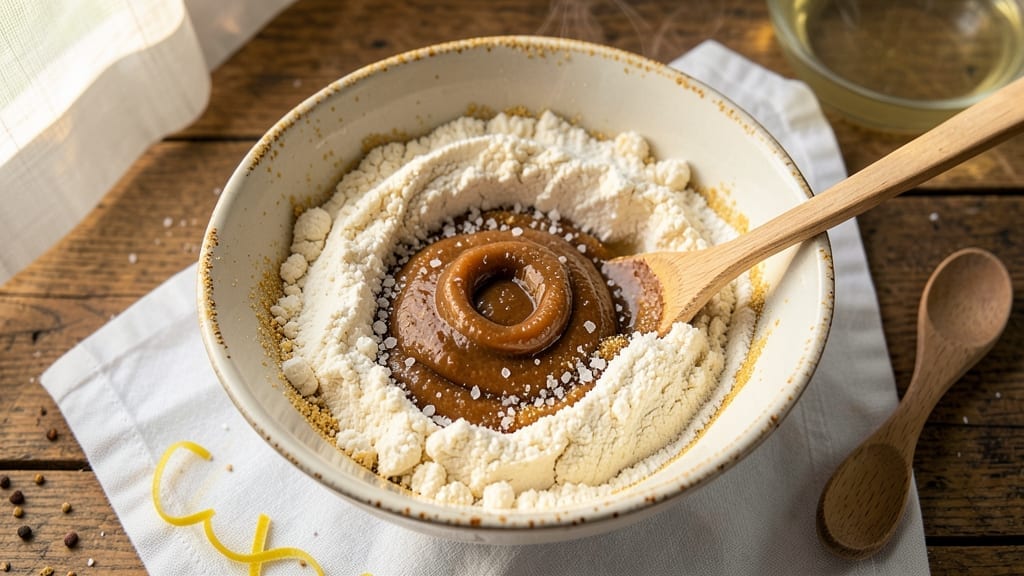
This 4-ingredient sourdough bread recipe proves you don’t need complicated methods to bake restaurant-quality loaves at home. With just flour, water, salt, and a starter (or instant yeast), you’ll create a crusty, artisanal loaf in under 2 hours—no kneading required.
The secret lies in proper fermentation and baking techniques that develop deep flavor and an open crumb structure without the fuss of traditional sourdough.
What makes this recipe work is its focus on timing and temperature—the dough ferments at room temperature while you prepare, then bakes in a preheated Dutch oven for maximum crispiness.
This no-knead approach transforms simple ingredients into bread with a golden crust and airy interior, perfect for sandwiches, toast, or serving alongside soups. The process is straightforward but requires patience, as fermentation builds the bread’s signature tang and texture.
By the time you pull that loaf from the oven, you’ll have a crusty, flavorful sourdough that rivals what you’d find in a bakery—all made with just four ingredients. The key steps include mixing, bulk fermentation, shaping, proofing, and baking at high heat to create that coveted crust.
This method is ideal for beginners but delivers results that even experienced bakers will appreciate.
The beauty of this recipe is its versatility and simplicity. Use it for everyday meals or impress guests with a homemade loaf that tastes like it came from a specialty bakery. Once you master this technique, you’ll never buy store-bought sourdough again. Let’s get started on your first loaf!
Ingredients for 4 ingredient sourdough bread
Four simple ingredients transform into a restaurant-worthy loaf with just time and patience.
| Ingredient | Amount | Notes |
|---|---|---|
| Bread Flour 🌾 | 3 ½ cups | High-protein for structure (12-14% protein) |
| Active Sourdough Starter 🍞 | ½ cup | Unfed, bubbly starter (1:1:1 ratio) |
| Warm Water 💧 | 1 ½ cups | 90-95°F for optimal hydration |
| Kosher Salt 🧂 | 1 ½ tsp | Diamond Crystal preferred (1:1 ratio) |
| Instant Yeast 🍞 | ¼ tsp | Optional backup (if no starter) |
| Cornmeal 🌽 | ¼ cup | For dusting Dutch oven |
The flour is non-negotiable—King Arthur or Caputo bread flour deliver the best texture, but King Arthur all-purpose works in a pinch. Your starter needs to be active (bubbly, doubled in 4-6 hours)—if it’s sluggish, feed it 1:1:1 (flour:water:starter) 2 hours before using. Whole Foods or specialty bakeries often carry high-quality bread flour, but King Arthur’s website ships nationwide. For the yeast backup, Bob’s Red Mill instant yeast is my go-to—it’s reliable and shelf-stable for months. The salt? Diamond Crystal dissolves slower, so use it if you prefer more control over flavor development.
No sourdough starter? Instant yeast at 0.25 tsp gives you a 1-ingredient backup—just skip the starter entirely. Swapping flours? Bread flour substitutes (all-purpose + 2 tbsp vital wheat gluten) work, but texture suffers. The warm water should be 90-95°F—too hot kills yeast, too cold slows fermentation. If you’re short on time, reduce fermentation to 4 hours (but flavor will be milder). The cornmeal is optional but creates that perfect crust—semolina works too if you’re out.
Mix everything at room temperature for best hydration. The dough will look shaggy—that’s normal. Cover with a damp towel and let it ferment 8-12 hours at room temp (longer = more flavor). Shape gently, proof 1 hour, then bake in a preheated Dutch oven at 450°F for 30 minutes. Store wrapped at room temp 3-4 days, or freeze for 3 months. The crust gets crunchier as it cools—toast it fresh for maximum crunch.
Why You’ll Love This Recipe
- I’ll be real: this is the kind of dough you can toss together with one hand while stirring a pot of pasta. Just flour, starter, water, salt, and a pinch of yeast—no measuring cups, no stress.
- No-Fuss Mixing: I’ll be real: this is the kind of dough you can toss together with one hand while stirring a pot of pasta. Just flour, starter, water, salt, and a pinch of yeast—no measuring cups, no stress.
- Tangy Crust, Soft Core: That crispy, flavorful crust with a pillowy interior? It’s all in the sourdough starter’s magic. The salt and yeast work together to give it a depth that store-bought bread can’t touch.
- Weeknight Wonder: Pull it out for dinner, pack it for lunch, or freeze slices for toast next month. It’s the kind of bread that disappears fast—whether you’re feeding a crowd or just me and my coffee.
Step-by-step instructions for no-knead sourdough bread
Here’s how to transform four simple ingredients into a rustic, crusty loaf with minimal effort.
Mix the Dough with Minimal Handling
In a large mixing bowl, combine the 3.5 cups bread flour and 1.5 tsp kosher salt. Create a well in the center and add the 0.5 cup active sourdough starter and 1.5 cups warm water (around 90-95°F). Gently stir with a wooden spoon until just combined—you’ll see dry patches, and that’s okay.
Now, add the 0.25 tsp instant yeast and mix again, just until the flour is fully incorporated. The dough will be shaggy and sticky, but resist the urge to overwork it. The high hydration from the starter creates a wetter dough than traditional bread, and that’s exactly what we want for that open crumb structure. Let it rest for 30 minutes at room temperature while you prepare your Dutch oven.
Prepare the Dutch Oven for Maximum Crust
Place a 0.25 cup cornmeal in the bottom of a 5-quart Dutch oven. This creates a nonstick layer that prevents the dough from sticking during the bake. Preheat your oven to 450°F with the Dutch oven inside for 30 minutes. The hot oven and preheated pot are crucial for developing that signature sourdough crust.
While the oven preheats, give the dough one final gentle stir. It should still look wet and unformed—this is normal. The magic happens during the long fermentation, not in handling. Cover the bowl loosely with plastic wrap or a damp towel and let it rest in a warm place (75-80°F is ideal) for 12-16 hours. You’ll know it’s ready when it’s nearly doubled in size and has a slight jiggle when shaken gently.
Shape and Score for Professional Results
After fermentation, the dough will be puffy and bubbly. Using a wet spatula or your hands (floured lightly if needed), gently fold the dough over itself 2-3 times to develop surface tension. This step helps create that signature sourdough texture without kneading. Transfer the dough to a floured surface and shape it into a round boule by pulling the edges toward the center.
Carefully lift the dough into the preheated Dutch oven using a piece of parchment paper. Score the top with a sharp razor or serrated knife by making a ½-inch deep cross in the center. This prevents over-expansion and gives the bread its classic look. The steam from the hot pot will create that perfect oven spring when you bake.
Bake with Precision for Crusty Perfection
Bake the bread in the preheated Dutch oven for 30 minutes with the lid on. This closed bake creates steam that develops the crust and structure. After 30 minutes, remove the lid and bake for another 15-20 minutes until the bread is deep golden brown and sounds hollow when tapped on the bottom. The internal temperature should reach 205-210°F when measured with an instant-read thermometer.
Let the bread cool on a wire rack for at least 1 hour before slicing. This resting period allows the gluten to relax and the crumb to set properly. The exterior should be crisp and crackly, while the interior reveals an open, airy crumb with a slight tang from the sourdough starter. Slice it thick for maximum rustic appeal—this bread is best enjoyed fresh from the oven.
Pro Tips For Making 4 Ingredient Sourdough Bread
- Weigh Your Starter: Skip the eyeballing—use a kitchen scale for your sourdough starter. A 100g starter (fed and bubbly) is the baseline; guessing leads to dense bread or wasted dough. I learned this the hard way after making a batch that looked like a brick.
- Mix Salt Last: Add kosher salt to the dough after the autolyse (flour + water rest). It dissolves better and distributes evenly, so every bite gets that clean, balanced flavor. Trust me, your taste buds will notice the difference.
- Bulk Ferment Until Punchy: Don’t rush the bulk fermentation—your dough should pass the “poke test” with a slow springback (not instant). If it’s still slack after 6-8 hours, add 10 minutes in a warm spot. Overproofed dough is forgiving; underproofed is a disaster.
- Preheat Dutch Oven: Place your Dutch oven lid-down in a 475°F oven for at least 30 minutes before baking. The residual heat ensures a deep, crisp crust from the get-go. I used to skip this, and my bread always felt undercooked on the bottom.
Regional styles of these flavors
Italian Rustic Style
In Italy, sourdough bread is often baked in wood-fired ovens, but you can mimic that texture at home. Use 00 flour (like Caputo Pizzeria) instead of bread flour for a lighter crumb.
Shape the dough into a batard (oval loaf) instead of a boule, and score it with a ½-inch horizontal slash before baking. Brush the crust with olive oil after baking for that classic Italian finish. 🌟
French Baguette Twist
For a French-inspired version, stretch the dough into a 12-inch baguette shape before baking. Use a lightly floured banneton (proofing basket) to create those signature ridges. Bake in a combination bake: start with the lid on for 20 minutes, then finish uncovered for 10-12 minutes at 475°F.
The high heat creates a crisp, crackly crust perfect for dipping in soups. ✨
German Dense Loaf
German sourdough, like Roggenbrot, often includes rye flour for a denser, heartier texture. Replace 1 cup of bread flour with rye flour and add 1 tbsp honey to the dough for sweetness.
Shape into a round loaf and bake in a preheated cast iron skillet instead of a Dutch oven for a crispy bottom crust. This version is perfect for thick sandwiches or serving with butter. 💛
Swedish Cardamom Sourdough
Add a Scandinavian twist by incorporating 1 tsp ground cardamom into the dough. The warm spices complement the tangy sourdough beautifully. Shape the loaf into a round boule and bake as usual.
The cardamom adds a subtle aromatic note that pairs wonderfully with lingonberry jam or smoked salmon. This variation is a favorite for holiday breakfasts. 🌶️
American Artisan Style
For a classic American take, focus on maximizing the crust. Use a steel Dutch oven (like Lodge) for even heat distribution. After baking, let the bread cool completely, then brush the crust with melted butter for extra richness.
This version is ideal for Reuben sandwiches or grilled cheese—the thick crust holds up perfectly. 🔥
Nutrition facts
Frequently asked questions
Can I use all-purpose flour instead of bread flour?
The recipe works with all-purpose flour, but you’ll need to add 2 tablespoons vital wheat gluten per 3.5 cups flour to mimic bread flour’s protein content. This helps develop the proper gluten structure for that signature open crumb. For best results, stick with bread flour if possible—it’s worth the small investment for authentic texture.
What if my sourdough starter isn’t ready?
No problem! Simply replace the 0.5 cup starter with 0.25 tsp instant yeast—this creates a yeast-based version that still delivers great results. The flavor will be milder (less tangy) but equally delicious. For a starter-free backup, increase the yeast to 0.5 tsp and reduce fermentation to 4-6 hours instead of overnight.
Why does my dough look so wet and sticky?
This is completely normal! The high hydration (thanks to the starter) creates a wetter dough than traditional breads. The 12-16 hour fermentation helps develop gluten and structure naturally. Avoid adding extra flour—it can weaken the gluten network. Instead, wet your hands slightly when shaping to prevent sticking.
Can I bake this without a Dutch oven?
Yes, but the crust won’t be as crispy. Use a heavy baking sheet or cast iron skillet instead. For best results, place a metal bowl filled with water on the lower oven rack to create steam during the first 20 minutes of baking. This mimics the steam from a Dutch oven and helps develop some crust.
How do I know when the bread is fully baked?
Look for three signs: deep golden brown crust, a hollow sound when tapped on the bottom, and an internal temperature of 205-210°F (use an instant-read thermometer). The bread should also pull away slightly from the sides of the Dutch oven. If unsure, bake 5 more minutes—sourdough continues cooking as it cools.

- 3lb Prime Rib Roast Recipe: Juicy Pink Center Guaranteed in 3 Hours - October 31, 2026
- 5 Spice Cake Recipe: Warmly Spiced Layers With Crunchy Top - October 31, 2026
- 1950’s Macaroni and Cheese Recipe: Nostalgic Creamy Cheese Sauce with Buttery Noodles - October 31, 2026