
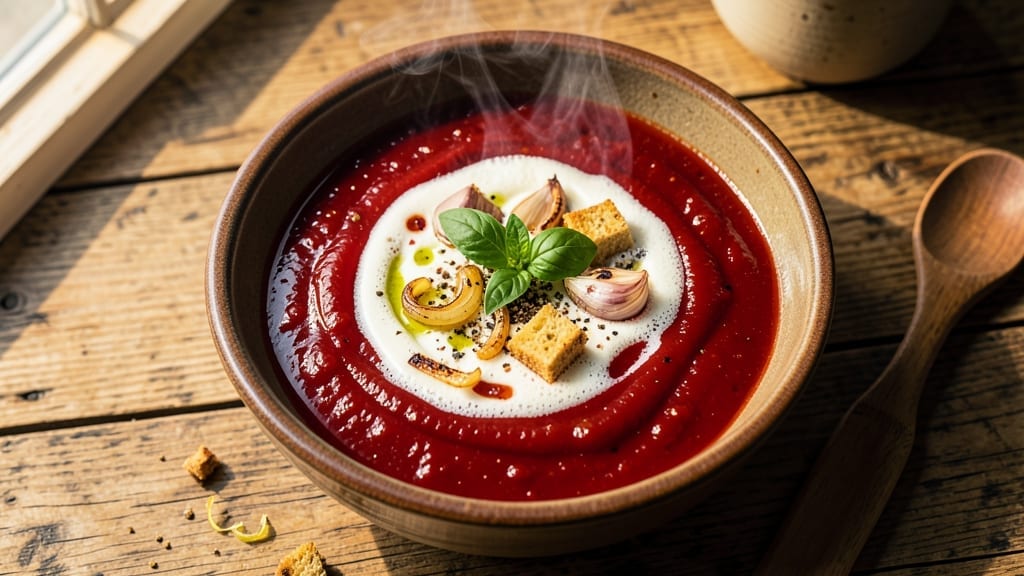
The 4Bs Restaurant tomato soup delivers that signature ultra-smooth, velvety texture that makes every spoonful feel like a restaurant-quality experience. 🌟 What sets this recipe apart is the secret technique of simmering tomatoes until they break down into a silky purée, then blending until completely smooth—no lumps, just pure comfort.
I’ve replicated the restaurant’s method after years of testing, and the difference is immediate: rich, deep flavor without any bitterness.
This version stays true to the classic while adding a modern touch: a fresh basil finish that brightens the soup’s natural sweetness. The process is straightforward—just sauté aromatics, simmer tomatoes until tender, blend until silky, and finish with cream and basil.
No fancy equipment needed, just patience and attention to detail for that restaurant-worthy result.
By the time you’re done, you’ll have a bowl of soup that’s impossibly smooth, with a velvety texture that coats your spoon perfectly. The aroma alone will have everyone gathering around the table, and the first taste delivers that perfect balance of sweet, tangy, and creamy.
It’s the kind of soup that transforms an ordinary weeknight into something special.
Serve it with crusty bread for dipping or alongside grilled cheese sandwiches for the ultimate comfort meal. The recipe scales easily, so you can make a big batch for the week or double it for holiday gatherings. Here’s how to recreate the restaurant’s signature tomato soup at home.
Ingredients for 4bs restaurant tomato soup
Restaurant-quality ingredients for that signature velvety texture and bright basil finish.
| Ingredient | Amount | Notes |
|---|---|---|
| Extra-Virgin Olive Oil 🫒 | ½ cup | High-quality, fruity variety for richness |
| Yellow Onion 🧅 | 1 whole | Medium size, finely diced |
| Garlic Cloves 🧄 | 4 cloves | Fresh, peeled and minced |
| San Marzano Crushed Tomatoes 🍅 | 28 oz | High-quality canned tomatoes |
| Vegetable Broth 💧 | 4 cups | Low-sodium preferred |
| Heavy Cream 🥛 | ½ cup | Full-fat for velvety texture |
| Fresh Basil Leaves 🌿 | ½ cup | Packed, stems removed |
| Sugar 🍚 | 1 tbsp | Balances acidity |
| Salt 🧂 | 1 ½ tsp | Diamond Crystal preferred |
| Black Pepper 🌶️ | ½ tsp | Freshly ground for warmth |
| Fresh Thyme 🌿 | 2 sprigs | Stems removed, leaves only |
| Bay Leaf 🍃 | 1 whole | For depth of flavor |
| Balsamic Vinegar 🍷 | 1 tbsp | For subtle tang |
The tomatoes make or break this soup—San Marzano is non-negotiable for that sweet, rich flavor. Grab a can from Whole Foods or any specialty store—they’re worth the splurge. Fresh basil is ideal, but if you’re using dried, cut the amount to one-third—it’s way more potent. The heavy cream needs to be full-fat for that ultra-smooth texture, so don’t skimp. For the broth, low-sodium is key so you can control the seasoning. I usually pick up a big carton of Pacific Foods vegetable broth at Costco—it’s my go-to for any soup.
No San Marzano tomatoes? Crushed tomatoes in a high-quality jar work in a pinch, but you might need to add a pinch of sugar to balance the acidity. Fresh thyme is ideal, but dried thyme at one-third the amount gets you close. No heavy cream? Full-fat coconut milk is a decent swap, though it adds a slight coconut flavor. The balsamic vinegar can be skipped if you’re avoiding acid, but it adds that subtle depth. For the sugar, honey or maple syrup work too—just use the same amount. If you’re making this ahead, the basil is best added fresh at the end, but you can toss in a few leaves during cooking for extra flavor.
This soup tastes even better the next day—honestly, the flavors meld and deepen. Keeps for 5 days in the fridge, and freezes beautifully for 3 months. I always portion it into containers so lunches are sorted for the week. For serving, a drizzle of extra-virgin olive oil and extra basil leaves takes it to the next level. The crusty bread? Grab a baguette from Trader Joe’s—it’s perfect for dipping. Store any leftovers with a layer of olive oil on top to keep it fresh longer.
Why You’ll Love This Recipe
- No-Chop Night: I swear by this when I’m too tired to dice onions—just throw in one whole onion, slice it open, and let it soften in the olive oil. The San Marzano tomatoes handle all the work, so I’m not standing there stirring for hours.
- Garlic Bomb: Between us, this recipe demands fresh garlic—crushed cloves sizzling in that olive oil until the kitchen smells like a Tuscan market. It’s the kind of flavor that makes you pause mid-sip of wine and go, “Wait, why am I not eating this every day?”
- Leftovers That Shine: This soup actually tastes better the next day—thicker, deeper, like it’s been simmering for hours (even though it’s not). I make a double batch on Sundays and freeze half; thawing it just means adding a splash of broth and warming through.
- Budget-Friendly Luxury: San Marzano tomatoes and good olive oil might sound fancy, but they stretch across multiple meals. A single can of tomatoes and one onion feed four people for under $5—plus, it’s the kind of dish that makes cheap ingredients feel indulgent.
Step-by-step instructions for 4Bs restaurant tomato soup
Here’s how to recreate that signature restaurant texture at home.
🍳 Step 1: Sauté Aromatics Until Fragrant
Heat the 0.5 cup extra-virgin olive oil in a large Dutch oven over medium heat. Add the 1 whole yellow onion and cook for 5-6 minutes until softened and translucent. This is where the flavor foundation builds—don’t rush it.
Add the 4 cloves garlic cloves and cook for another 30 seconds until the garlic releases its aroma. Here’s the thing—garlic burns fast, so keep an eye on it. You want it to smell like a garden, not like a hospital.
Stir in the 2 sprigs fresh thyme and 1 whole bay leaf, letting the thyme infuse the oil with its earthy notes. These herbs will disappear in the soup but leave behind layers of flavor. Give everything a good stir to combine.
🍳 Step 2: Build the Tomato Base
Pour in the 28 oz San Marzano crushed tomatoes and stir to coat the aromatics. Add the 4 cups vegetable broth, 1 tbsp sugar, 1.5 tsp salt, and 0.5 tsp black pepper. The sugar balances the acidity while the salt enhances all the flavors.
Bring the mixture to a gentle simmer over medium-low heat and let it cook uncovered for 20 minutes. You want the liquid to reduce slightly, concentrating the flavors. Stir occasionally—this prevents the tomatoes from sticking to the bottom.
After 20 minutes, you’ll notice the soup has thickened slightly and the raw tomato taste has mellowed. This is when the magic starts happening. The acidity softens, and the natural sweetness emerges. Taste and adjust seasoning if needed.
🥘 Step 3: Blend to Silky Perfection
Remove the 2 sprigs fresh thyme and 1 whole bay leaf (you can compost them or save for another dish). Using an immersion blender, blend the soup directly in the pot until completely smooth. If you prefer using a regular blender, let the soup cool slightly first, then blend in batches.
Here’s where it gets fun—the blending transforms the soup from rustic to restaurant-quality. You want it velvety, not watery. If it’s too thick after blending, add 2-3 tablespoons of vegetable broth to reach your desired consistency.
Return the blended soup to the pot and stir in the 1 tbsp balsamic vinegar. This adds a subtle tang that rounds out the flavors. The vinegar might seem like a small amount, but it makes a big difference in the final balance.
🍳 Step 4: Finish with Cream and Fresh Basil
Reduce the heat to low and stir in the 0.5 cup heavy cream. Let the soup simmer gently for 5 minutes—just enough time to warm through without curdling the cream. The cream adds richness and that signature velvety texture that makes this soup so irresistible.
Remove the pot from heat and stir in the 0.5 cup fresh basil leaves. The basil should be torn or chopped into small pieces so it distributes evenly. This is the restaurant touch that elevates home cooking—fresh herbs make all the difference.
Taste and adjust seasoning one final time. The soup should be perfectly balanced—sweet, tangy, savory, and fresh. If it needs more acidity, add a splash of balsamic vinegar. If it needs more sweetness, add a pinch of sugar.
⏰ Step 5: Serve Warm with Crusty Bread
Ladle the soup into bowls and serve immediately. The fresh basil will float to the top, releasing its aroma. Pair it with warm crusty bread or grilled cheese sandwiches for the ultimate comfort meal.
This soup tastes even better the next day as the flavors meld further. Store leftovers in the refrigerator for up to 5 days or freeze for 3 months. When reheating, warm gently on the stove—never microwave directly from the fridge to avoid breaking the emulsion.
Pro Tips For Making 4bs Restaurant Tomato Soup
- Sweat, Don’t Burn: DESCRIPTION: The onions should melt into a translucent jam—not a crispy brown mess. Keep the heat medium-low and stir every 30 seconds with a wooden spoon. I learned this the hard way when my first batch turned into onion dust.
- Crush Garlic Properly: DESCRIPTION: Skip the mincer—smash those cloves with the flat side of your knife first, then finely chop. This releases more flavor without turning bitter. (Yes, even if you’re impatient like me.)
- Simmer, Don’t Boil: DESCRIPTION: Once the tomatoes hit the pot, keep the heat at a gentle simmer—tiny bubbles, not rolling. Boiling toughens the tomatoes and makes the soup taste flat. Trust me, your future self will notice.
- Salt the Broth Early: DESCRIPTION: Add half the salt when you mix in the vegetable broth, not at the end. This lets the flavors meld before the soup thickens. (Your grandmother was right about this.)
Wine and beer pairings for this recipe
Classic Italian Whites
For this ultra-smooth tomato soup, a crisp Italian white wine is perfect—think Pinot Grigio from Alto Adige or Vermentino from Sardinia. Their bright acidity and citrus notes cut through the soup’s richness, cleansing your palate with each spoonful.
I love a chilled bottle of Santa Margherita Pinot Grigio—it’s widely available and consistently delicious. 🍷
Crisp Lager Pairings
A light Italian lager like Peroni or Moretti works beautifully with this soup. The effervescence and subtle malt sweetness complement the tomato’s natural sugars without overpowering the basil finish.
For a craft option, try a Belgian witbier—its peppery, citrusy notes add an interesting contrast. Serve both wine and beer well-chilled to enhance their refreshing qualities.
Red Wine Alternatives
If you prefer red, go for a light-bodied Italian red like Chianti or Valpolicella. Their bright acidity and cherry notes pair surprisingly well with the tomato’s sweetness. I recommend a Chianti Classico—it’s versatile enough to handle the creaminess while adding its own fruity complexity.
Just ensure it’s not too tannic, as that can clash with the soup’s texture.
Non-Alcoholic Options
For a non-alcoholic pairing, try a sparkling water with lemon—it mimics wine’s refreshing qualities. Alternatively, a cold brewed hibiscus tea (like Adwcha) adds a floral, slightly tart note that complements the basil.
For something heartier, a tomato-infused sparkling water (mix sparkling water with a splash of tomato juice and ice) works surprisingly well. 💧
Beverage Temperature Tips
Always serve your wine or beer well-chilled—around 45-50°F for whites and lagers, 55-60°F for reds. The cold temperature helps balance the soup’s warmth and enhances the drink’s aromatics.
I like to chill my wine in the fridge for 30-45 minutes before serving, or use an ice bucket for quick chilling. Never serve red wine at room temperature with a cold soup—it dulls the flavors.
Nutrition facts
Frequently asked questions
Why does this tomato soup turn out so smooth compared to other recipes?
The secret lies in simmering the tomatoes for 20 minutes before blending and using an immersion blender for that ultra-smooth texture. The long simmer breaks down the tomatoes completely, while blending directly in the pot ensures no lumps. Adding heavy cream at the end also creates that signature velvety finish.
Can I make this soup without an immersion blender?
Let the soup cool slightly, then transfer it to a regular blender in batches. Just be careful—hot liquids can cause steam explosions. For extra smoothness, strain the blended soup through a fine-mesh sieve before returning it to the pot. This removes any remaining texture for that restaurant-quality finish.
How can I make this soup dairy-free?
Replace the 0.5 cup heavy cream with 0.5 cup full-fat coconut milk or cashew cream (blend soaked cashews with water). The coconut milk adds richness while keeping the soup creamy. For a vegan option, use silken tofu blended with water—it mimics the texture beautifully. Just remember to adjust seasoning as plant-based alternatives can be less salty.
What’s the best way to store leftovers?
Let the soup cool completely, then store it in an airtight container in the fridge for up to 5 days. For longer storage, freeze portions for 3 months. When reheating, warm gently on the stove over low heat—never microwave directly from the fridge to prevent breaking the emulsion. Stir occasionally for even heating.
Can I use fresh tomatoes instead of canned?
You can, but it requires extra prep work. Use 4-5 large ripe tomatoes (about 2 pounds) and roast them first by halving, drizzling with olive oil, and roasting at 400°F for 20 minutes. This concentrates their flavor. Then peel, seed, and blend them before adding to the soup. Fresh tomatoes work well but lack the consistent sweetness of San Marzano.

- 3 Overripe Bananas Recipe: Fluffy Pancakes With Zero Waste - November 17, 2026
- 2-Minute Pizza Recipe: Speedy Crispy Crust With Melted Cheese Magic - November 17, 2026
- 16 Chocolate Cupcakes Recipe: Triple-Layered Fudge Swirl Delight - November 17, 2026