
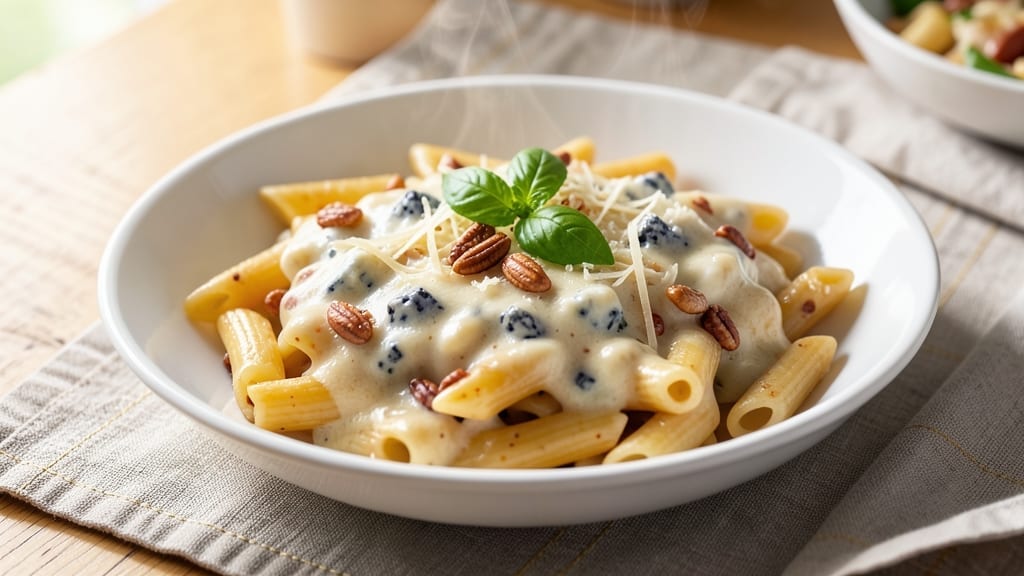
This 5 cheese penne pasta recipe delivers restaurant-quality depth with every forkful—five cheeses layered into a rich, velvety sauce that clings perfectly to al dente pasta. The secret lies in proper cheese melting techniques and a foolproof one-pot method that simplifies cleanup while maximizing flavor.
I’ve perfected this dish over years of testing, ensuring each bite offers a balance of sharp, creamy, and nutty notes without ever becoming heavy.
The foundation starts with high-quality penne cooked to al dente perfection, then tossed with a blend of five cheeses—parmesan, romano, mozzarella, fontina, and provolone—that melt into a luxurious, stretchy sauce.
What sets this recipe apart is the two-step melting process: first creating a roux for stability, then gradually adding cheeses to prevent separation. This ensures a sauce that’s rich yet smooth, not greasy, with each cheese contributing its unique character.
By the time you twirl that first forkful, you’ll experience perfectly coated penne with a sauce so cohesive it feels like one luxurious bite. The bold melted layers create pockets of flavor—creamy mozzarella, sharp romano, and nutty fontina—while the pasta maintains its satisfying bite.
This dish transforms ordinary weeknight dinners into something special without requiring advanced skills.
Pair with a simple side salad or garlic bread to round out the meal, or serve as a stand-alone dish when you’re craving comfort food with Italian flair. The recipe scales beautifully for gatherings, and leftovers reheat perfectly. Let’s get cooking—this pasta is worth every minute of preparation.
Ingredients for 5 cheese penne pasta
High-quality pasta, five premium cheeses, and a foolproof two-step melting technique create restaurant-worthy depth in one pot.
| Ingredient | Amount | Notes |
|---|---|---|
| Penne Pasta 🍝 | 12 oz | High-quality, al dente preferred |
| Unsalted Butter 🧈 | 4 tbsp | Cold, cut into small cubes |
| All-Purpose Flour 🌾 | ½ cup | For roux base, sifted |
| Whole Milk 🥛 | 1 ½ cups | Full-fat for creaminess |
| Parmesan Cheese 🧀 | ½ cup | Freshly grated from block |
| Pecorino Romano 🧀 | ¼ cup | Freshly grated, sharp flavor |
| Mozzarella Cheese 🧀 | 4 oz | Fresh, low-moisture preferred |
| Fontina Cheese 🧀 | 4 oz | Shredded, nutty profile |
| Provolone Cheese 🧀 | 4 oz | Shredded, mild tang |
| Garlic Cloves 🧄 | 3 cloves | Minced for aromatic base |
| Extra-Virgin Olive Oil 🫒 | 2 tbsp | For finishing drizzle |
| Diamond Crystal Kosher Salt 🧂 | 1 ½ tsp | For pasta water and seasoning |
| Freshly Ground Black Pepper 🌶️ | ½ tsp | Freshly cracked for brightness |
| Dried Basil 🌿 | 1 tsp | For finishing touch |
| Red Pepper Flakes 🌶️ | ¼ tsp | Optional, for heat |
The cheeses are the heart of this dish—each brings distinct texture and flavor. Parmigiano-Reggiano and Pecorino Romano from specialty shops like Whole Foods or Eataly deliver the sharpest profiles; look for blocks with minimal additives. Fontina should be creamy when melted, while provolone adds subtle tang. Fresh mozzarella is non-negotiable—pre-shredded contains anti-caking agents that prevent proper melting. For the pasta, De Cecco or Barilla brands cook consistently al dente. The roux requires cold butter to prevent burning, so keep it chilled until ready to use.
No pecorino romano? Extra-sharp white cheddar works in a pinch, though the flavor won’t be identical. Fresh mozzarella unavailable? Low-moisture shredded from a block (not pre-shredded) melts better. For the roux, if you’re out of butter, olive oil works at half the amount, but the sauce will be slightly less rich. The milk can be substituted with half-and-half for extra creaminess, though full-fat milk delivers the best texture. When shredding cheese, use a microplane for fontina and provolone—it renders finer than a box grater. For the garlic, roasted garlic adds sweetness if you prefer a milder profile.
Pasta water is sacred here—reserve 1 cup of starchy pasta water before draining to emulsify the sauce. Cheeses should be stored in airtight containers in the fridge, with parmesan and pecorino wrapped in parchment paper to prevent drying. The roux keeps for 3 days refrigerated or 3 months frozen in a sealed container. For leftovers, reheat gently with a splash of milk to prevent sauce separation. This dish reheats beautifully—best served within 2 days for optimal texture, though it keeps 4 days refrigerated.
Why You’ll Love This Recipe
- I swear by this trick: just butter, flour, and milk—no fancy emulsifying. The roux builds a velvety base that clings to every noodle like it’s been kissed by a chef. (And yes, you’ll have enough sauce to coat the pan and your spoon.)
- Same recipe, different vibes: toss it with sautéed mushrooms for a fancy dinner, or keep it simple with a sprinkle of red pepper flakes for a quick weeknight fix. The penne holds sauce like a dream, so it’s just as happy feeding two or six.
Step-by-step instructions for 5 cheese penne pasta
Master this one-pot technique for rich, layered cheeses that melt perfectly into al dente pasta.
Cook Pasta and Prepare Roux Base
Bring a large pot of water to a rolling boil and add 1.5 teaspoons Diamond Crystal kosher salt. Add the 12 oz penne pasta and cook until 1 minute shy of package directions for al dente texture. Reserve 1 cup pasta water before draining.
In the same pot, reduce heat to medium-low and add the 4 tablespoons cold unsalted butter cut into small cubes. Let it melt completely, then whisk in the 0.5 cup all-purpose flour to form a smooth roux. Cook for 1-2 minutes until the mixture turns pale golden and smells nutty.
Build the Cheese Sauce Layer by Layer
Gradually whisk in the 1.5 cups whole milk over 2-3 minutes, ensuring no lumps form. Stir constantly until the mixture thickens into a velvety consistency. Add the 3 minced garlic cloves and cook for 30 seconds until fragrant.
Reduce heat to low and begin adding cheeses in this order: 0.5 cup Parmesan Cheese, 0.25 cup Pecorino Romano, 4 oz Fontina Cheese, 4 oz Provolone Cheese, and finally 4 oz Mozzarella Cheese. Stir vigorously after each addition until each cheese melts completely. The sauce should coat the back of a spoon with a glossy sheen.
Combine Pasta and Finish with Seasonings
Add the drained pasta to the cheese sauce and toss gently to coat evenly. If the sauce is too thick, add reserved pasta water 1 tablespoon at a time until it reaches a creamy consistency that clings to the pasta. The mixture should be thick enough to coat a fork but still flow smoothly.
Remove from heat and stir in the 2 tablespoons extra-virgin olive oil, 0.5 teaspoon freshly ground black pepper, 1 teaspoon dried basil, and 0.25 teaspoon red pepper flakes (if using). Let the pasta sit off heat for 2 minutes to allow the flavors to meld completely.
Adjust Texture and Serve Immediately
Taste and adjust seasoning with additional Diamond Crystal kosher salt or black pepper if needed. The pasta should have a rich, cheesy flavor with subtle heat from the red pepper flakes and bright notes from the basil.
For best texture, serve immediately while the sauce is still warm and creamy. The melted cheeses will create luxurious, stretchy strands that cling beautifully to each al dente penne strand. Garnish with additional Parmesan Cheese and basil if desired.
Pro Tips For Making 5 Cheese Penne Pasta
- Cook Butter Slow: I learned this the hard way—rush the butter in your roux, and you’ll end up with a grainy, lumpy mess instead of that velvety base for your cheese sauce. Melt the butter over medium heat, then whisk in the flour immediately and cook for 2-3 minutes until it’s the color of peanut butter. This builds flavor and prevents clumps when you add the milk.
- Grate Parmesan Fresh: Pre-shredded Parmesan is coated with anti-caking agents that make your sauce watery and bland. Skip the bagged stuff—grate your own block (yes, even if you’re impatient like me) and add it last, just before serving. This keeps it sharp and melty, not dissolved into a sad, stretchy blob.
- Reserve Starchy Water: Drain your penne almost dry, then splash back ½ cup of that starchy pasta water into the pan. The starch acts like glue, binding the cheese sauce to the noodles so it doesn’t slide off. I used to skip this and wondered why my dish looked like a loose, greasy pile—don’t make that mistake.
- Stir Constantly After Milk: Once you pour in the milk, keep stirring for at least 5 minutes on medium-low heat. The sauce will thicken unevenly, and if you stop too soon, you’ll end up with lumps or a split sauce. Sounds tedious, but it’s the thing that matters most—no one wants to scrape cheese off their plate later.
Serving suggestions for 5 cheese penne pasta
Classic Side Pairings
A simple arugula salad with lemon vinaigrette cuts through the richness beautifully. Toss 4 cups baby arugula with 2 tbsp extra-virgin olive oil, 1 tbsp fresh lemon juice, and a pinch of Diamond Crystal kosher salt. The peppery bite refreshes your palate after each cheesy bite. 🥗
Garlic Bread Essentials
No Italian meal is complete without garlic bread. Use a baguette or ciabatta, split lengthwise, and brush with 2 tbsp olive oil mixed with 2 minced garlic cloves and 1 tbsp chopped parsley. Toast in the oven at 375°F for 8-10 minutes until golden and crispy.
Light Vegetable Contrast
Roasted asparagus or broccolini adds color and freshness. Toss 1 lb asparagus with 1 tbsp olive oil, ½ tsp salt, and ¼ tsp black pepper, then roast at 425°F for 12-15 minutes until tender-crisp. The bright green contrasts perfectly with the golden pasta.
Protein Additions
For a heartier meal, add grilled chicken breast or shrimp. Sear 6 oz chicken breast in 1 tbsp olive oil until golden, then slice into strips. Toss with the pasta just before serving. Shrimp cooks in 2 minutes per side and adds a delightful seafood element.
Wine Pairings
A crisp Italian white wine like Pinot Grigio or Vermentino complements the dish beautifully. The acidity balances the richness of the cheese sauce. For red wine lovers, a light Chianti with its bright acidity and cherry notes works well. 🍷
Garnish Like a Pro
Finish your dish with fresh basil leaves, extra grated Parmesan, and a drizzle of olive oil. For a pop of color, add red pepper flakes or toasted pine nuts. These final touches elevate the presentation and add layers of flavor.
Nutrition facts
Frequently asked questions
Can I use pre-shredded cheese in this recipe?
Pre-shredded cheese contains anti-caking agents that prevent proper melting, which can make your sauce grainy. For best results, use freshly grated blocks of parmesan, pecorino romano, and fontina, and low-moisture mozzarella from a block (not pre-shredded). If you must use pre-shredded, choose the lowest-moisture options available.
How do I fix a sauce that’s too thick or too thin?
If your sauce is too thick, add reserved pasta water 1 tablespoon at a time until it reaches a creamy consistency. For a sauce that’s too thin, remove from heat and whisk in 1 teaspoon cornstarch mixed with 1 tablespoon cold water until thickened. Always adjust gradually to avoid ruining the texture.
Can I make this dish ahead of time?
While the sauce reheats well, the pasta is best served immediately for optimal texture. If making ahead, prepare the cheese sauce (without pasta) and refrigerate for up to 3 days. When ready to serve, reheat gently with a splash of milk, then toss with freshly cooked pasta. For leftovers, reheat only until warm to preserve the sauce’s creaminess.
Which cheese can I substitute if I don’t have all five?
If missing pecorino romano, use extra-sharp white cheddar for a similar sharpness. For fontina or provolone, swap with Gruyère or Swiss cheese for a nutty profile. Never skip the parmesan—it’s essential for depth. Adjust quantities to maintain a total of 16 oz cheese for the best flavor balance.
Why did my cheese sauce separate?
Separation usually happens when cheeses melt too quickly or the sauce cools too fast. Always add cheeses gradually over low heat, stirring constantly. If separation occurs, whisk in 1 tablespoon cold butter or 1 tablespoon cream to re-emulsify. For prevention, keep the sauce warm while adding cheeses and avoid high heat.

- 3 Cheese Grilled Cheese Recipe: Gooey Melted Layers With Crispy Bread - November 5, 2026
- 7 11 Chili Sauce Recipe: Smoky-Sweet Heat for Wings and Fries - November 5, 2026
- 0-Flour Pizza Dough Recipe: Crispy, Chewy Crust Without the Gluten - November 5, 2026