
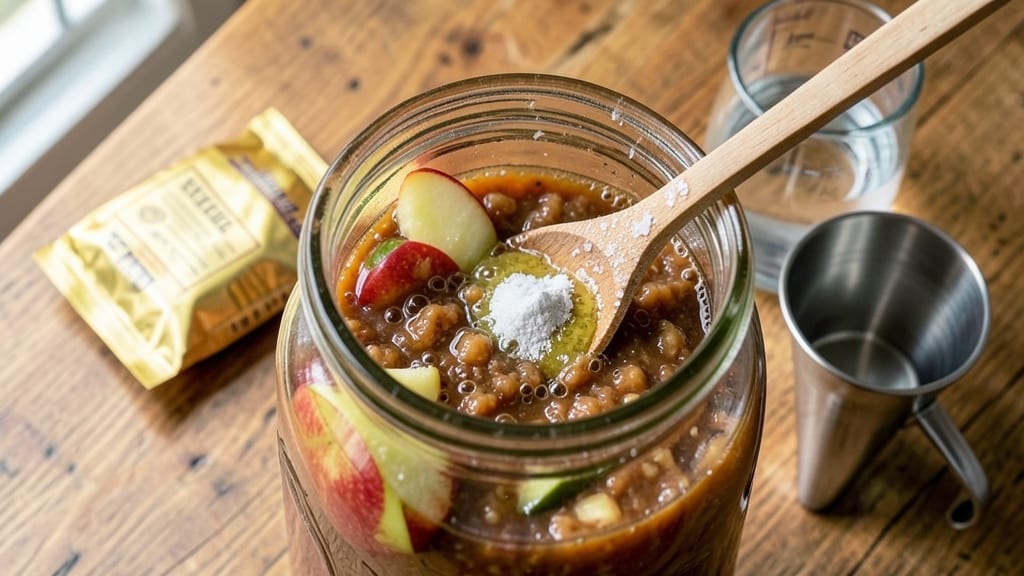
Transforming fresh apples into a rich, fermented apple brandy mash is an art that combines tradition with precise technique—this 5-gallon apple brandy mash recipe delivers bold, boozy depth with every sip.
The process begins with carefully selected apples, crushed and simmered into a fragrant cider base before yeast transforms it into a fermented masterpiece. What sets this method apart is the balance of sweetness, acidity, and fermentation time, ensuring a flavor profile that’s both complex and approachable for home distillers.
The foundation of success lies in the apples themselves—use a mix of tart and sweet varieties like Granny Smith and Honeycrisp for depth, then crush them thoroughly to maximize juice extraction. A proper yeast strain, like Lalvin EC-1118, ensures reliable fermentation, while strict sanitation practices prevent contamination.
This isn’t just about making cider; it’s about crafting a fermented base that will evolve into something extraordinary over weeks.
By the time fermentation completes, you’ll have a mash with a rich, caramelized aroma and a smooth, slightly effervescent texture—ready for distillation or further aging. The key is patience; letting the flavors develop naturally yields a product far superior to rushed methods.
Whether you’re a seasoned home distiller or a curious beginner, this recipe provides the roadmap to achieving professional-quality results in your own kitchen.
Safety is paramount when working with fermentation—sterilize equipment, monitor temperature, and never exceed safe alcohol levels. With these steps, you’ll not only create a delicious mash but also build confidence in your distilling skills. Let’s get started on your journey to crafting homemade apple brandy.
Ingredients for 5 gallon apple brandy mash
Tart apples, yeast, and careful sanitation transform into rich, fermented apple brandy mash.
| Ingredient | Amount | Notes |
|---|---|---|
| Apples (Granny Smith and Honeycrisp mix) 🍎 | 10 lb | Organic preferred, crushed thoroughly |
| Granulated Sugar 🍚 | 2 cups | White or raw cane sugar |
| Lemon Juice 🍋 | ½ cup | Freshly squeezed, acidity booster |
| Campden Tablets (Potassium Metabisulfite) 💊 | 2 tablets | Sanitizes mash, dissolve in water first |
| Distilled Water 💧 | 4 cups | For dissolving Campden tablets |
| Lalvin EC-1118 Yeast 🍺 | 1 package | Reliable fermentation strain |
| Cinnamon Sticks 🌿 | 4 whole | For aromatic complexity |
| Star Anise 🌶️ | 2 whole | Adds subtle anise notes |
| Cloves 🌿 | 4 whole | Enhances warmth |
| Orange Peel (organic) 🍊 | 1 tbsp | Dried, for citrus brightness |
| Yeast Nutrient 🧪 | 1 tsp | Supports yeast health |
| Pectic Enzyme 🍶 | 1 tsp | Improves juice extraction |
| Diatomaceous Earth 🌊 | 1 tsp | Clarifies mash post-fermentation |
| Sanitizer (Star San or equivalent) 🧼 | ¼ cup | For equipment sterilization |
The apples are non-negotiable—Granny Smith for tartness and Honeycrisp for sweetness create the perfect balance. Local orchards or farmers markets often have the freshest, most flavorful varieties, but grocery store organic apples work too if you’re in a pinch. Crush them thoroughly (a food mill or clean hands work) to maximize juice extraction—no chunks. For yeast, Lalvin EC-1118 is my go-to; it handles the sugar content like a champ. If you can’t find it, Lalvin 71B-1122 is a solid backup. The spices? Whole spices are best—they infuse flavor without overpowering. Buy them in small quantities from Penzeys or local spice shops to keep them fresh.
No Campden tablets? Potassium metabisulfite powder works at half the weight, but measure carefully—too much can affect flavor. Running low on yeast nutrient? Diammonium phosphate is a direct substitute. The orange peel can be fresh, but dried works better for long-term storage—just make sure it’s organic. If you’re using a 5-gallon bucket, sterilize it first with Star San (or boiling water for 20 minutes). The pectic enzyme is optional but worth it for cloudy mash—it breaks down pectin for clearer juice. For the spices, toast them lightly in a dry pan before adding to enhance their aroma.
This mash keeps 2-3 weeks in the fridge before fermentation gets too active—monitor daily. The spices can be removed after 24 hours if you prefer a cleaner flavor. Freeze extras in ice cube trays for later batches. Once fermented, the mash is ready for distillation—don’t rush it. Let it sit at least 7-10 days post-fermentation for maximum flavor development. If you’re not distilling immediately, store in food-grade plastic or glass containers with airlocks. The yeast nutrient and pectic enzyme can be stored indefinitely in a cool, dark place.
Why You’ll Love This Recipe
- No-Chop Necessary: I swear by this trick—just core and quarter the apples, no peeling, no fuss. That Campden tablet step (yeah, it’s a mouthful) keeps things fresh for weeks, so I toss in the whole mix without stressing over prep.
- Tart-Sweet Magic: Granny Smith’s bite and Honeycrisp’s juiciness? It’s like autumn in a jar. The sugar balances the sharpness, and that lemon juice? It’s the secret weapon—brightens every sip without overpowering.
- Party in a Pitcher: Serve it warm with cinnamon sticks for cozy nights in, or chill it for a refreshing summer drink. My in-laws think it’s “fancy,” but honestly, it’s just apples and a little patience—no pretension, all flavor.
- Zero-Waste Goldmine: That 5-gallon batch lasts forever. I freeze half for smoothies, use the rest in cocktails, and still have leftovers for oatmeal. Between us, the Campden tablets make this the most budget-friendly way to stretch fresh apples into something special.
Step-by-step instructions for apple brandy mash
Here’s how to transform fresh apples into a rich, spiced mash ready for fermentation into brandy.
Prepare and Sanitize Your Equipment
Start by thoroughly sanitizing all equipment using the 0.25 cup Sanitizer (Star San). Mix this with 1 gallon of distilled water in a clean bucket and use it to wash your fermentation vessel, utensils, and any other tools you’ll use. This critical step prevents contamination that could ruin your mash. Pay special attention to the primary fermentation container—scrub it with a brush, then rinse with the sanitizer solution and let it air-dry completely.
While your equipment dries, crush the 10 lb Apples (Granny Smith and Honeycrisp mix) thoroughly using a food mill, blender, or potato masher. You want a pulp that’s mostly liquid with minimal large chunks. The goal is to extract as much juice as possible while keeping the texture smooth. I like to work in batches if using a blender to avoid overfilling. Transfer the crushed apples to your sanitized fermentation vessel.
Add Spices and Sweetener
To the crushed apples, add the 2 cups Granulated Sugar, 0.5 cup Lemon Juice, 4 whole Cinnamon Sticks, 2 whole Star Anise, 4 whole Cloves, and 1 tbsp Orange Peel (organic). Stir everything together thoroughly to ensure even distribution of the spices and sugar. The sugar will begin dissolving immediately, creating a sweet base for fermentation. The lemon juice adds acidity, which helps preserve the mash and enhances flavor development.
Next, add the 1 tsp Yeast Nutrient and 1 tsp Pectic Enzyme. The yeast nutrient provides essential minerals that support yeast health during fermentation, while the pectic enzyme breaks down fruit pectin to improve juice extraction and clarity. Stir these ingredients into the apple mixture until fully incorporated. Let the mash sit at room temperature for 30 minutes to allow the enzymes to begin working.
Sanitize and Activate the Mash
Dissolve the 2 tablets Campden Tablets (Potassium Metabisulfite) in the 4 cups Distilled Water in a separate container. This creates a sanitizing solution that will help prevent unwanted bacteria and wild yeast from contaminating your mash. Pour this solution evenly over the apple mixture and stir well. The mash should now have a slightly sulfuric smell—this is normal and indicates the sanitizer is working.
Let the mash sit for 24 hours at room temperature. This allows the Campden tablets to fully sanitize the mixture and the pectic enzyme to work its magic. After this waiting period, you’ll notice the mash has become slightly clearer and more liquid. This is a good sign—it means the enzymes are breaking down the fruit structure and preparing it for fermentation.
Pitch the Yeast and Begin Fermentation
Rehydrate the 1 package Lalvin EC-1118 Yeast according to the package instructions (typically by mixing with a small amount of warm water). Once rehydrated, stir the yeast mixture into your apple mash. The yeast should activate immediately, and you’ll see small bubbles forming on the surface within 15-30 minutes. This indicates fermentation has begun.
Cover the fermentation vessel loosely with a clean cloth or fermentation lid to allow gases to escape while keeping out contaminants. Place the vessel in a warm location (around 70-75°F) for 5-7 days. During this time, stir the mash gently once daily to help distribute yeast and prevent a skin from forming. You’ll know fermentation is progressing well when you see active bubbling and smell a distinct apple aroma developing.
Clarify and Prepare for Distillation
After 5-7 days of active fermentation, add the 1 tsp Diatomaceous Earth to the mash. Stir gently to distribute evenly, then let it sit for 24 hours. The diatomaceous earth will help clarify the liquid by absorbing suspended particles. After this waiting period, carefully siphon off the clear liquid from the top, leaving behind the sediment at the bottom. This clarified liquid is what you’ll use for distillation.
The resulting apple brandy mash should have a rich, spiced apple aroma with a slightly sweet, tangy profile. If you’re not ready to distill immediately, you can store the mash in a sanitized container in the refrigerator for up to 2 weeks. The flavor will continue developing during this time, becoming more complex and balanced. When you’re ready to distill, simply transfer the mash to your still and follow your preferred distillation process to create a smooth, flavorful apple brandy.
Pro Tips For Making 5 Gallon Apple Brandy Mash
- CHOP APPLES UNIFORM: Cut Granny Smiths into ½-inch chunks and Honeycrisp into ¼-inch slices—smaller pieces from the Honeycrisp prevent mushy mash while keeping the texture balanced. I learned this the hard way when I dumped whole apples in and ended up with a pulpy, uneven batch.
- STIR BEFORE DISSOLVING SULFITE: Add Campden tablets to the water first, then stir for a full 30 seconds before mixing into the mash—this guarantees even distribution and prevents clumps that can ruin fermentation. Skipping this step means some spots might stay unsulfonated, inviting wild yeast to crash the party.
- WEIGH SUGAR, DON’T EYEBALL: Use a scale for the sugar—5 gallons of mash needs about 2.5 lbs (1.1 kg) for consistency, not guesswork. I once eyeballed it and ended up with a batch that fermented too fast, leaving a harsh, unbalanced flavor.
- COOL TO 70°F BEFORE FERMENTING: Let the mash sit at room temp for 2–3 hours after cooking, then chill to 70°F before adding yeast—this prevents temperature spikes that kill yeast and slow fermentation. I rushed this once and spent a week waiting for my batch to even start bubbling.
Flavor customization for 5 gallon apple brandy mash
Spice Variations
Swap out the classic spices for bold new flavors. Try 1 cinnamon stick + 2 cardamom pods + 1 tsp vanilla bean paste for a warm, aromatic twist.
For heat lovers, add ½ tsp cayenne pepper and 1 star anise pod—the cayenne brings subtle spice while star anise adds depth. I’ve also experimented with 1 tsp coriander seeds and 1 tsp black peppercorns for a savory note that pairs surprisingly well with the sweetness. 🌶️
Fruit Blends
Expand beyond apples by adding complementary fruits. Mix in 2 cups chopped pears for a honeyed sweetness, or 1 cup blueberries for a tart contrast. For a tropical vibe, blend in 1 cup mango chunks and ½ cup pineapple juice—the acidity balances the mash beautifully.
Just adjust sugar to 1.5 cups if adding extra fruit, as natural sugars vary. 🍍
Herbal Infusions
Elevate your mash with fresh herbs. Add 1 sprig fresh rosemary and 1 sprig fresh thyme during fermentation for an earthy, piney aroma. For a floral touch, steep 2 tbsp dried lavender buds in the mash for 24 hours before pitching yeast—remove them afterward to avoid bitterness.
I’ve also used ½ cup fresh mint leaves for a refreshing twist, though it’s best removed post-fermentation. 🌿
Sweetness Adjustments
Control the mash’s sweetness by tweaking sugar or fruit ratios. For a drier ferment, reduce sugar to 1.5 cups and add ½ cup apple cider vinegar to enhance tartness. For extra sweetness, substitute 1 cup honey for half the sugar—it adds complexity and caramel notes.
I’ve also found that 1 cup maple syrup works beautifully, lending a subtle maple aroma. 🍯
Yeast Strain Swaps
Experiment with yeast to alter flavor profiles. Lalvin 71B-1122 produces a cleaner, crisper ferment, while Wyeast 3724 French Oak Ale adds a toasty, oaky character. For a fruity twist, try Lalvin EC-1118’s cousin, Lalvin K1-V1116, which enhances ester production. Always rehydrate yeast properly—improper activation can ruin fermentation. ✨
Nutrition facts
Frequently asked questions
Can I use frozen apples instead of fresh?
Fresh apples are ideal, but you can use frozen apples if that’s all you have. Thaw them first, then crush them thoroughly to maintain juice extraction. Frozen apples may release less juice, so you might need to add 1 extra cup of water to compensate. Just ensure they’re completely thawed before crushing to avoid uneven fermentation.
How do I know when fermentation is complete?
Fermentation is complete when bubbling slows significantly and the mash smells clean and fruity (not sour or yeasty). Use a hydrometer to check the specific gravity—when it stabilizes around 0.990-0.995, fermentation is done. This typically takes 7-10 days, but some mashes may take longer. Taste a small sample: if it’s still sweet, fermentation isn’t finished.
What happens if I skip the Campden tablets?
Skipping Campden tablets increases contamination risk, which can ruin your mash. Without them, wild yeast and bacteria may dominate, leading to off-flavors like vinegar or rotten aromas. If you can’t find Campden tablets, use potassium metabisulfite powder (½ tsp per gallon) as a substitute. Always sanitize equipment thoroughly—it’s your best defense against spoilage.
Can I make this recipe with a smaller batch?
Yes! Scale down all ingredients proportionally—use a 1-gallon container with 2.5 lb apples, 0.5 cup sugar, and adjust spices to 1 tsp total. Keep the same ratios (e.g., 1 Campden tablet per gallon) for consistency. A smaller batch ferments faster, so monitor closely for signs of completion (like reduced bubbling). Perfect for testing flavor variations!
How long can I store the mash before distilling?
Store the fermented mash in a sanitized container with an airlock in the fridge for up to 2-3 weeks. Beyond that, flavors may degrade or over-ferment. For best results, distill within 10-14 days after fermentation completes. If storing longer, add ½ tsp potassium sorbate per gallon to halt fermentation. Label containers with dates to track freshness.

- 3lb Prime Rib Roast Recipe: Juicy Pink Center Guaranteed in 3 Hours - October 31, 2026
- 5 Spice Cake Recipe: Warmly Spiced Layers With Crunchy Top - October 31, 2026
- 1950’s Macaroni and Cheese Recipe: Nostalgic Creamy Cheese Sauce with Buttery Noodles - October 31, 2026