
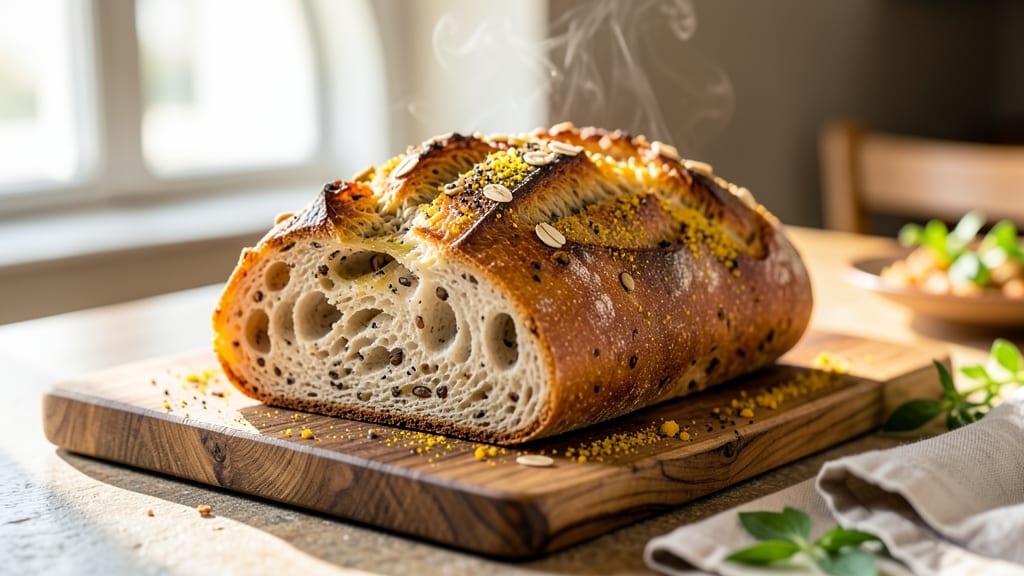
This 5-grain Italian bread recipe delivers the perfect balance of crusty crunch and nutty depth—all in one bowl. 🌟 The secret lies in blending five whole grains (wheat, rye, barley, oats, and cornmeal) for texture and flavor complexity, while traditional Italian techniques ensure a golden, artisanal crust.
Whether you’re a home baker or a bread-making novice, this recipe simplifies the process without sacrificing authenticity.
The beauty of this method is its simplicity: no fancy equipment, just a mixing bowl, a little time, and patience. The dough comes together with a wetter consistency than traditional bread, which creates a tender crumb and that signature crusty exterior.
Yeast activates slowly, allowing flavors to develop fully, while the grains absorb moisture for maximum texture. It’s the kind of bread that tastes like a trip to Italy—without the jet lag.
By the time it emerges from the oven, you’ll have a loaf with a crispy, caramelized crust and a soft, airy interior speckled with nutty grains. The aroma alone will have everyone gathering around the table.
This bread freezes beautifully for later use, making it perfect for meal prep or gifting. Ready to bake?
For those who love customization, try adding fresh rosemary or flaxseeds for extra flavor and texture. The possibilities are endless, but the foundation—this foolproof 5-grain dough—is where the magic begins. Let’s get started on your crusty, nutty masterpiece.
Ingredients for 5 grain italian bread
Five grains blend with Italian tradition for bread that tastes like a trip to Italy’s countryside.
| Ingredient | Amount | Notes |
|---|---|---|
| All-Purpose Flour 🌾 | 3 cups | Unbleached preferred for lighter texture |
| Whole Wheat Flour 🌾 | 1 cup | For added texture and nutrition |
| Rye Flour 🌾 | ½ cup | Adds deep, earthy flavor |
| Barley Flour 🌾 | ½ cup | Boosts chewy texture |
| Rolled Oats 🥣 | ½ cup | Old-fashioned, not quick oats |
| Fine Yellow Cornmeal 🌽 | ½ cup | For subtle crunch |
| Active Dry Yeast 🍞 | 2 ¼ tsp | Ensure freshness (test in warm water) |
| Granulated Sugar 🍚 | 1 tbsp | Feeds yeast for activation |
| Salt 🧂 | 1 ½ tsp | Diamond Crystal preferred |
| Extra-Virgin Olive Oil 🫒 | ½ cup | High-quality for flavor |
| Warm Water 💧 | 1 ½ cups | 110°F for yeast activation |
| Cornmeal 🌽 | ¼ cup | For dusting baking sheet |
| Coarse Sea Salt 🧂 | 1 tsp | For sprinkling crust |
The grains are the heart of this bread, so Bob’s Red Mill or King Arthur flours work best—they’re finely milled for even texture. If you can’t find rye or barley flour, substitute ground rye berries or pearled barley (blend in a coffee grinder for 30 seconds). The oats should be old-fashioned, not quick-cooking—they add chewiness. For the yeast, check the expiration date by dropping a pinch in warm water; if it foams within 5 minutes, it’s active. Olive oil matters here—California avocado oil is a great alternative if you prefer a neutral flavor.
No rye flour? Dark rye breadcrumbs work in a pinch (pulse in a food processor). Barley flour missing? Substitute all-purpose flour, but reduce by 1 tbsp to account for barley’s moisture. The sugar can be swapped for honey or maple syrup (same amount), though it may darken the crust slightly. For a lighter texture, add 1 tbsp vital wheat gluten to the flours. If your kitchen lacks a thermometer, test water temperature by touching it—it should feel warm but not hot to your inner wrist. The cornmeal can be skipped entirely if you prefer a softer crust, but it adds that classic Italian touch.
This dough keeps beautifully—cover and refrigerate for up to 24 hours if you want to let flavors develop overnight. For freezing, shape the loaf, wrap tightly in plastic, and freeze for up to 3 months. Thaw at room temperature before baking. The crust stays crisp for 2-3 days if stored in a bread bag, but it’s best enjoyed fresh. For extra crunch, sprinkle with poppy seeds or sesame seeds before baking. Leftovers? Toast them—nothing beats grain bread with jam.
Why You’ll Love This Recipe
- No-Knead Magic: This dough comes together in five minutes—no stand mixer, no arm workout. Just toss the flours (all-purpose, whole wheat, rye, barley) and oats into a bowl, add warm water, and let the yeast do the work while you sip your coffee.
- Earthy Crunch Meets Soft: The rye and barley give it that deep, nutty bite, while the rolled oats add a satisfying chew. Toast it until golden, and you’ve got a crust that’s crispy on the outside but still pillowy inside—like a rustic Italian loaf and a cozy oatmeal cookie had a baby.
- Sandwich Star Every Day: Between us, this bread is my go-to for everything—grilled cheese that doesn’t fall apart, charcuterie boards that impress, or just slathered with olive oil and salt. It’s the kind of bread that makes you want to eat it for breakfast, lunch, and dinner.
- Pantry Goldmine: Honestly, this recipe uses ingredients you’re already buying (flour, oats, yeast). A single batch feeds the whole family, and leftovers? They last days without drying out. Freeze slices for toast later—trust me, your future self will thank you.
Step-by-step instructions for 5 grain Italian bread
Here’s how to mix, knead, and bake this rustic bread with a perfect crust and nutty interior.
👨🍳 Step 1: Activate the Yeast and Mix the Dough
In a large bowl, combine the 1.5 cups warm water (about 110°F), 1 tbsp granulated sugar, and 2.25 tsp active dry yeast. Let sit for 5-10 minutes until foamy—this confirms the yeast is alive and ready to work. If it doesn’t foam, your yeast may be expired.
In a separate bowl, whisk together the 3 cups all-purpose flour, 1 cup whole wheat flour, 0.5 cup rye flour, 0.5 cup barley flour, 0.5 cup rolled oats, and 0.5 cup fine yellow cornmeal. Add the yeast mixture and 1.5 tsp salt to the dry ingredients, then drizzle in the 0.5 cup extra-virgin olive oil. Stir with a wooden spoon until a shaggy dough forms—it’ll look messy, but that’s okay. The oil helps create a tender crumb while the flours add depth and texture.
👨🍳 Step 2: Knead the Dough Until Smooth
Turn the dough onto a lightly floured surface and knead for 8-10 minutes by hand (or 5-6 minutes with a stand mixer using the dough hook). You’re looking for a smooth, elastic dough that springs back when poked—this means the gluten has developed properly. If it feels too sticky, add 1 tablespoon of flour at a time until it’s manageable. The rolled oats and cornmeal will make the dough slightly denser, so don’t overwork it.
Shape the dough into a ball, place it back in the bowl, and lightly coat the top with olive oil. Cover with a damp towel and let rise in a warm place for 1-1.5 hours, or until doubled in size. The kitchen should feel slightly humid—this helps the dough rise evenly. If your kitchen is cold, place the bowl near a warm oven with the light on.
🔥 Step 3: Shape and Proof the Loaf
Once the dough has risen, punch it down to release air, then turn it onto a lightly floured surface. Gently shape it into a 12-inch log by folding the sides toward the center and rolling it tightly. Place the loaf seam-side down on a baking sheet dusted with 0.25 cup cornmeal—this prevents sticking and adds a subtle crunch. Cover loosely with the damp towel and let proof for another 30-45 minutes until it’s puffy and slightly domed. The dough should feel springy but still yield slightly when pressed.
Preheat your oven to 375°F with a baking stone or inverted baking sheet inside. The stone helps create steam, which gives the bread its signature crust. Sprinkle the loaf with 1 tsp coarse sea salt just before baking—this enhances flavor and adds texture to the crust.
🔥 Step 4: Bake for a Crusty Exterior and Soft Interior
Bake the bread for 30-35 minutes until the crust is deep golden brown and sounds hollow when tapped on the bottom. The internal temperature should reach 190-200°F—this ensures a soft, fully baked interior. If the crust browns too quickly, tent the loaf with foil to prevent over-browning while the center finishes baking.
Remove the bread from the oven and let it cool on a wire rack for at least 20 minutes before slicing. The crust will firm up as it cools, but the interior will remain tender and slightly chewy. The combination of rye, barley, and whole wheat flours gives this bread a nutty depth, while the rolled oats and cornmeal add texture. Serve warm with olive oil and balsamic vinegar for dipping, or use it for sandwiches and toast.
Pro Tips For Making 5 Grain Italian Bread
- Mix Flours First: DESCRIPTION: Dump all the flours—all-purpose, whole wheat, rye, barley—and rolled oats into one bowl before measuring. I learned this the hard way: weighing them separately leads to dust everywhere and uneven ratios. A quick shake and scoop saves time and keeps your kitchen cleaner.
- Toast the Oats: DESCRIPTION: Dry-toast the rolled oats in a 350°F (175°C) oven for 8–10 minutes before mixing. This prevents them from turning mushy during baking—trust me, your bread will stay chewy and sturdy, not gummy. Skip this, and you’ll regret it when the crumb turns dense.
- Knead Just Enough: DESCRIPTION: Stop kneading when the dough pulls away from the bowl but still feels slightly tacky. Overworking it with all those dense flours (especially rye and barley) makes gluten tough and the bread dry. Aim for 8–10 minutes by hand—no need to tire yourself out.
- Proof in a Warm Spot: DESCRIPTION: Place the dough in a lightly oiled bowl, cover it with a damp towel, and let it rise in an oven with the light on (or a proofing box at 80°F/27°C). The warmth keeps it from taking forever—my dough usually doubles in 1.5–2 hours, not 3. Cold kitchens slow this down, and nobody’s got time for that.
Best sauces and condiments for this 5 grain italian bread
Classic Olive Oil Drizzle
Finish your 5-grain loaf with a simple drizzle of extra-virgin olive oil—I use Mezzaluna for its rich, fruity notes. Warm the bread slightly (30 seconds in the oven) to help the oil soak in beautifully.
Add a pinch of flaky sea salt right before serving for a Mediterranean-inspired touch that highlights the bread’s nutty complexity. 🫒
Garlic-Herb Compound Butter
Mix ½ cup softened butter with 2 minced garlic cloves, 1 tbsp chopped fresh rosemary, and ½ tsp lemon zest. Spread this on warm bread slices for a fragrant, savory contrast to the grains.
For extra depth, add 1 tsp crushed red pepper flakes if you love heat. This works especially well with hearty sandwiches or as a simple appetizer. 🌿
Whole Grain Mustard Spread
Blend ¼ cup Dijon mustard, 2 tbsp Greek yogurt, 1 tbsp honey, and 1 tsp apple cider vinegar until smooth. Spread on toasted bread slices for a tangy-sweet balance that pairs perfectly with the bread’s earthy flavors.
Add 1 tsp poppy seeds for texture and a nutty crunch. This is my go-to for breakfast or as a snack with cheese. 🥜
Roasted Red Pepper Jam
Spread 2 tbsp roasted red pepper jam (like Colosio) on warm bread slices for a sweet-tangy contrast. The jam’s smoky depth complements the grains’ nuttiness, while its jammy texture adds moisture.
Top with a sprinkle of crumbled feta cheese for a Greek-inspired twist. This is perfect for brunch or as a quick appetizer. 🌶️
Balsamic Glaze Reduction
Simmer ½ cup balsamic vinegar in a small saucepan until reduced to 2 tbsp (about 10-15 minutes). Drizzle over warm bread slices for a glossy, tangy finish.
The reduction’s intensity cuts through the bread’s richness, making every bite more vibrant. Pair with aged pecorino cheese for a classic Italian combination. 🍷
Spiced Honey Drizzle
Warm 2 tbsp honey with ½ tsp ground cinnamon and ¼ tsp cayenne pepper in a small saucepan for 2 minutes. Drizzle over toasted bread for a sweet-spicy contrast.
The honey softens the bread’s crust, while the spices add warmth. This is a fantastic pairing with ricotta cheese or fig jam for a dessert-like treat. 🍯
Nutrition facts
Frequently asked questions
Why does my 5-grain bread dough feel so sticky?
The grains (especially rolled oats and cornmeal) absorb more moisture, creating a wetter dough than traditional bread. This is normal! Use a dough scraper to handle it, and add flour 1 tablespoon at a time only if needed. The stickiness actually helps develop a tender crumb and crispy crust.
Can I substitute one of the grains if I don’t have rye or barley flour?
Yes! For 0.5 cup rye flour, use 0.5 cup dark rye breadcrumbs (pulsed in a food processor). For barley flour, swap with all-purpose flour but reduce by 1 tbsp to account for moisture. The texture will change slightly, but the flavor will still be rich and nutty.
How do I get a crispier crust on my Italian bread?
Preheat your oven to 375°F with a baking stone or inverted baking sheet inside for 30 minutes before baking. Brush the loaf with water right before baking, then sprinkle with coarse sea salt. For extra crunch, bake until the crust is deep golden brown (about 35 minutes) and let it cool completely on a wire rack.
Can I make this bread in a Dutch oven for a steamed effect?
Place the shaped loaf in a preheated Dutch oven with a baking stone inside. Cover and bake at 375°F for 25 minutes, then remove the lid and bake 10-15 minutes more until golden. This creates a steamed, artisanal crust with a soft interior—perfect for sandwiches!
How long can I store or freeze this bread?
Store at room temperature in a bread bag for 2-3 days to keep the crust crisp. For longer storage, wrap tightly in plastic and freeze for up to 3 months. Thaw at room temperature before reheating. The grains stay fresh even after freezing, making it great for meal prep!

- 6 Egg Cake Recipe with Oil: Light as Air With Buttery Moisture - October 4, 2026
- 4 Bean Casserole Recipe: One-Pan Heartiness With Smoky Paprika Depth - October 4, 2026
- 3-Ingredient Keto Mug Cake Recipe: Microwave Magic in 2 Minutes - October 4, 2026