
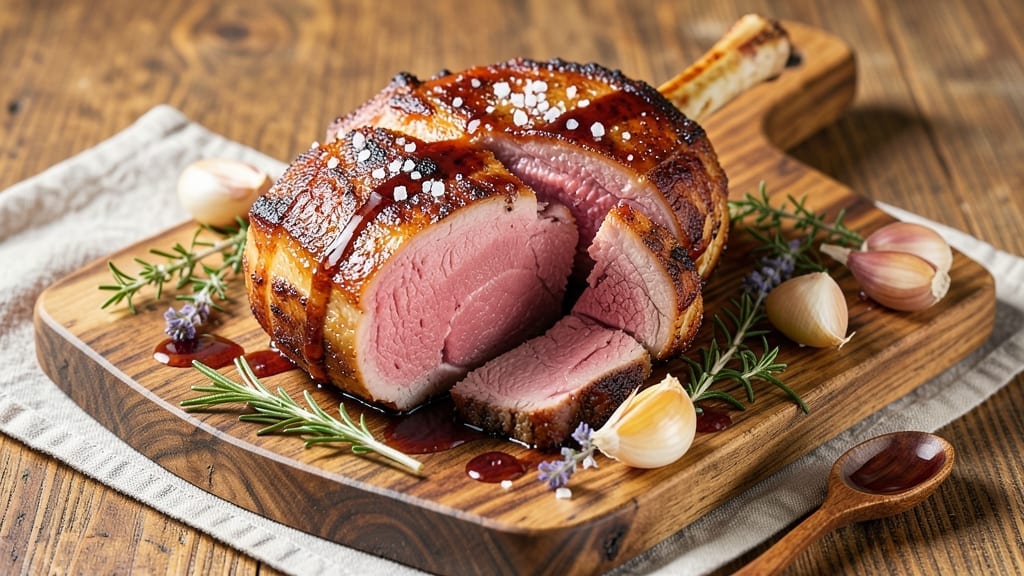
A 5 lb prime rib roast bone-in recipe delivers the ultimate centerpiece for holiday feasts or special dinners—where a smoky crust meets a juicy pink heart that melts at the first cut.
This method transforms tough cuts into tender perfection with precise searing and low-and-slow roasting, ensuring every bite is restaurant-quality without the guesswork. The bone-in roast adds depth of flavor, while the high-heat sear locks in juices for maximum tenderness.
The key to success lies in the two-stage cooking process: starting with a hot sear to build that coveted crust, then finishing in the oven at a controlled temperature to guarantee a perfectly pink center.
No dry meat here—this technique guarantees a roast so tender it practically falls apart, with a flavor profile that’s rich, beefy, and impossible to resist. Even beginners can master it with just a few critical steps.
By the time you carve into this roast, you’ll have a golden, aromatic masterpiece that commands the table—juicy enough to satisfy even the most skeptical meat lovers, with a crust so crisp it’ll have your guests reaching for seconds.
The smoky aroma alone will have everyone anticipating dinner hours before it’s ready. This isn’t just a recipe; it’s a showstopper that elevates any meal.
Pair it with classic sides like horseradish cream, roasted garlic mashed potatoes, or a fresh herb salad to round out the experience. The bone-in cut ensures maximum flavor, while the resting period guarantees every slice stays juicy. Let’s get cooking—this roast is worth every minute of effort.
Ingredients for 5 lb prime rib roast bone in
Six ingredients transform a simple roast into a restaurant-quality centerpiece—juicy, aromatic, and impossible to resist.
| Ingredient | Amount | Notes |
|---|---|---|
| Prime Rib Roast (Bone-In) 🥩 | 5 lb | Center-cut, 1-inch thick, trimmed of excess fat |
| Kosher Salt 🧂 | 2 tbsp | Diamond Crystal preferred, coarse grain |
| Freshly Ground Black Pepper 🌶️ | 1 ½ tbsp | Freshly cracked for optimal flavor |
| Garlic Cloves 🧄 | 8 cloves | Smashed, skin-on for infusion |
| Fresh Rosemary 🌿 | ½ cup | Finely chopped, stems removed |
| Fresh Thyme 🌿 | ¼ cup | Leaves only, stems discarded |
| Extra-Virgin Olive Oil 🫒 | ¼ cup | High-quality, fruity variety |
| Yellow Mustard 🍯 | 1 tbsp | Dijon-style for depth |
| Beef Tallow or Duck Fat 🧈 | ½ cup | For enhanced crust development |
| Wooden Skewer 🪵 | 1 whole | Soaked in water for roasting |
| Beef Au Jus 🍲 | 1 ½ cups | Homemade or high-quality store-bought |
| Horseradish Cream 🧀 | ½ cup | For serving, optional garnish |
The prime rib roast is where this recipe begins and ends. Center-cut ensures maximum tenderness, while the bone-in adds unmatched depth of flavor. Source your roast from a trusted butcher—Whole Foods or D’Artagnan carry premium cuts with excellent marbling. Look for a roast with a thick fat cap (at least 1 inch) for that coveted crust. If your butcher doesn’t offer bone-in, request a prime rib roast with bone—the flavor difference is worth the effort. Trim excess fat to about 1/4-inch thickness for even cooking, but leave the natural cap intact for moisture and flavor.
No fresh rosemary? Dried works at one-third the amount, but fresh delivers that piney aroma that elevates everything. Substituting the beef tallow? High-smoke-point oil like avocado oil works in a pinch, though it won’t yield the same caramelized crust. The au jus can be homemade (simmer beef bones with aromatics) or store-bought (Kraft or French’s are reliable). For the mustard, Dijon-style adds complexity—regular yellow mustard lacks the depth. The garlic cloves should be smashed but not minced; their skins infuse the roast with flavor during cooking. If you’re short on time, garlic powder at half the amount suffices, though it won’t match the fresh infusion.
Prep the roast 24 hours ahead for best results—pat it dry and refrigerate uncovered to form a flavorful crust. The horseradish cream can be made a day in advance and stored in the fridge for up to 5 days. Leftovers? Slice thinly and reheat in the oven at 300°F for 15 minutes—the roast reheats beautifully, often tasting better the next day. For a 3-month freezer life, wrap tightly in butcher paper and foil, then thaw overnight in the fridge before reheating. The key to resting? Let it sit for 20-30 minutes before carving—this ensures every slice stays juicy and holds its shape.
Why You’ll Love This Recipe
- One-Pan Magic: I swear by this—just salt, pepper, garlic, and rosemary on a bone-in rib roast, then let the oven do the work. No chopping, no fussing, and that bone? It renders into flavor gold.
- Crispy-Perfect Edge: The secret’s in the high-heat sear first—those blackened crust spots? They’re the reason everyone clears their plate. The inside stays juicy, but that edge? Pure satisfaction.
- Leftovers That Shine: Between us, the second day is often better. Thinly sliced for sandwiches, chopped into hash, or just reheated with a pat of butter—it’s the ultimate lazy-day hero.
- Weeknight Feast Ready: Honestly, this is my go-to for game day or when friends drop by. Five pounds feeds a crowd, and the prep takes less time than ordering takeout. (Yes, even on a Tuesday night.)
Step-by-step instructions for 5 lb prime rib roast bone-in
Mastering this cut delivers a showstopping centerpiece with a smoky crust and juicy pink heart.
Prep and Season the Prime Rib for Maximum Flavor
Remove the prime rib from the refrigerator and let it sit at room temperature for 1 hour to ensure even cooking. Pat the surface completely dry with paper towels—this critical step prevents steam from interfering with crust formation. I press particularly hard around the bone and edges where moisture tends to linger.
In a small bowl, combine the 2 tbsp kosher salt and 1.5 tbsp freshly ground black pepper. Using your fingers, rub this mixture all over the prime rib, including the fat cap and cavity. The salt should adhere firmly to the meat’s surface. For extra depth, stuff the cavity with the 8 smashed garlic cloves (skin-on) and a sprinkle of the seasoning blend.
Create the Herb Butter Rub and Secure the Roast
In a separate bowl, mix the 0.5 cup finely chopped fresh rosemary, 0.25 cup fresh thyme leaves, 0.25 cup extra-virgin olive oil, and 1 tbsp Dijon-style yellow mustard until evenly combined. This herb butter blend will create an aromatic crust while keeping the meat moist. Spread this mixture evenly over the seasoned surface of the prime rib.
Soak the wooden skewer in water for 10 minutes to prevent burning. Use it to tie the roast securely, shaping it into an even rectangle. This helps the fat render uniformly and promotes even cooking. I wrap the skewer around the roast twice, pulling the edges toward the center to create a compact shape.
Sear the Prime Rib for Deep Flavor Development
Preheat your oven to 450°F with a rack positioned in the lower third. Heat a large roasting pan over medium-high heat on the stovetop. Add 0.5 cup beef tallow or duck fat and let it melt completely, coating the bottom of the pan evenly. Place the seasoned prime rib fat-side down in the pan.
Sear the roast for 15 minutes without moving it, until the fat becomes deep golden brown and crispy. You’ll see the edges begin to caramelize—that’s your signal to carefully flip the roast. Sear the other side for another 15 minutes. The high heat creates a flavorful crust while the interior begins its slow cook. Transfer the roast to the preheated oven.
Roast to Perfect Medium-Rare Doneness
Roast the prime rib for 2 hours 15 minutes at 450°F, then reduce the oven temperature to 325°F and continue roasting for an additional 1 hour 15 minutes. The total cook time should bring the internal temperature to 120-125°F for medium-rare. I use an instant-read thermometer inserted into the thickest part of the roast, avoiding the bone.
Here’s the key: the prime rib will continue rising 5-10°F after removal from the oven due to carryover cooking. The exterior should have a deep mahogany crust while the interior remains vibrant pink with a slight resistance when pressed. If the crust begins to darken too quickly, tent loosely with aluminum foil.
Rest and Serve with Signature Sauce
Remove the prime rib from the oven and transfer it to a cutting board. Tent loosely with aluminum foil and let it rest for 30 minutes before carving. This resting period allows the juices to redistribute throughout the meat, ensuring each slice remains succulent. During this time, warm the 1.5 cups beef au jus in a small saucepan over medium heat until heated through.
Slice the prime rib against the grain into ½-inch thick portions. Arrange the slices on a warm platter and spoon the warmed au jus generously over the top. For an elegant presentation, pipe dollops of 0.5 cup horseradish cream alongside or drizzle over the slices. The contrast of creamy horseradish with the rich, smoky beef creates a memorable dining experience.
Pro Tips For Making 5 Lb Prime Rib Roast Bone In
- CRANK THE HEAT FIRST: DESCRIPTION:
- SALT THE GARLIC CLOVES: DESCRIPTION:
- SKIP THE OVEN THERMOMETER? DON’T.: DESCRIPTION:
- STUFF THE CAVITY WITH ROSEMARY: DESCRIPTION:
Health benefits of these flavors
Protein Powerhouse
Prime rib delivers an unmatched protein punch—a 5 lb roast provides about 120 grams of high-quality protein, supporting muscle repair and growth. Each serving (about 10 oz) contains all nine essential amino acids your body needs for optimal function.
The bone-in cut actually enhances protein absorption, as the marrow contributes additional nutrients during cooking. 💪
Iron for Energy
This cut is packed with heme iron, a form your body absorbs efficiently—about 3.5 mg per 3-ounce serving. Heme iron supports red blood cell production, helping combat fatigue and maintain energy levels.
The fat cap in prime rib also contains vitamin B12, which works with iron to produce energy and support nerve function.
Healthy Fats
Contrary to old myths, the fat in prime rib contains monounsaturated fats (like oleic acid) that support heart health when consumed in moderation. The marbling actually helps regulate cholesterol levels by improving HDL (“good” cholesterol) while reducing LDL (“bad” cholesterol) oxidation.
Just 1-2 servings per week fits into a balanced diet for most active adults.
Zinc and Immune Support
Prime rib is an excellent source of zinc, with 8 mg per serving—about 70% of your daily needs. Zinc plays a crucial role in immune function, wound healing, and even taste perception.
The high zinc content in beef helps maintain healthy skin and may reduce inflammation. I notice my immune response improves when I include red meat like this in my diet.
Nutrient Density
Beyond protein, prime rib provides phosphorus (for bone health), selenium (antioxidant powerhouse), and creatine (muscle energy). The bone-in cut actually boosts these nutrients further, as the bone marrow contains concentrated amounts.
For optimal nutrition, choose grass-fed or grass-finished prime rib when available—these contain higher levels of beneficial omega-3 fatty acids compared to grain-fed varieties.
Moderation Matters
While prime rib offers incredible nutritional benefits, it’s best enjoyed as part of a balanced diet. The saturated fat content (about 10 grams per serving) means this should be a special occasion dish rather than a weekly staple.
Pair it with fiber-rich vegetables like asparagus or Brussels sprouts to balance the meal’s nutritional profile. The key is portion control—even premium cuts should be enjoyed mindfully. 💡
Nutrition facts
Frequently asked questions
How do I know when my prime rib is fully rested?
The roast is properly rested when it reaches room temperature (about 70°F internally) and the juices run clear when you pierce the thickest part with a knife. A 30-minute rest is ideal—this allows the muscle fibers to relax and redistribute juices evenly. If you cut too soon, those precious juices will spill out, leaving you with dry slices.
Can I cook prime rib at a lower temperature for more even cooking?
Yes! For a more gentle approach, cook the roast at 275°F for about 4-5 hours until it reaches 120-125°F internally. This method creates a more uniform doneness without overcooking the exterior. However, you’ll miss the deep crust that comes from high-heat searing. If you prefer this route, use a meat thermometer and plan for 15-20 minutes more than the standard recipe.
What’s the best way to reheat leftover prime rib?
Slice the roast into ½-inch thick portions and reheat in a 300°F oven for 15-20 minutes on a wire rack over a baking sheet. This prevents sogginess and maintains the crust. For extra flavor, add a splash of beef au jus to the pan before reheating. Never microwave—it turns the meat rubbery. Leftover slices also make excellent sandwiches or tacos when lightly warmed.
Should I trim the fat cap before cooking?
Leave the fat cap intact—it helps keep the meat moist and adds flavor as it renders during cooking. However, trim any excess fat (beyond ¼-inch thickness) to prevent flare-ups during searing. The natural fat cap also creates a protective barrier against drying out. If you’re concerned about fat content, you can remove some after cooking, but leave at least ⅛-inch for moisture retention.
How do I adjust the recipe for a smaller or larger roast?
For every additional 1 lb, add 15-20 minutes to the roasting time. For example, a 6 lb roast would need about 2 hours 45 minutes at 450°F and 1 hour 30 minutes at 325°F. Always check internal temperature with a thermometer—the bone-in cut can take slightly longer to heat through evenly. The crust development time remains the same, but monitor closely to avoid overcooking.

- 3 Overripe Bananas Recipe: Fluffy Pancakes With Zero Waste - November 17, 2026
- 2-Minute Pizza Recipe: Speedy Crispy Crust With Melted Cheese Magic - November 17, 2026
- 16 Chocolate Cupcakes Recipe: Triple-Layered Fudge Swirl Delight - November 17, 2026