
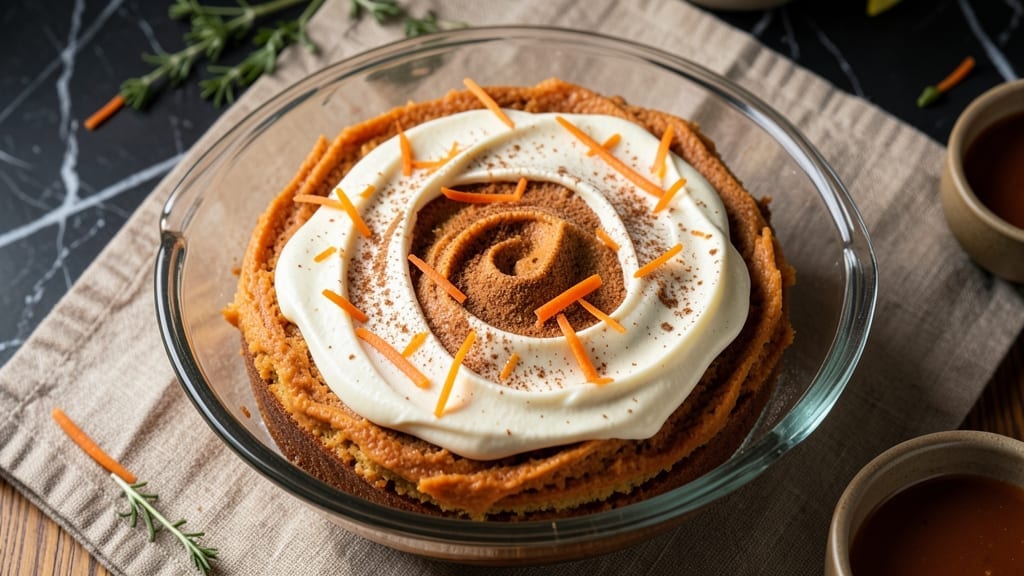
When you crave carrot cake but don’t have hours to spare, this 5-minute carrot cake recipe delivers all the classic flavors in a fraction of the time. The secret lies in a microwave method that transforms simple ingredients into moist, spiced cake with tender carrots and warm cinnamon notes.
I perfected this version after years of baking—now you can enjoy carrot cake without waiting for the oven to heat.
The magic happens with just a handful of pantry staples: flour, sugar, eggs, and of course, grated carrots. A splash of vanilla and a pinch of cinnamon ensure that familiar carrot cake taste, while a quick cream cheese frosting twist adds a velvety finish.
This method skips the fuss of mixing batter by hand, making it perfect for busy weeknights or last-minute dessert cravings.
What you’ll end up with is a rich, moist cake that’s ready in minutes, topped with a smooth cream cheese frosting that balances the cake’s natural sweetness. The texture is surprisingly tender, with just the right amount of carrot bite in every forkful.
It’s the kind of dessert that feels indulgent but comes together effortlessly.
Serve it warm with a scoop of vanilla ice cream or enjoy it at room temperature with a sprinkle of chopped nuts for extra crunch. This recipe proves that quick doesn’t mean sacrificing quality—just simplicity and speed. Let’s get baking!
Ingredients for 5 minute carrot cake
Pantry staples and a few fresh grated carrots—this cake comes together faster than you can preheat an oven.
| Ingredient | Amount | Notes |
|---|---|---|
| All-Purpose Flour 🌾 | 1 cup | Sifted for even texture |
| Granulated Sugar 🍚 | ¾ cup | White or light brown |
| Large Eggs 🥚 | 2 whole | Room temperature preferred |
| Unsalted Butter 🧈 | ½ cup | Melted, full-fat version |
| Vanilla Extract 🍯 | 1 tsp | Pure vanilla preferred |
| Ground Cinnamon 🌶️ | 1 ½ tsp | Freshly ground for warmth |
| Baking Powder 🧂 | 1 tsp | Aluminum-free preferred |
| Salt 🧂 | ¼ tsp | Fine sea salt |
| Carrots 🥕 | 1 ½ cups | Grated, fine texture |
| Plain Greek Yogurt 🥛 | ½ cup | Full-fat for creaminess |
| Cream Cheese 🧀 | 8 oz | Room temperature, soft |
| Powdered Sugar 🍚 | 1 cup | Sifted for smooth frosting |
| Vanilla Extract 🍯 | ½ tsp | Same as cake layer |
| Heavy Cream 🥛 | ¼ cup | Cold for stability |
The carrots are the star, so grab the bright orange ones from the produce section—they’re sweeter and more vibrant. Organic carrots work best since they’re less likely to have wax coatings that can affect texture. If you’re short on time, baby carrots can be grated (just peel them first), but the flavor isn’t as rich. For the flour, King Arthur or Gold Medal brands are reliable choices—they’re finely milled and consistent. The baking powder is non-negotiable here; Aluminum-free versions are preferred to avoid any metallic aftertaste. I always check the expiration date on spices like cinnamon—if it’s been sitting in your cabinet for months, toast it fresh in a dry pan for 30 seconds to wake up the flavor.
No Greek yogurt? Sour cream at half the quantity works in a pinch, though the texture will be slightly denser. Substituting regular yogurt is fine, but the protein content in Greek yogurt gives the cake that signature moisture. For the frosting, cream cheese brands like Philadelphia or Kite Hill are my go-tos—they’re smooth and consistent. If you’re out of powdered sugar, you can make a quick substitute by blending granulated sugar in a food processor until it’s fine, but sifted powdered sugar is ideal for that silky finish. The heavy cream can be whipped separately if you prefer a lighter frosting, but mixing it directly into the cream cheese keeps things simple.
This cake is best served immediately after microwaving—it’s still warm and the frosting is just starting to set. If you need to prep ahead, assemble the cake and frosting, then refrigerate for up to 2 hours before microwaving. The frosting keeps well in the fridge for 3 days, covered tightly, and can be whipped back up with a splash of milk if it separates. For storage, I like to wrap the cake in plastic wrap and keep it at room temperature for up to 1 day—the texture stays tender, but the frosting might soften slightly. Freezing isn’t recommended, as the microwave method relies on the cake’s quick cook time.
Why You’ll Love This Recipe
- Five-Ingredient Magic: The pantry staples you already own—flour, sugar, butter, eggs, and vanilla—are all you need. No special trips, no forgotten spices, just pure simplicity that still delivers.
- Moist Without the Fuss: That creamy texture? It’s all in the butter-to-sugar ratio and a quick whisk. No overmixing, no waiting for the oven to preheat forever—just tender, cakey perfection every time.
- Breakfast or Dessert: Honestly, I’ve had this cold for lunch, warmed with a sprinkle of cinnamon as a snack, and even as a quick dessert. The carrot’s natural sweetness balances the vanilla butter richness—it’s that adaptable.
- Zero-Waste Leftovers: The batter’s so stable it keeps for days, and the cake slices neatly. Pack a few in your lunchbox or freeze half for when you’re too tired to bake. (Yes, even on a Tuesday night.)
Step-by-step instructions for quick carrot cake with cream cheese frosting
Here’s how to make this surprisingly fast carrot cake that delivers bakery-quality results in minutes.
Prep Ingredients for Maximum Efficiency
Start by grating the 1.5 cups of carrots using a box grater or food processor—aim for a fine, almost paste-like texture. This ensures even distribution throughout the batter. In a separate bowl, sift together the 1 cup of all-purpose flour, 1.5 teaspoons of ground cinnamon, 1 teaspoon of baking powder, and ¼ teaspoon of salt. Sifting prevents lumps and guarantees a light, tender crumb.
While the oven preheats to 350°F, melt the ½ cup of unsalted butter in a microwave-safe bowl in 30-second intervals, stirring between each interval until completely smooth. Let it cool slightly—it should still feel warm to the touch but not hot. In another bowl, whisk together the 2 whole large eggs, ½ cup of plain Greek yogurt, 1 teaspoon of vanilla extract, and ¾ cup of granulated sugar until fully combined and slightly thickened. This mixture forms the base of your cake batter.
Combine Wet and Dry Ingredients Quickly
Pour the melted butter into the egg mixture and whisk vigorously for 20 seconds until fully incorporated. The mixture should look smooth and slightly thickened. Gradually fold in the grated carrots using a rubber spatula, being careful not to overmix—just until evenly distributed. The batter will be thick and moist, almost like a dense cookie dough.
Gently fold in the sifted dry ingredients in two additions, mixing just until combined. You’ll notice the batter becomes lighter in color as the flour incorporates. Real talk: don’t overmix here. Overworking the batter develops gluten, which leads to a tough cake instead of the tender texture we’re after. The batter should be thick but pourable—if it looks too stiff, add 1 tablespoon of milk or water to loosen it.
Bake the Cake with Precision Timing
Grease an 8-inch round cake pan with butter or line it with parchment paper for easy removal. Pour the batter into the prepared pan and smooth the top with a spatula. Tap the pan gently on the counter 3-4 times to remove any air bubbles trapped in the batter. This simple step prevents sinkholes in your cake.
Bake in the preheated 350°F oven for 20-22 minutes. You’ll know it’s done when a toothpick inserted in the center comes out clean and the edges pull away slightly from the pan. The top should be golden brown but not dark—if it starts browning too quickly, loosely tent the pan with aluminum foil. The cake should spring back slowly when pressed gently in the center, not leave a deep indent.
Prepare the Cream Cheese Frosting While Cake Cools
While the cake bakes, beat the 8 ounces of cream cheese and ½ cup of unsalted butter together in a mixing bowl using an electric mixer on medium speed until completely smooth and creamy. This step is crucial—don’t rush it. The mixture should look like thick, pale yellow pudding. Scrape down the sides of the bowl with a spatula to ensure even mixing.
Gradually add the 1 cup of powdered sugar, ½ teaspoon of vanilla extract, and ¼ cup of cold heavy cream. Mix on low speed until just combined, then increase to medium and beat for 2-3 minutes until light and fluffy. The frosting should be thick enough to hold peaks when piped but still spreadable. If it’s too thick, add 1 teaspoon of milk at a time until you reach the perfect consistency. This frosting is the secret weapon that makes this cake taste like it came from a bakery.
Assemble and Serve Immediately
Once the cake has cooled completely in the pan for 15 minutes, run a thin knife around the edges to loosen it from the pan. Place a wire rack over a plate and invert the cake onto it, then carefully remove the pan. Let the cake cool completely before frosting—this prevents melting and ensures clean slices. Spread the cream cheese frosting evenly over the top and sides of the cake, using a spatula for a smooth finish.
Slice into 4 equal wedges and serve immediately. The cake should have a moist, tender crumb with perfectly distributed carrot pieces, while the frosting adds a rich, tangy contrast that balances the cake’s natural sweetness. For best results, serve within 2 hours of assembly—this cake tastes best when enjoyed fresh from the oven.
Pro Tips For Making 5 Minute Carrot Cake
- MIX DRY INGREDIENTS FIRST: I learned this the hard way—skipping this step means you’ll end up with lumps of sugar and flour clinging to your butter. Whisk the flour and sugar together in the bowl before adding wet ingredients. That way, when you fold in the eggs and melted butter, everything blends smoothly without a fight.
- MELT BUTTER SLOWLY: Cranking the heat to melt butter fast introduces moisture, which can make your cake dense. Use a double boiler or microwave in 20-second bursts until just melted—no bubbles. Cold butter creates air pockets, and that’s what makes this cake light.
- WEIGH EGGS AT ROOM TEMP: Cold eggs from the fridge mix unevenly, leaving streaks of raw egg in your batter. Pop them in warm water for 5 minutes first, or just let them sit out while you preheat. The batter will be smoother, and the cake will rise better—no guessing if it’s fully cooked.
- STOP WHEN SPRINGY: Overbaking is the real enemy here. The cake’s done when a toothpick comes out with a few moist crumbs—not clean. If you wait for it to pull away completely, you’ll end up with a dry, sad sponge. Trust the springiness, not the clock.
Dietary considerations for this dish
Gluten-Free Adaptation
For a gluten-free version, swap the 1 cup all-purpose flour with a 1:1 gluten-free baking flour blend like King Arthur Measure for Measure or Bob’s Red Mill 1-to-1. These blends mimic the texture of regular flour while keeping the cake tender.
Add 1 extra teaspoon of baking powder to compensate for the lack of gluten structure, and ensure your cinnamon is certified gluten-free to avoid cross-contamination.
The cake will still be moist but may have a slightly denser crumb—balance this by adding 1 extra tablespoon of Greek yogurt for extra tenderness. 🌾
Vegan-Friendly Swaps
To make this cake vegan, replace the 2 eggs with 2 tablespoons of flaxseed meal mixed with 6 tablespoons of water (let it sit for 5 minutes to thicken).
Use vegan butter (like Miyoko’s or Earth Balance) instead of unsalted butter, and swap the Greek yogurt for ½ cup unsweetened coconut yogurt or silken tofu for creaminess.
For the frosting, replace the cream cheese with 8 ounces of vegan cream cheese (like Kite Hill) and use coconut milk instead of heavy cream. The frosting will still be rich and tangy, though slightly lighter in texture. 🥛
Lower-Sugar Option
Cut the sugar by ⅓—reduce the ¾ cup granulated sugar to ½ cup and the 1 cup powdered sugar in the frosting to ¾ cup. Boost natural sweetness by adding ½ cup grated sweet potato (instead of some carrots) or 2 tablespoons of maple syrup to the batter.
Use monk fruit sweetener or erythritol in the frosting if you prefer zero-calorie sweetness, but reduce the amount by half since these sweeteners are much sweeter than powdered sugar. The cake will still be moist and flavorful, just less sweet. 🍯
Nut-Free Version
If you’re avoiding nuts, skip any optional toppings like walnuts or pecans and focus on the cake itself. For extra crunch without nuts, sprinkle toasted coconut flakes or crushed graham crackers on top of the frosting.
The cake’s natural sweetness and carrot texture shine on their own—no nuts needed! If you’re concerned about cross-contamination, use certified nut-free facilities for all ingredients, especially the flour and spices. 🥥
Dairy-Free Adjustments
For a dairy-free cake, use dairy-free butter (like Earth Balance) and replace the Greek yogurt with ½ cup coconut yogurt or unsweetened applesauce for moisture. The frosting can be made dairy-free by using dairy-free cream cheese (like Violife) and coconut cream instead of heavy cream.
The texture will be slightly lighter, but the tangy-sweet balance remains intact. If you’re also avoiding eggs, use the flaxseed egg substitution mentioned earlier. 🧀
Nutrition facts
Frequently asked questions
Why does this carrot cake cook in just 5 minutes?
This isn’t a traditional oven-baked carrot cake—it’s a microwave method that skips the long baking time. The batter uses a quick-mix approach with melted butter and yogurt for moisture, while the microwave’s intense heat cooks it through in minutes. Think of it like a super-fast cake-in-a-mug concept scaled up! The texture is still moist and tender, though slightly denser than classic carrot cake.
Can I make this cake without an electric mixer?
For the frosting, beat the cream cheese and butter by hand with a fork or whisk until smooth, then mix in the powdered sugar with vigorous stirring. The cake batter can be mixed with a sturdy spoon or spatula—just fold everything gently to avoid overmixing. The texture will be slightly less fluffy but still delicious.
What if I don’t have Greek yogurt?
Use ½ cup sour cream or ½ cup applesauce as substitutes—they’ll keep the cake moist. For extra tenderness, add 1 extra tablespoon of milk or water to the batter if it seems too thick. The cake won’t be identical, but it’ll still be flavorful and quick to make. The frosting won’t be affected by this substitution.
How do I store leftovers?
Keep the cake covered at room temperature for up to 2 days, or refrigerate for 3 days if you prefer. The frosting may soften slightly when chilled—let it sit at room temperature for 10 minutes before serving. For longer storage, freeze the unfrosted cake for 1 month, then frost before serving. Microwave leftovers for 10-15 seconds to refresh them.
Can I add walnuts or other mix-ins?
Yes, but fold them in gently at the end to avoid overmixing. For ½ cup chopped walnuts or pecans, toast them first in a dry pan for 3-4 minutes to enhance their flavor. If you’re avoiding nuts, try shredded coconut or dried cranberries instead. Just remember—this is a quick cake, so don’t overload it with mix-ins or the texture may change.

- 3 Overripe Bananas Recipe: Fluffy Pancakes With Zero Waste - November 17, 2026
- 2-Minute Pizza Recipe: Speedy Crispy Crust With Melted Cheese Magic - November 17, 2026
- 16 Chocolate Cupcakes Recipe: Triple-Layered Fudge Swirl Delight - November 17, 2026