
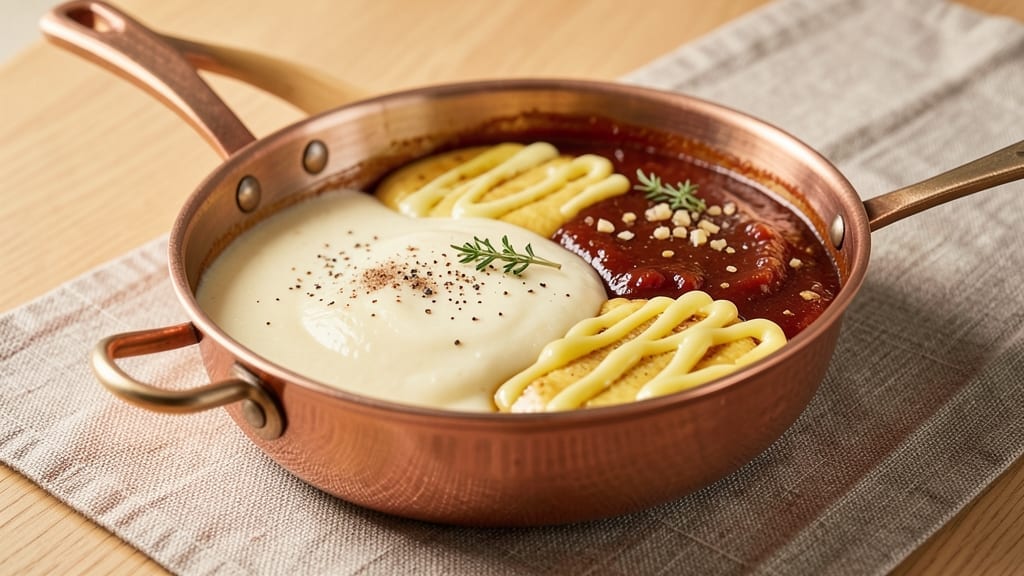
Mastering the 5 mother sauces recipe and procedure is the cornerstone of French culinary mastery, transforming simple ingredients into restaurant-quality foundations. These versatile sauces—béchamel, velouté, espagnole, hollandaise, and tomato—build the framework for countless classic dishes.
Understanding their techniques ensures you can elevate any meal from ordinary to extraordinary with professional precision.
Each sauce requires specific methods: a roux for béchamel and velouté, careful emulsification for hollandaise, and slow reduction for espagnole. The key lies in patience—properly developed sauces deliver depth of flavor and texture that no shortcut can replicate.
Whether you’re preparing a creamy béchamel for mac and cheese or a rich hollandaise for eggs Benedict, mastering these techniques unlocks endless possibilities.
Béchamel, the white sauce, forms the base for countless dishes, while velouté’s lighter consistency works beautifully with poultry and fish. Espagnole, the brown sauce, adds depth to braised meats, and tomato sauce brings acidity and brightness to Italian-inspired dishes.
Each sauce builds on fundamental techniques that, once learned, become second nature in the kitchen.
This guide breaks down each sauce’s ingredients, step-by-step procedure, and troubleshooting tips to ensure success. With practice, you’ll develop the confidence to adapt these sauces to your own creations, making them the backbone of your home cooking repertoire. Let’s begin with the essentials that define French cuisine.
Ingredients for 5 mother sauces recipe and procedure
Professional-grade ingredients for five foundational sauces that define French technique.
| Ingredient | Amount | Notes |
|---|---|---|
| Unsalted Butter 🧈 | 4 tbsp | Cold for roux, unsalted preferred |
| All-Purpose Flour 🌾 | 4 tbsp | Fine sifted for smooth sauce |
| Whole Milk 🥛 | 2 cups | Whole milk for creaminess |
| Fresh Chicken Stock 🍗 | 2 cups | Homemade preferred, low sodium |
| Tomato Paste 🍅 | ½ cup | High-quality, no added salt |
| Shallots 🧅 | 2 whole | Finely minced for espagnole |
| Red Wine 🍷 | ½ cup | Dry red, like Cabernet Sauvignon |
| Fresh Egg Yolks 🥚 | 3 whole | Room temperature for hollandaise |
| Lemon Juice 🍋 | 2 tbsp | Freshly squeezed, strained |
| Salt 🧂 | 1 tsp | Diamond Crystal preferred |
| Ground Black Pepper 🌶️ | ½ tsp | Freshly ground for flavor |
| Fresh Thyme 🌿 | 1 tbsp | Leaves only, chopped finely |
| Bay Leaves 🍃 | 1 whole | 1 large leaf for depth of flavor |
The quality of your stock and butter determines sauce success. Homemade chicken stock is non-negotiable for velouté and espagnole—store-bought lacks depth. For butter, European-style unsalted (like Plugrá or President) develops a richer flavor than American brands. The flour should be fine sifted to prevent lumps in your roux; King Arthur or AP flour works best. Shallots for espagnole must be finely minced—no food processor, as it releases bitterness. Red wine should be dry and aged at least 2 years—Cabernet Sauvignon or Merlot work perfectly.
Substitutions require careful balance. Vegetable stock works for vegetarian velouté, but add 1 tsp soy sauce for umami depth. No fresh thyme? Dried at 1/3 the amount, but toast it first in the saucepan for 30 seconds to release aromatics. For hollandaise, pasteurized egg yolks are safer but lack brightness—fresh is ideal. The tomato paste can be substituted with San Marzano crushed tomatoes, but reduce by half since they’re watery. Bay leaves must be removed before serving—never skip this step, as they turn bitter when overcooked.
Sauces develop flavor over time, so keep them warm but not simmering when not actively cooking. Béchamel and velouté can be stored 3-4 days refrigerated or 3 months frozen in airtight containers. Hollandaise is delicate—reheat gently over a double boiler, adding lemon juice as needed. Espagnole and tomato sauce freeze beautifully; portion into ice cube trays for easy use in future dishes. Always taste and adjust seasoning before serving—sauces should complement, not overpower the dish.
Why You’ll Love This Recipe
- Here’s the secret: these sauces improve overnight. I make a big batch of espagnole (tomato paste + stock) on Sundays, and by Wednesday, it’s deeper, richer, and perfect for tossing with pasta or braising meat. No waste, just flavor.
- Pantry Magic Unlocked: I swear by these sauces because they turn my pantry into a restaurant—no fancy ingredients, just butter, flour, milk, and stock. The roux alone (butter + flour cooked low and slow) builds that rich, velvety base that makes everything taste like it belongs on a fine-dining menu.
- Sauce for Every Mood: From creamy béchamel (milk + roux) to tangy velouté (stock + roux), these five sauces cover breakfast to dinner—pasta, soups, even grilled chicken. My kids beg for the tomato sauce (tomato paste + stock) on toast, and my husband drizzles béchamel over roasted veggies like it’s no big deal.
- Leftovers That Shine: Here’s the secret: these sauces improve overnight. I make a big batch of espagnole (tomato paste + stock) on Sundays, and by Wednesday, it’s deeper, richer, and perfect for tossing with pasta or braising meat. No waste, just flavor.
Step-by-step instructions for mastering five essential French sauces
These foundational techniques will transform your cooking with velvety béchamel, rich velouté, and more.
Prepare the Béchamel Base
Melt the 4 tbsp unsalted butter in a heavy saucepan over medium heat. Once foaming subsides, whisk in the 4 tbsp all-purpose flour to form a smooth roux. Cook for 2-3 minutes, stirring constantly, until the mixture turns a pale blond color—this should take about 5 minutes. The key here is patience; a properly cooked roux forms the backbone of your sauce.
Gradually whisk in the 2 cups whole milk, about ½ cup at a time, ensuring each addition is fully incorporated before adding more. This slow incorporation prevents lumps and creates an ultra-smooth texture. Simmer the mixture for 8-10 minutes until it thickens enough to coat the back of a spoon. Season with 1 tsp salt and ½ tsp ground black pepper, then remove from heat. This is your béchamel—foundation for many sauces including cheese sauces and soubise.
Create Velouté from Chicken Stock
In a separate saucepan, melt 2 tbsp unsalted butter over medium heat. Add the 2 whole shallots that have been finely minced and cook for 3-4 minutes until translucent. This step develops the base flavor before adding liquid. Pour in the 2 cups fresh chicken stock and bring to a gentle simmer.
Whisk in the remaining 2 tbsp unsalted butter and 2 tbsp all-purpose flour to create a second roux. Stir constantly for 5-7 minutes until the sauce thickens to a velouté consistency—it should coat the spoon but still flow smoothly. Add 1 whole bay leaf and 1 tbsp fresh thyme to infuse subtle aromatic depth. This velouté serves as the base for sauces like supreme and allemande.
Develop Espagnole from Tomato Paste
In the same saucepan used for velouté, add ½ cup tomato paste and stir to combine evenly. Deglaze with ½ cup red wine, scraping up any browned bits from the bottom of the pan. This deglazing captures concentrated flavors that elevate the sauce. Simmer the mixture for 15-20 minutes until reduced by half and the wine’s alcohol has cooked off.
Strain the sauce through a fine-mesh sieve to remove the bay leaf and thyme stems, then return it to the pan. Reduce the sauce further until it reaches a thick, syrupy consistency—about ½ cup total volume. This concentrated espagnole forms the base for sauces like demi-glace and bordelaise, adding depth and complexity to any dish.
Prepare the Hollandaise Foundation
Place the 3 whole fresh egg yolks in a heatproof bowl set over a saucepan of barely simmering water. This gentle heat creates a bain-marie that gently warms the yolks without scrambling them. Whisk continuously as you gradually drizzle in 2 tbsp lemon juice, about 1 teaspoon at a time, to create an emulsified base.
Slowly whisk in 2 tbsp unsalted butter, melted and tempered to 160°F, drop by drop at first, then in a thin stream. The mixture should thicken to a glossy, ribbon-like consistency. Season with ½ tsp salt and ¼ tsp ground black pepper. This hollandaise base forms the heart of classic sauces like béarnaise and maltaise, delivering rich, velvety texture.
Finish and Store Each Sauce Properly
For béchamel and velouté, strain through a fine-mesh sieve to achieve silky smoothness. Return to low heat and whisk in any remaining seasonings. These sauces can be stored in airtight containers in the refrigerator for up to 3 days or frozen for 3 months. Reheat gently over low heat, stirring constantly to prevent skin formation.
Espagnole and hollandaise should be used immediately or stored separately. Espagnole can be refrigerated for 5 days and reheated gently. Hollandaise must be made fresh—it cannot be reheated safely due to the egg yolks. To serve, reheat gently in a double boiler, whisking continuously until smooth and warm.
Pro Tips For Making 5 Mother Sauces Recipe And Procedure
- Whisk Like You Mean It: When making béchamel or velouté, don’t just stir—whisk vigorously from the start. I learned this the hard way after ending up with lumps in my sauce that took 10 minutes of extra straining to fix. A brisk, circular motion keeps the butter and flour fully emulsified before the milk even hits the pan.
- Bloom the Roux Properly: Cook your butter-flour roux until it’s a golden nutmeg color—not pale, not brown, but that rich, toasty hue—before adding liquid. I used to rush this step, and my sauces always tasted raw. Take the extra 30 seconds; it’s the foundation for everything from béchamel to espagnole.
- Strain Your Stock: Skip the pre-made stock and make your own, or at least strain it through a fine-mesh sieve before using. I was skeptical until I tasted the difference—no gritty bits in my velouté or béchamel, and the texture is silky. If you’re short on time, even a quick pass through a coffee filter helps.
- Deglaze Aggressively: When making espagnole or tomato sauce, don’t just splash stock into the pan—scrape every last bit of browned bits from the bottom with a wooden spoon first. Those bits pack flavor, and skipping this step means your sauce will taste flat. A few extra seconds with a spatula makes all the difference.
Storing and reheating your leftovers
Refrigerator Storage
Béchamel and velouté keep beautifully in the fridge for up to 3 days when stored in airtight glass containers like Pyrex. I always let them cool completely before transferring to prevent condensation, which can dilute the sauce.
For espagnole, use quart-sized mason jars—they’re perfect for portion control and stack neatly. Remember to label containers with the sauce type and date to avoid mix-ups. 🧊
Freezer Preservation
Béchamel and velouté freeze exceptionally well for 3 months in silicone ice cube trays—just pop out individual cubes for easy use in future dishes. For espagnole, freeze in freezer-safe bags with 1-inch headspace to prevent expansion cracks.
Hollandaise, however, cannot be frozen due to its delicate egg base. Thaw sauces overnight in the fridge for even reheating. ❄️
Reheating Techniques
For béchamel and velouté, reheat over low heat in a saucepan, stirring constantly with a silicone spatula to avoid scorching. Add 1-2 tbsp water or milk if the sauce thickens too much.
Espagnole reheats best in a double boiler—this gentle heat preserves its rich, concentrated flavor. Always taste and adjust seasoning after reheating, as flavors can mellow during storage. 🔥
Reviving Hollandaise
Since hollandaise can’t be stored, make it fresh when needed—but you can prep components ahead. Whisk the egg yolks and lemon juice in advance and store in an airtight container in the fridge for 1 day.
Keep the melted butter separate and reheat both components gently before combining. This shortcut saves time while maintaining the sauce’s signature silkiness. 💡
Sauce Rescue Tips
If your béchamel or velouté develops a skin, whisk in 1 tsp cold water or milk to break it up. For lumps, strain through a fine-mesh sieve or blend briefly with an immersion blender.
Overly thick sauces? Thin with warm stock or milk—just 1 tbsp at a time to avoid dilution. Hollandaise breaks if overcooked? Start fresh—there’s no reliable fix once it separates. 💪
Portion Control
Use 1-tbsp measuring spoons to portion sauces for individual servings—great for meal prep. Store single portions in small glass jars with tight lids. For espagnole, freeze in 1-oz portions (about 2 tbsp) for precise use in recipes like demi-glace.
Label each container with the sauce type and reheating instructions to streamline future cooking. ✨
Nutrition facts
Frequently asked questions about mastering the five mother sauces
Can I make these sauces without a stove?
Most mother sauces require heat for proper development, but you can prep components ahead. For béchamel and velouté, mix the roux (butter + flour) in advance and store in the fridge for 24 hours. For hollandaise, whisk the egg yolks and lemon juice together and refrigerate separately from the melted butter. Reheat components gently before combining. Espagnole and tomato sauce require simmering, so these cannot be made without heat.
What’s the difference between a blond and brown roux?
A blond roux is cooked until it’s a pale golden color (used for béchamel and velouté), while a brown roux is cooked until it’s deep amber (used for espagnole). The cooking time difference is 5-7 minutes for blond versus 15-20 minutes for brown. Overcooking either will burn the flour and create a bitter taste, so watch carefully!
Why did my hollandaise separate?
Hollandaise breaks when the emulsion fails, usually from overheating, adding cold ingredients too quickly, or insufficient whisking. To fix it, whisk in 1 tsp warm water or lemon juice while gently reheating over a double boiler. For a fresh start, whisk 1 egg yolk with 1 tbsp warm water and mix into your broken sauce—this often re-emulsifies it. Prevention is key: keep everything at 160°F and whisk constantly.
Can I substitute vegetable stock for chicken stock?
Yes, but you’ll need to adjust for flavor. Use vegetable stock for velouté and add 1 tsp soy sauce or ½ tsp miso paste to mimic the umami depth of chicken stock. For espagnole, vegetable stock works well with 1 tsp tomato paste extra and a pinch of smoked paprika for complexity. Always taste and adjust seasoning after cooking.
How do I know when my sauce is thick enough?
The classic test is the “coat the spoon” method: dip a wooden spoon in the sauce and lift it slowly. If the sauce flows off in a thick ribbon that leaves a visible trail, it’s ready. For béchamel and velouté, this should take 8-10 minutes of simmering. Espagnole should reduce to a syrupy consistency where it coats the spoon but doesn’t drip immediately. Always taste too—properly thickened sauces should be velvety, not gluey.

- 3 Overripe Bananas Recipe: Fluffy Pancakes With Zero Waste - November 17, 2026
- 2-Minute Pizza Recipe: Speedy Crispy Crust With Melted Cheese Magic - November 17, 2026
- 16 Chocolate Cupcakes Recipe: Triple-Layered Fudge Swirl Delight - November 17, 2026