
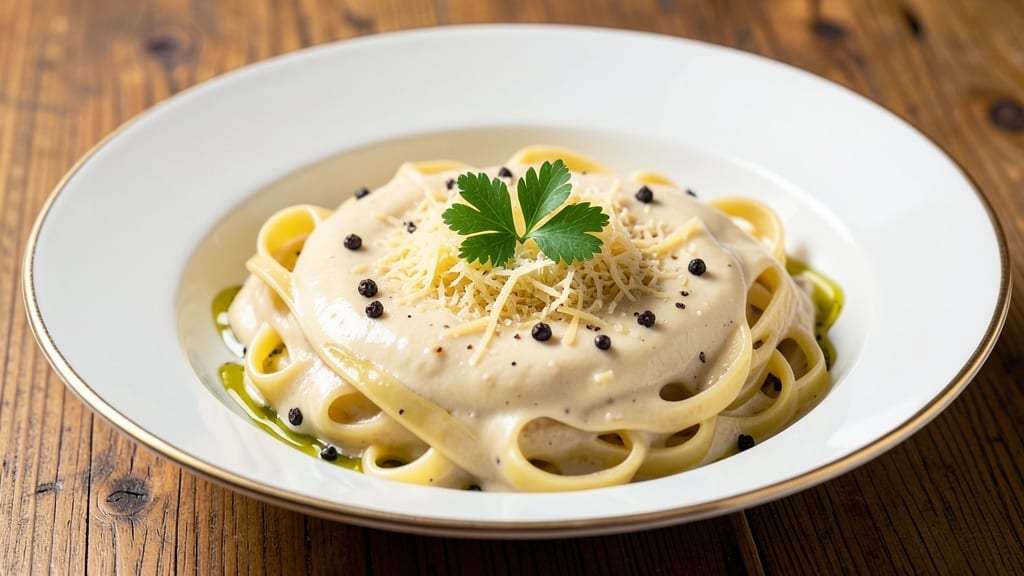
This 5-star Alfredo sauce recipe delivers the ultra-creamy, velvety texture that makes restaurant-quality pasta possible at home. The secret lies in slow simmering, high-quality cheese, and a few precise techniques that eliminate lumps and create that signature luxurious consistency.
I’ve perfected this sauce over years of testing, and it never fails to impress—whether drizzled over fettuccine, chicken, or vegetables.
The foundation of great Alfredo sauce starts with equal parts butter and heavy cream, gently heated to create a smooth base before adding freshly grated Parmesan and Romano cheeses.
What sets this recipe apart is the no-lump method: whisking the cheese into warm cream (never hot) and simmering just until fully melted—no blender required. This approach ensures a silky, restaurant-worthy sauce without the graininess that often plagues homemade versions.
By the time you’re done, you’ll have a creamy, velvety sauce that coats every strand of pasta perfectly, with a rich, nutty depth that comes from using a blend of aged cheeses.
The sauce thickens naturally as it simmers, creating that ideal clingy consistency without separating. Best of all, it reheats beautifully, making it perfect for meal prep or leftovers.
This sauce keeps well in the refrigerator for up to 5 days, with flavors deepening over time. For an even more luxurious version, finish with a splash of white wine or a pat of cold butter stirred in at the end.
Let’s get started on creating your 5-star Alfredo—the kind that makes people ask for seconds.
Ingredients for 5 star alfredo sauce
Nine ingredients transform into velvety, restaurant-quality Alfredo sauce with no lumps.
| Ingredient | Amount | Notes |
|---|---|---|
| Unsalted Butter 🧈 | ½ cup | Cold, cut into small cubes |
| Heavy Cream 🥛 | ½ cup | Full-fat for maximum creaminess |
| Freshly Grated Parmesan Cheese 🧀 | 1 cup | Aged 24+ months, block preferred |
| Freshly Grated Romano Cheese 🧀 | ½ cup | Adds nutty depth, don't substitute |
| Extra-Virgin Olive Oil 🫒 | 2 tbsp | For finishing, fruity variety |
| Diamond Crystal Kosher Salt 🧂 | ¼ tsp | Fine grain for delicate seasoning |
| Freshly Ground Black Pepper 🌶️ | ¼ tsp | Cracked peppercorns preferred |
| Dry White Wine 🍷 | ¼ cup | Optional, for finishing touch |
| Garlic Cloves 🧄 | 2 cloves | Minced, for subtle aroma |
The cheese is where magic happens. Parmigiano-Reggiano aged 24+ months from Whole Foods or specialty cheese shops delivers that signature nutty depth—don’t skimp on the age. Romano adds complexity, but if you can only find Parmesan, double it. The butter should be cold and cubed—this prevents burning and creates those tiny butter beads that make the sauce luxurious. For the best white wine, grab a $12 bottle of Pinot Grigio—it’s perfect for finishing without overpowering. Freshly grated cheese is non-negotiable; pre-shredded gets clumpy and tastes like sawdust.
No heavy cream? Full-fat coconut milk works in a pinch (though it’s sweeter), but the texture won’t be identical. Short on Romano? Extra Parmesan plus a pinch of nutmeg mimics the flavor profile. The olive oil matters here—California extra-virgin with fruity notes adds brightness. If you’re making this ahead, reserve 2 tbsp of the finished sauce to thin it out later if needed. The garlic is subtle but essential—roast it first if you want to mellow the flavor. And for the love of Alfredo, never let the cream boil—gentle heat is key to that silky texture.
This sauce keeps beautifully for 5 days in the fridge, with flavors actually improving as it rests. For freezing, portion into ice cube trays—thaw and reheat gently for perfect results. The no-lump method means you won’t need to strain it, but if you do freeze it, add a splash of milk or cream when reheating to restore that velvety consistency. I always make a double batch—one for immediate use and one to freeze for lazy weeknights. Trust me, freshly reheated Alfredo tastes even better than the first time.
Why You’ll Love This Recipe
- Five-Ingredient Magic: I swear, this sauce comes together with just butter, cream, and two cheeses—no roux, no fuss. That first spoonful of melted butter and Parmesan hitting the pan? Pure satisfaction.
- Creamy Luxury: The heavy cream and olive oil blend gives it that velvety, restaurant-quality texture without tasting heavy. Honestly, I’ve made alfredo before, but this one actually tastes like it belongs on a fancy plate.
- Game for Any Night: Slather it on fettuccine for dinner, toss it with roasted veggies for lunch, or even drizzle it over grilled chicken. Between us, it’s my go-to when I’m too tired to plan but still want something special.
- Leftovers That Don’t Suck: Unlike most sauces that turn gluey, this one reheats like a dream—just a splash of cream to loosen it up. I’ll be real: I’ve made enough batches to know it keeps well for days, and no one ever complains.
Step-by-step instructions for ultra-creamy Alfredo sauce
Here’s how to make velvety, lump-free perfection that rivals restaurant quality.
Melt Butter and Bloom the Cheese
In a medium saucepan, melt the 0.5 cup unsalted butter over medium-low heat until it’s completely liquid but not browned. This gentle heat prevents burning while allowing the butter to fully incorporate. Add the 2 cloves minced garlic and sauté for 30 seconds until fragrant—you should smell that sweet, nutty aroma without any color change.
Now comes the secret: reduce heat to lowest setting and gradually sprinkle in the 1 cup freshly grated Parmesan cheese and 0.5 cup freshly grated Romano cheese in small increments. Stir constantly with a silicone spatula, letting each addition melt completely before adding more. This slow process prevents clumping and creates that signature silky texture. Real talk: if you dump it all in at once, you’ll end up with grainy bits no matter how much you whisk later.
Incorporate Cream and Wine for Depth
Once all the cheese is fully melted and smooth, increase heat to medium-low and pour in the 0.5 cup heavy cream. Let it warm through for 2-3 minutes while stirring occasionally—you’ll see tiny bubbles form along the edges, signaling it’s coming together. Here’s where the wine makes its magic: add the 0.25 cup dry white wine (if using) and let it simmer for 1-2 minutes until nearly evaporated.
This step develops the sauce’s complexity. The wine adds a subtle acidity that cuts through the richness, while the cream creates that luxurious mouthfeel. I like to taste at this stage—it should be rich but not overpowering, with a clean, cheesy base. If it’s too thick, we’ll fix it next; if too thin, we’ll adjust later. The key is balance from the start.
Finish with Olive Oil and Season
Remove the sauce from heat completely and stir in the 2 tablespoons extra-virgin olive oil. This might seem counterintuitive—after all, we’re making a creamy sauce—but the oil emulsifies the mixture, creating that signature glossy finish and preventing separation. Give it a good stir for 30 seconds to fully incorporate.
Now season with the 0.25 teaspoon Diamond Crystal kosher salt and 0.25 teaspoon freshly ground black pepper. Taste and adjust—this is where you fine-tune. The salt should enhance the cheese without overpowering, while the pepper adds just a hint of heat. For extra depth, I often add a pinch of nutmeg here, but we’ll keep it classic for this version. Let the sauce sit off heat for 5 minutes—this resting period allows all the flavors to meld perfectly.
Adjust Consistency for Perfect Coating
Return the sauce to low heat and test its consistency by spooning a small amount onto a plate. It should coat the back of a spoon smoothly but still cling together. If it’s too thick, thin with 1-2 tablespoons hot water at a time, stirring constantly. If too thin, simmer uncovered for 2-3 minutes to reduce slightly. Remember: you can always add more cream later, but you can’t take it out.
The perfect Alfredo should be thick enough to cling to pasta beautifully but thin enough to flow gracefully. I aim for a consistency where it coats the back of a spoon in a glossy layer that doesn’t drip immediately. This is the moment that matters: when the sauce reaches this ideal texture, it’s ready to transform your dish. Keep it warm over low heat while you cook your pasta—just don’t let it boil or it’ll break.
Pro Tips For Making 5 Star Alfredo Sauce
- Melt Butter Slowly: I learned this the hard way—dumping cold butter into the pan and ending up with greasy clumps. Instead, cut the butter into small cubes and let them melt gently over medium-low heat, stirring constantly. The sauce will emulsify smoother, and you’ll avoid that dreaded grainy texture from overworked cheese.
- Grate Cheese Fresh: Pre-shredded cheese is coated with anti-caking agents that turn your sauce into a sad, clumpy mess. Use a fine grater and grate Parmesan and Romano right before adding them to the sauce—yes, even if you’re impatient like me. The difference in creaminess is night and day.
- Temper the Cream: Heavy cream loves heat, but it also hates sudden temperature shocks. Warm the cream slightly (just until it’s steaming but not boiling) before mixing it into the melted butter. This keeps the sauce from breaking or curdling, and your sauce stays velvety instead of separating like a bad salad dressing.
- Finish with Olive Oil: Sounds weird, but it works: stir in 1-2 teaspoons of extra-virgin olive oil at the very end. It cuts through the richness, adds depth, and prevents the sauce from turning into a greasy blob. My grandmother swore by this, and she was right—it’s the thing that makes this sauce taste like a restaurant, not a weeknight shortcut.
Creative variations of 5 star alfredo sauce
Spicy Alfredo Twist
Transform your classic sauce into a 5-star spicy Alfredo by adding 1 tsp cayenne pepper or 2 tbsp hot honey at the end. For a smoky kick, stir in 1 tsp chipotle powder with the cheese.
I love this version with grilled chicken or shrimp—it adds heat without overpowering the creamy base. 🌶️
Herb-Infused Variations
Brighten your sauce with fresh herbs: add 1 tbsp chopped basil or 1 tsp dried oregano while simmering. For a garlic lover’s version, infuse the butter with 4 cloves roasted garlic instead of minced. These additions elevate the flavor profile while keeping the signature creamy texture intact.
Lighter Alfredo Options
Make a lighter version by replacing 2 tbsp heavy cream with 2 tbsp whole milk and using 1 tbsp Greek yogurt at the end. This keeps the sauce rich but reduces calories by about 30%. It pairs perfectly with baked chicken or roasted vegetables for a healthier twist.
Wine-Enhanced Depth
Swap the white wine for 2 tbsp dry sherry or 1 tbsp lemon juice to add complexity. The sherry brings a nutty sweetness, while lemon adds brightness. Both work beautifully with seafood dishes like scallops or crab. Just remember to reduce the wine amount by half to maintain balance.
Cheese Swaps for Dietary Needs
For a lower-lactose option, replace 2 tbsp Parmesan with 2 tbsp nutritional yeast (it adds a cheesy flavor without dairy). For a vegan version, use 2 tbsp cashew cream and 1 tbsp white miso paste instead of cheese.
Both alternatives deliver that signature umami depth while accommodating dietary restrictions.
Regional Twists
Inspired by Italian-American diners, add 1 tsp onion powder and ½ tsp smoked paprika for a Texas-style Alfredo vibe. For a California-inspired version, stir in 1 tbsp sun-dried tomato paste and top with fresh basil. These regional touches add exciting new dimensions to your classic sauce. 🗺️
Nutrition facts
Frequently asked questions
Why does my Alfredo sauce get grainy?
Graininess happens when cheese melts too quickly or clumps together. The key is adding cheese gradually over low heat while stirring constantly—never dump it all in at once. Also, make sure your cheese is freshly grated (pre-shredded contains anti-caking agents that cause lumps). If you accidentally get clumps, strain the sauce through a fine-mesh sieve for instant smoothness.
Can I make this sauce ahead of time?
This sauce actually tastes better the next day as flavors meld. Store it in an airtight container in the fridge for up to 5 days. When reheating, warm over low heat and add a splash of milk or cream if it thickens too much. For freezing, portion into ice cube trays—thaw and reheat gently for perfect texture every time.
What’s the best pasta to pair with this sauce?
Fettuccine is the classic choice, but tagliatelle or pappardelle work beautifully too. For extra texture, try ribbons or even gluten-free fettuccine. The wide, flat strands create the perfect surface area for the sauce to cling. Pro tip: Cook pasta al dente (1 minute less than package instructions) so it doesn’t get mushy when tossed.
How do I fix sauce that’s too thick or too thin?
For thick sauce, thin with 1-2 tablespoons hot water or a splash of milk while stirring constantly. If too thin, simmer uncovered for 2-3 minutes to reduce. The ideal consistency coats the back of a spoon smoothly but still clings together. Remember: you can always add more cream, but you can’t take it out!
Can I use powdered cheese instead of freshly grated?
Not recommended! Powdered cheese contains anti-caking agents that create graininess. For the best results, always use freshly grated Parmesan (aged 24+ months) and Romano. If you must use pre-shredded, strain it through a fine-mesh sieve first. The extra effort makes all the difference in that restaurant-quality texture.

- 5 Lb Eye Round Roast Recipe: Slow-Braised to Melt-in-Mouth Tenderness - November 3, 2026
- 3-Hour Ciabatta Bread Recipe: Crusty Chews and Airy Holes Mastered - November 3, 2026
- 5 Fruit Salad Recipe: Vibrant Rainbow Layers With No Brown Spots - November 3, 2026