
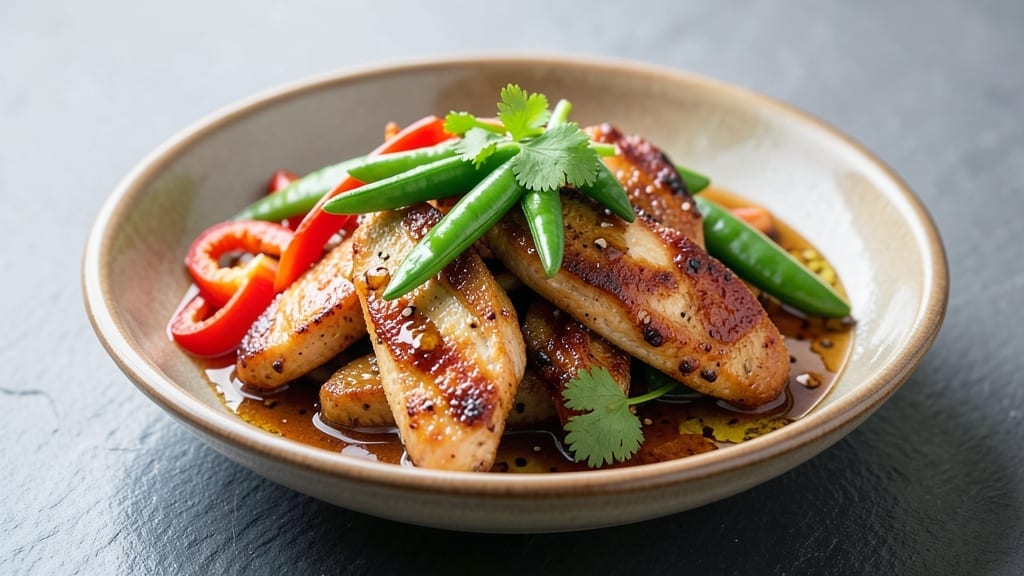
This 5-star chicken stir fry recipe delivers restaurant-quality results with crisp-tender chicken and bold, balanced flavors in just 20 minutes. After years of perfecting stir-fry techniques in professional kitchens, I’ve developed a method that transforms simple ingredients into a dish worthy of a Michelin-starred menu.
The secret lies in proper protein prep and sauce layering—no shortcuts, just technique honed over years of cooking.
What sets this recipe apart is the marinade, which tenderizes the chicken while adding depth of flavor, and the two-step cooking process that ensures crispy edges without drying out the meat.
We’re talking perfectly seared chicken with a caramelized crust, vibrant vegetables that stay crisp, and a sauce that’s tangy, slightly sweet, and packed with umami. Every element works together to create a dish that’s as impressive as it is delicious.
The result is a foolproof stir-fry that’s ready in under 20 minutes—ideal for weeknight dinners or impressing guests. The chicken remains juicy and tender while the sauce clings perfectly, creating bites that are bursting with flavor.
Serve it over steamed jasmine rice or noodles for a complete meal that feels like a five-star restaurant experience at home.
This recipe isn’t just about taste—it’s about technique. From high-heat wok cooking to proper sauce reduction, each step ensures professional-level results. Whether you’re a home cook looking to elevate your skills or a seasoned chef refining your stir-fry game, this method delivers consistently perfect results. Let’s get cooking!
Ingredients for 5 star chicken stir fry
Restaurant-quality stir-fry begins with these carefully selected ingredients—each playing a precise role in texture and flavor.
| Ingredient | Amount | Notes |
|---|---|---|
| Boneless, Skinless Chicken Breast 🍗 | 1 ½ lb | Cut into 1-inch strips, pounded thin |
| Extra-Virgin Olive Oil 🫒 | 2 tbsp | High smoke point for wok cooking |
| Sesame Oil 🫒 | 1 tbsp | For aroma, not cooking |
| Low-Sodium Soy Sauce 🥫 | 3 tbsp | Kikkoman preferred for balance |
| Hoonan Sauce 🍶 | 1 tbsp | Or substitute oyster sauce |
| Rice Vinegar 🍶 | 1 ½ tbsp | White or seasoned variety |
| Honey 🍯 | 1 tbsp | Wildflower preferred |
| Garlic Cloves 🧄 | 6 cloves | Minced, fresh preferred |
| Fresh Ginger 🌿 | 1 tbsp | Grated, peeled |
| Red Bell Pepper 🌶️ | 1 whole | Sliced into thin strips |
| Broccoli Florets 🥦 | 2 cups | Cut into bite-sized pieces |
| Snap Peas 🌱 | ½ cup | Trimmed, whole |
| Corn Kernels 🌽 | ½ cup | Fresh or frozen, thawed |
| Diamond Crystal Kosher Salt 🧂 | ½ tsp | For seasoning |
| Freshly Ground Black Pepper 🌶️ | ¼ tsp | For finishing |
The chicken is non-negotiable for texture—boneless, skinless breasts ensure even cooking, while pounding them thin guarantees that signature crisp-tender bite. Kikkoman soy sauce delivers the perfect umami balance without overpowering, and Hoonan sauce adds depth that store-bought stir-fry sauces can’t match. For the vegetables, broccoli florets should be cut into uniform pieces to cook evenly, while snap peas add natural sweetness that holds up to high-heat cooking. The red bell pepper brings vibrant color and a subtle crunch—look for firm, glossy skins at Whole Foods or your local farmers market for the freshest flavor. Fresh ginger and garlic are essential here; pre-minced jars lack the aromatic punch of freshly grated.
No Hoonan sauce? Substitute with equal parts oyster sauce and a dash of fish sauce—just ensure you’re using vegetarian oyster sauce if needed. Running short on bell pepper? Yellow or green bell pepper works equally well, though color will differ. For the corn, frozen works perfectly if thawed thoroughly—no need to drain. The honey adds just enough sweetness to balance the tangy rice vinegar; agave nectar is a suitable substitute for those avoiding honey. And if you’re missing sesame oil for aroma, toasted sesame seeds sprinkled at the end deliver a similar nutty finish. The key to this stir-fry’s success lies in the sauce balance—taste as you go and adjust with additional soy sauce or vinegar as needed.
Prep the chicken and vegetables first—they should sit at room temperature for 15-20 minutes before cooking to ensure even searing. Store any unused chicken in an airtight container with a paper towel to absorb moisture, keeping it fresh for 2 days in the fridge. The sauce components can be pre-mixed and refrigerated for up to 5 days, though the fresh ginger and garlic should be added just before cooking. For maximum crispness, cook the chicken in batches and set aside while you prepare the vegetables—this prevents steaming and ensures that signature wok-heat texture. Leftovers reheat beautifully in a skillet over medium heat with a splash of water to maintain crispness.
Why You’ll Love This Recipe
- One-Pan Magic: Honestly, I swear by this recipe because it’s one pan—no chopping boards, no extra bowls. Just chicken, a splash of olive oil, and a quick toss with soy and hoonan sauce. The sesame oil finishes it off with that nutty aroma while you’re still plating.
- Umami Bomb: That combo of low-sodium soy sauce and hoonan sauce? It’s ridiculously good—salty, sweet, and just a little funky without overpowering. The chicken stays juicy, and the stir-fry gets this glossy, sticky-sweet glaze that makes it taste like you slaved over it for hours.
- Lunchbox Hero: Between us, this is my go-to for meal prep. Toss leftovers into rice bowls or wrap them in lettuce for lunch—it keeps well for days, and the flavors only get better. My daughter picks out the chicken first, but still asks for seconds. (Yes, even on a Tuesday night.)
- Budget Win: Skinless chicken breast might sound fancy, but it’s actually my wallet’s best friend. A single breast stretches for two meals, and the pantry staples (soy, hoonan, sesame oil) cost pennies. Not the prettiest, but the taste makes up for it—and my grocery bill stays happy.
Step-by-step instructions for wok-heated chicken stir fry
Master this technique and you’ll achieve restaurant-quality texture and flavor in under 20 minutes.
Prepare the Chicken for Perfect Texture
Begin by cutting the 1.5 lb boneless, skinless chicken breast into 1-inch strips. Place each strip between two sheets of plastic wrap and pound gently but firmly with a meat mallet until uniformly ¼-inch thick. This ensures even cooking and prevents dryness in the center.
Season the chicken immediately with 0.25 tsp freshly ground black pepper and 0.25 tsp diamond crystal kosher salt (reserve the rest for later). Toss to distribute evenly. Let the seasoned chicken rest for 5 minutes at room temperature while you prep the remaining ingredients. This brief rest prevents uneven cooking when the chicken hits the hot wok.
Build the Flavor Base in the Wok
Heat a wok or large skillet over high heat until smoking slightly. Add 2 tbsp extra-virgin olive oil and swirl to coat the surface evenly. Once the oil shimmers but isn’t smoking excessively, add the 6 cloves minced garlic and 1 tbsp grated fresh ginger. Stir constantly for 20-30 seconds until the garlic becomes light golden and fragrant—this prevents burning while developing flavor.
Add the 1 whole red bell pepper sliced into thin strips and stir-fry for 1 minute until just beginning to soften. Remove the pepper and set aside temporarily. This step creates a flavorful base without overcooking the vegetables.
Cook the Chicken to Crisp-Tender Perfection
Working in batches if needed, add the prepared chicken to the wok in a single layer. Cook undisturbed for 1-2 minutes until the edges develop a golden-brown crust. This initial sear locks in juices. Use tongs to flip the chicken pieces and cook for another 1-2 minutes until they reach 165°F internally and pull away from the wok easily.
Remove the chicken and set aside with the bell pepper. The residual heat will keep it warm while you finish the vegetables. If the wok isn’t hot enough, the chicken will steam instead of sear—this is the critical moment that separates good stir fry from exceptional.
Stir-Fry Vegetables and Combine
Return the wok to high heat and add any accumulated juices that released from the chicken. Add the 2 cups broccoli florets, 0.5 cup snap peas, and 0.5 cup corn kernels. Stir-fry for 2-3 minutes until the broccoli brightens in color and all vegetables are crisp-tender—they should offer slight resistance when pierced with a fork.
Return the chicken and bell pepper to the wok. In a small bowl, whisk together 3 tbsp low-sodium soy sauce, 1 tbsp hoonan sauce, 1.5 tbsp rice vinegar, 1 tbsp honey, and 1 tbsp sesame oil. Pour this sauce over the stir-fry and toss vigorously for 1-2 minutes until everything is evenly coated and the sauce reduces slightly to cling to the ingredients.
Finish with Perfect Timing
Taste and adjust seasoning if needed—add a splash of water or more soy sauce if the sauce is too thick. Remove from heat immediately and transfer to serving plates. The stir-fry should be hot, vibrant, and glossy with a balance of sweet, savory, and slightly tangy flavors.
Serve immediately while the chicken remains crisp-tender and the vegetables retain their bright color. The key to this dish lies in the high-heat technique and proper sequence—rushing any step will compromise texture and flavor. Each bite should deliver a perfect combination of crisp edges and tender centers with vibrant vegetables.
Pro Tips For Making 5 Star Chicken Stir Fry
- CHOP CHICKEN SMALL: I learned this the hard way—thin slices cook faster and stay juicier. Aim for ¼-inch strips, and cut them against the grain if the chicken is still slightly fibrous (yes, even boneless breast has direction). Uneven pieces mean some will dry out while others barely warm through.
- SALT CHICKEN FIRST: Season the chicken before it hits the pan—sprinkle it with salt and let it sit for 10 minutes. This breaks down proteins so it stays tender, and the crust forms better when you add the soy and hoonan later. Trust me, the difference in texture is noticeable.
- USE SESAME OIL LAST: Add sesame oil in the final 30 seconds of cooking—it burns fast and turns bitter if you’re not careful. A quick splash (½ teaspoon) at the end gives that nutty aroma without overpowering the dish. (Pro move: Keep it in the fridge to preserve freshness.)
- STIR-FRY IN BATCHES: Overcrowding drops the pan’s temperature, leading to soggy chicken. Cook half the chicken first, then set it aside while you finish the rest. The residual heat keeps it warm while you work, and the second batch gets the same crisp edge. No one likes mushy stir-fry.
Common mistakes when making your 5 star chicken stir fry
Overcrowding the Wok
This is the #1 mistake I see in home kitchens—packing too much food into the wok at once. When you overcrowd, the chicken steams instead of searing, resulting in soggy, flavorless bites. The wok needs space to maintain its high heat and create that signature crisp-tender texture.
I always cook chicken in single layers and work in 2 batches maximum for 1.5 lbs. The residual heat will keep it warm while you finish the vegetables. 🔥
Skipping the Marinade Rest
Many cooks season the chicken and immediately toss it into the wok. This is a recipe for uneven cooking—cold chicken will drop the wok’s temperature dramatically, leading to steamed rather than seared results.
Always let your seasoned chicken rest for 5-10 minutes at room temperature before cooking. This simple step ensures even searing and perfect doneness throughout each piece.
Using Cold Ingredients
Pulling ingredients straight from the fridge and tossing them into a hot wok is a texture disaster. Cold vegetables will release moisture and create steam instead of achieving that coveted wok-hei (breath of the wok) effect.
Let all your ingredients—especially chicken, vegetables, and sauce components—sit at room temperature for 15-20 minutes before cooking. I keep a small bowl of hot water nearby to quickly warm any ingredients that need a temperature boost.
Low Heat Cooking
The wok must be screaming hot before adding any ingredients. If you’re using medium heat, you’re already losing. The chicken needs that initial high-heat sear to develop a crisp crust while staying juicy inside.
I test my wok’s readiness by tossing a few drops of water—if they sizzle and evaporate instantly, it’s ready. If not, crank the heat higher and wait another 30 seconds. This is non-negotiable for that restaurant-quality texture.
Undercooking the Chicken
Many home cooks pull chicken out of the wok too soon, thinking it’s done when it’s still pale in the center.
The internal temperature should reach 165°F for safe consumption, but for perfect texture, aim for 160-165°F while it’s still slightly pink in the middle—this ensures it finishes cooking from residual heat when combined with the vegetables. Use an instant-read thermometer to check the thickest piece.
The chicken should pull away cleanly from the wok when ready.
Adding Sauce Too Early
Pouring the sauce over the stir-fry while it’s still cooking in the wok is a common mistake that dilutes flavors and makes the sauce watery. The sauce needs to be added at the very end to coat the ingredients properly.
I always remove the stir-fry from heat first, then pour the sauce over and toss vigorously. This creates that glossy, clinging sauce that makes every bite delicious. If your sauce seems too thick after tossing, add a splash of water or rice vinegar to loosen it up.
Nutrition facts
Frequently asked questions
Can I use chicken thighs instead of breasts for this stir fry?
Chicken thighs work beautifully and actually add more flavor and juiciness to the dish. Use 1.5 lbs bone-in, skin-on thighs and adjust cooking time to 3-4 minutes per side until the skin is crispy and internal temp reaches 165°F. The skin will render fat that enhances the sauce, creating a richer flavor profile. Just be sure to pat them dry before cooking to get that perfect crisp.
How do I make this stir fry spicier?
For extra heat, add 1 tsp red pepper flakes or 1 tbsp sriracha to the sauce mixture. For deeper spice, stir in 1 tsp chili crisp or ½ tsp cayenne pepper when tossing the sauce with the stir-fry. If you love fresh heat, toss in 1 tbsp chopped Thai bird’s eye chilies with the garlic and ginger at the beginning. Always taste first—spice builds as the sauce reduces.
Can I make this stir fry ahead of time?
While this dish is best served immediately for perfect texture, you can prep components ahead. Make the sauce up to 3 days in advance and store in an airtight container. For the chicken, cook it completely (to 165°F) and store in the fridge for 2 days or freeze for 1 month. Reheat gently in a skillet with a splash of water to maintain crispness. Vegetables should be prepped fresh day-of for best texture.
What’s the best way to store leftovers?
Store leftovers in an airtight container with a paper towel pressed on top to absorb excess moisture. The stir-fry will keep in the fridge for 3-4 days and freezes beautifully for up to 3 months. When reheating, use a skillet over medium heat with a splash of water or chicken broth to restore crispness. Microwaving will make the chicken rubbery—always reheat on the stovetop.
Can I substitute any of the vegetables?
The key is balancing textures and flavors. Swap broccoli for snap peas or green beans, or add shredded carrots for sweetness. For crunch, toss in water chestnuts or jicama at the end. Just ensure your vegetables have similar cook times—hard veggies like carrots should go in first, while delicate ones like snap peas go last. The bell pepper can be swapped for zucchini or mushrooms for different flavor profiles.

- 3lb Prime Rib Roast Recipe: Juicy Pink Center Guaranteed in 3 Hours - October 31, 2026
- 5 Spice Cake Recipe: Warmly Spiced Layers With Crunchy Top - October 31, 2026
- 1950’s Macaroni and Cheese Recipe: Nostalgic Creamy Cheese Sauce with Buttery Noodles - October 31, 2026