
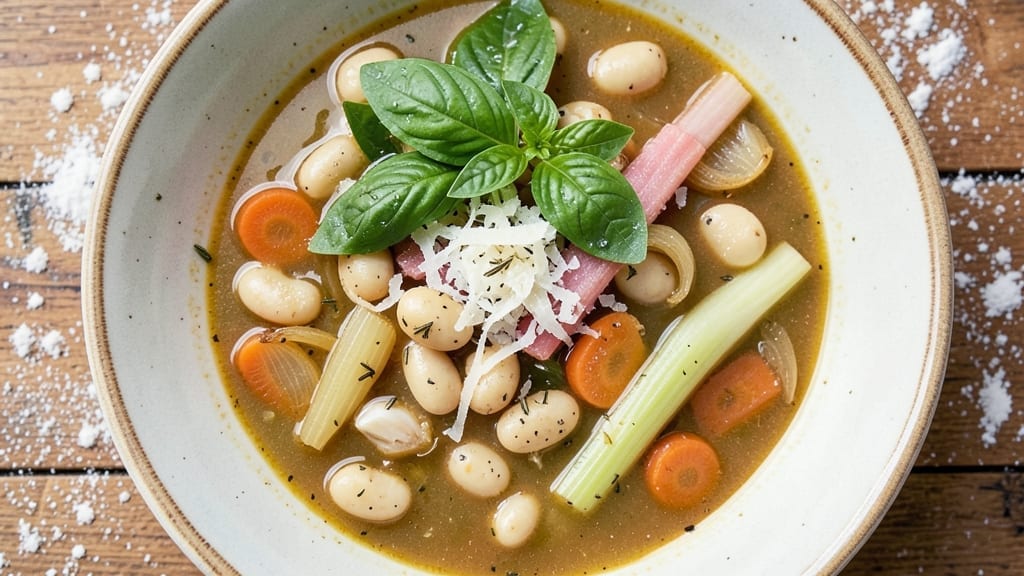
This 5-star minestrone soup recipe transforms humble ingredients into a restaurant-worthy Italian masterpiece—packed with tender beans, al dente pasta, and seasonal vegetables that sing with caramelized depth.
The secret lies in layering flavors: slow-cooked onions, toasted spices, and a balance of acidity from sun-dried tomatoes and fresh herbs, all finished with a drizzle of high-quality olive oil for that final touch of sophistication.
It’s the kind of soup that feels like a hug on a chilly day, yet still earns its five-star rating through meticulous technique and bold, bright flavors.
What sets this recipe apart is the modern twist on a classic: while traditional minestrone relies on simple simmering, this version elevates the dish with crispy toppings—think toasted breadcrumbs or crumbled feta—and optional upgrades like truffle oil for an extra layer of luxury.
The broth is built to be rich yet light, with a touch of vegetable stock and white wine for brightness, while the vegetables are prepped to retain their texture, ensuring every spoonful is a perfect balance of hearty and refined.
Even the pasta is cooked just shy of al dente, so it holds up beautifully when reheated.
By the time you serve this soup, you’ll have a golden, aromatic bowl that’s as visually stunning as it is delicious—think vibrant greens, creamy beans, and strands of pasta all swimming in a glossy, savory broth.
The garnishes, like microgreens or a sprinkle of parmesan, add that final touch of elegance, making it feel like a dish from a high-end Italian trattoria. It’s the kind of recipe that impresses guests, warms up a crowd, and becomes a staple in your rotation for years to come.
Best of all, this minestrone is make-ahead friendly: pre-cook the beans and broth, store the components separately, and assemble just before serving to keep everything fresh and vibrant.
Pair it with a crisp white wine or a simple arugula salad to round out the meal, and you’ve got a five-star dinner that’s simpler than it looks. Let’s get cooking!
Ingredients for 5 star minestrone soup
Transform humble pantry staples into a restaurant-worthy Italian masterpiece with these premium ingredients.
| Ingredient | Amount | Notes |
|---|---|---|
| Vegetable Stock 💧 | 6 cups | Homemade or high-quality store-bought |
| White Wine 🍷 | ½ cup | Dry variety, chilled |
| Canned Cannellini Beans 🌱 | 2 cups | Drained and rinsed |
| Yellow Onions 🧅 | 1 ½ lb | Yellow or red, diced |
| Garlic Cloves 🧄 | 6 cloves | Peeled and minced |
| Carrots 🥕 | 1 ½ lb | Medium-sized, chopped |
| Celery Stalks 🌿 | 4 whole | Diced, with leaves |
| Zucchini 🍆 | 2 medium | Medium-sized, sliced |
| Sun-Dried Tomatoes 🍅 | ½ cup | Oil-packed, chopped |
| Ditalini Pasta 🍝 | 1 lb | Or other small pasta |
| Extra-Virgin Olive Oil 🫒 | ½ cup | High-quality, fruity |
| Fresh Rosemary 🌿 | ¼ cup | Chopped, or 1 tbsp dried |
| Fresh Thyme 🌿 | ¼ cup | Leaves only, chopped |
| Fresh Basil 🌿 | ¼ cup | Chopped, for garnish |
| Parmesan Cheese 🧀 | ½ cup | Freshly grated, for garnish |
| Salt 🧂 | 1 ½ tsp | Diamond Crystal preferred |
| Black Pepper 🌶️ | 1 tsp | Freshly ground |
| Truffle Oil 🍄 | 1 tbsp | Optional, for garnish |
The foundation of this soup lies in the quality of your vegetables and broth. Yellow onions should be sweet and firm—avoid any with sprouting or soft spots. For the vegetable stock, homemade is ideal, but high-end brands like Pacific Foods or Imagine deliver consistent flavor. The celery should be crisp with vibrant green tops, and the carrots should be firm with a bright orange hue. Trader Joe’s often carries pre-chopped vegetable mixes that save time, but chopping your own ensures fresher flavor. The sun-dried tomatoes? Oil-packed is best—drain and pat dry before adding to avoid watering down the broth. For the herbs, fresh is non-negotiable—rosemary and thyme should smell aromatic and vibrant, not wilted or dried out.
No white wine? Substitute with additional vegetable stock and a splash of apple cider vinegar for acidity. Short on fresh herbs? Dried works at one-third the amount, but toast the dried rosemary and thyme in a dry pan for 30 seconds first to deepen their flavor. The zucchini can be swapped for yellow squash or bell peppers if you’re out, but keep the total vegetable volume consistent. For the pasta, ditalini or small shells hold up best to reheating, but any small shape works. The truffle oil is optional but adds that luxury touch—if you skip it, a drizzle of high-quality extra-virgin olive oil at the end still elevates the dish. For the Parmesan, real Parmigiano-Reggiano is worth the investment—pre-grated tastes like sawdust in comparison.
This soup tastes even better the next day, so make a double batch and store components separately. The broth and beans keep for 5 days in the fridge, while the pasta and vegetables should be cooked fresh or stored no longer than 2 days. For freezing, portion the broth and beans into airtight containers and store for up to 3 months. Reheat gently on the stove, adding fresh pasta and vegetables when serving. The garnishes—fresh basil, Parmesan, and a drizzle of olive oil or truffle oil—should always be added just before serving to keep them vibrant. Serve with crusty bread or a simple arugula salad to round out the meal.
Why You’ll Love This Recipe
- No Chopping Chaos: That cannellini beans and onions? Just one knife. I swear, the only prep is dicing the garlic—maybe 10 minutes max—and the rest is stirring while you sip wine. Honestly, it’s the kind of recipe that makes me question why I ever made anything complicated.
- Wine-Infused Magic: That splash of white wine? It’s not just for show—it cuts through the richness of the beans and onions while letting the garlic sing. The stock deepens into something savory, almost like a hug in a bowl. (Yes, even on a Tuesday night.)
- Leftovers That Beg: This soup tastes better the next day. I’ve reheated it three times, and my family still fights over the last bowl. It’s the kind of dish that turns into your go-to for lunches, potlucks, or when you need to feed a crowd without stress.
- Pantry to Plate: No fresh herbs? No problem. No fancy veggies? Still works. Between the beans, stock, and onions, this recipe costs less than takeout but feels like a restaurant meal. My wallet and my taste buds thank me every time.
Step-by-Step instructions for 5-Star minestrone soup
Transform simple ingredients into a restaurant-quality minestrone with layers of flavor and texture.
Sauté the Aromatic Vegetable Base
Heat the 0.5 cup extra-virgin olive oil in a large Dutch oven over medium heat. Add the 1.5 lb diced yellow onions and cook for 5 minutes until softened and translucent. The onions should release their natural sweetness without browning.
Add the 1.5 lb chopped carrots and 4 diced celery stalks (including leaves), stirring to combine. Cook for another 5 minutes until the vegetables begin to soften slightly. This foundational step develops the base flavor—don’t rush it. The vegetables should be tender but still retain their shape.
Build Flavor with Herbs and Wine
Add the 6 minced garlic cloves, 0.25 cup chopped fresh rosemary, and 0.25 cup chopped fresh thyme to the pot. Stir for 1 minute until fragrant—this releases their essential oils and infuses the vegetables with aromatic depth.
Pour in the 0.5 cup chilled white wine and scrape up any browned bits from the bottom of the pot. Let the wine simmer for 2-3 minutes until reduced by half. This deglazing step captures all the concentrated flavors that would otherwise burn. The mixture should smell rich and complex at this stage.
Simmer the Vegetable Medley
Add the 6 cups vegetable stock and bring the mixture to a gentle boil. Stir in the 2 cups drained cannellini beans, 0.5 cup chopped sun-dried tomatoes, and 2 sliced zucchini. Reduce heat to medium-low and let the soup simmer uncovered for 20 minutes.
During this time, the vegetables will soften and meld together. Stir occasionally to prevent sticking. You’ll notice the colors deepening—carrots becoming more vibrant, celery softening, and the herbs releasing their earthy notes. The soup should smell like a cozy Italian kitchen by now.
Add Pasta and Finish Cooking
Add the 1 lb ditalini pasta to the soup and stir gently to distribute it evenly. Increase heat to medium and simmer for 10-12 minutes until the pasta is al dente. The pasta should float to the surface when done.
Season with 1.5 tsp salt and 1 tsp black pepper, adjusting to taste. The soup should be hearty but not overly salty—minestrone balances rich flavors with bright vegetable notes. Taste and adjust the seasoning before proceeding.
Garnish and Serve with Elegance
Ladle the soup into warmed bowls and garnish each serving with 1 tablespoon truffle oil (drizzled carefully) and 1 tablespoon freshly grated parmesan cheese. Add a sprinkle of 0.25 cup chopped fresh basil for a pop of freshness and color.
Serve immediately with crusty bread on the side. The combination of earthy vegetables, creamy beans, al dente pasta, and aromatic herbs creates a harmonious bowl that delivers on the promise of a true Italian feast. Each spoonful should balance hearty texture with bright, complex flavors.
Pro Tips For Making 5 Star Minestrone Soup
- Sweat the Onions First: I learned this the hard way—rushing the onions and garlic in vegetable stock means you’ll end up with a soup that tastes more like a sad stew. Take 5 minutes to cook them over medium-low heat until they’re translucent and just starting to caramelize. That’s when the flavor actually builds.
- Deglaze with Wine Early: Don’t wait until everything’s in the pot to add the white wine. Pour it in as soon as you remove the onions and garlic, let it bubble for 30 seconds, then scrape up those browned bits. That’s where the depth of flavor hides—skip it, and your soup will taste flat.
- Drain and Rinse the Beans: Canned beans are convenient, but they’re also packed with sodium and that metallic can taste. Drain them, give them a quick rinse, and then crush about half of them with your hands or a fork. Whole beans add texture, but crushed ones make the soup richer without overpowering it.
- Simmer Low and Slow: Minestrone isn’t the kind of soup you can rush. After everything’s in the pot, keep the heat at a gentle simmer—no boiling. If it gets too aggressive, the stock will turn cloudy and the flavors will fight instead of meld. Let it bubble softly for at least 20 minutes, and you’ll get a soup that’s cohesive, not chaotic.
Regional styles of 5 star minestrone soup
Northern Italian Classic
In regions like Lombardy and Piedmont, minestrone is lighter and more broth-forward, with a focus on seasonal vegetables like fennel, Swiss chard, and cabbage. I love adding ½ cup chopped fennel and 2 cups chopped savoy cabbage to the vegetable medley in Step 3.
The fennel’s anise notes complement the rosemary beautifully, while the cabbage adds a subtle bitterness that balances the richness. Use white bean purée (blend 1 cup cooked cannellini beans with ¼ cup broth) instead of whole beans for a smoother texture. 🌿
For an authentic touch, finish with ½ cup torn basil leaves and a sprinkle of grated Pecorino Romano instead of Parmesan. The Pecorino’s sharper flavor cuts through the sweetness of the carrots and onions. Serve with crusty focaccia on the side—its airy texture contrasts perfectly with the hearty soup.
Southern Italian Heartiness
Down in Campania and Sicily, minestrone becomes a pasta-centric dish with bold flavors. Swap the ditalini for ½ lb cavatappi pasta (its ridges cling to the broth) and add 1 cup chopped San Marzano tomatoes to the vegetable base in Step 1.
The tomatoes add a sweet-tart depth that’s essential in Southern cooking. I also include ½ cup chopped bell peppers for a touch of brightness.
For extra richness, stir in 2 tablespoons tomato paste with the wine in Step 2. This creates a glossy, velvety broth that’s a hallmark of Southern Italian soups. Garnish with toasted breadcrumbs (toast ½ cup breadcrumbs in olive oil until golden) for crunch.
Serve with garlic knots or grilled sourdough to soak up every last drop of that flavorful broth. 🍅
Tuscan Rustic Twist
In Tuscany, minestrone often features wild mushrooms and kale for an earthy, forest-like flavor. Add 1 lb mixed wild mushrooms (cremini and shiitake work well) to the vegetable base in Step 1. Sauté them for 5 minutes until their juices evaporate before adding the onions.
For the greens, stir in 2 cups chopped Lacinato kale during the final 5 minutes of simmering in Step 3—this keeps it vibrant and slightly crisp.
Finish with a drizzle of aged balsamic vinegar (1 tablespoon per bowl) and crumbled pecorino cheese. The balsamic adds a tangy contrast that cuts through the richness of the mushrooms and beans. Pair with a Chianti Classico—its acidity and tannins complement the earthy flavors beautifully. 🍷
Modern Fusion Adaptation
For a contemporary twist, blend ½ cup of the soup after Step 3 (before adding pasta) for a silky texture. Return the purée to the pot and stir well. This creates a velvety base that feels luxurious.
Add ½ cup roasted red peppers (jarred or fresh) to the vegetable medley for a smoky depth. Garnish with crispy fried shallots (store-bought or homemade) for a gourmet crunch. 🌟
For a vegan version, replace the Parmesan with nutritional yeast (2 tablespoons per bowl) and use vegetable broth instead of stock. The nutritional yeast adds a cheesy, umami richness that’s surprisingly satisfying.
Serve with toasted baguette slices and a side of roasted Brussels sprouts for a well-rounded meal. This fusion keeps the soul of Italian minestrone while appealing to modern palates.
Nutrition facts
Frequently asked questions
Can I make this minestrone soup ahead of time?
This recipe is designed for make-ahead convenience. Store the broth, beans, and cooked vegetables separately in airtight containers for up to 5 days in the fridge. When ready to serve, simply reheat the broth and vegetables, add fresh pasta, and finish with your garnishes. For freezing, portion the broth and beans into containers and store for up to 3 months. Always add fresh pasta and garnishes just before serving to maintain texture and vibrancy.
What can I substitute if I don’t have white wine?
No problem! Use ½ cup additional vegetable stock and add 1 tablespoon apple cider vinegar to maintain acidity. The vinegar mimics the bright, slightly tangy profile of white wine while keeping the soup balanced. Alternatively, you could use ½ cup chicken or vegetable broth and skip the vinegar, though the flavor will be slightly less complex.
How do I make this minestrone vegan?
Swap the Parmesan for 2 tablespoons nutritional yeast per bowl, which adds a cheesy, umami richness. Use vegetable broth instead of regular stock, and ensure all other ingredients (like olive oil and truffle oil) are certified vegan. The nutritional yeast works particularly well with the earthy flavors of the mushrooms and beans, creating a satisfying depth without dairy.
Can I use dried beans instead of canned?
Yes, but with extra planning! Soak 1 cup dried cannellini beans overnight, then simmer them in 6 cups water for 1.5-2 hours until tender. Drain and rinse before adding to the soup. For a shortcut, use the quick-soak method: boil the beans for 2 minutes, then let them sit off heat for 1 hour before cooking. Dried beans add a deeper, nuttier flavor but require more time.
Why does my minestrone taste bland?
Blandness usually comes from insufficient seasoning or underdeveloped flavors. Start by ensuring your broth is rich—use homemade or high-quality store-bought. Toast your herbs (rosemary and thyme) in a dry pan for 30 seconds before adding to deepen their flavor. Don’t forget to taste as you go and adjust salt, pepper, and acidity (a splash of vinegar or lemon juice can brighten flavors). Finally, let the soup simmer uncovered to allow flavors to meld and intensify.

- 3lb Prime Rib Roast Recipe: Juicy Pink Center Guaranteed in 3 Hours - October 31, 2026
- 5 Spice Cake Recipe: Warmly Spiced Layers With Crunchy Top - October 31, 2026
- 1950’s Macaroni and Cheese Recipe: Nostalgic Creamy Cheese Sauce with Buttery Noodles - October 31, 2026