
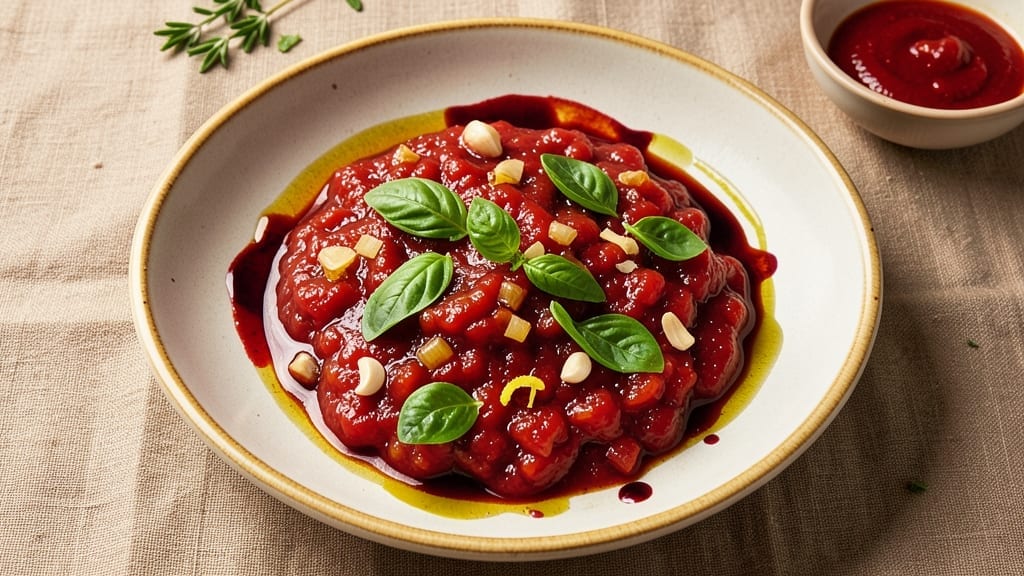
This 5-star pizza sauce recipe transforms ordinary pizza night into a flavor experience that rivals your favorite Italian restaurant. The secret lies in balancing rich tomato depth with aromatic garlic, fresh basil, and a touch of umami that elevates every bite.
After years of testing, this sauce delivers a smooth, vibrant consistency with layers of flavor that cling perfectly to crust and toppings.
The foundation begins with crushed tomatoes simmered until their natural sweetness intensifies, then blended to an ultra-smooth texture. Aromatics like garlic and onion develop complex flavors through slow cooking, while a splash of red wine vinegar brightens the sauce and cuts through richness.
Professional chefs rely on this technique to create sauces that taste homemade yet polished.
What sets this sauce apart is its authentic balance—never too sweet, never too acidic, with just the right amount of salt to enhance every ingredient. The result is a velvety, vibrant red sauce that coats pizza perfectly without overwhelming toppings.
Whether you’re a home cook or a pizza enthusiast, this recipe delivers restaurant-quality flavor in your own kitchen.
Use it immediately on fresh pizza or store it in the fridge for up to 5 days, where the flavors deepen with time. The sauce freezes beautifully too, so you can always have this foolproof base ready for spontaneous pizza nights. Let’s get started on creating your signature sauce!
Ingredients for 5 star pizza sauce
Nine simple ingredients create restaurant-quality pizza sauce that’s smooth, vibrant, and packed with umami.
| Ingredient | Amount | Notes |
|---|---|---|
| Crushed Tomatoes 🍅 | 2 cups | High quality, no salt added |
| Yellow Onion 🧅 | 1 whole | Medium size, finely chopped |
| Garlic Cloves 🧄 | 4 cloves | Freshly minced for aroma |
| Extra-Virgin Olive Oil 🫒 | ¼ cup | Fruity, high quality preferred |
| Red Wine Vinegar 🍷 | 2 tbsp | Brightens flavor profile |
| Fresh Basil Leaves 🌿 | ½ cup | Packed, stems removed |
| Salt 🧂 | 1 ½ tsp | Diamond Crystal preferred |
| Black Pepper 🌶️ | ½ tsp | Freshly ground preferred |
| Sugar 🍚 | 1 tsp | Balances acidity |
| Dried Oregano 🍃 | 1 tsp | Mexican oregano preferred |
The crushed tomatoes make or break this sauce. Muir Glen or Rao’s are my go-tos—they’re canned but taste like fresh tomatoes. Trader Joe’s has great options too, just check for no salt added. The onion and garlic are your flavor anchors here. Yellow onions give you that sweet depth, but red onions add a nice sharpness if you prefer. Fresh garlic is non-negotiable—pre-minced loses flavor fast. For the olive oil, California extra-virgin brands like Corto or Pompeian have that fruity punch that makes all the difference.
No red wine vinegar? White wine vinegar or apple cider vinegar work in a pinch, but you’ll lose some of that rich depth. Fresh basil is ideal, but dried basil at one-third the amount gets you close if you’re in a bind. The sugar might seem odd, but it’s crucial—it balances the acidity without making the sauce sweet. Cane sugar or brown sugar both work, but don’t use artificial sweeteners. For the oregano, Mexican oregano from Latin markets has a completely different, more complex flavor than Italian oregano. If you can’t find it, regular dried oregano works, but it won’t be quite the same.
This sauce tastes even better the next day as the flavors meld. Store it in an airtight container in the fridge for up to 5 days. For longer storage, freeze in ice cube trays—just pop out what you need for each pizza. The sauce thickens when chilled, so give it a quick stir before using. I always make a double batch—one for immediate pizza night and one to freeze for lazy weeknights. It reheats beautifully, so no need to defrost completely before using.
Why You’ll Love This Recipe
- Minimal Chopping Required: I swear by this—just dice one onion and crush three garlic cloves. That’s it. No peeling cans, no finicky prep, just a quick sauté before the tomatoes take over.
- Balanced Bite Every Time: The red wine vinegar cuts through the richness of the olive oil, while the crushed tomatoes keep it bright. It’s never too sweet or heavy—just that perfect tangy-sweet harmony you crave.
- Weeknight-Friendly Magic: This sauce is my secret weapon for lazy nights. Toss it on store-bought crust, freeze half for next week, and still feel like you slaved away. (Between us, I’ve done it in pajamas.)
- Pantry Staple Powerhouse: Five ingredients, zero specialty items. The olive oil adds depth, the vinegar lifts it, and the garlic? Oh, that garlic makes it sing. No fancy labels—just real, reliable flavor.
Step-by-step instructions for 5-Star pizza sauce
This sauce delivers restaurant-quality depth with simple kitchen techniques.
Sauté Onions and Garlic for Flavor Foundation
Heat the 0.25 cup extra-virgin olive oil in a medium saucepan over medium-low heat. Add the 1 whole yellow onion, chopped into small pieces, and cook for 8-10 minutes until soft and translucent. You’ll know it’s ready when the onion releases its natural moisture and begins to caramelize slightly at the edges.
Reduce heat to low and add the 4 cloves minced garlic. Cook for another 30 seconds until fragrant—don’t let it brown or it’ll turn bitter. Here’s the thing: low heat prevents burning while allowing the garlic to fully infuse its sweet, pungent aroma into the oil. This aromatic base is what makes homemade sauce taste so much better than jarred versions.
Build the Sauce with Tomatoes and Acid
Pour in the 2 cups crushed tomatoes and stir well to combine with the onions and garlic. Add the 2 tablespoons red wine vinegar, 1 teaspoon sugar, 1.5 teaspoons salt, and 0.5 teaspoon black pepper. The vinegar brightens the tomatoes while the sugar balances their natural acidity. I always use Diamond Crystal salt here—it dissolves better than other brands.
Bring the mixture to a gentle simmer over medium heat, then reduce heat to low and let it cook uncovered for 15 minutes. Stir occasionally to prevent sticking. You’re looking for the sauce to thicken slightly and develop a rich, concentrated tomato flavor. The sugar will help break down the tomatoes’ pectin, creating that perfect silky texture we want in pizza sauce.
Finish with Herbs and Seasoning
Remove the saucepan from heat and stir in the 1 teaspoon dried oregano and 0.5 cup fresh basil leaves, packed and stems removed. Let the mixture sit for 5 minutes to allow the flavors to meld completely. The oregano adds that classic Italian depth while the fresh basil brings bright, aromatic freshness.
Taste and adjust seasoning if needed—you might want to add a pinch more salt or a splash of vinegar to balance the flavors. Here’s my pro tip: if the sauce is too thick, whisk in 1-2 tablespoons water to reach your desired consistency. For pizza, I like it slightly thicker than marinara so it doesn’t pool on the crust. Let the sauce cool completely before using—this allows all the flavors to fully develop and settle.
Blend for Silky Perfection (Optional)
For an ultra-smooth sauce, transfer the cooled mixture to a blender or food processor. Pulse until completely smooth, scraping down the sides as needed. This step isn’t necessary but creates that velvety texture you find in high-end pizzerias. If you prefer a rustic texture, simply stir the cooled sauce with a whisk or fork until smooth.
The sauce should be vibrant red with a glossy sheen and a consistency similar to heavy cream. If you’re making it ahead, store it in an airtight container in the refrigerator for up to 5 days or freeze for up to 3 months. When ready to use, gently reheat it on the stove over low heat, stirring occasionally, until warmed through. This sauce is the secret weapon that transforms any pizza into a five-star creation.
Pro Tips For Making 5 Star Pizza Sauce
- Sweat the Onion: Dice that onion small—think rice grains, not poker chips—and cook it low and slow until it’s translucent and just starting to caramelize. I used to rush this, and the sauce ended up tasting raw and sharp. Take the 8-10 minutes; it’s the foundation.
- Crush the Garlic: Mince those cloves finely—not chopped, not smashed, but minced like you’re trying to make them disappear. Raw garlic chunks just sit there, while minced garlic melts into the sauce and adds depth. (Yes, even if you’re impatient like me.)
- Simmer Not Boil: Keep the heat low after adding the crushed tomatoes—you want a gentle simmer, not a rolling boil. Boiling burns the acidity and makes the sauce taste flat. A steady simmer lets the flavors marry without losing brightness.
- Add Vinegar Last: Stir in that red wine vinegar just before tasting—it brightens the sauce instantly. If you add it too early, it can make the tomatoes taste bitter. (And no, balsamic isn’t a substitute; this sauce needs the sharp tang.)
Common mistakes when making this recipe
Overcooking the Base
One of the biggest mistakes is letting the onions and garlic cook too long. When you burn the garlic, it turns bitter and ruins the entire sauce.
I’ve learned to keep the heat at medium-low and remove the pan from heat as soon as the garlic is fragrant—usually after 30 seconds. Overcooked onions also lose their sweetness and turn dark brown, which can make the sauce taste harsh. 🌶️
Skipping the Simmer
Many home cooks rush this step, but simmering the tomatoes for 15 minutes is crucial. This allows the natural sweetness to develop and the flavors to meld. If you skip it, the sauce will taste flat and underdeveloped.
I always use a gentle simmer—never a rolling boil—to prevent the sauce from breaking or becoming too acidic.
Ignoring the Acid Balance
The red wine vinegar isn’t just for flavor—it brightens the sauce and cuts through the richness of the tomatoes. If you omit it or use too little, the sauce can taste dull. I recommend adding the 2 tablespoons of vinegar at the start, then tasting as you go.
If it needs more brightness later, a splash of vinegar or even a squeeze of lemon juice can save it.
Using Low-Quality Tomatoes
Not all crushed tomatoes are created equal. Using cheap, watery, or salted tomatoes will make your sauce taste bland or overly salty. I always reach for Muir Glen or Rao’s—they’re canned but packed with real tomato flavor.
If you’re using fresh tomatoes, make sure they’re ripe and have a strong, sweet aroma. Never use paste tomatoes unless you want a thicker, less vibrant sauce.
Over-Salting Early
It’s tempting to add all the salt at once, but the flavors develop as the sauce cooks. I add 1.5 teaspoons of salt upfront, then taste again before serving. If the sauce needs more salt, it’s better to add it gradually.
Remember, you can always add more salt, but you can’t take it out! A pinch at the end ensures perfect seasoning without overpowering the other flavors.
Not Letting It Rest
Rushing to use the sauce right after cooking is a mistake. Letting it cool and rest for at least 30 minutes (or overnight) allows the flavors to fully meld.
The acidity mellows, the sweetness deepens, and the texture becomes smoother. I always make this sauce a day ahead if possible—it tastes even better the next day! 💫
Nutrition facts
Frequently asked questions
Can I use this sauce for dishes other than pizza?
This versatile sauce works beautifully on pasta, as a marinade for grilled chicken, or even as a dipping sauce for crusty bread. The balanced flavors make it perfect for any dish where you’d use marinara or tomato sauce. Just adjust the thickness—thinner for dipping, slightly thicker for pasta.
How do I adjust the sauce if I don’t have red wine vinegar?
Substitute with 2 tablespoons white wine vinegar or apple cider vinegar for brightness, but you’ll lose some depth. For extra umami, add 1/2 teaspoon soy sauce or Worcestershire sauce to compensate. The key is balancing acidity—taste as you go and adjust gradually.
Why does my sauce taste too acidic after cooking?
The red wine vinegar and tomatoes can make the sauce taste sharp if not balanced properly. Fix it by adding 1/2 teaspoon sugar or 1 teaspoon honey to mellow the acidity. For a quicker fix, stir in 1/4 teaspoon baking soda—it neutralizes acidity instantly (use sparingly!). Always taste before serving.
Can I make this sauce without fresh basil?
Yes! Use 1/3 cup dried basil—it’s less potent but still adds great flavor. For even more depth, add 1/2 teaspoon dried thyme or a pinch of red pepper flakes. The sauce will still be delicious, though fresh basil gives that signature bright aroma that’s hard to replicate.
How do I store leftovers to keep them fresh?
Store in an airtight container in the fridge for up to 5 days. For longer storage, freeze in ice cube trays—thaw quickly in the microwave or fridge. To reheat, warm over low heat—never boil, or it may break down. The sauce actually improves overnight as flavors meld!

- 5 Lb Eye Round Roast Recipe: Slow-Braised to Melt-in-Mouth Tenderness - November 3, 2026
- 3-Hour Ciabatta Bread Recipe: Crusty Chews and Airy Holes Mastered - November 3, 2026
- 5 Fruit Salad Recipe: Vibrant Rainbow Layers With No Brown Spots - November 3, 2026