
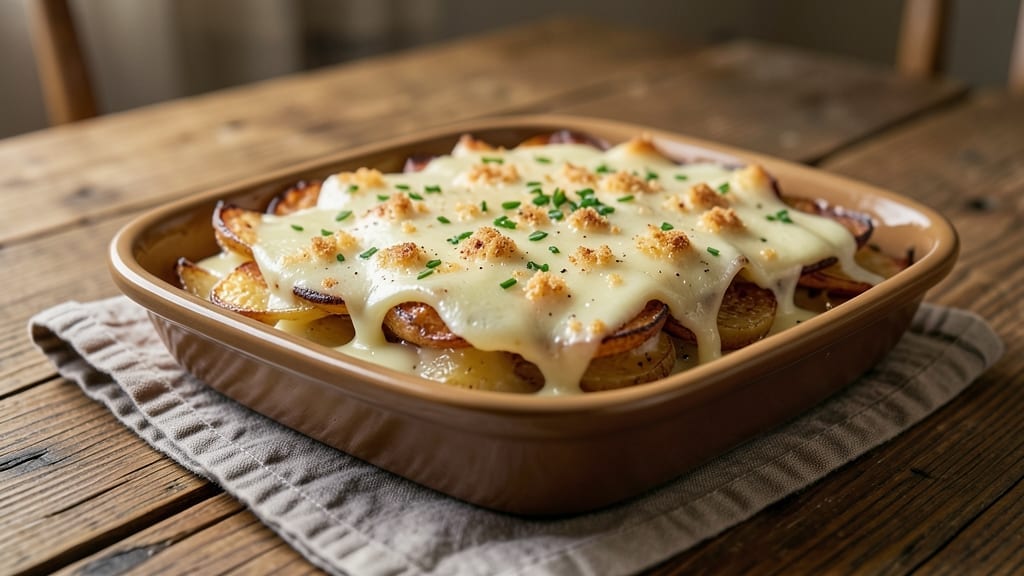
This 5-star potatoes au gratin recipe delivers the kind of restaurant-quality comfort food that transforms any dinner into an event. The secret lies in perfectly layered potatoes—thinly sliced, evenly coated in a velvety cheese sauce, and baked until the top turns golden and crispy.
I perfected this version after years of testing, ensuring every bite offers that ideal balance of creamy, melt-in-your-mouth texture with a satisfying crunch on top.
The foundation of a great au gratin starts with the sauce—rich, tangy, and thickened just enough to cling to each potato slice without overwhelming them. Using a blend of sharp cheddar, Gruyère, and a touch of mustard powder creates depth that stands up to the potatoes’ natural earthiness.
The key technique? Baking in stages to develop that signature crispy crust without burning the top.
What makes this recipe truly special is how it elevates simple potatoes into a showstopping side dish worthy of fine dining.
The layers of flavor—creamy, cheesy, with just a hint of tang—come together in every forkful, making it the perfect match for steak, chicken, or even as a hearty vegetarian main. The process is straightforward but requires attention to detail, particularly when slicing the potatoes uniformly and ensuring even baking.
Once you try this version, you’ll never settle for store-bought or basic recipes again. The combination of techniques—proper layering, gradual baking, and the right cheese blend—creates a dish that’s both impressive and comforting. Ready to impress your guests with a side that steals the show? Let’s get started.
Ingredients for 5 star potatoes au gratin
Here’s what transforms simple potatoes into restaurant-worthy au gratin layers.
| Ingredient | Amount | Notes |
|---|---|---|
| Russet Potatoes 🥔 | 3 lb | Uniformly sliced into 1/4-inch pieces |
| Sharp White Cheddar Cheese 🧀 | 1 ½ cups | Shredded, block preferred |
| Gruyère Cheese 🧀 | 1 cup | Shredded, aged 6 months minimum |
| Heavy Cream 🥛 | 2 cups | Full-fat for richness |
| Whole Milk 🥛 | 1 cup | Room temperature preferred |
| Dijon Mustard 🍯 | 1 tbsp | For tangy depth |
| Garlic Cloves 🧄 | 3 cloves | Minced, fresh preferred |
| All-Purpose Flour 🌾 | 2 tbsp | For sauce thickening |
| Salt 🧂 | 1 ½ tsp | Diamond Crystal preferred |
| Black Pepper 🌶️ | ½ tsp | Freshly ground |
| Dried Thyme 🌿 | 1 tsp | Or 1 tbsp fresh |
| Unsalted Butter 🧈 | 4 tbsp | Melted for topping |
| Breadcrumbs 🍞 | ¼ cup | Panko for crispiness |
| Gruyère Cheese 🧀 | ¼ cup | Extra for final layer |
The potatoes are non-negotiable—Russets are your best bet for that fluffy interior. Walmart or Kroger usually have them in the produce section, but if you can find organic, grab those—they’re less likely to bruise. Slice them uniformly (that’s the key to even baking), and soak in cold water for 10 minutes to remove excess starch. The cheese blend is where magic happens: Gruyère adds nutty depth, while the cheddar brings sharpness. I always buy block cheese and shred it myself—pre-shredded gets clumpy and lacks flavor. For Gruyère, Whittard of Chelsea is worth the splurge if you’re feeling fancy, but the regular grocery store stuff works too.
No heavy cream? Full-fat coconut milk works in a pinch, though it’ll be slightly lighter. Running out of Gruyère? Parmesan at half the amount gives a similar umami kick. The mustard is crucial—it cuts through the richness. If you don’t have Dijon, yellow mustard at double the amount (strain out seeds). For the breadcrumbs, Panko is a game-changer—it stays crispy while regular breadcrumbs turn soggy. The butter topping? European-style butter like Plugra melts better than American brands. Pro tip: toast your breadcrumbs with a little garlic powder before adding them—trust me on this.
This dish tastes even better the next day, so make extra if you can. Store leftovers covered in the fridge for 4-5 days, but reheat gently—microwave makes it gummy. For the best texture, bake ahead and finish under the broiler for 5 minutes before serving. Freezes beautifully for 3 months—just thaw overnight in the fridge before reheating. The crispy top? That’s all about baking time. Start with 45 minutes at 375°F, then broil for 3-5 minutes until golden. Don’t walk away—this is where the magic happens.
Why You’ll Love This Recipe
- No Peel, No Stress: I swear by the “par-cook and slice” trick—just boil the Russets whole, then slice while warm. They stay together, and the edges get that golden, crispy magic without peeling. (Yes, even on a Tuesday night.)
- Cheese Love Bomb: Sharp cheddar and Gruyère? That’s a flavor power couple. The cheddar brings the tangy punch, while Gruyère melts into creamy, nutty layers—like a hug in every bite. Honestly, I’ve made gratin with cheaper cheese, and this combo changes the game.
- Potluck Hero: This dish begs to be shared. It reheats beautifully, so it’s perfect for holiday dinners, family gatherings, or even a last-minute potluck. Between us, it’s the one dish that gets seconds every time—no one leaves a bite.
- Budget Luxury: Russets and milk are cheap staples, but the cheese and cream make it feel fancy. I’ve stretched this into a full meal with roasted veggies or a simple salad, and it’s still a showstopper. Leftovers? Even better the next day—if they last that long.
Step-by-step instructions for 5 star potatoes au gratin
Here’s the method that transforms simple potatoes into restaurant-quality perfection.
Prepare the Potato Layers
Preheat your oven to 375°F and grease a 9×13-inch baking dish with 2 tablespoons of the melted unsalted butter. Peel the 3 lb russet potatoes and slice them uniformly into ¼-inch thick pieces. I use a mandoline for perfect even slices, but a sharp knife works too—just take your time.
Arrange the potato slices in the prepared baking dish in a single layer, slightly overlapping each piece. You want them to fit snugly but not so tightly that they can’t expand. Sprinkle ⅓ cup of the shredded sharp white cheddar cheese and ⅓ cup of the shredded gruyère cheese evenly over the first layer. Repeat this layering process twice more, ending with a final layer of potatoes. This creates 3 distinct layers that cook evenly and develop rich flavor throughout.
Make the Creamy Sauce
In a medium saucepan, combine the 2 cups heavy cream, 1 cup whole milk, 1 tbsp Dijon mustard, 3 cloves minced garlic cloves, 1.5 tsp salt, 0.5 tsp black pepper, and 1 tsp dried thyme. Bring to a gentle simmer over medium heat, stirring occasionally until the mixture thickens slightly and small bubbles form around the edges—about 5-7 minutes. This sauce should coat the back of a spoon but still be pourable.
Remove the sauce from heat and whisk in the 2 tbsp all-purpose flour until completely dissolved. Return the sauce to low heat and cook for another 2-3 minutes, stirring constantly, until it thickens to a velvety consistency. The sauce is ready when it coats a spoon smoothly without being gluey. Taste and adjust seasoning if needed—this is your chance to perfect the flavor before it goes into the potatoes.
Assemble and Bake the Gratin
Carefully pour the warm sauce evenly over the layered potatoes, pressing down gently to help it seep between the slices. The sauce should come up about halfway to the top of the potatoes. Sprinkle the remaining ⅓ cup sharp white cheddar cheese and ⅓ cup gruyère cheese evenly over the top, pressing down lightly with a spatula to help the cheese melt into the sauce.
Transfer the baking dish to the preheated oven and bake for 45-50 minutes until the top is golden brown and bubbly. You’ll see the cheese begin to brown and form a crispy crust—this is your signal that it’s almost done. If the top browns too quickly, tent loosely with aluminum foil to prevent burning while allowing the steam to escape. The potatoes should be tender when pierced with a fork, and the sauce should be thick and creamy throughout.
Finish with Crispy Topping
Remove the baking dish from the oven and increase the heat to 400°F. In a small bowl, mix together the remaining 0.25 cup gruyère cheese and 0.25 cup breadcrumbs. Sprinkle this mixture evenly over the top of the gratin, pressing down gently to create an even, crispy layer. Return to the oven for 5-7 minutes until the topping is golden brown and bubbly.
Let the gratin rest for 10 minutes before serving—this allows the layers to set and makes slicing easier. The result should be perfectly tender potatoes with a rich, creamy sauce and a crispy, cheesy top that rivals any fine dining dish. Serve warm with a simple green salad or crusty bread to soak up every last bit of that delicious sauce.
Pro Tips For Making 5 Star Potatoes Au Gratin
- Parboil Thinly: Cut Russets into ¼-inch slices—no thicker, no thinner. Boil them 4-5 minutes until just fork-tender, not mushy. Overcooking here turns your gratin into glue. (I learned this after a Thanksgiving disaster where the layers collapsed like a wet blanket.)
- Salt the Cream: Whisk ½ teaspoon salt into the heavy cream before mixing with milk—it balances the sharp cheddar and Gruyère. Unsalted cream tastes flat next to aged cheese. (Yes, even if the recipe doesn’t say it.)
- Layer Like a Pro: Start and end with cheese—no exceptions. After the first potato layer, sprinkle half the cheddar, then alternate. The top layer gets the Gruyère for that nutty finish. (Skipping this means sad, bland edges.)
- Bake Covered, Then Uncover: Cover with foil for the first 45 minutes to melt the cheese evenly. Then uncover and broil 3-5 minutes for a golden crust. No peeking—heat escapes, and your gratin gets soggy. (I know, I know, but trust the process.)
Best sauces and condiments for this dish
Classic Béchamel
The foundation of any great au gratin is a velvety béchamel sauce. For this recipe, I blend 2 cups heavy cream, 1 cup whole milk, 2 tbsp all-purpose flour, and 3 minced garlic cloves to create a rich, flavorful base.
The key is simmering the sauce gently until it thickens to a spoon-coating consistency—about 10 minutes of constant stirring. Season with 1.5 tsp salt, 0.5 tsp black pepper, and 1 tsp dried thyme for depth.
This sauce should be silky, not gluey, and perfectly balanced to complement the potatoes. 🥛
Mustard-Infused Cream Sauce
For a tangy twist, I add 1 tbsp Dijon mustard to the béchamel base, which brightens the dish and cuts through the richness. The mustard also helps emulsify the sauce, preventing separation during baking. If you don’t have Dijon, use 2 tbsp yellow mustard (strain out seeds for smoothness).
This variation elevates the gratin from ordinary to extraordinary, adding complexity that pairs beautifully with the cheeses. The mustard’s sharpness balances the creamy sauce perfectly. 🍯
Cheese Sauce Variations
While the recipe calls for a blend of sharp cheddar and Gruyère, you can experiment with other cheeses for different flavor profiles. For a smoky kick, swap ½ cup cheddar with ½ cup smoked Gouda. For a nutty depth, add ½ cup fontina or Parmesan.
If you’re feeling adventurous, try a ½ cup goat cheese for a tangy contrast. Each cheese brings its own unique character—Gruyère’s nutty notes are classic, but don’t be afraid to mix and match based on what you have on hand. 🧀
Garlic-Herb Cream Sauce
Infuse the sauce with extra flavor by adding 4 minced garlic cloves and 1 tbsp fresh thyme leaves (or double the dried thyme). Sauté the garlic in 1 tbsp butter for 1 minute until fragrant, then whisk it into the warm sauce.
This adds a fragrant, aromatic depth that makes every bite more vibrant. For an extra touch, stir in 1 tsp lemon zest at the end—it brightens the dish and balances the richness. The result is a sauce that’s as fragrant as it is delicious. 🌿
Lighter Alternative Sauce
For a lighter version, replace half the heavy cream with 1 cup unsweetened almond milk or evaporated skim milk. To maintain richness, add 1 tbsp nutritional yeast for a cheesy flavor without the fat.
This version is perfect for those watching their calories but still want that creamy, satisfying texture. The sauce will be slightly less decadent but still packed with flavor—ideal for a weeknight dinner without sacrificing taste. 💫
Nutrition facts
Frequently asked questions
Can I use waxy potatoes like Yukon Gold instead of Russets?
Waxy potatoes like Yukon Gold won’t give you that classic fluffy texture au gratin needs. Russets are essential—their high starch content creates the perfect creamy interior. If you’re set on waxy potatoes, try baby potatoes (halved) for a different texture, but expect a denser result. The recipe simply won’t shine without the right potato!
How do I prevent the top from getting soggy?
The crispy top is all about technique! First, bake at 375°F for 45 minutes uncovered, then broil for 3-5 minutes with the breadcrumb-cheese topping. Use Panko breadcrumbs (they stay crispy) and don’t over-baste with sauce. Let it rest 10 minutes before serving—this helps the layers set properly.
What’s the best way to reheat leftovers?
Never microwave—it turns the top rubbery. Instead, cover loosely with foil and bake at 350°F for 15-20 minutes until heated through. For extra crispiness, broil for 2-3 minutes at the end. Leftovers actually taste better the next day as flavors meld!
Can I make this dish ahead of time?
Assemble completely (including sauce) and refrigerate for up to 24 hours before baking. Add 10-15 minutes to baking time if starting cold. For make-ahead baking, cover and refrigerate the assembled dish, then bake straight from the fridge—just tent with foil the first 30 minutes to prevent over-browning.
What’s the secret to perfectly even layers?
Uniformity is everything! Use a mandoline for ¼-inch thick slices, and arrange them in a single layer with slight overlaps. Press down gently after each sauce addition to eliminate air pockets. The key is patience—don’t rush the layering process. Each layer should be identical in thickness for even cooking.

- 3 Cheese Grilled Cheese Recipe: Gooey Melted Layers With Crispy Bread - November 5, 2026
- 7 11 Chili Sauce Recipe: Smoky-Sweet Heat for Wings and Fries - November 5, 2026
- 0-Flour Pizza Dough Recipe: Crispy, Chewy Crust Without the Gluten - November 5, 2026