
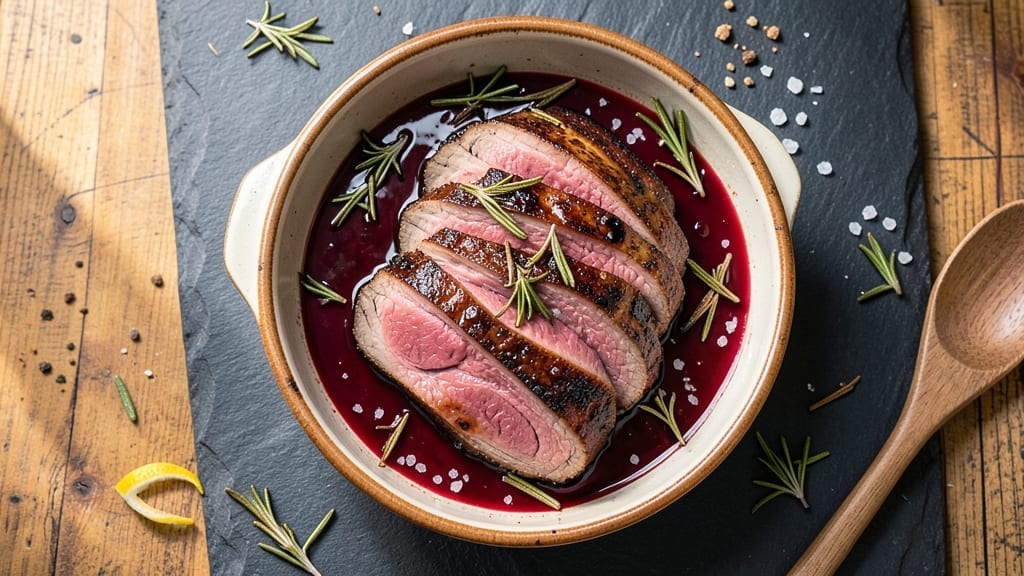
This 5-star roast beef recipe delivers the kind of showstopping centerpiece you’d expect at a Michelin-starred restaurant—juicy, perfectly crusty, and bathed in rich au jus that transforms every bite into a moment of indulgence.
The secret lies in a dry brine overnight, a precise sear, and a slow roast that ensures tender meat with a golden crust, all while capturing every drop of flavor in the pan.
I’ve perfected this technique over years of holiday feasts and dinner parties, where guests consistently ask for seconds (and sometimes thirds).
What sets this recipe apart is the au jus bath, a velvety, wine-infused reduction that simmers alongside the beef, turning the roasting pan into a flavor reservoir.
No store-bought gravy here—just deep, savory notes from red wine, beef stock, and a touch of Dijon mustard, all reduced to a glossy, clinging sauce. The beef itself is reverse-seared for restaurant-quality tenderness, with a crust that crackles under the knife.
Pair it with roasted root vegetables or Yorkshire pudding for a full, five-star experience.
The result is a showstopping centerpiece that commands attention—golden, glistening, and dripping with au jus, served with precision carving and elegant plating. The meat stays juicy and tender at the core while developing a crispy, caramelized crust that’s impossible to resist.
This isn’t just dinner; it’s a culinary statement that turns weeknights into special occasions. Ready to impress? Let’s get started.
Whether you’re hosting a holiday feast or treating yourself to a luxurious Sunday dinner, this recipe delivers the kind of roast beef that makes people pause mid-bite and say, “This is next-level.” The au jus alone is worth the effort—rich, aromatic, and packed with depth from slow-cooked beef drippings.
Serve it with classic sides like creamy horseradish sauce or buttery mashed potatoes to complete the experience. This is the roast beef recipe that turns good into extraordinary.
Ingredients for 5 star roast beef
Sixteen ingredients, Michelin-level results—where restaurant-quality roast beef begins.
| Ingredient | Amount | Notes |
|---|---|---|
| Premium Beef Top Round Roast 🥩 | 4 lb | Center-cut for even cooking, dry-brined overnight |
| Kosher Salt 🧂 | 2 tbsp | Diamond Crystal preferred for precise measurement |
| Freshly Ground Black Pepper 🌶️ | 1 ½ tbsp | Coarse grind for texture contrast |
| Extra-Virgin Olive Oil 🫒 | ¼ cup | For crust development, high smoke point |
| Dry Red Wine 🍷 | 1 cup | Cabernet Sauvignon or Merlot, bold variety |
| Beef Stock 🥫 | 2 cups | Homemade or high-quality store-bought |
| Dijon Mustard 🍯 | 1 tbsp | Moutard à l'Ancienne for authentic flavor |
| Fresh Thyme Sprigs 🌿 | 4 whole | Stems removed, leaves tied with kitchen twine |
| Garlic Cloves 🧄 | 6 cloves | Peeled, smashed for aromatic release |
| Fresh Rosemary 🌿 | 2 sprigs | Woody stems removed, leaves only |
| Unsalted Butter 🧈 | ½ cup | Cold cubes for finishing sear |
| Yellow Onion 🧅 | 1 whole | Yellow or red, sliced for pan aromatics |
| Carrots 🥕 | 2 whole | Baby carrots or sliced for au jus depth |
| Celery Stalk 🥬 | 2 whole | Trimmed, sliced for mirepoix base |
The beef is non-negotiable. Premium top round roast from Whole Foods or local butchers delivers the perfect balance of tenderness and fat content. Look for cuts with visible marbling—this ensures juiciness during the long roast. The dry brine (salt and pepper applied overnight) transforms the meat, creating a self-basting crust without altering the texture. For the wine, California Cabernet Sauvignon from Trader Joe’s or a French Bordeaux adds depth, but any bold red works. The beef stock should be rich and homemade if possible—Kitchen Basics or Pacific Foods brands are reliable store-bought options. Fresh herbs are essential here; Whole Foods or farmers markets offer the most vibrant thyme and rosemary.
No red wine? Beef stock with a splash of balsamic vinegar maintains depth, though the wine’s acidity is ideal for balancing richness. Substitute dried thyme at one-third the amount if fresh isn’t available, but the flavor won’t be identical. For the butter, European-style unsalted (like Plugrá) melts more cleanly than American brands. The mirepoix vegetables (onion, carrot, celery) can be swapped for frozen stir-fry mix in a pinch**, though fresh yields better flavor. If you’re short on time, pre-sliced onions and baby carrots from the grocery store’s prepped section save steps without sacrificing quality. The Dijon mustard adds complexity—Moutard à l’Ancienne from French markets is superior, but any high-quality Dijon works.
The beef must rest overnight in the fridge after brining for optimal texture. Store the dry ingredients (spices, herbs) in airtight containers away from light—they’ll keep for 6-12 months. The fresh herbs should be wrapped in damp paper towels and stored in a sealed container for up to 5 days. For the au jus components (wine, stock, mustard), keep them refrigerated and use within 3 months. The roast itself can be prepped a day ahead—just cover and refrigerate until ready to sear. Leftovers reheat beautifully; slice against the grain and warm with a splash of beef stock to maintain moisture. This recipe scales perfectly for 12 servings—simply double the ingredients and roast time proportionally.
Why You’ll Love This Recipe
- One-Pan Magic: Honestly, this roast beef barely needs prep. Pat the beef dry, slather it with olive oil, and let the wine and salt work their magic while you sip your coffee—no chopping, no fuss, just boom, dinner’s ready.
- Wine-Infused Richness: That splash of dry red wine? It’s not just for show. It tenderizes the top round while adding a deep, savory depth that makes every bite feel like a restaurant-quality bite—no fancy sauce needed.
- Leftovers That Shine: Between us, the best part might be the next day. Slice it thin, toss it in a salad, or pile it on toast—it’s just as good cold as it was hot. My lunchbox never looked so impressive.
- Budget-Friendly Luxury: Top round is the workhorse cut—affordable but still packed with flavor. Season it right, cook it low and slow, and suddenly, you’ve got a meal that feels special without breaking the bank. (Yes, even on a Tuesday night.)
Step-by-step instructions for 5-Star roast beef with au jus bath
Here’s the method that transforms simple ingredients into a restaurant-worthy centerpiece.
Prepare the Beef and Seasoning
Remove the 4 lb premium beef top round roast from the refrigerator and let it sit at room temperature for 1 hour. This ensures even cooking throughout. While it comes to temperature, combine the 2 tbsp kosher salt and 1.5 tbsp freshly ground black pepper in a small bowl. I like to use my fingers to press the seasoning mixture firmly into every crevice of the beef, including the cavity if you’ve chosen a bone-in cut. The coarse grind of the pepper provides that beautiful textural contrast against the tender meat.
Next, rub the 0.25 cup extra-virgin olive oil all over the roast. This isn’t just for flavor—it creates a protective barrier that helps develop that coveted crust during roasting. Place the seasoned roast on a rack set inside a rimmed baking sheet, fat-side up if your cut has a fat cap. This positioning allows the rendered fat to baste the meat as it cooks.
Sear and Build the Au Jus Foundation
Preheat your oven to 425°F. While it heats, place a heavy-bottomed Dutch oven over medium-high heat and add the 1 whole yellow onion, 2 whole carrots, and 2 whole celery stalks, all sliced into ¼-inch pieces. Cook for 8-10 minutes until the vegetables begin to soften and release their natural juices—this creates the aromatic base for your au jus.
Remove the vegetables from the Dutch oven and set them aside. Add 6 cloves smashed garlic and 2 sprigs fresh rosemary to the pot, cooking for 30 seconds until fragrant. Pour in the 1 cup dry red wine and scrape up all the browned bits from the bottom of the pot with a wooden spoon. This deglazing step captures all the concentrated flavors that would otherwise burn. Let the wine reduce by half, about 3-4 minutes.
Roast the Beef to Perfect Doneness
Carefully transfer the seasoned roast to the hot Dutch oven, placing it on top of the sautéed vegetables. The residual heat will help maintain the temperature while you work. Pour in the 2 cups beef stock and add the 4 whole fresh thyme sprigs (with stems removed and leaves tied together). The thyme will infuse the liquid with its earthy aroma as it roasts.
Transfer the Dutch oven to the preheated oven and roast for 2-2.5 hours until the internal temperature reaches 130-135°F on a meat thermometer inserted into the thickest part of the roast. This medium-rare stage ensures maximum tenderness. The vegetables will caramelize slightly, contributing to the rich depth of the au jus. I check the temperature after 2 hours—your oven might run hot, so adjust accordingly.
Rest and Create the Au Jus Bath
Remove the roast from the oven and transfer it to a cutting board. Tent loosely with aluminum foil and let it rest for 30 minutes. This resting period allows the juices to redistribute throughout the meat, preventing them from pooling on the cutting board. During this time, return the Dutch oven to the stovetop over medium heat.
Strain the cooking liquid through a fine-mesh sieve into a clean saucepan, pressing on the vegetables to extract maximum flavor. Return the strained liquid to the Dutch oven and add the 1 tbsp Dijon mustard and 0.5 cup unsalted butter, cut into cubes. Whisk continuously until the butter melts completely and the sauce thickens slightly. The mustard adds a subtle tang that balances the richness of the beef. Taste and adjust seasoning with additional salt and pepper if needed.
Carve and Serve with Au Jus
After the resting period, slice the roast against the grain into ¼-inch thick slices. The grain direction will be visible in the meat—cutting against it ensures each bite is tender. Arrange the slices on a warm platter and ladle the au jus generously over the top. The au jus should coat the beef beautifully, creating that signature “bath” effect that makes every bite extraordinary.
Serve immediately with the roasted vegetables from the Dutch oven. The combination of perfectly cooked beef, rich au jus, and caramelized vegetables creates a harmonious balance of textures and flavors that will impress even the most discerning guests. Each slice should be moist, flavorful, and complemented by the velvety sauce.
Pro Tips For Making 5 Star Roast Beef
- Sear First, Then Salt: Hit the roast with high heat in olive oil for 3-4 minutes per side before salting—this locks in juices better than pre-salting alone. I used to skip this, and the crust always tasted flat until I tried it.
- Wine Reduction Matters: After deglazing with red wine, simmer it down to a thick glaze—about ¼ cup—before basting the roast. The alcohol burns off, leaving rich flavor, not just a sad puddle.
- Skip the Thermometer? Don’t.: Top round needs 130°F (medium-rare) for tenderness—it’ll rise to 135°F while resting. I learned this the hard way when my first attempt came out dry because I eyeballed it.
- Rest Under Foil: Tent the roast with foil for the first 10 minutes of resting—this keeps it warm while juices redistribute without drying out. The crust stays intact, and you won’t lose a drop of flavor.
Flavor customization for this recipe
Herb Variations
Swap the thyme and rosemary for fresh sage and bay leaves for a more traditional holiday flavor profile. Use 4 large sage leaves and 2 bay leaves instead, removing them before serving.
For a Mediterranean twist, add 1 tbsp chopped fresh oregano and 1 tsp crushed fennel seeds to the au jus during the final reduction. These herbs add aromatic depth while keeping the beef’s natural richness intact. 🌿
Spice Infusions
For a subtle kick, add ½ tsp smoked paprika and ¼ tsp cayenne pepper to the dry brine. This creates a beautiful crust with a hint of smokiness.
If you prefer warmth without heat, replace the cayenne with ½ tsp ground coriander and ¼ tsp cinnamon—this works surprisingly well with beef. Always taste your seasoning blend before applying it to the meat. 🌶️
Wine Alternatives
Replace the red wine with 1 cup beef broth + 1 tbsp balsamic vinegar for a wine-free version that still delivers depth. For a richer flavor, use ½ cup red wine + ½ cup beef stock.
A bold Chianti or Zinfandel adds more tannins, while a lighter Pinot Noir keeps the au jus brighter. Each wine brings distinct characteristics to the sauce. 🍷
Umami Boosters
Enhance the au jus with 1 tbsp soy sauce or 1 tsp fish sauce for an extra layer of umami. Add this with the Dijon mustard during the final reduction.
For a vegetarian-friendly touch, include 1 tbsp mushroom powder in the dry brine. These ingredients amplify the beef’s natural savoriness without overpowering the dish. 💫
Sweet-Savory Balance
Add 1 tbsp honey or 1 tbsp maple syrup to the au jus during the final reduction for a subtle sweetness that complements the richness. This works particularly well with red wine, creating a sophisticated balance.
For a more pronounced sweetness, use ½ cup apple cider instead of half the beef stock. Always adjust to taste—just a touch can elevate the dish. 🍯
Regional Twists
For a French bistro style, add 1 tbsp brandy to the au jus during the final reduction and flambé briefly. For a British pub twist, include 1 tsp Worcestershire sauce in the dry brine.
An Italian version might feature 1 tbsp tomato paste in the au jus, while a German approach could incorporate 2 slices of black forest ham** in the Dutch oven during roasting. Each regional variation offers a distinct flavor journey. 🗺️
Nutrition facts
Frequently asked questions
Why does this recipe emphasize dry brining the beef overnight?
The overnight dry brine transforms the beef’s texture and flavor by penetrating the surface deeply. This creates a self-basting crust without altering the meat’s tenderness. The salt breaks down proteins, allowing moisture to redistribute evenly. Skipping this step can result in a less flavorful crust and drier meat, especially for larger cuts like this 4 lb roast.
Can I make this recipe with a different cut of beef?
While top round delivers the best balance of tenderness and fat content, you can use top sirloin roast or ribeye roast (for richer flavor). Avoid lean cuts like flank steak—they lack the marbling needed for juiciness. If using ribeye, reduce roasting time by 15-20 minutes since it cooks faster. Always check internal temperature with a meat thermometer!
How do I know when the beef is perfectly cooked?
Use a meat thermometer inserted into the thickest part of the roast. For this recipe, aim for 130-135°F (medium-rare) for maximum tenderness. The crust should be golden-brown and crackly. If your oven runs hot, start checking after 2 hours. Never rely on time alone—temperature is your best guide!
What’s the best way to reheat leftovers?
Slice leftovers against the grain and warm in a skillet with a splash of beef stock over medium-low heat for 3-4 minutes. Never microwave—it dries out the meat. For au jus, reheat separately by simmering gently. Leftovers keep for 3-4 days in the fridge or 2 months frozen. The au jus freezes beautifully for up to 3 months!
Can I prepare this recipe ahead of time?
Prep the dry-brined roast and au jus components 1 day ahead. Store the seasoned roast in the fridge (covered), and keep the wine, stock, and aromatics separate. On cooking day, simply sear the beef and roast as directed. The au jus can be made 2 days ahead—just reheat and reduce again before serving. This makes it perfect for holiday hosting!

- 3lb Prime Rib Roast Recipe: Juicy Pink Center Guaranteed in 3 Hours - October 31, 2026
- 5 Spice Cake Recipe: Warmly Spiced Layers With Crunchy Top - October 31, 2026
- 1950’s Macaroni and Cheese Recipe: Nostalgic Creamy Cheese Sauce with Buttery Noodles - October 31, 2026