
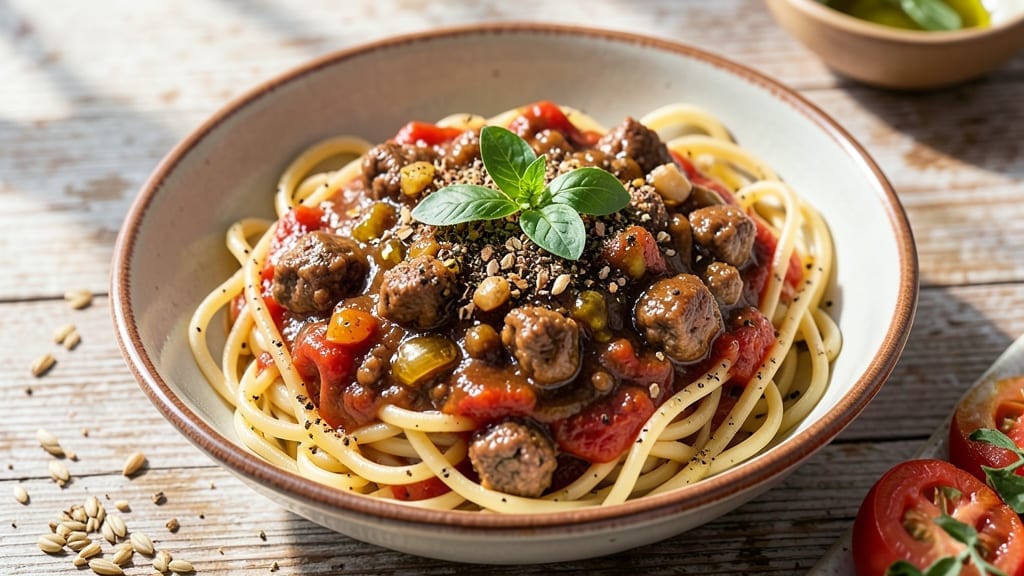
This 5-star spaghetti meat sauce transforms weeknight dinners into restaurant-quality meals with its deep, slow-cooked richness that lingers for days. 🌟 The secret lies in browning ground beef until it develops a deep caramelized crust, then simmering it for hours with crushed tomatoes, garlic, and a blend of Italian herbs.
That slow cooking process builds layers of flavor that bottled sauces can’t match—each bite delivers umami depth and a satisfying heartiness that feels like a hug in sauce form.
What sets this recipe apart is the balance of simplicity and technique.
You’ll use just 10 core ingredients, but the magic happens in the method: searing the meat properly, deglazing the pan to capture all those flavorful browned bits, and letting the sauce reduce until it coats the back of a spoon.
The result is a meat sauce so rich and complex that it elevates even the simplest spaghetti into something extraordinary. This isn’t just dinner—it’s an experience that makes everyone at the table ask for seconds (and thirds).
The beauty of this sauce is its versatility—it freezes beautifully for future meals, making it perfect for busy families or meal preppers. Serve it with perfectly al dente spaghetti, a sprinkle of fresh basil, and a glass of Chianti for the full Italian trattoria experience.
The flavor develops even more the next day, so leftovers taste even better—proof that good things get better with time.
Ready to make spaghetti night the highlight of your week? The process is straightforward, but the results are anything but ordinary. Let’s get cooking—your taste buds will thank you.
Ingredients for 5 star spaghetti meat sauce
Ten ingredients that build restaurant-quality depth through proper technique and slow simmering.
| Ingredient | Amount | Notes |
|---|---|---|
| Ground Beef (80/20 Lean-to-Fat Ratio) 🥩 | 1 ½ lb | Freshly ground for best flavor |
| Crushed Tomatoes (San Marzano Preferred) 🍅 | 28 oz | High-quality canned tomatoes |
| Yellow Onion 🧅 | 1 whole | Medium size, finely diced |
| Garlic Cloves 🧄 | 4 cloves | Fresh, minced for depth |
| Extra-Virgin Olive Oil 🫒 | 2 tbsp | For searing and deglazing |
| Dried Italian Seasoning 🌿 | 1 tbsp | Or blend of basil, oregano, thyme |
| Dried Oregano 🍃 | 1 tsp | For authentic Italian flavor |
| Salt 🧂 | 1 ½ tsp | Diamond Crystal preferred |
| Black Pepper 🌶️ | ½ tsp | Freshly cracked for heat |
| Tomato Paste 🍅 | 1 tbsp | High-quality for richness |
| Red Wine (Optional) 🍷 | ½ cup | Dry variety for depth |
The ground beef is non-negotiable—80/20 ratio ensures juiciness and flavor development. Costco or butcher shops offer the best quality, but grocery store packages work fine. Look for bright red meat with visible fat marbling; pre-ground beef loses flavor fast. The crushed tomatoes should be San Marzano if possible—they’re sweeter and more flavorful than standard brands. For the onion, yellow or red both work, but avoid sweet onions like Vidalia. Fresh garlic cloves are essential; never use powdered garlic. The olive oil should be extra-virgin with a fruity aroma—none of that cheap cooking oil.
No red wine? Beef broth with a splash of balsamic vinegar works beautifully. The Italian seasoning blend can be homemade—equal parts dried basil, oregano, and thyme—or store-bought. For tomato paste, Rao’s or Barilla are excellent; avoid the squeeze tubes if you can. The tomato paste should be high-quality—it’s the backbone of the sauce’s richness. If you’re using dried herbs, toast them lightly in a dry pan before adding to deepen their flavor. The salt should be Diamond Crystal or Morton kosher—table salt will over-salt the sauce.
This sauce develops flavor over time—day-old sauce tastes even better. Store in airtight containers in the fridge for up to 5 days or freeze for 3 months. For freezing, portion into containers with room at the top—sauce expands when frozen. When reheating, add a splash of water or broth to prevent thickening. The sauce thickens as it cools, so always stir before serving. Leftovers make perfect lunches—just reheat and serve over pasta or with crusty bread.
Why You’ll Love This Recipe
- Foolproof Simplicity: I swear by this recipe because it’s the kind of sauce that doesn’t demand perfection—just a few minutes of attention. Brown the 80/20 beef in olive oil until it’s got that perfect crust, then toss in the onions and garlic while you stir up a pot of pasta. The San Marzano tomatoes handle all the heavy lifting, so you’re not stuck babysitting a simmering pot.
- Umami Bomb: That 80/20 ground beef? It’s the secret weapon—juicy, rich, and packed with flavor that doesn’t need fancy seasonings to shine. When you brown it right, the edges get crispy, and the fat melts into the tomatoes, creating a sauce so deeply savory it’ll make your taste buds do a happy dance. (Between us, I’ve skipped the wine in this sauce and it’s still ridiculously good.)
- Weeknight Workhorse: This sauce is my go-to for busy nights, but it also plays well with company. Double the batch and freeze half for when you’re too tired to cook—just reheat and serve. It’s the kind of dish that feels special without requiring a 3-hour prep: perfect for date nights, family dinners, or the night you just want to eat with your hands.
- Budget Magic: San Marzano tomatoes might sound fancy, but they’re worth every penny—they’re sweeter, smoother, and last longer in the pantry. The 80/20 beef stretches further than leaner cuts, and you’re not drowning it in cream or expensive spices. Honestly, it’s the kind of meal that makes grocery day feel like a win, especially when you’re feeding a crowd for less than $15.
Step-by-step instructions for 5 star spaghetti meat sauce
Here’s the method for building a rich, layered sauce that delivers restaurant-quality depth.
🔥 Step 1: Brown the Ground Beef Perfectly
Heat a large Dutch oven over medium-high heat and add the 1.5 lb ground beef (80/20). Break it apart with a wooden spoon, letting the pieces form into ½-inch patties for maximum surface area. This creates better flavor development through the Maillard reaction.
Cook undisturbed for 3-4 minutes until the meat releases from the bottom and turns deep brown. Break up the patties with your spoon, then continue cooking for another 3-4 minutes until fully browned. The fat should render out but not smoke—if it does, reduce the heat slightly. Don’t drain the fat; it’s essential for building flavor.
🍳 Step 2: Sauté Aromatics and Develop the Base
Add the 1 whole yellow onion and 4 cloves minced garlic to the Dutch oven. Cook for 3-4 minutes until the onion softens and becomes translucent, then turns golden brown. This caramelization adds sweet depth to your sauce.
Stir in the 1 tbsp tomato paste and cook for 1 minute until it darkens slightly. This step creates a rich foundation that prevents the sauce from being too acidic. If using the 0.5 cup red wine, pour it in now and let it simmer for 2 minutes until mostly evaporated—this removes the alcohol’s sharpness while adding complexity.
🥘 Step 3: Build the Sauce with Tomatoes and Seasonings
Add the 28 oz crushed San Marzano tomatoes, 1.5 tsp salt, 0.5 tsp black pepper, 1 tbsp dried Italian seasoning, and 1 tsp dried oregano. Stir well to combine, then bring to a gentle simmer over medium-low heat. The sauce should bubble softly—if it boils vigorously, reduce the heat.
Partially cover the Dutch oven and let the sauce cook for 45-60 minutes, stirring occasionally. You’re looking for a sauce that thickens naturally as moisture evaporates and flavors meld. The texture should coat the back of a spoon with a velvety consistency. If the sauce gets too thick before the time is up, add 2-3 tablespoons of water to maintain proper texture.
⏰ Step 4: Simmer to Perfection and Rest Before Serving
After the initial simmering, uncover the sauce and continue cooking for another 30-45 minutes until it reaches your desired consistency. The sauce should be thick enough to cling to spaghetti without being gluey. Taste and adjust seasoning—you may need to add a pinch more salt or pepper.
Remove from heat and let the sauce rest for 10-15 minutes before serving. This resting period allows the flavors to fully meld and the texture to stabilize. The sauce will thicken slightly as it cools, so don’t over-thicken it before resting. Serve over freshly cooked spaghetti with a sprinkle of fresh basil and grated Parmesan cheese.
Pro Tips For Making 5 Star Spaghetti Meat Sauce
- CRUSH GARLIC COARSELY: I learned this the hard way—mincing garlic too finely turns it into a bitter paste instead of releasing its aroma. For this sauce, use the flat side of your knife to smash 3-4 cloves into rough chunks before cooking. They’ll soften perfectly without overpowering the tomatoes or onion.
- BROWN THE BEEF IN BATCHES: High heat is non-negotiable, but don’t overcrowd the pan—this steams the meat instead of searing it. Cook 1 pound at a time in 2 tablespoons olive oil, breaking it apart with a wooden spoon until deep brown (about 5 minutes per batch). The crust on the meat locks in flavor, and skipping this step makes the sauce taste flat.
- SALT THE CRUSHED TOMATOES: San Marzano tomatoes are sweet but still need seasoning. Stir in 1 teaspoon kosher salt directly to the canned tomatoes before adding them to the pot. This balances acidity and lets the salt penetrate while simmering—no need to add extra later.
- SIMMER LOW AND UNCOVERED: Sounds weird, but it works: After adding tomatoes, reduce heat to a bare simmer and let the sauce bubble gently without a lid for the first 20 minutes. This evaporates excess moisture and concentrates the flavors faster than a slow cook. Cover only after the raw tomato taste fades.
Serving suggestions for this dish
Pasta Pairings
This rich meat sauce pairs best with al dente spaghetti—the long strands create the perfect vehicle for sauce clinging. Use bronze-cut spaghetti for extra texture, or try bucatini for a heartier bite. For a rustic touch, serve over rigatoni or penne to hold more sauce.
I always cook pasta in salted boiling water until it’s 1 minute shy of al dente—it finishes cooking in the sauce. 🍝
Garnish Game-Changers
Fresh basil is non-negotiable—torn leaves add bright contrast to the deep sauce. For extra flair, sprinkle grated Parmesan cheese (use Parmigiano-Reggiano for authentic flavor) and a pinch of red pepper flakes for heat.
A drizzle of high-quality olive oil right before serving elevates the dish to restaurant-level. I also love adding toasted pine nuts for crunch and texture.
Bread Sides
Crusty ciabatta rolls or garlic bread soak up every last bit of sauce. For a lighter option, serve with grilled sourdough brushed with olive oil and sprinkled with sea salt. I make a quick version by toasting baguette slices with garlic butter—it’s the perfect side for sharing.
For a more substantial meal, add a simple arugula salad with lemon vinaigrette to cut through the richness.
Wine Pairings
A bold Chianti Classico or Sangiovese complements the sauce’s acidity and depth. For white wine lovers, a crisp Vermentino from Sardinia balances the meal beautifully. If you prefer beer, a Malbec or Zinfandel works well with the meaty flavors.
I always open a bottle 30 minutes before serving to let it breathe—it makes all the difference. 🍷
Make-Ahead Serving
This sauce tastes even better the next day, so plan ahead! Store leftovers in an airtight container in the fridge for up to 5 days. Reheat gently on the stove with a splash of water to restore texture.
For freezing, portion into quart-sized bags—they thaw perfectly in the fridge overnight. When reheating from frozen, add 2 tablespoons of water per cup of sauce to prevent thickening.
Family-Style Presentation
Serve in a large ceramic bowl at the center of the table for a communal dining experience. Add extra sauce to the bowl so everyone can ladle their own. For a festive touch, sprinkle fresh parsley over the top and place a wooden spoon in the center.
I love setting out small bowls of grated cheese and herbs on the table so everyone can customize their plate. The aroma alone will have everyone excited for dinner. 💫
Nutrition facts
Frequently asked questions
Can I use ground turkey or chicken instead of beef?
Yes, but expect a different flavor profile. Ground turkey (especially dark meat) works best—it stays juicier than chicken. Use 93% lean/7% fat turkey to mimic beef’s richness. For chicken, add 1 tablespoon of olive oil to the pan to prevent drying. The cooking time remains the same, but turkey may release more liquid, so adjust by reducing to medium heat for the final simmer.
Why does my meat sauce taste bland after cooking?
Most likely, you didn’t brown the meat enough or didn’t let the sauce simmer long enough. The Maillard reaction (browning) creates deep flavor—cook the beef until it’s deep brown in spots. Also, taste as you go and adjust seasoning gradually. If it’s still bland, add 1 teaspoon of balsamic vinegar or a pinch of smoked paprika to add complexity.
How do I fix a sauce that’s too acidic or tomato-forward?
Balance acidity by adding 1 teaspoon of sugar or 1 tablespoon of tomato paste to deepen the flavor. For richness, stir in 1 tablespoon of butter or a splash of heavy cream at the end. Let it simmer for 5 minutes to meld. If the sauce is too thin, uncover and simmer uncovered for 10-15 minutes to reduce naturally—never boil vigorously.
Can I make this sauce in a slow cooker?
Brown the meat and aromatics in a skillet first, then transfer everything to the slow cooker. Cook on low for 6-8 hours or high for 3-4 hours. The slow cooking enhances the flavors even more. Stir occasionally and add 1-2 tablespoons of water if it gets too thick. The texture will be slightly looser, but it’s perfect for reheating.
What’s the best way to reheat leftovers?
Gently reheat on the stove over low heat with a splash of water or broth to restore texture. Never microwave—it makes the sauce rubbery. For frozen sauce, thaw overnight in the fridge, then reheat with 2 tablespoons of water per cup of sauce**. Stir frequently to prevent scorching. If the sauce separates, whisk in 1 teaspoon of cornstarch mixed with water to smooth it out.

- 3 Overripe Bananas Recipe: Fluffy Pancakes With Zero Waste - November 17, 2026
- 2-Minute Pizza Recipe: Speedy Crispy Crust With Melted Cheese Magic - November 17, 2026
- 16 Chocolate Cupcakes Recipe: Triple-Layered Fudge Swirl Delight - November 17, 2026