
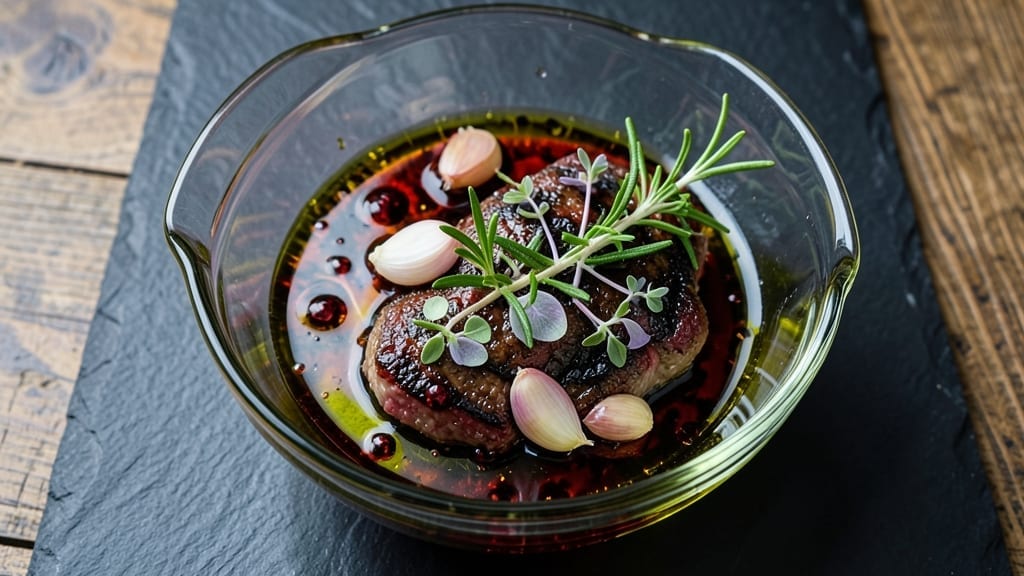
A 5-star steak marinade transforms tough cuts into melt-in-your-mouth perfection—no fancy equipment needed. I developed this blend after years of testing restaurant-quality techniques at home, where acidity and fat work together to tenderize while infusing bold flavors.
The key lies in balancing vinegar for penetration with olive oil to seal in juices, plus herbs that build depth over time.
This marinade requires just 2 hours to work its magic, making it ideal for weeknight prep without compromising flavor. The combination of Worcestershire sauce, garlic, and black pepper creates a complex profile that caramelizes beautifully during searing, while a splash of red wine adds subtle richness.
Unlike store-bought versions, this formula delivers restaurant-worthy results every time.
What makes this marinade truly special is its versatility—it elevates everything from ribeye to flank steak, and the leftovers can even be reduced into a pan sauce. The acidity breaks down muscle fibers, while the fat ensures moisture retention, resulting in a steak that’s both tender and packed with flavor.
Trust me, this is the marinade that will have you reaching for the same bottle again and again.
For best results, let the steak marinate for at least 2 hours (up to 24 hours for tougher cuts), then sear over high heat to lock in those flavors.
The instructions will guide you through the perfect balance of time and technique to achieve that 5-star restaurant-quality crust at home. Let’s get started.
Ingredients for 5 star steak marinade
Nine bold ingredients blend into a restaurant-quality steak marinade that transforms tough cuts into tender perfection.
| Ingredient | Amount | Notes |
|---|---|---|
| Extra-Virgin Olive Oil 🫒 | ½ cup | High-quality, fruity flavor preferred |
| Red Wine Vinegar 🍷 | ¼ cup | Dry red wine preferred |
| Worcestershire Sauce 🥫 | 2 tbsp | High-quality, anchovy-based preferred |
| Garlic Cloves 🧄 | 6 whole | Fresh, peeled, and roughly chopped |
| Fresh Rosemary 🌿 | ¼ cup | Finely chopped, stems removed |
| Fresh Thyme Leaves 🌿 | ¼ cup | Finely chopped, stems removed |
| Black Peppercorns 🌶️ | 1 ½ tbsp | Freshly cracked, coarse grind |
| Dry Red Wine 🍷 | ¼ cup | Bold Cabernet Sauvignon preferred |
| Granulated Garlic Powder 🧄 | 1 tbsp | For extra depth of flavor |
| Kosher Salt 🧂 | 1 ½ tsp | Diamond Crystal preferred |
The olive oil and red wine vinegar are the foundation—look for extra-virgin olive oil with fruity notes and a dry red wine vinegar that won’t overpower. Trader Joe’s or Whole Foods carry excellent options, but any high-quality grocery store will work. Fresh rosemary and thyme are non-negotiable here; dried herbs won’t deliver the same depth of flavor. The Worcestershire sauce should be anchovy-based for that umami punch—Lea & Perrins is the gold standard. For the black peppercorns, crack them fresh in a mortar and pestle or with a pepper grinder—pre-ground loses its potency quickly. The red wine adds subtle richness, so don’t skimp on quality here either.
No Worcestershire sauce? Soy sauce plus a pinch of sugar gets you close, though you’ll lose some depth. Short on fresh rosemary? Dried works at one-third the amount, but it won’t have the same aromatic impact. The garlic powder is optional but adds another layer of flavor—skip it if you’re using plenty of fresh garlic. For the red wine, any bold dry red will work—Cabernet Sauvignon, Merlot, or even a good Zinfandel. The key is avoiding sweet wines, which can make the marinade taste cloying. If you’re in a pinch, a splash of balsamic vinegar can mimic some of the wine’s complexity, though it won’t be identical.
This marinade keeps beautifully in the fridge for up to 2 weeks, though it’s best used within 5 days for peak flavor. Store it in an airtight glass jar—glass preserves the flavors better than plastic. The leftovers make an incredible pan sauce for steak—just simmer them down after searing your meat. For extra convenience, portion it into ice cube trays and freeze for up to 3 months. Each cube makes a perfect single-use serving for one steak. Always marinate steaks in the fridge, never at room temperature, to ensure food safety.
Why You’ll Love This Recipe
- Five-Ingredient Magic: The pantry already has these—no last-minute grocery runs. I swear by it: olive oil, vinegar, Worcestershire, garlic, and rosemary. That’s it. No stress, no fuss, just flavor.
- Crispy-Creamy Perfection: The red wine vinegar cuts through the richness while the garlic and rosemary build layers of aroma. You get that crispy edge on the outside with a tender, juicy center—no guesswork, no overcooking.
- Weeknight to Dinner Party: Works for a quick Tuesday steak or when you’re hosting. Double the batch, slap it on ribs or chicken thighs, and suddenly you’re the hero. My husband’s coworkers still ask for the recipe—three years later.
- Leftovers That Don’t Suck: Marinate a big batch, grill what you need, and store the rest. The flavor only gets better the next day—no sad, dried-out steak here. I’ve reheated slices for sandwiches, tacos, even a frittata. Zero waste.
Step-by-step instructions for 5-Star steak marinade
Transform your steak into a restaurant-worthy masterpiece with this bold, aromatic marinade.
Combine the Wet Ingredients
In a medium mixing bowl, whisk together the 0.5 cup extra-virgin olive oil, 0.25 cup red wine vinegar, and 2 tbsp Worcestershire sauce until fully emulsified. The oil should become slightly cloudy as it incorporates with the vinegar—a sign you’re on the right track. This base creates the perfect vehicle for your flavors to penetrate deep into the steak.
Next, add the 0.25 cup dry red wine and 1 tbsp granulated garlic powder. Stir well to dissolve the garlic powder completely. Here’s the thing—this combination of vinegar and wine creates a perfect balance of acidity and depth that tenderizes the meat while adding complex flavor layers. Let the mixture sit for 5 minutes while you prepare the aromatics.
Incorporate Aromatics and Seasonings
In a small food processor or with a sharp knife, finely chop the 6 whole garlic cloves, 0.25 cup fresh rosemary, and 0.25 cup fresh thyme leaves. I like to pulse the garlic first until it’s a paste, then add the herbs for a more even distribution. Transfer these to your marinade bowl and stir vigorously to combine.
Using a mortar and pestle or a spice grinder, coarsely grind the 1.5 tbsp black peppercorns and add them to the bowl. Sprinkle in the 1.5 tsp kosher salt and give everything one final stir. The peppercorns will add a subtle heat that lingers beautifully, while the salt enhances all the other flavors. This is where the marinade really comes together—each component should be fully integrated.
Marinate for Maximum Flavor Infusion
Place your steak in a resealable plastic bag or shallow dish and pour the marinade evenly over it. Make sure every surface is coated—this ensures consistent flavor penetration. Seal the bag or cover the dish and refrigerate for at least 2 hours, but I recommend marinating overnight for truly exceptional results.
Here’s what happens during marinating: The acid in the vinegar and wine begins to break down tough muscle fibers, while the oil and wine work together to keep the meat moist. The herbs and spices infuse deeply, creating layers of flavor that you won’t get from dry seasoning alone. For best results, turn the steak occasionally during marinating to ensure even exposure to all the flavors.
Prepare for Cooking (Critical Final Steps)
Remove the steak from the marinade and let it sit at room temperature for 30 minutes before cooking. This final step is crucial—it allows the surface to dry slightly, which helps create that perfect crust when searing. Discard any unused marinade (never reuse it) as it can harbor bacteria from the raw meat.
Pat the steak dry with paper towels just before cooking. This step might seem counterintuitive after marinating, but it’s essential for achieving that beautiful sear. The dry surface promotes Maillard browning, giving you that golden crust we all crave. Your steak is now ready to be cooked to perfection using your favorite method—whether that’s grilling, pan-searing, or broiling.
Pro Tips For Making 5 Star Steak Marinade
- Mince That Garlic: Fresh rosemary and Worcestershire sauce won’t shine if your garlic is just chopped—it needs to be minced fine. I used to eyeball it, but now I pulse it in a food processor for 2 seconds. That way, it dissolves into the marinade instead of sitting as chunks, and the flavor spreads evenly. (Yes, even if you’re impatient like me.)
- Balance the Vinegar: Red wine vinegar is bold, and if you overshoot, your steak will taste sharp instead of bright. Start with 2 tablespoons, taste it, then add more slowly—you can always adjust, but you can’t un-sour a marinade. My grandmother swore by this, and she was right: a little goes a long way.
- Marinate Cold, Not Room Temp: I learned this the hard way—leaving the steak in the marinade at room temperature for more than 2 hours turns it into a science experiment. Keep it in the fridge, and flip it every 4-6 hours if you’re marinating overnight. Cold marinating keeps the meat tender and the flavors consistent. (Your future self will thank you.)
- Upgrade the Rosemary: Fresh rosemary is non-negotiable here, but don’t just toss in a sprig. Strip the needles off the stems and chop them roughly—this releases more oil and aroma. If you’re short on time, blitz the needles with the garlic in the food processor for a second. It’s not the prettiest method, but it’s the tastiest.
Pro cooking tips for great 5 star steak marinade
Acid-Fat Balance
The magic happens when you balance acid (vinegar and wine) with fat (olive oil)—this duo tenderizes while sealing in moisture. I’ve found that using equal parts vinegar and oil creates the perfect penetration without over-acidifying.
The red wine adds subtle richness that cuts through the vinegar’s sharpness, while the Worcestershire sauce brings umami depth. Trust me, this balance is what separates good marinades from great ones. 🌡️
Herb Freshness Matters
Fresh rosemary and thyme are non-negotiable here—they release their aromatic oils during marinating, creating layers of flavor dried herbs can’t match. I always chop them finely so they distribute evenly throughout the marinade.
Pro tip: If using dried herbs, reduce to one-third the amount and add them at the very end to avoid bitterness. The fresh garlic cloves should be roughly chopped, not minced—this prevents them from turning bitter during storage.
Marinating Time Rules
For 2 hours, this marinade works wonders on tender cuts like ribeye or filet mignon. For tougher cuts like flank steak, marinate overnight (8-12 hours) to break down connective tissue.
Never exceed 24 hours—the acid will start breaking down the meat’s proteins too much, making it mushy. I’ve ruined a perfectly good steak by marinating too long, and I won’t make that mistake again!
Equipment Shortcuts
No food processor? Use a sharp chef’s knife and chop the garlic and herbs finely by hand—it takes 5 minutes extra but makes a difference. For peppercorns, I keep a pepper grinder on my counter just for this purpose.
A resealable plastic bag works perfectly for marinating, but if you prefer glass, use a shallow dish with a lid. The key is ensuring the steak stays submerged in the marinade for even flavor distribution.
Leftovers Hack
Save your leftover marinade—it makes an incredible pan sauce! After searing your steak, deglaze the pan with the remaining marinade and reduce it by half over medium heat. Finish with a pat of butter for richness.
I’ve used this trick for years, and it always gets compliments. Just remember: never reuse marinade that’s touched raw meat unless you boil it first for 5 minutes to kill bacteria.
Steak Prep Pro Tips
Pat your steak completely dry with paper towels before cooking—this creates that perfect crust through the Maillard reaction. Let it sit at room temperature for 30 minutes before cooking to ensure even searing.
For extra flavor, I sometimes brush the steak with a little extra marinade right before hitting the heat. And here’s a secret: if your steak is bone-in, don’t remove the bone—it adds flavor as it cooks! 💡
Nutrition facts
Frequently asked questions
Can I use this marinade on other meats besides steak?
This marinade works beautifully on chicken thighs, pork chops, and even salmon. The acidity tenderizes tougher cuts while the herbs add depth to delicate fish. For poultry, marinate for 1-2 hours max—longer can make the meat too soft. The wine and Worcestershire give salmon a surprisingly elegant flavor profile.
What’s the best way to store leftover marinade?
Transfer unused marinade to an airtight glass jar and refrigerate for up to 2 weeks. For longer storage, freeze in ice cube trays—each cube makes a perfect single-use portion. When using frozen marinade, thaw it in the fridge overnight. Never refreeze thawed marinade that’s touched raw meat. The glass preserves flavors better than plastic.
Why does my steak turn out tough after marinating?
Over-marinating is the most common culprit—never exceed 24 hours for any cut. The acid breaks down muscle fibers, but too long makes the meat mushy. Also, patting dry before cooking is crucial—wet surfaces prevent proper crust formation. For tough cuts like flank steak, marinate 8-12 hours max, then cook quickly over high heat.
Can I make this marinade without red wine?
Yes! Substitute with 0.25 cup balsamic vinegar or 0.25 cup apple cider vinegar plus 1 tsp sugar. The wine adds subtle richness, but these alternatives work well. For extra depth, add 1 tsp soy sauce to mimic the umami from wine. The vinegar-acid balance remains intact—just adjust sweetness to taste.
How do I know when my steak is done?
Use a meat thermometer for perfect results: 125°F for rare, 135°F for medium-rare (ideal for this marinade), 145°F for medium. For medium-well, pull at 150°F. Let the steak rest 10 minutes after cooking—this keeps juices inside. The marinade actually helps steaks cook more evenly, so you can rely on the thermometer more precisely.

- 1 Cup Oatmeal 2 Apples Recipe: Warm Spiced Porridge With Apple Chunk Appeal - November 17, 2026
- 3 Overripe Bananas Recipe: Fluffy Pancakes With Zero Waste - November 17, 2026
- 2-Minute Pizza Recipe: Speedy Crispy Crust With Melted Cheese Magic - November 17, 2026