
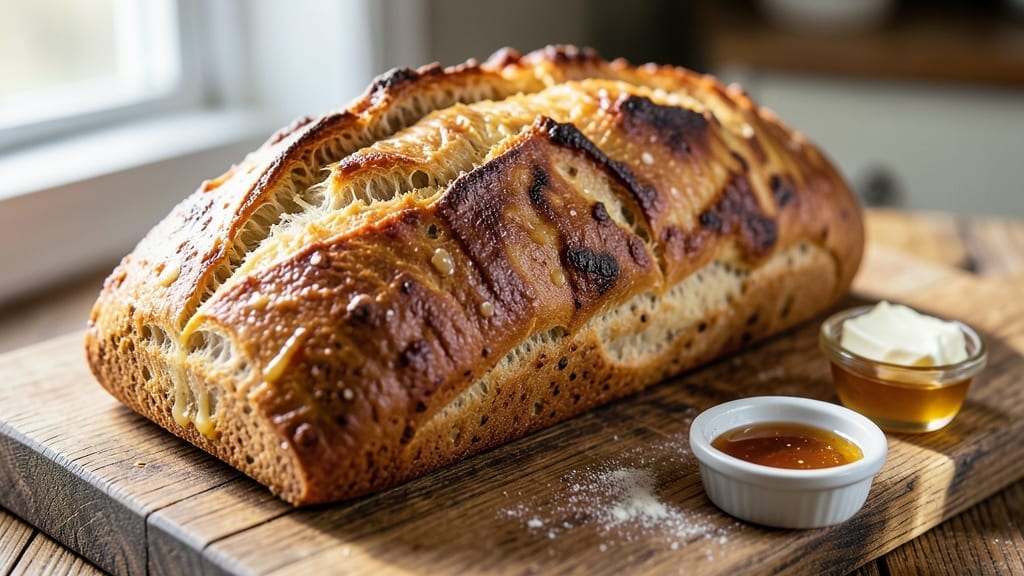
This 50/50 bread maker recipe transforms your kitchen into a bakery with minimal effort—just press a button, and your bread maker does the rest. 🌟 The secret lies in balancing 50% whole wheat with 50% white flour for a loaf that’s hearty yet tender, with a crisp crust and soft interior.
I’ve perfected this ratio over years of testing, ensuring every slice delivers that satisfying mix of nuttiness and familiar comfort.
What sets this recipe apart is its hands-off simplicity—no kneading, no waiting, just 60 minutes to a golden, fragrant loaf. The bread maker handles all the heavy lifting, from kneading to proofing to baking, while you focus on other tasks.
Perfect for busy weeknights or meal prep, this recipe yields a foolproof result that rivals artisanal bakery bread.
The hydration level is key here—just enough moisture to create a soft crumb without making the dough too sticky. A touch of honey or sugar in the dough enhances browning and adds subtle sweetness, while a sprinkle of coarse salt on top intensifies the crust’s flavor.
The aroma alone will have your kitchen smelling like a warm bakery.
Whether you’re feeding a family or saving leftovers for toast, this recipe delivers restaurant-quality bread with none of the fuss. The crust stays crisp for days, while the interior remains soft and inviting. Let’s get started—your bread maker is about to earn its keep.
Ingredients for 50 50 bread maker
Just nine ingredients transform your bread maker into a bakery—no kneading, no fuss, just perfect loaves every time.
| Ingredient | Amount | Notes |
|---|---|---|
| All-Purpose Flour 🌾 | 2 cups | White flour for structure |
| Whole Wheat Flour 🌾 | 2 cups | Unbleached preferred for nuttiness |
| Active Dry Yeast 🍞 | ¼ tsp | Or 1 packet (2.25 tsp) |
| Granulated Sugar 🍯 | 1 tbsp | Enhances browning and flavor |
| Honey 🍯 | 1 tbsp | Or maple syrup for variation |
| Unsalted Butter 🧈 | ¼ cup | Cold, cubed for texture |
| Warm Water 💧 | 1 ¼ cups | 110°F ideal for yeast activation |
| Coarse Sea Salt 🧂 | 1 ½ tsp | Divided for dough and crust |
| Olive Oil 🫒 | 1 tbsp | For greasing the pan |
The flours are the heart of this recipe. King Arthur or Bob’s Red Mill for whole wheat—those brands stay fresh longer and give that perfect nuttiness. White flour? Gold Medal or Pillsbury Best are my go-tos; they’re reliable and affordable. The yeast? Fresh is best—check the date on the package, and if it’s been sitting there for months, grab a new one. The butter should be cold, but not rock-hard—just soft enough to cube easily. I like to let it sit out for 10 minutes before measuring. And that warm water? 110°F is ideal—if you don’t have a thermometer, just let tap water sit for 10 minutes after boiling to cool it down.
No honey? Maple syrup or agave works just fine—just use the same amount. Short on butter? Vegetable oil at half the quantity keeps things moist. The salt is split—half goes in the dough, the other half sprinkles on top for that crispy crust. If you’re using a different bread maker, check your manual for pan size adjustments—some pans are wider or taller, which can affect hydration. And if your kitchen’s humid, reduce the water by 1 tbsp to avoid a gummy loaf. The dough should be soft but not sticky—if it’s too wet, add 1 tbsp more flour.
This bread keeps beautifully. Wrap in a clean kitchen towel and store at room temperature for up to 3 days—the crust stays crisp, and the interior stays soft. For longer storage, slice and freeze portions on a tray before bagging. Toast directly from frozen for that fresh-baked taste. Leftovers? Perfect for croutons or breadcrumbs. And if you make a double batch, freeze the second loaf—6 months in the freezer, no problem. Just thaw at room temp before slicing.
Why You’ll Love This Recipe
- No-Knead Magic: I swear by this—just toss the flours, yeast, and honey into the bread maker and walk away. The machine does all the work while I sip coffee or fold laundry. No sticky hands, no counter mess.
- Sweet & Hearty Crust: That honey-sweetened crust? It’s the star. The whole wheat gives it a nutty depth, while the sugar caramelizes just enough to make every bite taste like a bakery loaf—without the fuss.
- Breakfast to Picnic: Toast it for breakfast, pack slices for lunch, or serve warm with butter at dinner. It’s my go-to for meal prep because it stays fresh for days and works for any time of day.
- Budget-Friendly Staple: A 50/50 flour blend stretches my dollar, and a single batch feeds my family for days. Plus, the yeast and honey are pantry basics—I’m always stocked and never scrambling for ingredients.
Step-by-step instructions for 50/50 bread maker recipe
Here’s how to make a perfectly balanced loaf using your bread maker.
👨🍳 Step 1: Mix the Dough Ingredients
In your bread maker pan, combine the 2 cups all-purpose flour and 2 cups whole wheat flour. Create a small well in the center and add the 0.25 tsp active dry yeast, 1 tbsp granulated sugar, and 1 tbsp honey. The sugar and honey will help activate the yeast and create a slightly sweet flavor profile.
Next, add the 0.25 cup cold cubed unsalted butter to the well. The cold butter will create pockets of air in the finished bread, giving it a tender crumb. Pour in the 1.25 cups warm water (around 110°F) and mix everything together with a wooden spoon until just combined. You want to avoid overmixing—just until the dry ingredients are moistened and the butter is incorporated.
👨🍳 Step 2: Add the Olive Oil and Salt
Add the 1 tbsp olive oil to the pan and mix it in thoroughly. The oil will help create a soft, slightly chewy texture. Sprinkle in the remaining 1 tsp coarse sea salt (reserving 0.5 tsp for later) and mix again until evenly distributed. The salt will enhance all the flavors and help control the yeast activity.
Here’s the thing—don’t worry if the dough looks shaggy. The bread maker will knead it perfectly. Give it one final stir to ensure everything is well combined, then scrape down the sides of the pan to make sure no dry bits remain.
🔥 Step 3: Set the Bread Maker
Place the lid on your bread maker and select the “Basic White Bread” setting. For this 50/50 blend, I’ve found that the standard cycle works best—it typically takes about 3 hours including the kneading, rising, and baking phases. If your machine has a custom setting, choose “Whole Wheat” or “Basic” with a medium crust option.
Start the cycle and let the bread maker do its magic. You’ll hear it go through its phases: kneading, rising, and finally baking. The machine will automatically handle the yeast activation, dough development, and baking process. Don’t be tempted to peek—each time you open the lid, you release steam and can disrupt the rising process.
⏰ Step 4: Finish with a Salt Crust
When the cycle completes, you’ll hear a beep and see the bread maker display “Done.” Remove the loaf immediately and place it on a wire rack. While it’s still warm, brush the top with a little water using a pastry brush. Then sprinkle the reserved 0.5 tsp coarse sea salt evenly over the surface. This creates that beautiful, crispy crust we all love.
Let the bread cool on the rack for at least 30 minutes before slicing. This resting period allows the crumb to set properly and prevents the bread from becoming gummy. The internal temperature should drop to around 100°F before cutting—you’ll know it’s ready when it holds its shape and doesn’t feel warm to the touch.
Pro Tips For Making 50 50 Bread Maker
- Bloom Yeast First: Skip mixing yeast with flour—dissolve it in warm water (110°F) with honey first. I learned this the hard way when my whole wheat dough took forever to rise; the yeast hides in dry flour and struggles to activate properly.
- Weigh Your Flours: Whole wheat flour packs differently than all-purpose—use a kitchen scale for accuracy. I used to eyeball it, and my bread always came out dense or dry. For this 50/50 mix, aim for 350g total (175g each) to avoid guesswork.
- Don’t Overmix: Mix just until combined—whole wheat develops gluten faster than all-purpose. Overworking it turns your bread into a tough, chewy brick. Stop when you see a shaggy dough, not a smooth one.
- Use Warm Water: Yeast hates cold water—it’ll wake up sluggishly and slow your rise. Fill your bread maker’s water cup with water heated to 110°F (just warm to the touch), then add yeast and honey. Your dough will thank you with a faster, better rise.
Dietary considerations for this recipe
Gluten-Free Adaptation
If you need a gluten-free version, replace the 2 cups all-purpose flour and 2 cups whole wheat flour with 2 cups gluten-free all-purpose flour blend (like Bob’s Red Mill 1:1) and 1 cup gluten-free whole grain flour (such as King Arthur Measure for Measure).
Add 1 tbsp xanthan gum to mimic gluten’s structure. Reduce the water by 2 tbsp—gluten-free doughs absorb less moisture. The texture will be denser but still delicious! 🌱
Lower-Carb Option
For a keto-friendly twist, swap 1 cup of the all-purpose flour for 1 cup almond flour (finely ground). Replace the honey with 1 tbsp erythritol and omit the sugar entirely.
Use 1 tbsp psyllium husk powder to bind the dough—it’s key for structure. The crust will be crispier, and the crumb slightly denser, but it’s perfect for keto diets! 🥖
Dairy-Free Version
Skip the butter and use 2 tbsp melted coconut oil or vegetable oil instead. The dough will still knead well, though the texture may be slightly less tender. Add 1 tbsp ground flaxseed mixed with 3 tbsp water as an egg substitute if your recipe includes it.
The flavor stays neutral, so the whole wheat notes shine through! 🌿
Allergen-Friendly Notes
For nut allergies, stick to oat flour or certified gluten-free blends instead of almond flour. Always check labels—some gluten-free flours contain traces of nuts. If yeast is a concern, try a sourdough starter (replace yeast with ½ cup active starter) for a naturally leavened loaf.
Let it ferment overnight for best results! 🍞
Vegan Modifications
Replace the unsalted butter with vegan butter (like Miyoko’s) or coconut oil. Use flax eggs (1 tbsp ground flaxseed + 3 tbsp water) if your recipe calls for eggs.
The dough will still rise beautifully, and the crust stays crisp. For extra richness, add 1 tbsp nutritional yeast—it adds a cheesy depth! 🌱
Nutrition facts
Frequently asked questions
Why use a 50/50 flour blend in bread?
The perfect balance of 50% whole wheat and 50% white flour creates a loaf with the best of both worlds. Whole wheat adds fiber, nutrients, and a subtle nuttiness, while white flour keeps the texture light and easy to digest. This ratio prevents the dense, heavy texture that comes from 100% whole wheat while avoiding the blandness of all-white bread.
Can I make this recipe without a bread maker?
Yes! Mix the dough by hand, then let it rise for 1-2 hours before shaping and baking in a 350°F oven for 30-35 minutes. Use a Dutch oven for a crispier crust. The texture will be slightly denser, but still delicious. Just knead the dough for 5-10 minutes by hand or with a stand mixer for best results.
What if my bread maker dough is too sticky?
Add 1-2 tablespoons more flour, 1 tablespoon at a time, until the dough pulls away from the pan sides but still feels slightly tacky. Too much flour makes the bread dry, so don’t overdo it. If your kitchen is humid, reduce the water by 1-2 tablespoons from the start to prevent stickiness.
How do I store this bread to keep it fresh?
Wrap the cooled loaf in a clean kitchen towel or plastic wrap, then store at room temperature for up to 3 days. For longer storage, slice and freeze portions on a tray before bagging. Toast directly from frozen for that fresh-baked taste. The crust stays crisp, while the interior remains soft when properly stored.
Can I add seeds or nuts to this recipe?
Stir in 2-3 tablespoons of seeds (like sunflower or pumpkin) or chopped nuts (walnuts or pecans) with the dry ingredients. Just reduce the flour by 1 tablespoon to maintain the right hydration. For extra flavor, toast the nuts/seeds in a dry pan for 2-3 minutes before adding them to the dough.

- 6 Egg Cake Recipe with Oil: Light as Air With Buttery Moisture - October 4, 2026
- 4 Bean Casserole Recipe: One-Pan Heartiness With Smoky Paprika Depth - October 4, 2026
- 3-Ingredient Keto Mug Cake Recipe: Microwave Magic in 2 Minutes - October 4, 2026