
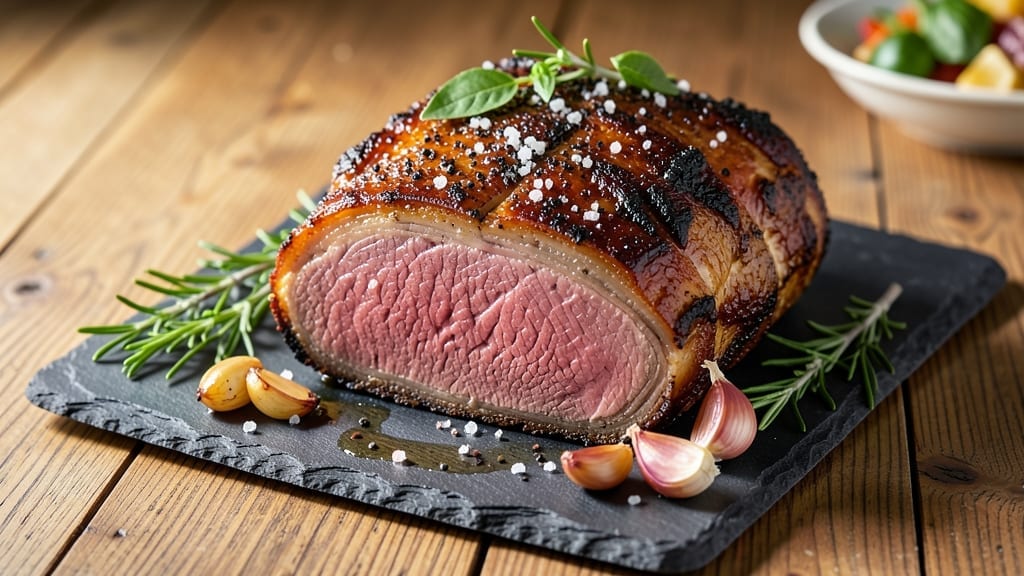
Mastering a 5.5 lb prime rib roast isn’t just about cooking—it’s about transforming a simple cut into a showstopping centerpiece that demands attention.
After years of perfecting this technique, I’ve developed a method that delivers a crispy crust, medium-rare perfection, and a juicy interior every time, all while keeping the process simpler than you’d expect for such an impressive dish.
The secret lies in the balance between high-heat searing and slow roasting, paired with precise temperature control that ensures your roast never overcooks.
This recipe begins with a simple yet effective dry rub—just coarse salt and freshly cracked black pepper—that enhances the natural richness of the prime rib without overpowering it.
Preheating your oven to 450°F for the initial sear creates that coveted crust, while dropping the temperature to 325°F allows the interior to reach the ideal 130–135°F for medium-rare.
Resting the roast for 15–20 minutes after cooking is just as critical as the cooking itself, ensuring every slice stays juicy and tender. The timeline is designed to keep stress at bay, so you can focus on the moment rather than the clock.
Pair your prime rib with classic sides like rosemary roasted potatoes, creamy horseradish sauce, or a crisp Yorkshire pudding to complete the meal.
The presentation is just as important as the cooking—slicing against the grain and arranging the slices on a warm platter elevates the dish from impressive to unforgettable.
This isn’t just dinner; it’s an experience, and with this recipe, you’ll be the one everyone turns to for holiday feasts and special occasions.
What makes this recipe stand out is its foolproof approach to a dish that often intimidates home cooks. No fancy equipment or complicated techniques—just a well-seasoned roast, a reliable thermometer, and patience. The result?
A prime rib that rivals what you’d find at high-end steakhouses, all made in your own kitchen. Let’s get started on creating a dish that will have your guests asking for seconds—and thirds.
Ingredients for 5.5 lb prime rib roast
Six ingredients transform a simple roast into a restaurant-worthy centerpiece—no shortcuts, just perfect technique.
| Ingredient | Amount | Notes |
|---|---|---|
| Prime Rib Roast 🥩 | 5 ½ lb | Bone-in, center-cut preferred |
| Coarse Kosher Salt 🧂 | 1 ½ tbsp | Diamond Crystal preferred |
| Freshly Ground Black Pepper 🌶️ | 1 tbsp | Cracked, not pre-ground |
| Extra-Virgin Olive Oil 🫒 | 2 tbsp | For crust development |
| Fresh Rosemary 🌿 | 1 whole | Sprigs for garnish |
| Garlic Cloves 🧄 | 6 cloves | Smash for aroma infusion |
| Yellow Onion 🧅 | 1 whole | Quartered, for aromatics |
| Beef Tallow or Duck Fat 🧈 | 2 tbsp | For extra crust richness |
| Meat Thermometer 🌡️ | 1 whole | Instant-read preferred |
| Baking Sheet 🍳 | 1 whole | Heavy-duty, for even heat |
The prime rib is your star. Look for a bone-in center-cut roast—it’s more flavorful and holds its shape better. Costco or Whole Foods carry excellent options, but any trusted butcher will have a quality cut. The fat cap is crucial for moisture, so don’t trim it. If you’re buying frozen, thaw it in the fridge for 24-48 hours—never at room temperature. The kosher salt matters too: Diamond Crystal is less dense than Morton’s, so you’ll need more for the same flavor impact. Freshly cracked black pepper makes all the difference—pre-ground loses potency fast.
No beef tallow? Duck fat or extra olive oil works just as well for that golden crust. Short on rosemary? Thyme sprigs add a similar earthy note. The onion and garlic are non-negotiable for building flavor—yellow onions caramelize best. If you’re nervous about temperature control, invest in a good instant-read thermometer—I use a Thermoworks for precision. The baking sheet should be heavy-duty to handle the high heat without warping. And trust me on the 15-20 minute rest—skipping it means dry slices.
Prime rib reheats poorly, so plan ahead. Cook it 10-15 minutes early and hold in a 200°F oven while you finish sides. The roast keeps 3-4 days wrapped tightly in the fridge, but honestly it’s best eaten fresh. For leftovers, slice thinly and reheat quickly in a skillet with a splash of beef broth. The crust won’t be as crispy, but the meat stays juicy. Freezing? Wrap tightly in butcher paper, then foil—up to 3 months for maximum quality.
Why You’ll Love This Recipe
- The secret’s in the prep: just a handful of coarse kosher salt and a drizzle of olive oil, rubbed in while the roast rests. That’s it—no fancy marinades or hours of basting. The rosemary clings like a hug, and the pepper? It caramelizes into little flavor bombs.
- Salt & Oil Magic: The secret’s in the prep: just a handful of coarse kosher salt and a drizzle of olive oil, rubbed in while the roast rests. That’s it—no fancy marinades or hours of basting. The rosemary clings like a hug, and the pepper? It caramelizes into little flavor bombs.
- Weeknight Crown Jewel: Between us, this is the only thing I cook when I’m too tired for Thanksgiving prep. The oven does all the work while I pour wine and pretend I’m not actually hosting. (Yes, even on a Tuesday night.)
- Leftovers That Win: That 5.5 lb roast? It feeds a crowd and gives you three days of lunches that taste like a restaurant. Thinly sliced with crusty bread? Heaven. Cold in sandwiches? Still a showstopper. My kids actually ask for it.
Step-by-step instructions for 5.5 lb prime rib roast
Here’s how to cook prime rib to perfect medium-rare tenderness with a flawless crust.
Prep the Roast and Season Generously
Remove the prime rib roast from the refrigerator and let it sit at room temperature for 1 hour before cooking. This ensures even cooking throughout. Pat the roast dry with paper towels—this step is crucial for developing that beautiful crust later.
In a small bowl, combine the 1.5 tablespoons coarse kosher salt and 1 tablespoon freshly ground black pepper. Rub this mixture all over the roast, including inside any cavities. I like to press the seasoning into the meat gently with my fingers to ensure it adheres well. This aggressive salting creates the perfect balance of flavor and helps tenderize the meat.
Create the Aromatic Base and Sear the Roast
Preheat your oven to 450°F for 20 minutes to ensure it’s fully heated. While the oven preheats, place the 1 whole yellow onion, quartered, and the 6 cloves garlic, smashed, on the prepared baking sheet. Drizzle with the 2 tablespoons extra-virgin olive oil and 2 tablespoons beef tallow or duck fat, then toss to coat evenly.
Place the seasoned prime rib roast fat-side up on the baking sheet with the aromatics. Roast for 15 minutes at 450°F to render the fat and create a golden crust. Remove the roast and aromatics from the oven, then reduce the oven temperature to 325°F. This initial high-heat sear locks in juices and builds deep flavor.
Cook Low and Slow to Perfect Medium-Rare
Return the roast to the oven and continue cooking at 325°F until the internal temperature reaches 115°F on the meat thermometer. This typically takes 1 hour 45 minutes to 2 hours, depending on your oven. The key here is patience—low and slow cooking ensures the roast stays juicy and tender throughout.
During the final 30 minutes of cooking, add the 1 whole fresh rosemary sprig to the baking sheet for added aroma. You’ll know it’s ready when the internal temperature hits 115°F—this gives you that perfect medium-rare finish. Remove the roast from the oven and let it rest on the baking sheet for 15 minutes before carving. This resting period allows the juices to redistribute.
Carve and Serve with Confidence
Using a sharp carving knife, slice the prime rib roast against the grain into ½-inch thick slices. The roast should have a deep red center with a perfect crust on the outside. Arrange the slices on a warm platter, drizzle with any accumulated pan juices, and garnish with the roasted aromatics.
Serve immediately with your favorite sides—roasted potatoes, a fresh green salad, or horseradish cream all pair beautifully. The meat should be tender enough to pull apart slightly with a fork, with a rich, beefy flavor that’s perfectly balanced by the crust and aromatic herbs. Enjoy your restaurant-quality prime rib right at home!
Pro Tips For Making 5.5 Lb Prime Rib Roast
- CRANK THE HEAT: DESCRIPTION: Start your prime rib on the highest oven rack with the oven at 475°F—yes, even for a 5.5 lb roast. The initial sear locks in juices and builds that crust faster than low-and-slow methods. After 20 minutes, drop to 325°F, but that first blast makes all the difference.
- SALT LIKE IT’S 1950: DESCRIPTION: Generously coat the prime rib with coarse kosher salt the night before—about 1.5 teaspoons per pound—and let it sit uncovered in the fridge. The salt penetrates deeper, and the crust forms better than if you salt it right before cooking. (I learned this the hard way after a dry, bland roast.)
- STOP POKING THE MEAT: DESCRIPTION: Use a meat thermometer instead of guessing, and resist the urge to check it early. Prime rib needs 130°F for medium-rare, but stabbing it with a fork releases juices. Let it cook undisturbed—your thermometer will tell you when it’s done, not your eye.
- ROSMARY NEEDS A HAND: DESCRIPTION: Don’t just sprinkle rosemary on top—weave sprigs into the fat cap and tuck them under the edges of the roast. This ensures they infuse flavor into the meat, not just sit on the surface like decorative garnish. (Your future self will thank you when the first slice reveals aromatic herbs.)
Storing and reheating this dish
Refrigerator Storage
Prime rib keeps beautifully in the fridge for 3-4 days when stored properly. After carving, wrap the remaining slices tightly in plastic wrap or place them in an airtight container—I prefer glass containers with snap-on lids.
The key is to minimize air exposure to prevent drying. Store on the bottom shelf where temperatures stay most consistent. Remember, the crust loses its crispiness after reheating, but the meat remains tender and flavorful. 💫
Freezer Prep Tips
For longer storage, freeze prime rib for up to 3 months using the butcher paper + foil method. Wrap the raw roast tightly in butcher paper first to protect against freezer burn, then seal in heavy-duty aluminum foil.
Label with the date and store flat in a freezer bag if you have space. Thaw overnight in the fridge before cooking—never at room temperature. This preserves texture and prevents bacterial growth. ❄️
Reheating Leftovers
Reheat prime rib slices in a skillet over medium heat with 1 tablespoon beef broth for 2-3 minutes per side to maintain moisture. Avoid microwaving—it turns the meat rubbery. For larger portions, use a slow cooker on low for 2 hours with a splash of broth.
Always reheat to an internal temperature of 165°F for safety. The crust won’t be perfect, but the meat stays juicy and delicious. 🔥
Make-Ahead Strategy
Cook the prime rib 10-15 minutes early and hold it in a 200°F oven while you finish sides. This keeps it perfectly warm without overcooking. For holiday meals, I often prepare the roast completely the day before, then reheat it gently before carving.
The flavors actually deepen overnight, making it even more impressive when served. Plan ahead to avoid last-minute stress! ⏰
Leftovers Reinvented
Transform prime rib leftovers into new meals. Shred the meat for prime rib tacos with corn tortillas and avocado crema. Or make prime rib hash with diced potatoes, onions, and a fried egg on top.
The rich flavor works beautifully in sandwiches too—just pile it high on crusty bread with horseradish sauce. Get creative with what might otherwise be forgotten! 💡
Safety Reminders
Always handle prime rib with care—it’s a rich protein that can spoil quickly if mishandled. Use separate cutting boards for raw meat and vegetables to prevent cross-contamination. Discard any leftovers that smell off or have an unusual texture.
When in doubt, throw it out—food safety is non-negotiable. Trust me, a little caution goes a long way with expensive cuts like this. 🛡️
Nutrition facts
Frequently asked questions
Why does the recipe call for resting the prime rib for 15-20 minutes?
Resting allows the meat’s juices to redistribute evenly throughout the roast. When you cut into prime rib too soon, all those precious juices rush to the surface, leaving you with dry slices. The 15-20 minute rest at room temperature ensures every bite stays moist and tender. Think of it as letting the meat “relax” before serving—it’s the secret to perfect texture!
Can I cook prime rib without a meat thermometer?
While possible, I strongly recommend using one for perfect results. Without a thermometer, you’re guessing at internal temperature, which can lead to overcooked meat. If you must skip it, use the finger test: Press your finger gently on the meat—if it feels like 130-135°F (medium-rare), it’s ready. But for best results, invest in a good instant-read thermometer—it’s a game-changer for prime rib!
What’s the best way to slice prime rib for maximum tenderness?
Always slice against the grain, cutting perpendicular to the muscle fibers. This shortens the fibers, making each bite more tender. Use a sharp carving knife and slice into ½-inch thick portions. For extra presentation, fan the slices slightly on the platter. Pro tip: Warm your knife in hot water for 10 seconds before slicing—it glides through the meat like butter!
How do I adjust cooking time for a smaller or larger prime rib?
Use this simple rule: 15-20 minutes per pound for medium-rare. For a 5.5 lb roast, that’s about 1.5-2 hours after the initial sear. If you have a 3 lb roast, reduce time to 45-60 minutes. For larger cuts (like 8+ lbs), increase to 2-2.5 hours. Always check internal temperature with a thermometer—it’s the only reliable guide!
What if my prime rib comes out overcooked?
Don’t panic! If it’s slightly overdone (around 140°F), you can still salvage it. Slice thinly and serve with rich sauces like red wine reduction or horseradish cream to enhance flavor. For well-done (160°F+), try shredding it for prime rib sandwiches or tacos—the texture works surprisingly well in these applications. Prevention is better: Use the thermometer and pull the meat out 5°F below your target temp!

- 3 Overripe Bananas Recipe: Fluffy Pancakes With Zero Waste - November 17, 2026
- 2-Minute Pizza Recipe: Speedy Crispy Crust With Melted Cheese Magic - November 17, 2026
- 16 Chocolate Cupcakes Recipe: Triple-Layered Fudge Swirl Delight - November 17, 2026