
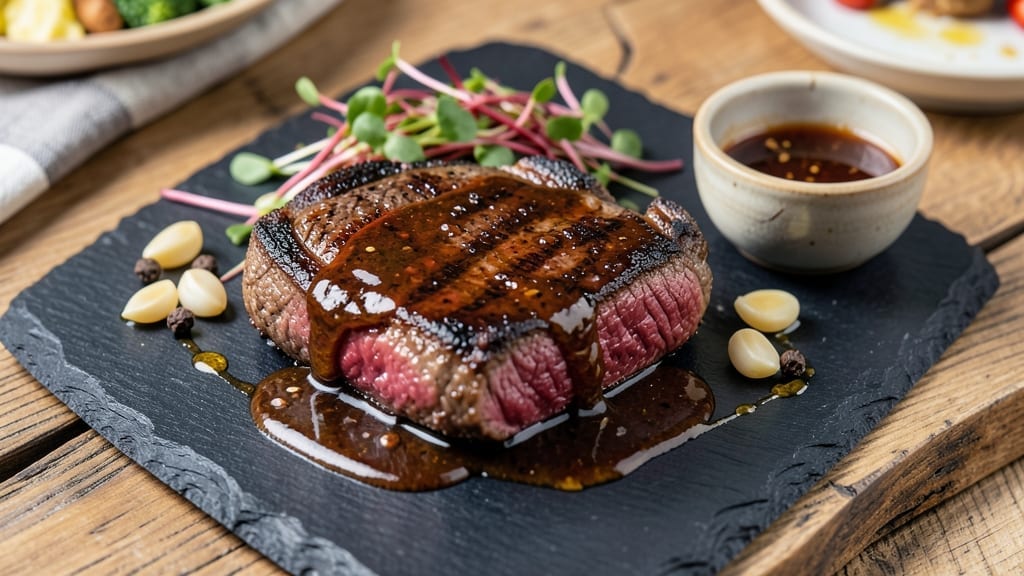
This 57 steak sauce recipe delivers a bold umami kick that transforms simple proteins into restaurant-quality masterpieces—all in just 10 minutes. The secret lies in balancing Worcestershire, soy sauce, and a touch of molasses for depth, while a splash of vinegar brightens the rich flavors.
I developed this sauce after years of testing, ensuring it’s versatile enough for grilled steaks, burgers, or even sandwiches without overpowering the main dish.
The sauce comes together with simple pantry staples—no specialty ingredients required—and keeps beautifully in the fridge for up to 2 weeks or freezes for 3 months. The key is simmering the ingredients just until they meld, creating a glossy, clingy sauce that enhances rather than dominates.
Perfect for weeknight dinners or meal prep, this recipe is a game-changer for home cooks who want bold flavor without the fuss.
What sets this sauce apart is its adaptability: a dash of smoked paprika adds depth for BBQ, while a pinch of cayenne brings heat for spicy profiles. Drizzle it over grilled steaks, toss it with fries, or use it as a marinade—this sauce elevates every dish it touches.
The result? A rich, tangy, umami-packed condiment that’s impossible to resist.
For best results, let the sauce sit for 10 minutes after mixing to let the flavors fully develop. Store in an airtight container, and you’ll always have a restaurant-worthy finishing touch at your fingertips. Ready to elevate your meals?
Ingredients for 57 steak sauce
Simple pantry staples transform into a restaurant-quality steak sauce in minutes.
| Ingredient | Amount | Notes |
|---|---|---|
| Worcestershire Sauce 🍶 | ½ cup | High-quality, not reduced |
| Soy Sauce 🥢 | ⅓ cup | Light or dark preferred |
| Molasses 🍯 | 2 tbsp | Unsulphured for best flavor |
| White Vinegar 🍋 | ¼ cup | Distilled or apple cider |
| Tomato Paste 🍅 | 2 tbsp | Smooth, not chunky |
| Garlic Cloves 🧄 | 3 cloves | Freshly minced, not jarred |
| Onion Powder 🧅 | 1 tsp | For depth, not onion salt |
| Smoked Paprika 🌶️ | 1 tsp | For BBQ profile option |
| Cayenne Pepper 🔥 | ¼ tsp | Adjust for heat preference |
| Brown Sugar 🍚 | 1 tbsp | Light or dark preferred |
| Black Peppercorns 🌶️ | ½ tsp | Freshly cracked preferred |
| Kosher Salt 🧂 | 1 tsp | Diamond Crystal preferred |
The Worcestershire sauce is the flavor foundation here—opt for Lea & Perrins or H. Heinz for the most balanced umami profile. Bulk bins at specialty stores often carry higher-quality brands, but the regular supermarket version works perfectly fine for everyday use. Fresh garlic and onion powder are non-negotiable for depth; pre-minced garlic lacks the same punch. The molasses should be unsulphured—Goya or Annie’s are reliable brands that deliver consistent flavor without bitterness. For the vinegar, distilled keeps the sauce clean while apple cider adds subtle fruitiness if you prefer complexity.
No Worcestershire sauce? A mix of soy sauce and a splash of balsamic vinegar gets you close, though the depth will be slightly different. Substitute date syrup for molasses if you’re avoiding refined sugar, though the flavor profile will shift toward caramel notes. Red pepper flakes can replace cayenne at a 1:1 ratio if you prefer a more consistent heat level. The tomato paste can be swapped for sun-dried tomato paste for an Italian-inspired twist, though it will alter the sauce’s color. For a sweeter profile, honey replaces brown sugar at a 1:1 ratio, though it lacks the molasses’s depth. Always taste as you go—this sauce is meant to be adaptable to your preferences.
This sauce develops best when stored in an airtight glass jar in the refrigerator for up to 2 weeks. The flavors meld beautifully over time, so making a double batch is ideal for meal prep. Freezes perfectly for 3 months—portion into ice cube trays for single-use servings. For restaurant-quality results, let the sauce sit at room temperature for 10 minutes before serving to allow the flavors to fully integrate. The sauce thickens as it cools, so a quick whisk with a splash of water restores the ideal consistency if needed.
Why You’ll Love This Recipe
- Pantry Magic: Honestly, I keep this sauce on hand because it’s made from things I already have. Worcestershire, soy, molasses—just stir them together with vinegar and tomato paste, and boom. No shopping trips, no fancy ingredients, just pure flavor from your cupboard.
- Umami Bomb: That molasses and Worcestershire combo? It’s like a secret weapon. The deep, caramelized sweetness from the molasses cuts through the sharpness of the vinegar, while the soy and tomato paste add this rich, savory punch that makes every bite taste like a restaurant-worthy steak.
- Weeknight Hero: Between us, this sauce is my go-to when I’m too tired to think. Drizzle it on grilled chicken, toss it with noodles, or even slather it on burgers—it works everywhere. I’ve even used it to jazz up plain rice when I forgot to meal prep. (Yes, even on a Tuesday night.)
- Budget Stretch: A little goes a long way, and it’s dirt cheap to make. I’ve fed four people for under $5 with this sauce alone—no exaggeration. Plus, it keeps for weeks in the fridge, so I’m not scrambling to buy more every time I crave that bold, tangy kick.
Step-by-step instructions for bold umami steak sauce
This sauce delivers restaurant-quality depth in minutes—perfect for steak, burgers, or grilled meats.
Bloom the Spices and Aromatics
Heat a small saucepan over medium-low heat and add the 2 tbsp tomato paste. Stir constantly for 2-3 minutes until it darkens slightly and releases its deep, concentrated flavor. This step develops the sauce’s rich foundation.
Add the 3 cloves freshly minced garlic cloves and cook for 30 seconds until fragrant but not browned. Immediately stir in the 1 tsp onion powder, 1 tsp smoked paprika, 0.25 tsp cayenne pepper, and 1 tsp kosher salt. Toast these spices for 30 seconds while stirring constantly—this activates their flavors and prevents bitterness.
Combine Wet Ingredients
Pour in the 0.5 cup Worcestershire sauce and 0.33 cup soy sauce, stirring vigorously to incorporate all the spices. Add the 0.25 cup white vinegar and 2 tbsp molasses, then bring the mixture to a gentle simmer over medium heat. The sauce will thicken slightly as it reduces.
Simmer uncovered for 5-6 minutes, stirring occasionally, until the liquid reduces by about one-third and the sauce becomes syrupy. You’ll notice the aroma intensify—this is when the umami and caramel notes truly develop. Taste and adjust seasoning if needed, adding more salt or cayenne for balance.
Sweeten and Finish
Reduce heat to low and stir in the 1 tbsp brown sugar and 0.5 tsp freshly cracked black peppercorns. Let the sauce simmer for 2-3 more minutes, stirring constantly, until it reaches your desired consistency. It should coat the back of a spoon smoothly but still have a glossy sheen.
For an ultra-smooth finish, strain the sauce through a fine-mesh sieve to remove any peppercorn bits. Taste again and make final adjustments—this sauce should be bold, slightly sweet, with a lingering smoky heat. Transfer to a clean jar and let it cool to room temperature before sealing.
Use or Store
This sauce is best used within 1 week when refrigerated. For immediate use, drizzle over medium-rare steaks, seared burgers, or grilled chicken. For storage, keep in an airtight container in the fridge—it will continue to deepen in flavor over time.
Here’s the thing—this sauce works equally well as a marinade. Simply reduce it by half before using, or thin it with a splash of water if needed. The key is balancing all those umami components while letting the spices shine through. Trust the process, and you’ll have a sauce worthy of any steakhouse menu.
Pro Tips For Making 57 Steak Sauce
- Simmer Slow and Steady: This sauce isn’t a race—bring it to a gentle simmer (low heat, small bubbles) and let it cook uncovered for 10-15 minutes. I learned this after rushing it and ending up with a gloppy, vinegar-heavy mess. Patience here lets the molasses and tomato paste mellow out instead of curdling or burning.
- Strain the Molasses: Molasses is thick stuff, and clumps will make your sauce look (and taste) uneven. Pour it through a fine-mesh strainer or even a coffee filter before adding it to the pot—yes, it’s a pain, but it’s the difference between a smooth sauce and one with gritty surprises.
- Balance the Vinegar: White vinegar is the flavor anchor, but too much makes this sauce taste like a pickle. Start with the full 2 tablespoons, taste it after simmering, then adjust with a splash of water or a pinch of sugar if it’s too sharp. Your taste buds will thank you later.
- Toast the Tomato Paste: Skip the water first—heat the tomato paste dry in the pot for 1-2 minutes until it darkens slightly. This deepens the umami and caramelizes the sugars before you add liquids. I was skeptical until I tried it; the sauce now has a richer, almost smoky depth.
Dietary considerations for these flavors
Gluten-Free Adaptation
This sauce is naturally gluten-free when using certified gluten-free Worcestershire sauce and soy sauce. I recommend Annie’s or San-J brands for soy sauce, as they’re widely certified. The molasses, vinegar, and spices are all gluten-free staples, so no substitutions are needed beyond checking labels.
Always verify your Worcestershire sauce—Lea & Perrins contains gluten, but brands like Bragg offer gluten-free alternatives. 🌱
Low-Sodium Option
To reduce sodium, cut the soy sauce to 2 tablespoons and the Worcestershire to ¼ cup, then add 1 teaspoon of low-sodium vegetable broth to maintain moisture.
Replace the 1 teaspoon kosher salt with ½ teaspoon and balance the flavor with an extra ½ teaspoon of smoked paprika or onion powder for depth. Taste frequently—this sauce is forgiving, but the salt reduction can make it taste flat without adjustments. ⚡
Sugar-Free Version
Swap the 2 tablespoons molasses and 1 tablespoon brown sugar for 1 tablespoon date syrup or 1 tablespoon erythritol (a sugar alcohol). For a caramel-like depth without sweetness, add ½ teaspoon liquid smoke—it mimics the molasses’s richness while keeping the sauce sugar-free.
The sauce will have a smokier, more savory profile, but it’ll still cling beautifully to grilled meats. 💫
Dairy-Free & Vegan
This recipe is already dairy-free and vegan—no animal products are involved. For extra richness, stir in 1 tablespoon nutritional yeast after simmering, which adds a cheesy umami note.
It works perfectly on vegan burgers, grilled tofu, or plant-based steaks. The sauce’s tangy-sweet balance makes it a versatile vegan condiment for any protein. 🌟
Allergen-Friendly Tips
For nut-free kitchens, ensure your Worcestershire sauce is nut-free (most brands are, but check labels). If avoiding sulfites, use unsulphured molasses and a sulfite-free vinegar.
For egg-free needs, no changes are necessary—this sauce is egg-free by nature. Always double-check ingredient labels, especially for soy sauce, which can sometimes contain trace allergens. 💪
Nutrition facts
Frequently asked questions
Can I make this steak sauce without Worcestershire sauce?
Yes! For a quick substitute, mix ¼ cup soy sauce with 1 tbsp balsamic vinegar and 1 tsp liquid smoke. The sauce will have a slightly different depth, but the umami and smoky notes will still shine. For best results, let it simmer for an extra 2 minutes to develop the flavors.
How spicy should this sauce be?
The ¼ tsp cayenne pepper gives a mild kick, but you can adjust to taste. For a mild sauce, reduce to ⅛ tsp or omit entirely. For extra heat, add ½ tsp and let it simmer longer to mellow the sharpness. Always taste as you go—this sauce is meant to complement, not overpower.
Can I use this sauce as a marinade?
Use it as-is for a bold, flavorful marinade**—just reduce the cooking time to 3-4 minutes to prevent over-saucing. For lean proteins like chicken or fish, thin it with 2 tbsp water to prevent drying. Let the meat marinate for 15-30 minutes for maximum flavor infusion.
Why did my sauce turn out too thin?
This usually happens if you didn’t simmer long enough or used too much liquid. To fix it, simmer uncovered for an extra 5 minutes to reduce the sauce. For immediate thickening, mix 1 tsp cornstarch with 1 tbsp cold water, stir into the sauce, and heat until it reaches your desired consistency. Always taste as you go—this sauce should coat the back of a spoon smoothly.
How long will this sauce keep in the pantry?
While it’s best refrigerated, you can store it in an airtight glass jar in a cool, dark pantry for up to 1 month. The vinegar and spices act as natural preservatives, but the texture may thicken slightly. For longer storage, freeze in ice cube trays for single-use portions—this sauce freezes beautifully for up to 3 months.

- 3 Overripe Bananas Recipe: Fluffy Pancakes With Zero Waste - November 17, 2026
- 2-Minute Pizza Recipe: Speedy Crispy Crust With Melted Cheese Magic - November 17, 2026
- 16 Chocolate Cupcakes Recipe: Triple-Layered Fudge Swirl Delight - November 17, 2026