
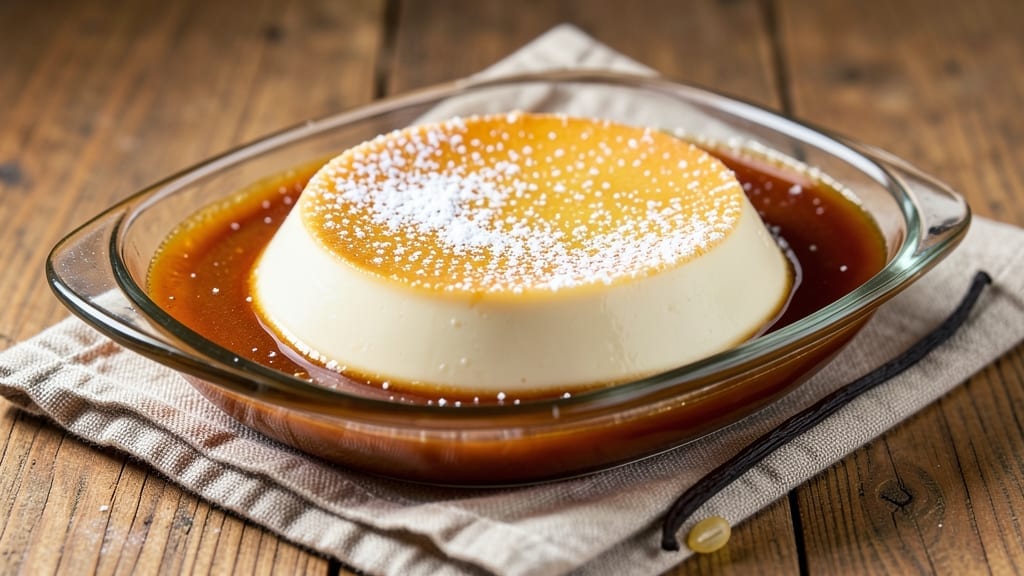
A 2-egg flan recipe delivers that perfect balance of silky custard and rich caramel—no cracks, no fuss, just pure comfort in every bite. The secret lies in a gentle water bath and precise timing, transforming simple ingredients into a restaurant-worthy dessert.
This version cuts the eggs in half while keeping the texture luscious, making it ideal for small gatherings or satisfying a single craving.
The process begins with a golden caramel layered at the bottom of your baking dish, creating that signature “hug” of sweetness. After pouring the custard mixture, the water bath ensures even cooking without overbrowning.
With just 30 minutes of active time (plus cooling), you’ll achieve a silky, jiggly center that’s impossible to resist. The key? Whisking the eggs until ribbons form—this prevents lumps and guarantees that velvety finish.
What sets this recipe apart is its foolproof technique for avoiding cracks, a common flan frustration. By using a water bath and baking at a steady 325°F, the custard sets smoothly without collapsing.
The result? A slice that releases effortlessly, with caramel clinging to every spoonful. Serve chilled or at room temperature—either way, it’s pure indulgence with minimal effort.
Perfect for potlucks, dinner parties, or a quiet dessert night, this flan adapts effortlessly. Swap vanilla for cinnamon or coffee for a twist, or keep it classic. The beauty of this recipe is its versatility—restaurant-quality without the fuss. Ready to master it?
Ingredients for 2 egg flan
Nine simple ingredients transform into a velvety flan with perfect caramel embrace.
| Ingredient | Amount | Notes |
|---|---|---|
| Large Eggs 🥚 | 2 whole | Room temperature for even mixing |
| Granulated Sugar 🍚 | 1 cup | White or light brown preferred |
| Whole Milk 🥛 | 1 ½ cups | Full-fat for creaminess |
| Pure Vanilla Extract 🌿 | 1 tsp | High-quality, pure vanilla |
| All-Purpose Flour 🌾 | 2 tbsp | For thickening custard |
| Salt 🧂 | ¼ tsp | Fine sea salt preferred |
| Unsalted Butter 🧈 | 2 tbsp | Cold, cut into small pieces |
| Heavy Cream 🥛 | ½ cup | For extra richness |
| Granulated Sugar 🍚 | ½ cup | For caramel layer |
The eggs form the flan’s heart—room temperature ensures smooth mixing without lumps. Whole eggs (not separated) create that signature jiggly texture. For the caramel, granulated sugar must be heated until golden amber—no darkening, or it’ll turn bitter. Whole milk adds richness, but 2% works too if you’re watching fat. The vanilla extract should be pure (no imitation) for authentic flavor. I always grab Kirkland Signature from Costco—affordable and reliable. If you prefer a deeper vanilla taste, Madagascar bourbon vanilla takes it to the next level.
No vanilla extract? Vanilla bean paste works beautifully—just use half the amount. Heavy cream can be swapped for half-and-half (texture will be slightly lighter). The butter is crucial for the caramel layer—European-style butter like Plugrá has higher fat content and creates a smoother caramel. For a coffee twist, add 1 tsp instant espresso powder to the custard mixture. The flour acts as a stabilizer—don’t skip it, even though it’s a small amount. If you’re making this ahead, prep the caramel first—it keeps for 2 weeks in an airtight container at room temperature.
The caramel layer stays liquid for 48 hours at room temperature—cover it tightly to prevent moisture. Store the custard mixture in the fridge for up to 2 days before baking to ensure perfect texture. Once baked, flan keeps for 3 days in the fridge, but best enjoyed within 24 hours for that silky center. Freeze unbaked custard for 1 month—thaw overnight in the fridge before baking. For potlucks, bake in individual ramekins (use 6-ounce size) for easy serving.
Why You’ll Love This Recipe
- No Fuss Setup: I swear by this recipe because it’s the kind of thing you can start while scrolling through your phone—just whisk eggs, milk, and sugar in one bowl, then pour into a ramekin. No fancy equipment, no stress.
- Silky Vanilla Hug: That first bite? Pure comfort. The custard is so smooth you’ll forget it’s just two eggs and milk, especially with a whisper of vanilla cutting through the sweetness. Honestly, it’s the kind of dessert that makes you pause mid-sip of coffee.
- Office Lunch Hero: Between us, this flan is my go-to for work lunches. It travels well (no spills, no fuss), keeps for days in the fridge, and I’ve even reheated slices in the microwave without anyone noticing. (Yes, even on a Tuesday night.)
- Budget Magic: I make this for under $3 a serving, and it feeds four. The flour keeps it rich without breaking the bank, and the eggs stretch further than you’d think. Leftovers? They’re the best part—cutting costs and saving time.
Step-by-step instructions for silky caramel flan
Master this technique and you’ll achieve a perfectly set custard with a glossy caramel shell every time.
Prepare the Caramel Layer
In a clean, dry 9-inch oven-safe skillet, melt the ½ cup granulated sugar over medium-low heat using a heat diffuser or by swirling the pan gently. Watch closely as it transforms from dry crystals to a golden liquid—this takes about 5-7 minutes. The caramel should be a deep amber color, not dark brown, to avoid bitterness.
Immediately pour the caramel into a 6-serving ramekin or custard cup, tilting to coat the bottom evenly. Tap the ramekin gently on the counter to remove any air bubbles. Set aside to cool completely—this prevents the custard from setting prematurely when you add the hot mixture later. Work quickly here; caramel hardens fast.
Whisk the Custard Base
In a medium bowl, whisk together the 2 whole eggs, 1 cup granulated sugar, and 1.5 cups whole milk until fully combined. The mixture should be smooth with no visible streaks of egg or sugar. Add the 1 teaspoon pure vanilla extract and 2 tablespoons all-purpose flour, whisking until the flour disappears completely.
In a separate small bowl, dissolve the ¼ teaspoon salt in ½ cup heavy cream. This step ensures even salt distribution throughout the custard. Gently pour the salted cream into the egg mixture while whisking continuously. The custard should be thick but pourable—like heavy cream. If it’s too thick, whisk in 1 tablespoon additional milk.
Temper and Strain the Mixture
Place the bowl over a pot of gently simmering water (double boiler method) and whisk constantly for 3-4 minutes until the mixture reaches 160°F on an instant-read thermometer. The custard should thicken noticeably but still coat the back of a spoon. Remove from heat immediately to prevent overcooking.
Strain the custard through a fine-mesh sieve into a measuring cup to remove any potential lumps. This step guarantees a silky texture. Return the strained custard to its bowl and let it cool to 100°F—warm to the touch but not hot. Pour the custard carefully over the cooled caramel layer, filling each ramekin to ¾ capacity. Cover with plastic wrap and refrigerate for at least 4 hours or overnight.
Water Bath and Baking
Preheat your oven to 325°F. Place the filled ramekins in a deep baking dish and pour hot water into the dish until it reaches halfway up the sides of the ramekins. This water bath ensures gentle, even cooking. Bake for 45-50 minutes until the custard is just set—it should jiggle slightly in the center but not be liquid.
To test doneness, gently shake the ramekin—if the custard moves as one unit with a slight wobble, it’s ready. Remove from the water bath and let cool to room temperature. Run a knife around the edges to loosen, then refrigerate for 2 more hours before serving. The contrast between the cool custard and warm caramel creates the signature “hug” texture.
Unmolding and Serving
Run a thin knife around the edges of each ramekin to release the flan. Place a warm plate over the ramekin and invert gently but firmly. The caramel should release cleanly, creating a perfect dome. If any flan sticks, tap the ramekin lightly on the counter to encourage release.
Serve immediately with the caramel shell intact for that signature caramel “hug” experience. The custard should be creamy yet firm, with a glossy surface that reflects light. For presentation, garnish with a sprinkle of ground cinnamon or a dusting of powdered sugar. Each slice should reveal the rich caramel layer beneath the silky custard.
Pro Tips For Making 2 Egg Flan
- Whisk Eggs Until Ribbon Stage: I learned this the hard way—flan with even slightly under-whisked eggs turns out gummy. Beat those eggs and sugar until the mixture holds a slow ribbon when you lift the whisk. No lumps, no guesswork. This is the thing that matters most for that silky texture you crave.
- Warm the Milk First: Cold milk makes for a bland flan, no matter how much vanilla you add. Heat the whole milk just until it’s steaming (not boiling)—about 30 seconds in a microwave or a quick simmer in a saucepan. The warmth lets the vanilla and sugar dissolve better, and the flavor pops.
- Skip the Overmixing: Once you add the flour to the egg-milk mixture, stir just until combined—maybe 10 seconds. Overmixing develops gluten, and your flan will turn out tough instead of tender. This isn’t the prettiest method, but it’s the tastiest.
- Bake in a Water Bath: No shortcut here—flan needs the water bath to set evenly. Fill a roasting pan halfway with hot water, place your ramekins inside, and bake until the center jiggles just slightly (about 45-50 minutes at 350°F). Resist the urge to peek early; the steam does the work.
Troubleshooting your 2 egg flan
Cracked Custard Fix
Cracks appear when the flan cooks too fast or the custard isn’t properly tempered. First, reduce your oven temperature to 300°F and bake for 5-10 minutes longer—this slows the setting process. For next time, whisk your eggs until ribbons form (about 2-3 minutes) before adding milk.
This emulsifies the fat properly, preventing separation and cracks. If cracks already appear, don’t panic—simmer the flan in ½ inch of warm water for 5 minutes to melt the surface, then chill. The texture will still be creamy underneath. 💡
Grainy Texture Solution
Graininess happens when eggs aren’t fully incorporated or the mixture isn’t strained. Strain your custard through a fine-mesh sieve into a clean bowl—this removes any microscopic egg bits. For extra silkiness, chill the custard for 30 minutes before baking to let air bubbles rise to the surface.
If you skipped straining, whisk in 1 extra tablespoon of milk to dilute any lumps slightly. For future batches, use room-temperature eggs—cold eggs create more resistance when whisking. ✨
Undercooked Center
An undercooked center means the flan wasn’t baked long enough or the oven wasn’t hot enough. Test doneness by gently shaking the ramekin—it should wobble slightly but not be liquid. If it’s still runny, return to the water bath for 5-10 minutes at 300°F.
For next time, bake at 325°F for 50-55 minutes (not 45!) and check 5 minutes early. Pro tip: Use an instant-read thermometer—the center should reach 165°F. If you overbake, the flan will be rubbery; if underbaked, it’ll be soupy. 🌡️
Caramel Too Hard
Hard caramel means it cooled too much before pouring the custard. Work quickly—melt sugar over medium-low heat (not high!) and pour into ramekins immediately after reaching amber color. If caramel hardens before baking, reheat gently in the oven at 200°F for 5 minutes to soften.
For future batches, keep ramekins warm by placing them in a 200°F oven while you prepare the custard. This prevents premature hardening. 🔥
Flan Sticks to Ramekin
Sticking happens when the ramekin isn’t properly greased or the flan isn’t fully chilled before unmolding. Butter and flour ramekins thoroughly—use 2 tbsp butter + 2 tbsp flour per ramekin, tapping out excess. Chill flan for at least 4 hours before unmolding to firm up the edges.
If it still sticks, run a thin knife around the edges and place ramekin in a hot water bath for 10 seconds to loosen. For next time, use silicone ramekins—they release effortlessly. 💪
Water Bath Leaks
Leaks occur when ramekins aren’t stable or the water bath overflows. Place ramekins in a deep baking dish and add water only halfway up the sides—never to the top. For extra stability, nestle ramekins into a bed of chopped vegetables (like carrots or onions) before adding water.
If leaks happen, bake at 300°F to slow evaporation. For future batches, use a larger baking dish to contain splashes. The water bath should feel calm, not chaotic—think “gentle steam,” not “boiling pot.” ⚡
Nutrition facts
Frequently asked questions
Can I make this flan without a water bath?
While possible, a water bath ensures even cooking and prevents cracks. For a no-water-bath version, bake at 300°F for 55-60 minutes in a covered dish. The custard may set slightly faster at the edges, so monitor closely. For best results, use the water bath method—it’s the traditional approach for that signature silky texture.
How do I know when the caramel is ready?
The caramel should turn a deep amber color—like warm honey—when ready. It takes about 5-7 minutes over medium-low heat. If it darkens too quickly, reduce the heat immediately. Work fast after melting—caramel hardens within minutes!
Can I substitute heavy cream with something else?
Yes! Use ½ cup whole milk + 2 tablespoons melted butter for a lighter texture, or ½ cup half-and-half for a middle ground. Heavy cream adds richness, but these alternatives work well. Just whisk everything thoroughly to maintain smoothness.
Why did my flan crack?
Cracks usually happen when the custard cooks too fast or isn’t properly tempered. Next time, whisk eggs until ribbons form before adding milk, and bake at 300°F for 50-55 minutes. For existing cracks, simmer the flan in ½ inch of warm water for 5 minutes to melt the surface—it’ll still taste creamy underneath!
Can I make this ahead of time?
Prepare the caramel and custard mixture up to 2 days ahead, then refrigerate. Bake when ready—just add 5 extra minutes to the baking time. For best texture, serve within 3 days of baking. The caramel layer stays fresh for 2 weeks stored in an airtight container.

- 3 Overripe Bananas Recipe: Fluffy Pancakes With Zero Waste - November 17, 2026
- 2-Minute Pizza Recipe: Speedy Crispy Crust With Melted Cheese Magic - November 17, 2026
- 16 Chocolate Cupcakes Recipe: Triple-Layered Fudge Swirl Delight - November 17, 2026