
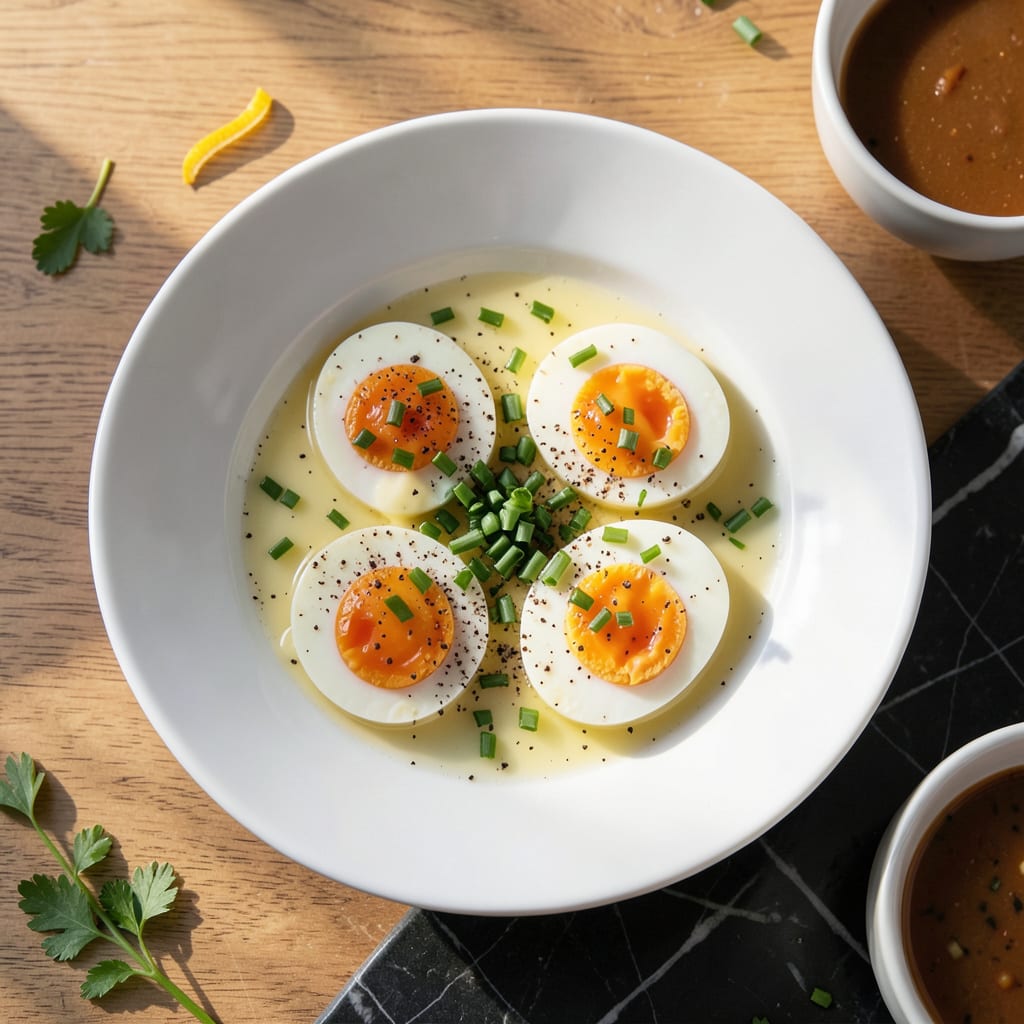
I’ve refined this steaming method to achieve silky, custard-like eggs every time. The gentle, consistent heat transforms the texture without overcooking.
This technique requires just a pot, a rack, and a lid—no special equipment. The result is tender, delicate eggs with a consistency that’s hard to match through other cooking methods.
Ingredients for Alton Brown Steamed Eggs
Minimal ingredients yield extraordinary texture with this precise steaming technique.
| Ingredient | Amount | Notes |
|---|---|---|
| Large Eggs 🥚 | 8 whole | Cold, straight from refrigerator |
| Water 💧 | 1 cup | For steaming in pot |
| Kosher Salt 🧂 | ½ tsp | Diamond Crystal preferred |
| Unsalted Butter 🧈 | 2 tbsp | Melted, for serving |
| Freshly Ground Black Pepper 🌶️ | ¼ tsp | To taste |
| Fresh Chives 🌿 | 2 tbsp | Finely minced for garnish |
| White Vinegar 🍶 | 1 tsp | Optional, for easier peeling |
| Ice Cubes ❄️ | 2 cups | For ice bath |
| Cold Water 💧 | 4 cups | For ice bath preparation |
| Steamer Basket 🍳 | 1 whole | Or metal rack alternative |
[recipeingredientscaler]
The eggs are the sole star here—fresh large eggs from a trusted source yield the best custard-like consistency. Diamond Crystal kosher salt dissolves more evenly than table salt, crucial for seasoning the cooking water. A heavy-bottomed pot with tight-fitting lid prevents hot spots. I source my eggs from local farmers markets when possible, but standard grocery store eggs work perfectly fine.
No steamer basket? An upside-down heatproof bowl or metal rack set over boiling water works identically. The vinegar is optional but makes peeling easier—apple cider vinegar substitutes at the same ratio. For richer flavor, European-style butter has higher fat content. Want herb variation? Fresh dill or tarragon both pair beautifully with eggs.
Steamed eggs keep 5 days refrigerated in their shells. The ice bath is non-negotiable—it stops carryover cooking instantly. Always start with cold eggs straight from the fridge for most consistent results. Leftovers peel best when chilled thoroughly first.
Why You’ll Love This Recipe
- Five Minute Breakfast: I can have these silky steamed eggs ready before my coffee finishes brewing.
- Buttery Simplicity: The unsalted butter and fresh pepper make every bite taste like a diner classic but better.
- Weekend or Weekday: Honestly, I serve these for lazy Sunday brunches and rushed Tuesday mornings alike.
- Pocket Friendly: A dozen eggs and a few pantry staples feed my family for pennies per serving.
Step-by-Step Instructions for Alton Brown Steamed Eggs
Precision and patience transform simple ingredients into a delicate, custard-like texture.
Step 1: Prepare the Ice Bath for Rapid Cooling
Fill a large bowl with the 2 cups Ice Cubes and 4 cups Cold Water. This ice bath is critical for stopping the cooking process immediately after steaming, which preserves the eggs’ silky texture. The ratio of ice to water ensures a consistent 32°F environment for shock-cooling.
Position the bowl near your steamer setup so you can transfer the eggs directly from steam to ice without delay. This immediate temperature drop prevents overcooking and maintains that perfect custardy consistency Alton Brown is known for.
Step 2: Set Up the Steamer with Aromatic Water
Pour the 1 cup Water into a pot with a tight-fitting lid. Add the 1 tsp White Vinegar to the water—this acid helps prevent any potential cracking of the eggshells during cooking. The vinegar also makes peeling easier later if you choose to shell them.
Place the Steamer Basket inside the pot, ensuring it sits above the water level. The water should not touch the basket when it’s inserted. Bring the water to a full rolling boil over high heat before adding the eggs.
Step 3: Steam the Cold Eggs to Perfect Doneness
Carefully arrange the 8 whole Large Eggs in a single layer in the Steamer Basket. It’s essential they’re straight from the refrigerator—cold eggs create a more uniform texture when steamed. Cover the pot with its lid and steam the eggs for exactly 13 minutes.
This timing yields a yolk that’s creamy but not runny, with a whites that are fully set but still tender. The steam’s gentle, enveloping heat cooks the eggs evenly without the risk of rubbery textures that can occur with boiling. Don’t shorten the time—every second matters for this method.
Step 4: Shock and Peel the Steamed Eggs
Using tongs, immediately transfer the eggs from the steamer to the prepared ice bath. Let them cool for at least 5 minutes, which halts the cooking process completely. The eggs will feel cool to the touch when ready.
The ice bath also firms up the whites slightly, making them easier to peel if desired. For serving whole, simply crack the top off with a spoon. For peeled eggs, tap gently all over on a hard surface before rolling to loosen the shell.
Step 5: Season and Garnish for Serving
Dry the eggs thoroughly with a paper towel to remove any moisture. Season each with 0.5 tsp Kosher Salt and 0.25 tsp Freshly Ground Black Pepper, adjusting to taste. The salt should be Diamond Crystal for consistent flavor distribution.
Drizzle with the 2 tbsp Unsalted Butter, melted, allowing it to pool slightly around the base. Finish with a sprinkle of 2 tbsp Fresh Chives, finely minced, for a bright, oniony contrast. Serve immediately in shallow bowls to capture every bit of the buttery sauce.
Pro Tips For Making Alton Brown Steamed Eggs
- Use Room-Temp Eggs: Sounds weird, but it works: pull your eggs out 30 minutes before steaming—cold eggs straight from the fridge crack more easily under the pressure of steam.
- Salt the Water: I learned this the hard way—always add a teaspoon of kosher salt to the steaming water to season the eggs from the outside in, especially since the recipe relies on simple flavors.
- Watch the Water Level: After burning my first batch, I finally figured out to keep the water just below the steamer insert—too much and the eggs boil instead of steam, turning them rubbery.
- Finish with Cold Butter: My grandmother swore by this, and she was right: stir in cold, cubed unsalted butter at the end for a silky texture that warm butter just can’t deliver.
Serving Suggestions for This Recipe
Elegant Presentation
Serve these eggs in shallow pasta bowls to catch every drop of melted butter. The custard-like texture deserves to be shown off—crack the top gently with a spoon for an Instagram-worthy reveal. I love watching the yolk spill out slightly.
Bread Pairings
Offer toasted sourdough or brioche on the side for dipping. The contrast of crispy bread with creamy eggs is irresistible. A baguette sliced on the bias works beautifully too.
Fresh Herb Garnish
Beyond chives, try tarragon or dill for a different herbaceous note. Finely chop 1 tbsp of your chosen herb and sprinkle just before serving. The freshness cuts through the richness perfectly.
Sauce Enhancements
A drizzle of hollandaise takes this to brunch level. Or try a spoonful of pesto for an herby twist. Both complement without overpowering the eggs’ delicate flavor.
Breakfast Charcuterie
Create a spread with prosciutto, aged cheddar, and cherry tomatoes. The salty, savory elements balance the eggs’ creaminess. A cornichon or two adds a nice vinegary pop. 💛
Beverage Matches
Pair with cold brew coffee or a sparkling water with lemon. For something stronger, a dry sparkling wine works surprisingly well. The acidity cuts through the richness.
Nutrition Facts
Frequently Asked Questions
Why use cold eggs straight from the fridge?
Cold eggs create a more uniform texture when steamed. The gradual temperature rise prevents shocking the proteins, resulting in that signature custard-like consistency. Always start with 32°F eggs for best results.
Can I skip the ice bath?
No, the 5 minutes ice bath is essential. It stops the cooking immediately, preventing overcooking that would turn the eggs rubbery. The shock-cooling preserves the delicate texture.
What if I don’t have a steamer basket?
Use an upside-down heatproof bowl or metal rack above boiling water. Just ensure the eggs sit above the water level. This works identically to a basket.
How do I know when they’re done?
Steam for exactly 13 minutes. The whites will be fully set but tender, with yolks creamy but not runny. Don’t shorten the time—precision matters.

- 6 Egg Cake Recipe with Oil: Light as Air With Buttery Moisture - October 4, 2026
- 4 Bean Casserole Recipe: One-Pan Heartiness With Smoky Paprika Depth - October 4, 2026
- 3-Ingredient Keto Mug Cake Recipe: Microwave Magic in 2 Minutes - October 4, 2026