
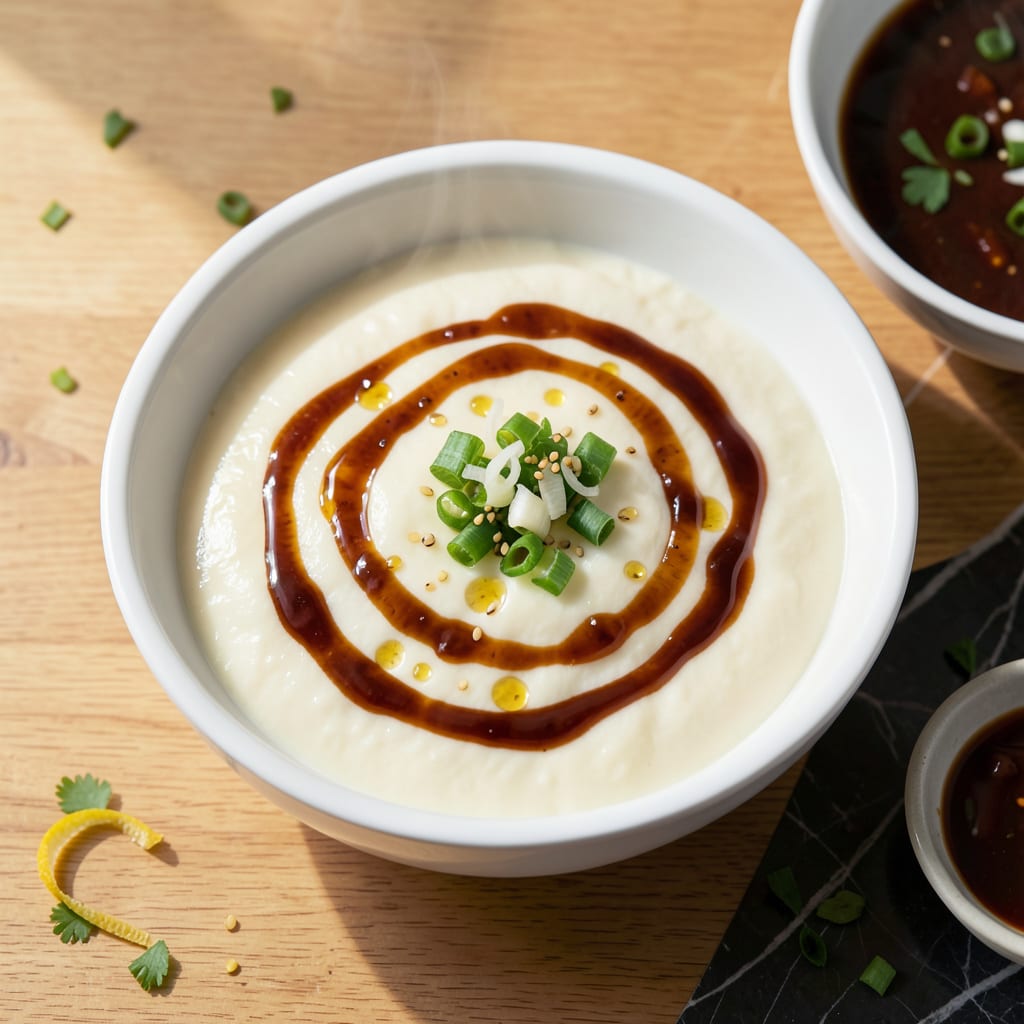
This microwave adaptation of the classic Chinese steamed egg delivers silky smooth results in a fraction of the time. Traditional stovetop steaming requires constant attention, but this method simplifies the process without sacrificing texture.
By whisking eggs with broth and a touch of soy sauce, then microwaving in short bursts, you achieve a custard-like consistency that’s tender and delicate. It’s the perfect solution for a quick, comforting meal when time is limited.
Ingredients for Chinese Steamed Egg Recipe Microwave
Simple ingredients create that signature custard-like texture in minutes, not hours.
| Ingredient | Amount | Notes |
|---|---|---|
| Large Eggs 🥚 | 4 whole | Room temperature preferred |
| Chicken Broth 🍲 | 1 ½ cups | Low-sodium preferred for control |
| Soy Sauce 🫒 | 1 tbsp | Light or all-purpose variety |
| Sesame Oil 🫒 | ½ tsp | Toasted for depth of flavor |
| Green Onions 🧅 | 2 whole | Thinly sliced for garnish |
| Fresh Ginger 🌿 | ½ tsp | Minced or grated finely |
| Salt 🧂 | ¼ tsp | Adjust to taste after cooking |
| White Pepper 🌶️ | ¼ tsp | Ground, for authentic flavor |
| Shaoxing Wine 🍶 | 1 tsp | Optional but recommended |
| Water 💧 | ½ cup | For adjusting consistency |
The eggs are non-negotiable here—fresh, high-quality large eggs make all the difference in texture. For the broth, low-sodium chicken broth lets you control the seasoning. I recommend Swanson or Kikkoman for reliable quality. The ginger should be fresh, not powdered (the flavor profile is completely different). Shaoxing wine adds depth, but dry sherry works as a substitute if you can’t find it at an Asian market.
No Shaoxing wine? Dry sherry or mirin will do in a pinch. If you’re avoiding alcohol, a pinch of sugar balances the soy sauce. The sesame oil is worth the splurge—Kadoya or Spectrum brands have great toasted versions. For a vegetarian option, swap the chicken broth for vegetable broth (I like Better Than Bouillon). The green onions can be omitted, but they add a nice fresh contrast.
This is best served immediately, but leftovers keep for 2 days in the fridge. Reheat gently in the microwave with a damp paper towel to prevent drying out. Don’t freeze—eggs get rubbery. The garnishes (onions, sesame oil) should be added fresh when serving.
Why You’ll Love This Recipe
- Microwave Magic: I can have silky steamed egg ready in 5 minutes—no stove, no steamer, just my microwave and a bowl.
- Umami Bomb: The chicken broth and soy sauce combo gives this dish a deep, savory richness that’s hard to resist.
- Breakfast or Dinner: Honestly, this works for any meal—quick breakfast, light lunch, or a cozy dinner side.
Step-by-Step Instructions for Chinese Steamed Egg
This microwave method delivers restaurant-quality results with minimal effort and maximum precision.
Step 1: Whisk Eggs and Broth to Silky Consistency
Crack the 4 whole Large Eggs into a heatproof bowl with high sides. Add the 1.5 cups Chicken Broth and whisk vigorously in a circular motion for 2 full minutes until no streaks remain and the mixture appears completely homogeneous.
This extended whisking incorporates air and breaks down protein structures, creating that signature silky texture. The broth-to-egg ratio is critical—too much liquid makes it watery, too little results in a dense custard. I always use room temperature eggs for smoother integration.
Step 2: Season and Infuse with Aromatics
Stir in the 1 tbsp Soy Sauce, 0.5 tsp Sesame Oil, 0.5 tsp Fresh Ginger, 0.25 tsp Salt, 0.25 tsp White Pepper, and 1 tsp Shaoxing Wine until fully combined. The ginger and white pepper are non-negotiable for authentic depth of flavor.
Let the mixture rest for 5 minutes to allow the aromatics to infuse. During this time, the minced ginger will distribute evenly and the flavors will begin to meld. This rest period also lets any air bubbles rise to the surface, which you can skim off for an even smoother texture.
Step 3: Microwave in Controlled Intervals
Cover the bowl tightly with microwave-safe plastic wrap, leaving one corner slightly vented. Microwave on 50% power (medium setting) for 3 minutes. This gentle heat prevents the eggs from curdling and ensures even cooking.
After the first interval, carefully remove the wrap (watch for steam) and stir gently with a fork. The mixture should be just beginning to set around the edges. Return to the microwave for another 2-3 minutes at 50% power, checking every 1 minute until the custard is set but still slightly jiggly in the center.
The total cooking time typically ranges between 5-7 minutes, depending on your microwave’s wattage. You’re aiming for a custard that’s firm enough to hold its shape but still trembles slightly when gently shaken.
Step 4: Rest and Adjust Consistency
Let the steamed egg rest in the microwave for 2 minutes with the door closed. This carryover cooking finishes setting the center without overcooking the edges. The texture should now be uniform throughout—velvety and custard-like.
If the mixture appears too firm, stir in 1-2 tablespoons of the reserved 0.5 cup Water to reach your desired consistency. The final product should be smooth as silk with a glossy surface, not watery or rubbery.
Step 5: Garnish and Serve Immediately
Thinly slice the 2 whole Green Onions and sprinkle them evenly over the top. Drizzle with an additional ¼ tsp Sesame Oil for added aroma. Serve immediately while still warm—the texture is at its peak within 10 minutes of cooking.
Each spoonful should deliver a delicate, wobbly custard with layers of umami from the broth and soy, balanced by the warmth of ginger and the freshness of green onion. The microwave method preserves all the traditional flavors while cutting the usual stovetop time in half.
Pro Tips For Making Chinese Steamed Egg Recipe Microwave
- Whisk the Eggs Hard: Beat the eggs for at least 30 seconds until fully smooth and slightly frothy—I learned this the hard way after my first few attempts came out lumpy and uneven.
- Use Room-Temp Broth: Cold broth straight from the fridge will shock the eggs and create a curdled texture; let it sit out for 10 minutes or microwave it for 20 seconds first.
- Cover with a Paper Towel: Skip the lid and use a damp paper towel over the bowl instead—it traps just enough steam without making the eggs rubbery from condensation.
- Add Sesame Oil Last: Stir in the sesame oil and soy sauce after microwaving, not before, to keep the flavors bright and aromatic instead of muted by heat.
Troubleshooting Perfect Results
Too Watery Texture
If your custard turns out watery, you likely used too much broth. The ideal ratio is 1.5 cups broth to 4 eggs. Next time, reduce broth by 2-3 tbsp or whisk in an extra egg to balance the liquid. 💡
Eggs Curdling
Curdling happens with high heat or uneven cooking. Always use 50% power and stir gently between intervals. If you see curds forming, stop immediately, whisk vigorously, and continue at 30% power for the remaining time.
Uneven Cooking
Microwave hot spots cause uneven setting. Rotate your bowl 180 degrees after each interval. Use a round glass bowl for more even heat distribution than plastic. Check doneness by gently shaking the bowl—the center should jiggle slightly.
Dense or Rubbery
Over-whisking or overcooking creates density. Whisk just until fully combined, not frothy. Stop cooking when the edges are set but the center still trembles. The carryover heat will finish it during the 2-minute rest period.
Lacking Flavor
If your custard tastes bland, boost the umami. Use low-sodium broth and add 1 tsp soy sauce extra. Fresh ginger is key—powdered won’t give the same depth. Don’t skip the Shaoxing wine; it adds complexity.
Surface Bubbles
Small bubbles form from air incorporation. After whisking, let the mixture rest for 5 minutes before cooking. Skim off any surface foam with a spoon. Covering with vented plastic wrap also helps prevent bubble formation during cooking.
Nutrition Facts
Frequently Asked Questions
Can I use a different broth?
Yes! Vegetable or mushroom broth work well. For richer flavor, try dashi or seafood stock. Avoid beef broth—it overpowers the delicate egg.
Why does my egg turn rubbery?
Overcooking is the main culprit. Stop microwaving when edges are set but center still jiggles. The 2-minute rest finishes cooking perfectly.
Can I make this ahead?
Best served fresh, but leftovers keep 2 days refrigerated. Reheat gently with a damp paper towel to prevent drying.

- 6 Egg Cake Recipe with Oil: Light as Air With Buttery Moisture - October 4, 2026
- 4 Bean Casserole Recipe: One-Pan Heartiness With Smoky Paprika Depth - October 4, 2026
- 3-Ingredient Keto Mug Cake Recipe: Microwave Magic in 2 Minutes - October 4, 2026