
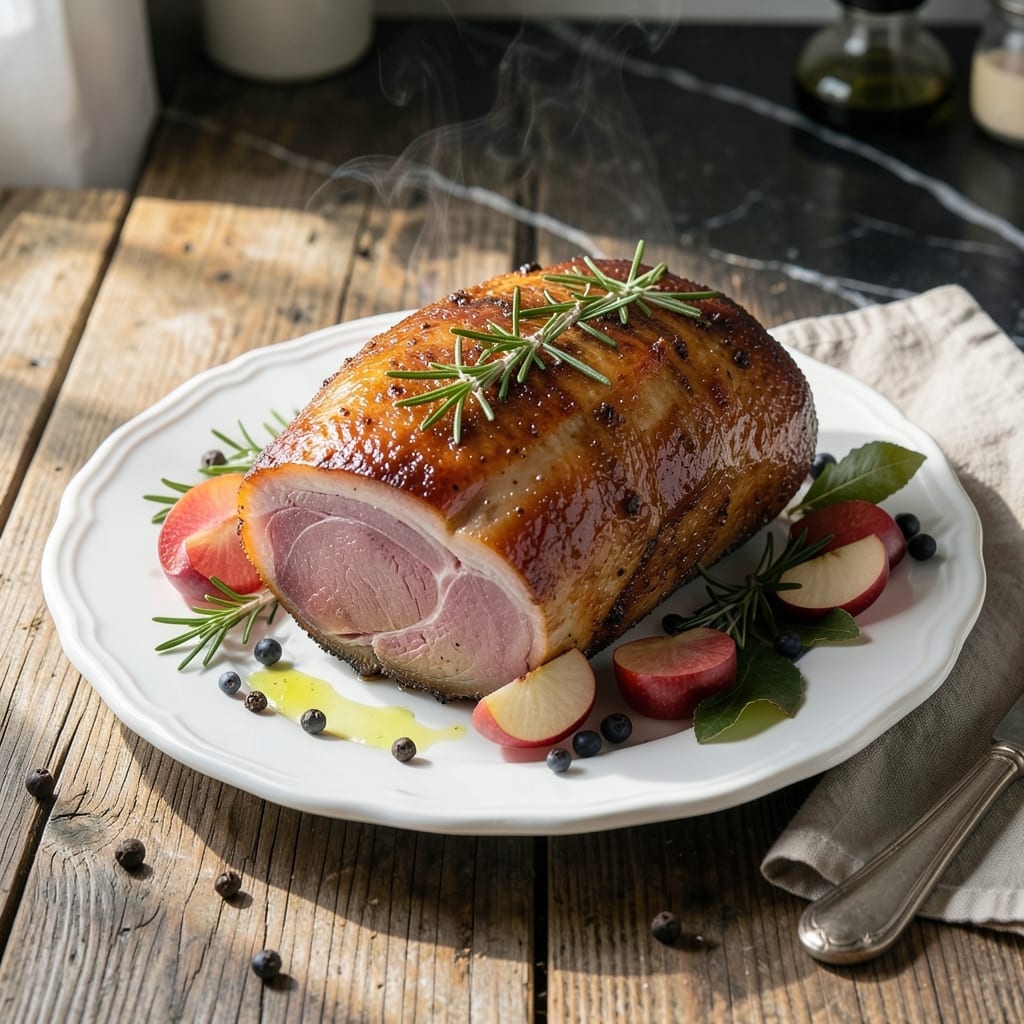
This German-style ham delivers authentic smoky flavor without leaving your kitchen. The curing process transforms pork into a tender, deeply seasoned centerpiece that rivals any deli counter offering.
I’ve refined this method to balance traditional technique with home cook accessibility. A precise blend of spices and wood smoke creates that signature Black Forest character in just a few days.
What emerges is a ham with a rich mahogany exterior and juicy, aromatic meat that’s perfect for sandwiches or holiday tables. The aroma alone will have everyone gathered around the stove.
The best part? This recipe scales perfectly, whether you’re curing a small piece for dinner or a large cut for a crowd. Serve it thinly sliced for maximum impact.
Ingredients for Black Forest Ham
Authentic German flavors start with quality pork and a precise spice blend for curing.
| Ingredient | Amount | Notes |
|---|---|---|
| Pork Shoulder 🥩 | 4 lb | Bone-in, skin-on preferred |
| Kosher Salt 🧂 | ½ cup | Diamond Crystal preferred |
| Brown Sugar 🍚 | ½ cup | Light or dark variety |
| Black Peppercorns 🌶️ | 2 tbsp | Freshly cracked preferred |
| Juniper Berries 🍇 | 1 tbsp | Lightly crushed |
| Bay Leaves 🍃 | 4 whole | Dried, for curing brine |
| Garlic Cloves 🧄 | 6 cloves | Smashed, peeled |
| Onion 🧅 | 1 whole | Yellow or white, quartered |
| Water 💧 | 2 cups | For brine solution |
| Hickory Wood Chips 🪵 | 2 cups | For smoking, soaked |
| Dijon Mustard 🟡 | ¼ cup | For glaze coating |
| Cloves 🌿 | 1 tsp | Whole, for studding |
| Coriander Seeds 🌿 | 1 tbsp | Lightly toasted |
| Apple Cider Vinegar 🍏 | ¼ cup | For brine acidity |
The pork shoulder is critical—bone-in, skin-on gives the best texture and moisture retention. Source from a trusted butcher or Whole Foods for consistent quality. Look for good marbling (the fat should be white, not yellow). For the juniper berries, Penzeys or specialty spice shops have the freshest stock. Avoid pre-ground black pepper; whole peppercorns cracked fresh make a noticeable difference.
No pork shoulder? Pork loin works in a pinch but will be leaner. Substitute brown sugar with maple syrup at three-quarters the amount. Missing juniper berries? Gin (1 tbsp) adds a similar piney note to the brine. For smoking, apple or cherry wood chips provide a milder fruitwood flavor. The clamp-style brine injection method is optional but ensures even curing.
Store the cured ham wrapped in butcher paper for up to 1 week in the fridge before smoking. After cooking, it keeps 5-7 days refrigerated or 3 months frozen. Slice only what you need—whole pieces retain moisture better (worth the extra minute).
Why You’ll Love This Recipe
- Set It and Forget: I toss the pork shoulder with salt, sugar, and spices, then let the oven do the work while I relax.
- Sweet and Earthy: The brown sugar caramelizes while the juniper berries add that deep, woodsy note I crave.
- Holiday or Tuesday: Honestly, it’s just as good sliced thin for sandwiches as it is as the centerpiece of a feast.
- Stretches Further: One pork shoulder makes enough for dinner, leftovers, and a few frozen portions for later.
Step-by-Step Instructions for Black Forest Ham
Master the curing and smoking process with precision for authentic German flavor at home.
Step 1: Prepare the Curing Brine
In a large pot, combine the 2 cups water, 0.5 cup kosher salt, 0.5 cup brown sugar, 0.25 cup apple cider vinegar, 2 tbsp black peppercorns, 1 tbsp juniper berries, 4 whole bay leaves, 6 cloves garlic cloves, and 1 tbsp coriander seeds.
Bring to a gentle simmer over medium heat until the salt and sugar dissolve completely. This should take about 5-7 minutes. Remove from heat and let the brine cool to room temperature before using—hot brine will cook the pork unevenly.
Step 2: Cure the Pork Shoulder
Place the 4 lb pork shoulder in a large food-safe container or resealable bag. Pour the cooled brine over the pork, ensuring it is fully submerged. If needed, add a bit more water to cover completely.
Refrigerate and cure for 3-5 days, turning the pork once daily to ensure even curing. The meat should feel firm to the touch and develop a slightly darker color as it absorbs the brine. This step is crucial for both flavor and preservation.
Step 3: Rinse and Dry the Meat
After curing, remove the pork from the brine and rinse it under cold water to remove excess salt. Pat it thoroughly dry with paper towels. I like to let it air-dry in the refrigerator uncovered for 1-2 hours to form a tacky surface, which helps the smoke adhere better.
The pork should have a slightly sticky texture, known as the “pellicle,” which is essential for achieving that signature smoky crust during the smoking process.
Step 4: Smoke to Perfection
Soak the 2 cups hickory wood chips in water for at least 30 minutes before smoking. Preheat your smoker to 225-250°F and add the soaked wood chips for a steady stream of smoke.
Place the pork shoulder in the smoker and cook for 4-6 hours, or until the internal temperature reaches 160°F. Maintain a consistent temperature and add wood chips as needed to keep the smoke going. The meat should develop a deep, rich color and a firm crust.
Step 5: Glaze and Finish
In a small bowl, mix the 0.25 cup Dijon mustard with 1 tsp cloves to create a smooth glaze. During the last 30 minutes of smoking, brush the glaze generously over the pork shoulder.
Continue smoking until the internal temperature reaches 195-200°F for fall-apart tenderness. Let the ham rest for 20-30 minutes before slicing. The glaze will caramelize slightly, adding a tangy, slightly sweet finish to the smoky depth.
Pro Tips For Making Black Forest Ham
- Cure Long Enough: Give the pork shoulder at least 5-7 days in the salt-sugar cure—any less and the flavor won’t penetrate deep enough. I learned this the hard way with a bland center on my first attempt.
- Crush the Juniper: Lightly crush the juniper berries before adding them to the cure to release their oils. Sounds weird, but it works—whole berries just don’t infuse the same way.
- Skip the Boiling: Resist the urge to boil the brine if using one—gentle heating (just until sugar dissolves) keeps the spices from turning bitter. After ruining a batch, I now use warm water only.
- Rest Before Slicing: Let the ham rest at least 20 minutes after cooking, tented with foil. My grandmother swore by this, and she was right: it keeps the juices from running all over the cutting board.
Serving Suggestions for This Recipe
Classic German Platter
Serve thin slices on a wooden board with sauerkraut and warm pretzels for a traditional presentation. I love pairing it with whole-grain mustard and cornichons for that authentic deli experience. The smoky flavor shines when served at room temperature. 💛
Holiday Centerpiece
For special occasions, arrange slices on a platter with roasted apples and red cabbage braised with bacon. The sweet-tart contrast complements the ham perfectly. Garnish with fresh rosemary for a festive touch.
Sandwich Perfection
Layer thin slices on rye bread with Swiss cheese and a smear of Dijon mustard. Add pickles for crunch. I recommend lightly toasting the bread to prevent sogginess from the juicy meat.
Breakfast Twist
Use leftovers in a hearty breakfast hash with diced potatoes, caramelized onions, and a fried egg on top. The smoky depth transforms your morning meal into something special. 🌟
Cheese Pairings
Offer a selection of German cheeses like Emmental or Tilsit alongside your ham. The nutty, slightly sharp flavors create a perfect balance with the smoky, sweet meat.
Beverage Match
A cold German Pilsner or Dunkel beer cuts through the richness beautifully. For non-alcoholic options, try a tart cherry juice or sparkling apple cider to complement the dish’s depth.
Nutrition Facts
Frequently Asked Questions
How long should I cure the pork?
Cure the pork shoulder for 3-5 days in the refrigerator, turning it daily. This ensures even flavor penetration and proper preservation before smoking.
Can I use a different wood for smoking?
Yes! While hickory gives a bold flavor, apple or cherry wood chips provide a milder, fruitier smoke. Soak them for 30 minutes before use for best results.
What if my ham dries out during smoking?
Prevent dryness by maintaining a consistent smoker temperature of 225-250°F. Spritz the meat with water or apple juice every 1-2 hours to keep it moist.
Do I need a special smoker?
A basic charcoal or electric smoker works fine. For small batches, a stovetop smoker with wood chips can also work, though the flavor may be less intense.

- 6 Egg Cake Recipe with Oil: Light as Air With Buttery Moisture - October 4, 2026
- 4 Bean Casserole Recipe: One-Pan Heartiness With Smoky Paprika Depth - October 4, 2026
- 3-Ingredient Keto Mug Cake Recipe: Microwave Magic in 2 Minutes - October 4, 2026