
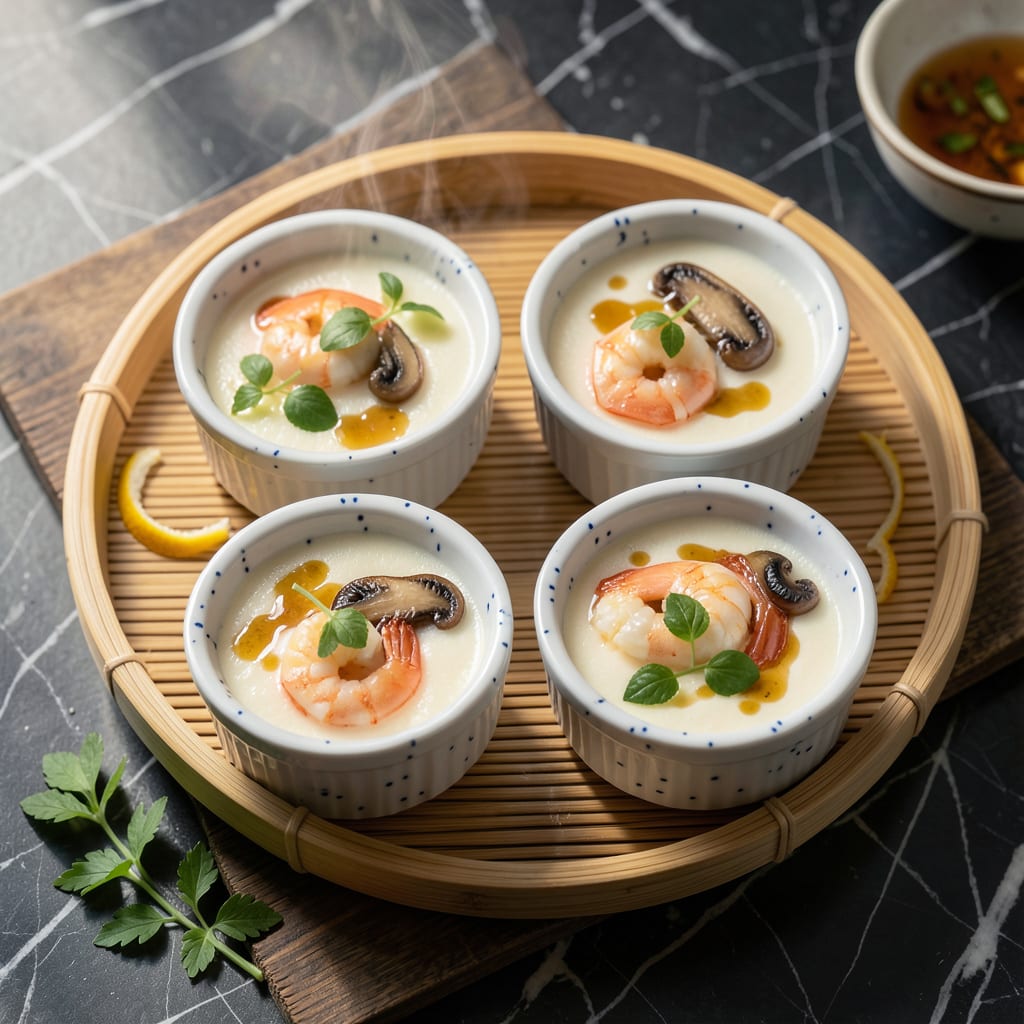
This delicate Japanese savory custard transforms simple ingredients into a silky, umami-rich dish that’s both elegant and comforting. The secret lies in the precise steaming process that yields a velvety texture.
Perfect as a starter or light meal, this custard features tender egg enriched with dashi and soy, often studded with shrimp, mushrooms, or ginkgo nuts. The result is a refined yet approachable dish that showcases Japanese culinary precision.
Ingredients for Steamed Egg Chawanmushi
Elegant yet approachable, these ingredients create a silky, umami-rich Japanese custard with precision.
| Ingredient | Amount | Notes |
|---|---|---|
| Large Eggs 🥚 | 4 whole | Room temperature for smooth texture |
| Dashi Stock 🍲 | 2 cups | Traditional Japanese broth base |
| Soy Sauce 🫒 | 2 tbsp | Low-sodium preferred for balance |
| Mirin 🍶 | 1 tbsp | Sweet rice wine for depth |
| Shrimp 🦐 | 4 oz | Peeled, deveined, chopped |
| Shiitake Mushrooms 🍄 | 2 whole | Thinly sliced for texture |
| Mitsuba or Flat-Leaf Parsley 🌿 | 2 tbsp | Chopped for garnish |
| Ginkgo Nuts 🌰 | ¼ cup | Canned, drained, optional |
| Neutral Oil 🛢️ | 1 tsp | For greasing ramekins |
| Salt 🧂 | ¼ tsp | Adjust to taste |
| White Pepper 🌶️ | ¼ tsp | Freshly ground for subtle heat |
| Bonito Flakes 🐟 | 1 tbsp | For garnish, optional |
The dashi stock is non-negotiable for authentic flavor. Look for instant dashi granules at Asian markets or the international aisle—Kikkoman or Hondashi brands are reliable. Fresh eggs at room temperature blend smoother into the broth. The shrimp should be wild-caught if possible, and shiitake mushrooms add that essential earthy note. Avoid pre-sliced mushrooms—they lose moisture too quickly.
No dashi? Combine kombu and bonito flakes for homemade stock (simmer 20 minutes, strain). Shrimp can be swapped for chicken or scallops—just keep pieces bite-sized. No mirin? Substitute 1 tsp sugar plus 2 tsp water. Mitsuba can be hard to find—cilantro or chives work in a pinch. The ginkgo nuts are traditional but skip entirely if unavailable.
Best served immediately after steaming, but custards hold their texture for about 2 hours at room temperature. Store leftovers covered in the fridge for up to 2 days—reheat gently in a steamer to revive the silky consistency. Dashi stock keeps 1 week refrigerated or 3 months frozen.
Why You’ll Love This Recipe
- One Bowl Wonder: I just whisk eggs, dashi, soy, and mirin in a bowl, strain, and steam—no fancy techniques needed.
- Silky Umami Bomb: The shrimp soaks up that savory dashi while the egg turns custard-smooth, every bite rich but light.
- Fancy Without Fuss: I serve it hot or cold, as a starter for guests or a solo lunch with rice. Honestly, it feels restaurant-worthy.
- Stretches Easily: A few eggs and a handful of shrimp make four portions, and leftovers keep beautifully for two days.
Step-by-Step Instructions for Steamed Egg Chawanmushi
Master this delicate Japanese custard with precise technique and layered umami flavors.
Step 1: Prepare the Ingredients and Ramekins
Begin by thinly slicing the 2 whole Shiitake Mushrooms and chopping the 4 oz Shrimp into small, even pieces. This ensures uniform cooking and elegant presentation. Lightly grease four ramekins with the 1 tsp Neutral Oil, coating the bottoms and sides evenly to prevent sticking.
Arrange the shrimp and mushroom slices at the bottom of each ramekin. If using, add a few Ginkgo Nuts for texture contrast. This layering creates a beautiful visual when the custard sets, with the toppings suspended in the silky egg mixture.
Step 2: Create the Custard Base
In a bowl, whisk the 4 whole Large Eggs until no streaks remain—this incorporates air for a lighter texture. Gradually whisk in the 2 cups Dashi Stock, 2 tbsp Soy Sauce, 1 tbsp Mirin, 0.25 tsp Salt, and 0.25 tsp White Pepper.
Strain the mixture through a fine-mesh sieve into a pitcher. This critical step removes any lumps, ensuring the signature silky-smooth consistency. The liquid should be pale golden and completely homogeneous, with no visible egg streaks.
Step 3: Fill Ramekins and Prepare for Steaming
Pour the custard mixture gently over the shrimp and mushrooms in each ramekin, filling them about 80% full. This leaves room for expansion during cooking. Cover each ramekin tightly with aluminum foil to prevent water droplets from falling onto the custard surface.
Place the ramekins in a steamer basket or on a heatproof rack that fits inside a large pot. The steam should circulate freely around each cup for even cooking. This setup prevents direct contact with boiling water, which would cause uneven heating.
Step 4: Steam to Silky Perfection
Bring water to a rolling boil in the pot, then reduce to maintain a gentle, steady steam. Place the covered ramekins in the steamer and steam for 15-18 minutes. The custard is done when the centers are just set but still slightly jiggly—like gelatin.
Avoid opening the lid during cooking, as temperature fluctuations can cause the custards to deflate. The ideal texture is tender yet firm enough to hold its shape, with a glossy, smooth surface that reflects light.
Step 5: Finish and Serve Immediately
Carefully remove the ramekins from the steamer and uncover. Garnish each with a sprinkle of Bonito Flakes and 2 tbsp Mitsuba or Flat-Leaf Parsley for freshness and color. The bonito flakes will dance slightly from the residual heat, adding visual appeal.
Serve immediately while warm—the custard achieves its peak silky texture straight from the steamer. Each spoonful should deliver the delicate egg custard, savory shrimp, earthy mushrooms, and subtle umami depth from the dashi and soy base.
Pro Tips For Making Steamed Egg Chawanmushi
- Strain the Eggs: Whisk your eggs vigorously, then strain through a fine mesh sieve—this removes any stubborn bits of chalazae and guarantees that silky-smooth texture chawanmushi is known for.
- Warm Your Dashi: Always use room temperature or slightly warm dashi when mixing with eggs; cold stock can cause the eggs to curdle, and I learned this the hard way after ruining two batches.
- Cover with Foil: Press plastic wrap directly onto the custard surface before steaming, then cover the cup with foil—this prevents water droplets from ruining the top and keeps the texture perfect.
- Pre-Cook the Shrimp: Lightly blanch or sauté your shrimp before adding to the custard; raw shrimp can release too much moisture and make the chawanmushi watery, and the flavor is cleaner when they’re pre-cooked.
Pro Cooking Tips for Great steamed egg chawanmushi
Steamer Setup
Use a bamboo steamer or a metal rack over a wide pot with a tight-fitting lid. I prefer a 12-inch stainless steel pot with 2 inches of boiling water—this creates consistent steam without direct contact. Ensure the lid seals completely to trap steam. 💡
Temperature Control
Maintain a gentle, rolling steam at 212°F throughout cooking. If your steam is too vigorous, it can cause bubbles to form on the custard surface. I keep my heat at medium-low once the water reaches a boil.
Straining Technique
Strain your custard mixture through a fine-mesh sieve into a pitcher with a spout. This eliminates any egg streaks and ensures a glass-like texture. I use a OXO Good Grips strainer for this step.
Ramekin Preparation
Grease your ramekins with neutral oil using a paper towel to create an even, thin coating. This prevents sticking while maintaining the custard’s delicate appearance. I recommend 6-ounce ramekins for perfect portions.
Steaming Time
Steam for 15-18 minutes—start checking at 15 minutes for doneness. The custard should jiggle slightly in the center when gently shaken. Oversteaming will make it rubbery.
Resting Period
Let the custards rest for 2-3 minutes after steaming. This allows them to set fully before serving. The texture will be at its silkiest during this window. ✨
Nutrition Facts
Frequently Asked Questions
Why strain the egg mixture?
Straining removes any lumps for a silky-smooth texture. Even well-whisked eggs can have tiny streaks that will cook into the custard.
Can I make this without dashi?
Substitute with chicken or vegetable broth mixed with 1 tsp soy sauce per cup. The flavor won’t be as authentic but still delicious.
How do I know when it’s done?
The center should jiggle slightly like gelatin when gently shaken. Oversteaming makes it rubbery, so check at 15 minutes.
What if my custard has bubbles?
This happens with too-vigorous steam. Reduce heat to maintain a gentle, steady steam. Cover ramekins with foil to prevent drips.

- 6 Egg Cake Recipe with Oil: Light as Air With Buttery Moisture - October 4, 2026
- 4 Bean Casserole Recipe: One-Pan Heartiness With Smoky Paprika Depth - October 4, 2026
- 3-Ingredient Keto Mug Cake Recipe: Microwave Magic in 2 Minutes - October 4, 2026