
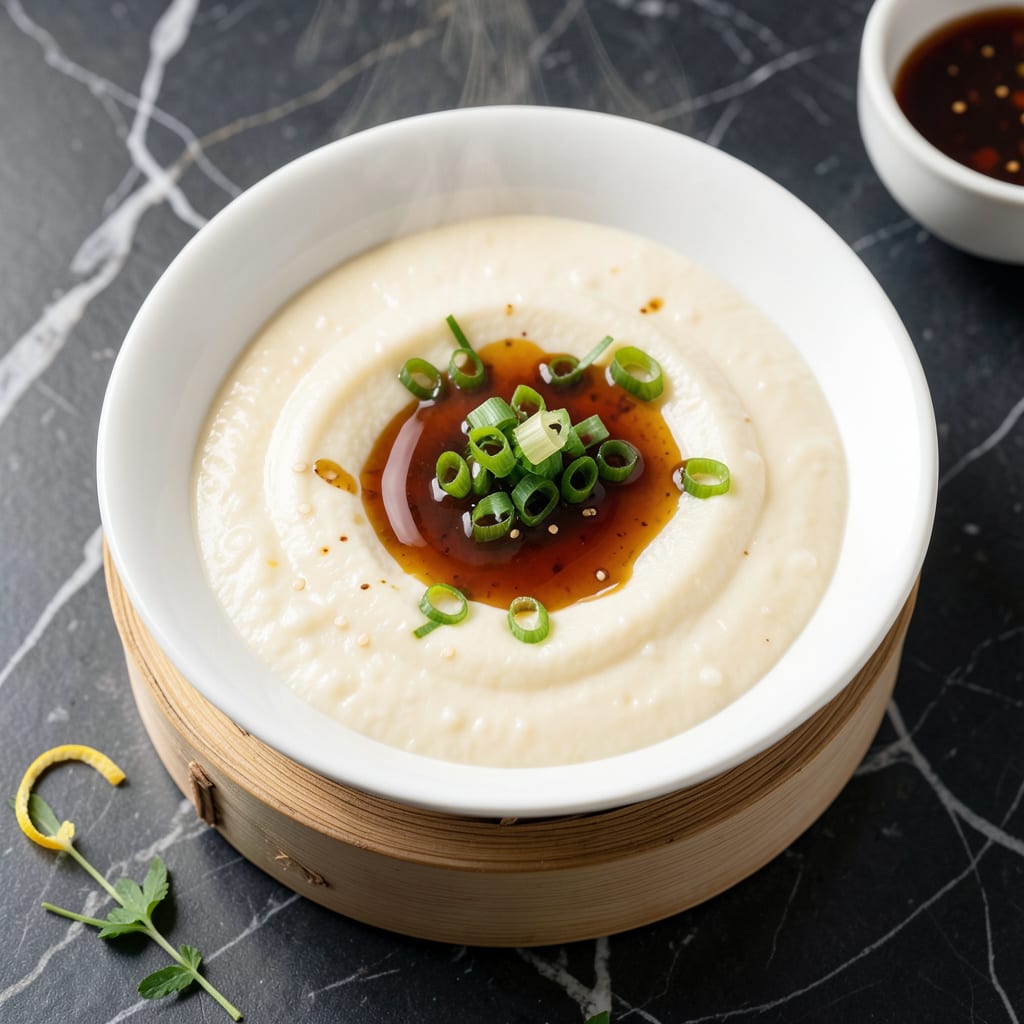
Achieving the perfect silk-smooth texture in this classic dish requires precise technique and patience. The key lies in gentle steaming and proper egg-to-liquid ratios.
This traditional preparation yields a delicate custard that’s both comforting and elegant. The result is a savory dish with a velvety finish that’s surprisingly simple to master.
Ingredients for Chinese Steamed Egg
A few humble ingredients transform into an elegant, velvety custard with perfect silk-smooth texture.
| Ingredient | Amount | Notes |
|---|---|---|
| Large Eggs 🥚 | 6 whole | Room temperature for even texture |
| Chicken Broth 🍲 | 2 cups | Low-sodium preferred, or vegetable broth |
| Water 💧 | ½ cup | Filtered for best flavor |
| Soy Sauce 🫒 | 1 tbsp | Light or all-purpose variety |
| Sesame Oil 🫒 | 1 tsp | Toasted for aroma |
| Green Onions 🧅 | 2 whole | Thinly sliced for garnish |
| Ginger 🌿 | 1 tsp | Freshly grated for depth |
| Garlic Cloves 🧄 | 2 cloves | Minced finely for subtle flavor |
| White Pepper 🌶️ | ¼ tsp | Ground, for authentic taste |
| Salt 🧂 | ¼ tsp | Adjust to taste after steaming |
| Shaoxing Wine 🍶 | 1 tbsp | Optional, adds complexity |
| Vegetable Oil 🫒 | ½ tsp | For greasing steamer dishes |
The eggs are the foundation here. Fresh, high-quality eggs yield the silkiest results—look for bright yolks and firm whites. Room temperature is critical; cold eggs create uneven textures. For the broth, Kikkoman low-sodium is reliable, but any clean, lightly seasoned stock works. Asian markets often carry superior-quality soy sauces and sesame oils worth the splurge.
Out of Shaoxing wine? Dry sherry makes a fine substitute. For a vegetarian version, ensure the broth is plant-based—Better Than Bouillon No Chicken Base is a great option. The green onions can be swapped with chives for a milder bite. If you’re missing ginger, ground ginger at half the amount works in a pinch, though fresh is always better.
This custard is best served immediately but holds well for 2-3 days refrigerated. Reheat gently by steaming again—microwaving can curdle the delicate texture. Store leftover broth separately to maintain consistency when reheating.
Why You’ll Love This Recipe
- 5-Minute Prep: I just whisk eggs with broth, steam, and drizzle with soy and sesame oil—no fuss, no mess.
- Silky Savory Bites: The egg turns custard-soft, soaking up the umami from the broth and soy sauce in every bite.
- Breakfast or Dinner: I serve it for a cozy breakfast or pair with rice for a quick weeknight meal.
- Pennywise Protein: Honestly, six eggs and pantry staples feed my family for less than a fiver.
Step-by-Step Instructions for Chinese Steamed Egg
Master this velvety custard with precise technique and timing for restaurant-quality texture.
Step 1: Prepare the Egg Mixture
Crack all 6 whole Large Eggs into a large bowl and whisk lightly until the yolks and whites are just combined. You want a uniform color with no streaks, but avoid over-beating which incorporates too much air and creates bubbles.
Strain the mixture through a fine-mesh sieve into a heatproof dish that fits inside your steamer. This removes any stubborn bits of chalazae and ensures a perfectly smooth final texture. I use a shallow ceramic or glass dish—8 inches in diameter works well for this quantity.
Step 2: Combine the Steaming Liquid
In a separate bowl, whisk together the 2 cups Chicken Broth, 0.5 cup Water, 1 tbsp Soy Sauce, 1 tsp Sesame Oil, 1 tsp Ginger, 2 cloves Garlic Cloves, 0.25 tsp White Pepper, 0.25 tsp Salt, and 1 tbsp Shaoxing Wine until fully combined. The liquid should be a light golden color and fragrant.
Slowly pour this seasoned broth through the same sieve into the dish with the eggs. Gently stir with a fork in one direction to combine, being careful not to create bubbles on the surface. The ratio of liquid to eggs should be 2.5 cups to 6 eggs for the ideal custard consistency.
Step 3: Steam with Precision
Bring 2 inches of water to a rolling boil in a large pot or wok. Place a bamboo or metal steamer rack inside, ensuring it sits above the water level. Lightly grease the steamer rack with the 0.5 tsp Vegetable Oil to prevent sticking.
Cover the dish with foil or a lid to prevent water droplets from falling onto the egg mixture. Carefully place the dish onto the steamer rack, cover the pot with a tight-fitting lid, and reduce heat to maintain a gentle, steady steam. Steam for 15-18 minutes until the custard is set but still jiggly in the center, like a softly set flan.
Step 4: Rest and Garnish
Carefully remove the dish from the steamer and let it rest for 5 minutes. This allows the custard to fully set and the flavors to meld. The surface should be smooth and glossy with no cracks—if you see any, it means the steam was too aggressive or the mixture was disturbed during cooking.
Thinly slice the 2 whole Green Onions and sprinkle them evenly over the top. Drizzle with an additional ½ tsp Sesame Oil if desired for extra aroma. Serve immediately while warm, as the texture is best when freshly steamed. The custard should be silky and delicate, trembling slightly when gently shaken.
Pro Tips For Making Chinese Steamed Egg
- Beat the Eggs: Whisk the eggs thoroughly but gently—you want them silky, not frothy. I learned this the hard way after ending up with a spongy texture.
- Warm the Broth: Use room temperature or slightly warm chicken broth to mix with the eggs, otherwise the sudden temperature change can cook the eggs unevenly.
- Steam Low and Slow: Keep the heat at medium-low and steam for 12-15 minutes. Cranking it up high will give you a lumpy, overcooked custard.
- Strain the Mixture: After mixing eggs and broth, strain through a fine sieve to remove any bubbles—this guarantees that smooth, restaurant-style finish.
Pro Cooking Tips for chinese steamed egg
Egg Temperature Matters
Always use room temperature eggs—cold eggs straight from the fridge create uneven textures in your custard. I set mine out 30 minutes before starting. This small step makes a noticeable difference in achieving that coveted silk-smooth finish. 💡
Straining for Perfection
Straining your egg mixture through a fine-mesh sieve removes chalazae and ensures a perfectly smooth custard. I also strain the broth mixture to eliminate any ginger or garlic bits that could disrupt the velvety texture.
Steam Control
Maintain a gentle, steady steam—rolling boils create turbulent heat that can cause cracks. Use a bamboo steamer for even heat distribution. I check the water level every 5 minutes to prevent boiling dry.
Lid Technique
Cover your dish with foil or a lid before placing in the steamer to prevent water droplets from falling onto the surface. These droplets can create small dimples in your custard. I use aluminum foil for a tight seal.
Ratio Precision
The ideal ratio is 2.5 cups liquid to 6 eggs. Too much liquid makes it soupy; too little results in a dense texture. Measure carefully—this is the foundation of the perfect custard consistency.
Patience Pays Off
Let your custard rest for 5 minutes after steaming. This allows it to fully set and the flavors to meld. Rushing this step often leads to a runny center. The texture should be silky, trembling slightly when gently shaken. ✨
Nutrition Facts
Frequently Asked Questions
Why does my custard have bubbles?
Over-beating the eggs incorporates air, creating bubbles. Whisk just until combined, then strain for a smooth finish.
Can I use a metal steamer?
Yes, but cover the dish with foil to prevent water droplets from dimpling the surface. Bamboo steamers work best for even heat.
What if I don’t have Shaoxing wine?
Substitute with dry sherry or skip it entirely. The dish will still be flavorful, though slightly less complex.
How do I fix a cracked surface?
Gentle steam and covering the dish prevents cracks. If it happens, smooth the surface with a spoon before serving.

- 6 Egg Cake Recipe with Oil: Light as Air With Buttery Moisture - October 4, 2026
- 4 Bean Casserole Recipe: One-Pan Heartiness With Smoky Paprika Depth - October 4, 2026
- 3-Ingredient Keto Mug Cake Recipe: Microwave Magic in 2 Minutes - October 4, 2026