
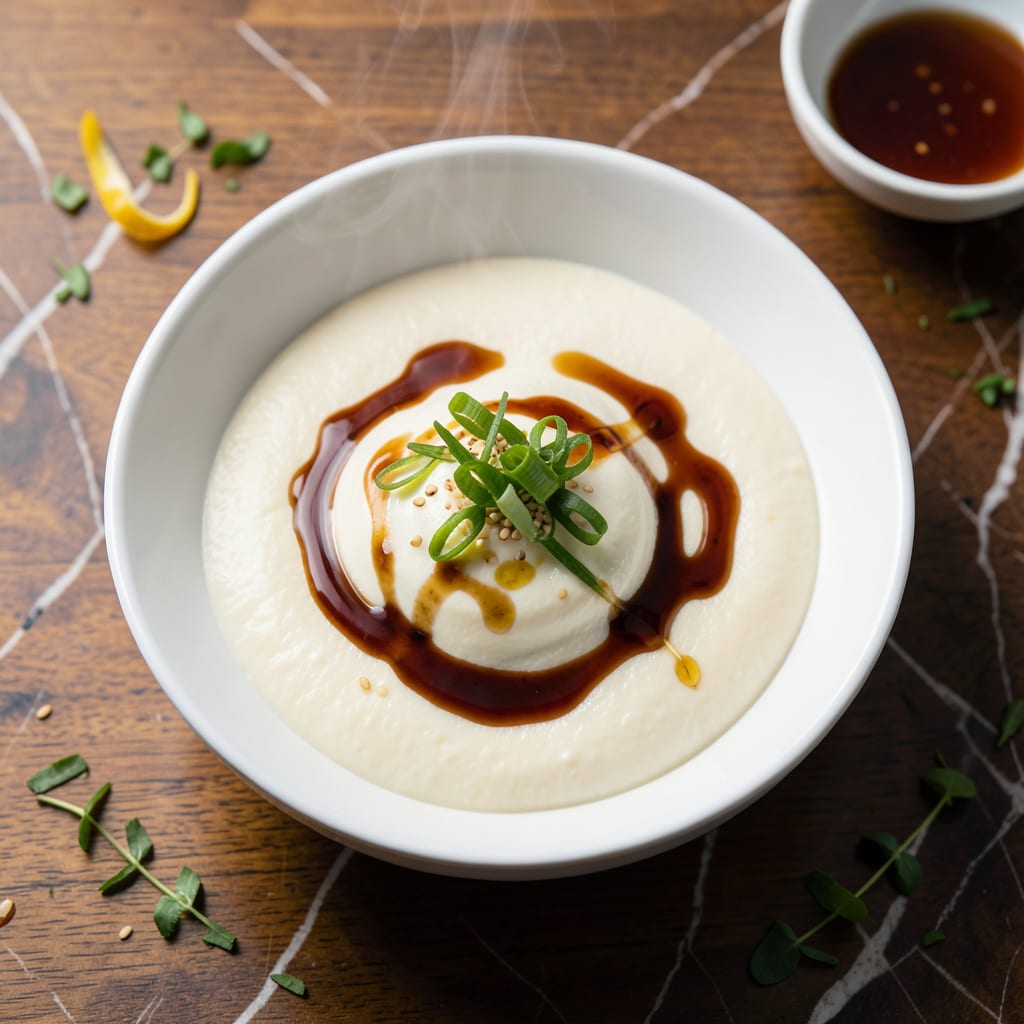
This traditional Chinese dish delivers a silky texture that feels luxurious yet requires just a handful of pantry staples. The technique relies on gentle steaming to create a custard-like consistency.
Scallions add aromatic depth while soy sauce provides a subtle umami backbone. The result is a delicate, comforting dish that showcases the beauty of simple ingredients transformed through precise method.
Ingredients for Chinese Steamed Water Egg
A handful of staples transforms into this delicate, custard-like dish with aromatic depth.
| Ingredient | Amount | Notes |
|---|---|---|
| Large Eggs 🥚 | 4 whole | Room temperature preferred |
| Water 💧 | 2 cups | Filtered or distilled for purity |
| Scallions 🧅 | 3 whole | Thinly sliced, green parts only |
| Light Soy Sauce 🫒 | 2 tbsp | Low-sodium for balance |
| Sesame Oil 🫒 | 1 tsp | Toasted for aroma |
| Salt 🧂 | ½ tsp | Fine sea salt preferred |
| White Pepper 🌶️ | ¼ tsp | Freshly ground for best flavor |
| Neutral Oil 🫒 | 1 tsp | For greasing the dish |
| Chicken Stock 🍲 | ½ cup | Optional for enhanced flavor |
| Shaoxing Wine 🍷 | 1 tbsp | Dry sherry works as substitute |
The eggs are the foundation here. Room temperature eggs blend more smoothly into the water mixture, creating that signature silky texture. Most Asian markets carry Shaoxing wine in the cooking aisle, but a dry sherry from your liquor cabinet works in a pinch. For the soy sauce, light soy sauce is traditional—avoid dark soy as it’s too intense and will overpower the dish.
No Shaoxing wine? Dry sherry or mirin at a one-to-one ratio gets you close. Missing white pepper? Black pepper at half the amount works, but the flavor profile shifts slightly. The scallions can be substituted with chives if that’s what you have on hand. For a vegetarian version, swap chicken stock for vegetable stock—it won’t be as rich but still delicious.
This dish is best enjoyed fresh, but leftovers keep in the fridge for 2 days. Reheat gently by steaming again to maintain the custard texture. Don’t microwave—it’ll turn rubbery. The scallions can be prepped a day ahead, but don’t slice until ready to use to preserve their crispness.
Why You’ll Love This Recipe
- 5-Minute Meal: I crack eggs into hot water, steam, and it’s done before the rice finishes cooking.
- Silky Soy Magic: That first bite of custardy egg with sesame oil and light soy sauce? I make it just to have leftovers.
- Breakfast or Dinner: It’s my go-to for rushed mornings or a lazy weeknight—equally at home with toast or rice.
- Pantry Staples Only: Between us, I’ve made this when the fridge was nearly bare—just eggs, water, and those few Asian staples I always keep.
Step-by-Step Instructions for Chinese Steamed Water Egg
Master this technique and you’ll achieve a custard so silky it trembles with the slightest touch.
Step 1: Prepare the Steaming Base and Aromatics
Begin by thinly slicing the 3 whole scallions, using only the green parts for a delicate onion flavor. Heat the 2 cups water in a steamer or wide pot with a lid until it reaches a gentle boil—you want steady, not rolling, steam for even cooking.
Lightly grease your heatproof dish with the 1 tsp neutral oil to prevent sticking. This step ensures the egg mixture releases cleanly after steaming. Distribute half of the sliced scallions evenly across the bottom of the dish—they’ll infuse the custard with subtle aroma as it cooks.
Step 2: Whisk the Egg Mixture to Silky Smoothness
In a bowl, crack the 4 whole large eggs and whisk them vigorously until no streaks remain. The goal is a completely homogeneous liquid—this is critical for the signature smooth texture. Add the 0.5 tsp salt, 0.25 tsp white pepper, and 1 tsp sesame oil, whisking after each addition to fully incorporate.
For enhanced depth, stir in the 1 tbsp Shaoxing wine and 0.5 cup chicken stock. The wine adds complexity, while the stock contributes a subtle savory backbone. Strain the mixture through a fine-mesh sieve into your prepared dish over the scallions—this removes any stubborn egg strands for a flawless finish.
Step 3: Steam Gently for Custard-Like Consistency
Place the dish in the steamer, ensuring the lid fits snugly to trap all the steam. Cover with the lid and steam over medium-low heat for 10-12 minutes. Resist the urge to peek—the sudden temperature drop can cause the custard to collapse or develop an uneven texture.
Check for doneness by gently shaking the dish. The center should jiggle slightly like set jelly, not slosh like liquid. If it’s still too runny, steam for another 1-2 minutes and check again. Overcooking will turn the custard firm and rubbery.
Step 4: Finish with Soy Sauce and Aromatics
Once the custard is set, carefully remove the dish from the steamer. Drizzle the 2 tbsp light soy sauce evenly over the top, allowing it to seep into the surface for a balance of saltiness. The soy sauce will pool slightly in the center—this is intentional.
Scatter the remaining scallions on top as a vibrant garnish. Let the dish rest for 2-3 minutes to allow the flavors to meld and the custard to stabilize before serving. The final texture should be tender, almost quivering, with a glossy sheen from the soy sauce.
Pro Tips For Making Chinese Steamed Water Egg
- Steam on High: Use the highest heat setting for your steamer—anything less and the eggs won’t set with that perfect silky texture. I learned this the hard way after my first three attempts came out watery.
- Strain the Eggs: After beating the eggs, pour them through a fine-mesh strainer into the water. This removes any ropy bits and guarantees a smooth, custard-like finish every time.
- Skip Old Eggs: Fresh eggs steam better—older ones spread too thin. Check the pack date; anything over 2 weeks starts to lose structure.
- Add Hot Water: Mix the eggs with hot (not boiling) water—about 1:1.5 egg-to-water ratio. Cold water makes the texture grainy, and I was skeptical until I tried it.
Creative Variations of chinese steamed water egg
Seafood Infusion
Stir in ½ cup chopped shrimp or ¼ cup minced crab meat with the scallions at the bottom for a luxurious twist. The seafood cooks perfectly in the 10-12 minutes of steaming, adding sweetness to the custard. I love using fresh shrimp for this variation. 🌟
Vegetable Medley
Add ¼ cup diced shiitake mushrooms or 2 tbsp finely chopped carrots to the scallion layer. For extra color, toss in 2 tbsp peas after steaming. These additions bring texture and earthy notes while keeping the dish light.
Spicy Sichuan Kick
Replace white pepper with ½ tsp Sichuan peppercorns for a numbing heat. Drizzle with 1 tsp chili oil instead of soy sauce for a fiery finish. This version packs a punch while maintaining the silky texture. 🔥
Creamy Coconut
Swap water for 1 cup coconut water and reduce to 1 cup total liquid. The subtle sweetness pairs beautifully with the eggs. Garnish with toasted coconut flakes for an exotic touch.
Herbal Aromatics
Infuse the steaming water with 2 slices ginger and 1 star anise pod for deeper aroma. Remove before serving. This adds complexity without overpowering the delicate custard. 💡
Nutrition Facts
Frequently Asked Questions
Why strain the egg mixture?
Straining removes stubborn egg strands for an ultra-smooth custard. Even well-whisked eggs can have tiny streaks that disrupt the silky finish.
Can I use cold eggs?
Room temperature eggs blend more smoothly into the water mixture. Cold eggs can create a less uniform texture and may require longer whisking.
How do I prevent a rubbery texture?
Steam for exactly 10-12 minutes over medium-low heat. Overcooking causes the custard to firm up and lose its delicate tremble.
What if I don’t have a steamer?
Use a wide pot with a lid and a heatproof rack. Add 1 inch of water, place your dish on the rack, and cover tightly. The results are identical.

- 6 Egg Cake Recipe with Oil: Light as Air With Buttery Moisture - October 4, 2026
- 4 Bean Casserole Recipe: One-Pan Heartiness With Smoky Paprika Depth - October 4, 2026
- 3-Ingredient Keto Mug Cake Recipe: Microwave Magic in 2 Minutes - October 4, 2026