
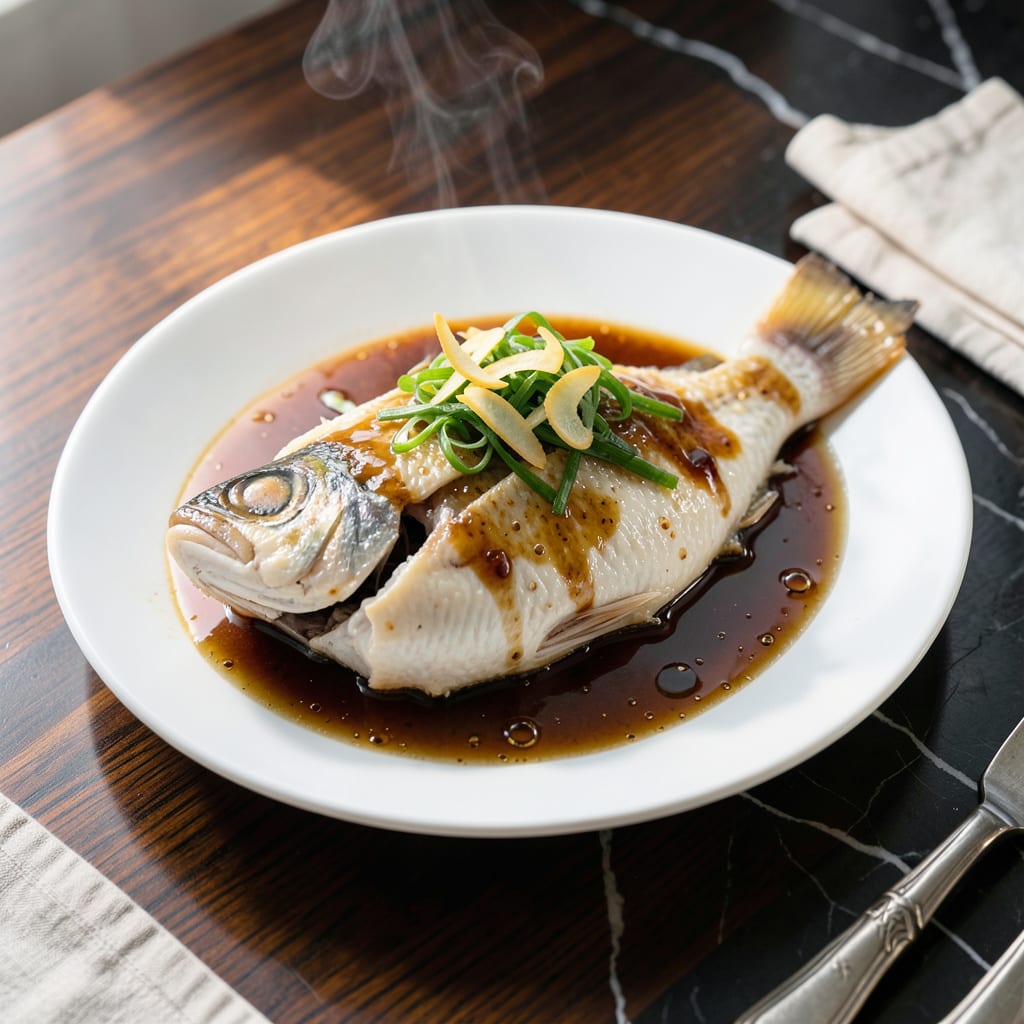
This Cantonese sauce transforms simple steamed fish into a restaurant-quality masterpiece. A perfect balance of savory, sweet, and aromatic flavors defines authentic Chinese steaming.
The secret lies in layering soy sauce, ginger, and green onions with hot oil to release their full potential. This authentic technique creates an umami-rich finish that enhances without overpowering.
Ingredients for Chinese Steamed Fish Sauce
Nine essential ingredients create this Cantonese umami-packed sauce for steamed dishes.
| Ingredient | Amount | Notes |
|---|---|---|
| Light Soy Sauce 🫒 | ¼ cup | Low-sodium preferred for balance |
| Ginger 🌿 | 2 tbsp | Fresh, julienned or minced |
| Green Onions 🌱 | 4 whole | Thinly sliced, white and green parts |
| Neutral Oil 🫒 | ¼ cup | Peanut or vegetable oil |
| Sugar 🍬 | 1 tsp | White granulated or rock sugar |
| Shaoxing Wine 🍶 | 1 tbsp | Chinese cooking wine, optional |
| Sesame Oil 🫒 | ½ tsp | Toasted, for finishing |
| Garlic Cloves 🧄 | 2 cloves | Minced or thinly sliced |
| Red Chili 🌶️ | 1 whole | Dried or fresh, optional for heat |
The soy sauce is the foundation—opt for low-sodium light soy sauce like Pearl River Bridge or Lee Kum Kee for authentic flavor without overpowering saltiness. Fresh ginger is non-negotiable; look for firm roots with smooth, taut skin. Asian markets typically stock the best quality, but most supermarkets carry adequate options in their produce sections.
No Shaoxing wine? Dry sherry works as a substitute in a pinch. For sugar, rock sugar is traditional but granulated dissolves faster. Toasted sesame oil adds depth—use a high-quality brand like Kadoya. If avoiding alcohol entirely, rice vinegar with a pinch of sugar mimics the acidity, though the complexity won’t be identical.
The sauce is best used immediately but can be prepped 1 day ahead. Store components separately—keep ginger and green onions refrigerated in sealed containers for up to 3 days. The oil can be kept at room temperature in a cool, dark place for 1 month.
Why You’ll Love This Recipe
- 5-Minute Sauce: That’s all it takes—just simmer soy sauce, ginger, and a pinch of sugar while the fish steams.
- Umami Bomb: The ginger and green onions infuse the light soy sauce with this deep, savory punch that clings to every bite.
- Weeknight Hero: I toss it together on busy evenings when I need something quick but restaurant-worthy.
- Stretches Further: A small batch of this sauce transforms plain fish, tofu, or veggies into a full meal.
Step-by-Step Instructions for Chinese Steamed Fish Sauce
Authentic Cantonese technique delivers a delicate balance of savory, sweet, and aromatic flavors.
Step 1: Bloom Aromatics in Hot Oil
Heat the 0.25 cup neutral oil in a small saucepan over medium-low heat until it shimmers. Add the 2 tbsp ginger and 2 cloves garlic cloves, stirring constantly for 1-2 minutes until fragrant and just beginning to turn golden at the edges.
Watch carefully—you want to coax out the aromas without burning. The oil should gently sizzle as the ginger and garlic release their essence. If using the 1 whole red chili, add it now to infuse the oil with subtle heat.
Step 2: Build the Sauce Foundation
Pour in the 0.25 cup light soy sauce and 1 tbsp Shaoxing wine, then add the 1 tsp sugar. Stir until the sugar fully dissolves, about 30-45 seconds. The sauce should take on a glossy sheen as the ingredients meld together.
Simmer gently for 2-3 minutes until the liquid reduces slightly and the raw edge of the alcohol cooks off. The aroma will transform from sharp to deeply savory. This step develops the umami depth that defines authentic Cantonese fish sauce.
Step 3: Finish with Green Onions and Sesame Oil
Remove the saucepan from heat and stir in the 4 whole green onions. The residual heat will soften them slightly while preserving their bright, fresh flavor. Let the mixture stand for 1 minute to allow the green onions to infuse.
Finally, drizzle in the 0.5 tsp sesame oil and stir to incorporate. The sauce should now have a complex aroma with layers of ginger, garlic, and toasted sesame. Taste and adjust the balance if needed—though the authentic version errs toward subtlety rather than boldness.
Step 4: Rest and Serve
Let the sauce cool to room temperature, about 10 minutes. This allows the flavors to marry fully. The sauce should coat the back of a spoon with a silky texture, and you’ll notice the green onions floating like delicate ribbons.
Spoon this over steamed white fish just before serving. The sauce’s light consistency ensures it clings to the fish without overpowering its natural delicacy, creating the perfect authentic Cantonese finish.
Pro Tips For Making Chinese Steamed Fish Sauce
- Heat the Oil: Always heat the neutral oil until it’s shimmering before adding ginger and green onions—this wakes up their aromas and prevents a raw, greasy sauce.
- Julienne the Ginger: Cut ginger into thin matchsticks rather than mincing so they infuse flavor without overpowering the delicate sauce.
- Skip the Over-Reduction: I learned this the hard way—simmer just until sugar dissolves, or the sauce will turn syrupy and cloying instead of light and balanced.
- Rest the Sauce: Let the finished sauce sit for 5 minutes before using—this lets the flavors meld, and the ginger and onions soften slightly in the residual heat.
Flavor Customization for This chinese steamed fish sauce
Spicy Infusion
For heat lovers, add 1-2 dried red chilies or ½ tsp chili oil when blooming the aromatics. This creates a Sichuan-inspired twist that adds warmth without overwhelming the delicate fish. I often use Lao Gan Ma chili crisp for extra texture. 🌶️
Sweet Variation
Increase the sugar to 1 tbsp or substitute with 1 tsp honey for a sweeter profile. This works particularly well with white fish like cod or tilapia. The sweetness balances the saltiness of the soy sauce beautifully.
Citrus Brightness
Add 1 tsp rice vinegar or ½ tsp lime juice at the end for a tangy kick. This brightens the sauce and cuts through the richness, making it perfect for oily fish like salmon. The acidity also helps preserve the sauce if storing.
Herbal Touch
Stir in 5-6 fresh cilantro stems or 3-4 Thai basil leaves during the final minute of cooking. This adds a fresh, aromatic layer that complements the ginger and garlic. Remove the stems before serving for a cleaner presentation.
Umami Boost
For extra depth, add 1 tsp oyster sauce or ½ tsp fish sauce when building the foundation. This intensifies the savory notes, creating a more complex sauce that pairs well with firm-fleshed fish like halibut. 💫
Nutty Finish
Toast 1 tbsp crushed peanuts or sesame seeds and sprinkle on top just before serving. This adds a delightful crunch and visual appeal. I prefer using black sesame seeds for a dramatic contrast against the green onions.
Nutrition Facts
Frequently Asked Questions
Can I make this without Shaoxing wine?
Yes! Substitute with dry sherry or omit it entirely. For an alcohol-free version, use rice vinegar with a pinch of sugar to mimic the acidity.
How long can I store this sauce?
Keep components separately in the fridge for up to 3 days. The oil lasts 1 month at room temperature in a cool, dark place. Combine just before serving for the best flavor.
What’s the best oil for this recipe?
Use a neutral oil like peanut or vegetable. These have a high smoke point and won’t overpower the delicate flavors of the ginger and soy sauce.
Can I add other herbs?
Try cilantro or Thai basil for freshness. Add them during the final 1 minute of cooking to preserve their aroma.

- 6 Egg Cake Recipe with Oil: Light as Air With Buttery Moisture - October 4, 2026
- 4 Bean Casserole Recipe: One-Pan Heartiness With Smoky Paprika Depth - October 4, 2026
- 3-Ingredient Keto Mug Cake Recipe: Microwave Magic in 2 Minutes - October 4, 2026