
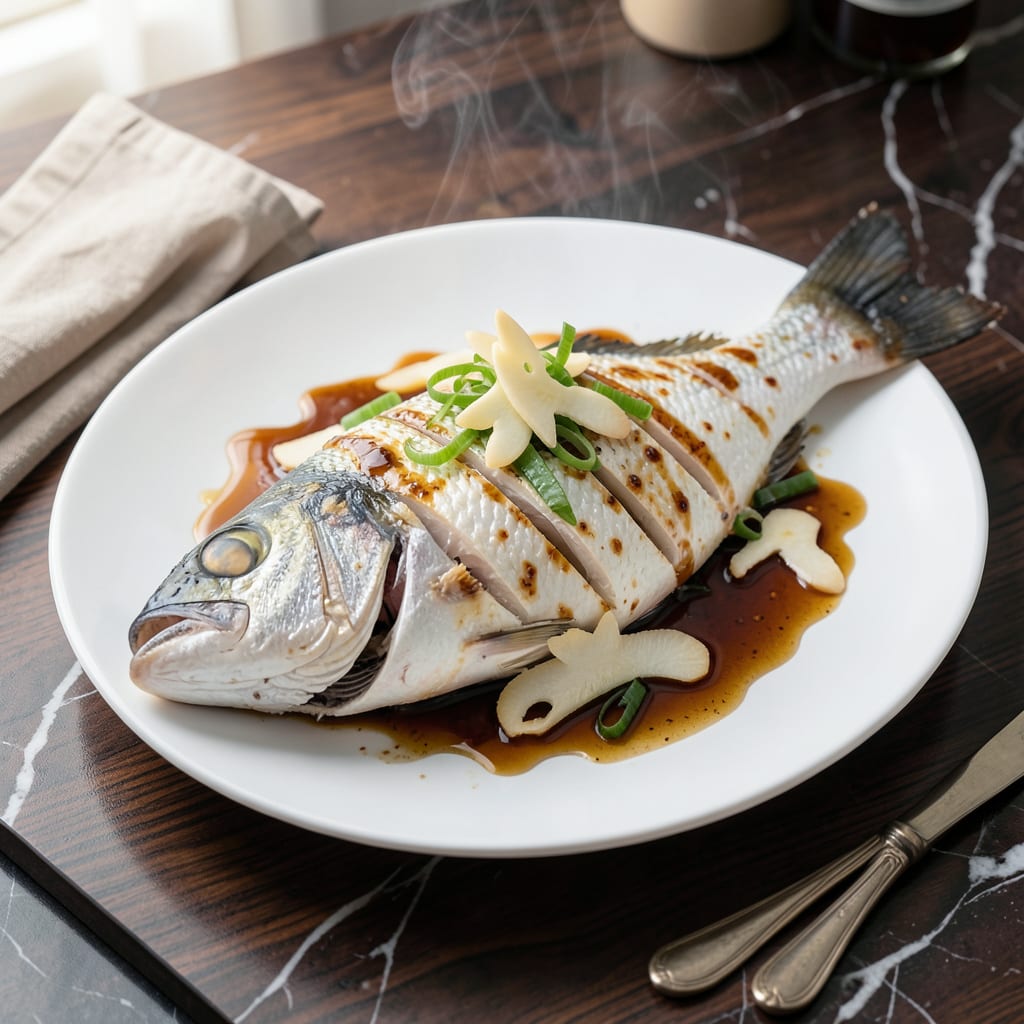
This Cantonese steaming method preserves the fish’s natural sweetness while infusing it with aromatic ginger and savory soy sauce. The technique requires precision but delivers restaurant-quality results at home.
Fresh fish, hot oil, and a simple soy-ginger sauce create a dish that’s light yet deeply flavorful. The steam locks in moisture, ensuring tender, delicate flesh every time.
Ingredients for Chinese Steamed Fish Recipe Soy Sauce
Fresh sea bass, aromatic ginger, and soy sauce create this delicate Cantonese classic at home.
| Ingredient | Amount | Notes |
|---|---|---|
| Whole White Fish 🐟 | 1 ½ lb | Fresh, scaled, gutted (sea bass or cod preferred) |
| Fresh Ginger 🌿 | 3 oz | Peeled, julienned into matchsticks |
| Green Onions 🧅 | 4 whole | Thinly sliced, white and green parts separated |
| Light Soy Sauce 💧 | 3 tbsp | Low-sodium preferred for balance |
| Neutral Cooking Oil 🫒 | 2 tbsp | Peanut or vegetable oil for high heat |
| Sesame Oil 🫒 | 1 tsp | Toasted for finishing aroma |
| Shaoxing Wine 🍶 | 2 tbsp | Or dry sherry as substitute |
| Sugar 🍚 | 1 tsp | Balances soy sauce saltiness |
| Salt 🧂 | ½ tsp | Kosher or sea salt for seasoning |
| White Pepper 🌶️ | ¼ tsp | Freshly ground for authenticity |
| Cilantro 🌿 | ¼ cup | Fresh sprigs for garnish |
| Red Chili 🌶️ | 1 whole | Thinly sliced for heat (optional) |
The fish is non-negotiable for authenticity. Whole sea bass or black cod from a trusted fishmonger—look for bright, clear eyes and firm flesh. Asian markets often carry the ideal varieties. Ginger must be fresh, never powdered; its oils are essential for the sauce. For the soy sauce, Pearl River Bridge or Lee Kum Kee light soy sauce offers the right balance of salt and umami without overpowering the dish.
No Shaoxing wine? Dry sherry at a 1:1 ratio works in a pinch. Sea bass unavailable? Cod or snapper are acceptable substitutes, though the texture will differ slightly. For a vegetarian twist, thick slices of king oyster mushroom can mimic fish texture (adjust steaming time). The green onions can be swapped for chives, but the flavor profile will be milder.
This dish is best served immediately, but leftovers keep 1-2 days refrigerated in an airtight container. Reheat gently by steaming again—microwaving dries out the fish. The ginger and green onions can be prepped 1 day ahead and stored separately in the fridge. Always bring fish to room temperature before steaming for even cooking.
Why You’ll Love This Recipe
- Set It and Forget: I just place the fish on a plate, drizzle soy sauce, scatter ginger and green onions, and let the steamer do the work.
- Umami Bomb: The light soy sauce soaks into the white fish while the hot oil sizzles over fresh ginger and green onions—simple but packed with flavor.
- Dinner Party Hero: Honestly, it looks impressive yet takes almost no effort, and everyone from my picky nephew to my foodie friend asks for seconds.
- Budget Stretcher: A whole white fish feeds four for the price of two steaks, and the leftovers make the best next-day fish fried rice.
Step-by-Step Instructions for Chinese Steamed Fish
Master this Cantonese technique for delicate fish with an aromatic sauce that complements, not overpowers.
Step 1: Prepare the Whole White Fish and Aromatics
Pat the 1.5 lb Whole White Fish completely dry with paper towels, inside and out. This removes excess moisture that could dilute the steaming liquid. Score the flesh lightly on both sides with a sharp knife—this allows the heat to penetrate evenly and prevents curling during cooking.
Peel and julienne the 3 oz Fresh Ginger into fine matchsticks. Thinly slice the 4 whole Green Onions, keeping the white and green parts separate. These aromatics will infuse the fish with layers of flavor during steaming and form the base of your finishing sauce.
Step 2: Steam the Fish to Perfection
Arrange the scored fish on a heatproof plate that fits inside your steamer. Scatter half of the julienned ginger and the white parts of the green onions over the fish and inside the cavity. This direct contact ensures the aromatics penetrate the flesh as it cooks.
Bring water to a rolling boil in your steamer. Place the plate with the fish inside, cover tightly, and steam over high heat for 10-12 minutes until the flesh turns opaque and flakes easily when tested with a fork. The exact time depends on the thickness of your fish—check for doneness at the thickest part near the head.
Step 3: Create the Signature Soy-Ginger Sauce
While the fish steams, heat the 2 tbsp Neutral Cooking Oil in a small saucepan over medium-high heat until it just begins to shimmer. Add the remaining ginger and cook for 1-2 minutes until fragrant but not browned. This blooms the ginger’s flavor in the oil.
Remove from heat and immediately add the 3 tbsp Light Soy Sauce, 2 tbsp Shaoxing Wine, 1 tsp Sugar, 0.5 tsp Salt, and 0.25 tsp White Pepper. Stir until the sugar dissolves completely. The sauce should be glossy and fragrant, with a balance of salty, sweet, and aromatic notes.
Step 4: Finish and Garnish for Service
Carefully transfer the steamed fish to a serving platter. Discard the ginger and green onion pieces used for steaming. Pour the hot soy-ginger sauce evenly over the fish, allowing it to pool slightly on the plate.
Drizzle with the 1 tsp Sesame Oil and scatter the reserved green onion tops, 0.25 cup Cilantro, and thinly sliced 1 whole Red Chili over the top. The sesame oil adds a final aromatic note, while the cilantro and chili provide freshness and a touch of heat. Serve immediately with steamed rice to soak up the sauce.
Pro Tips For Making Chinese Steamed Fish Recipe Soy Sauce
- Boil Water First: Start with a rolling boil in your steamer before adding the fish—I learned this the hard way after serving undercooked fish that stuck to the plate.
- Score the Fish: Make 2-3 diagonal slashes on each side so the soy sauce penetrates deeper and cooks the flesh evenly.
- Skip the Cold Fish: Let the whole fish sit at room temperature for 10-15 minutes before steaming, or it’ll cook unevenly and dry out at the edges.
- Hot Oil Finish: Heat 2 tablespoons of oil until shimmering, then pour over the ginger and green onions right before serving—this releases their aroma into the dish.
Troubleshooting chinese steamed fish recipe soy sauce
Fish Sticks to Plate
If your fish sticks to the plate during steaming, it means the plate wasn’t heatproof or the water level was too low. Use a ceramic or glass plate that fits your steamer basket perfectly. I always add 1 inch of boiling water to prevent this issue. 💡
Overcooked Fish
Fish becomes tough when steamed too long. For a 1.5 lb fish, check doneness at 8 minutes by testing with a fork. The flesh should flake easily but still look slightly translucent at the center—it continues cooking off the heat.
Sauce Separation
If your soy-ginger sauce separates, the oil wasn’t hot enough when added. Heat the 2 tbsp oil until shimmering before adding ginger. Stir constantly while adding the soy sauce mixture and let it sit for 2 minutes to recombine.
Bland Flavor
This usually happens with old ginger or low-quality soy sauce. Use fresh ginger (peeled that day) and light soy sauce like Pearl River Bridge. I also add an extra ½ tsp sugar if the sauce tastes flat.
Water in Sauce
Condensation from the steamer can dilute your sauce. Always cover your sauce pan while making it, and pour it over the fish immediately after steaming. Keep a paper towel handy to mop up any excess liquid on the fish before saucing. ❄️
Uneven Cooking
Thicker parts near the head cook slower. Score the fish deeply on both sides and position it head-side toward the steamer’s center where heat is most intense. Rotate the plate 180 degrees halfway through cooking for even doneness.
Nutrition Facts
Frequently Asked Questions
What type of fish works best for steaming?
Whole white fish like sea bass or cod are ideal. Choose fresh, scaled, and gutted fish with bright eyes and firm flesh for the best texture and flavor.
Can I use dark soy sauce instead of light?
Dark soy sauce is thicker and sweeter. For this recipe, stick with light soy sauce to maintain the delicate balance of flavors. Dark soy can overpower the dish.
How do I prevent the fish from sticking to the plate?
Use a heatproof ceramic or glass plate and ensure your steamer has 1 inch of boiling water. This creates enough steam to prevent sticking.
Can I make this recipe without Shaoxing wine?
Yes, dry sherry works as a 1:1 substitute. It provides the same depth of flavor and acidity needed to balance the soy sauce.

- 6 Egg Cake Recipe with Oil: Light as Air With Buttery Moisture - October 4, 2026
- 4 Bean Casserole Recipe: One-Pan Heartiness With Smoky Paprika Depth - October 4, 2026
- 3-Ingredient Keto Mug Cake Recipe: Microwave Magic in 2 Minutes - October 4, 2026