
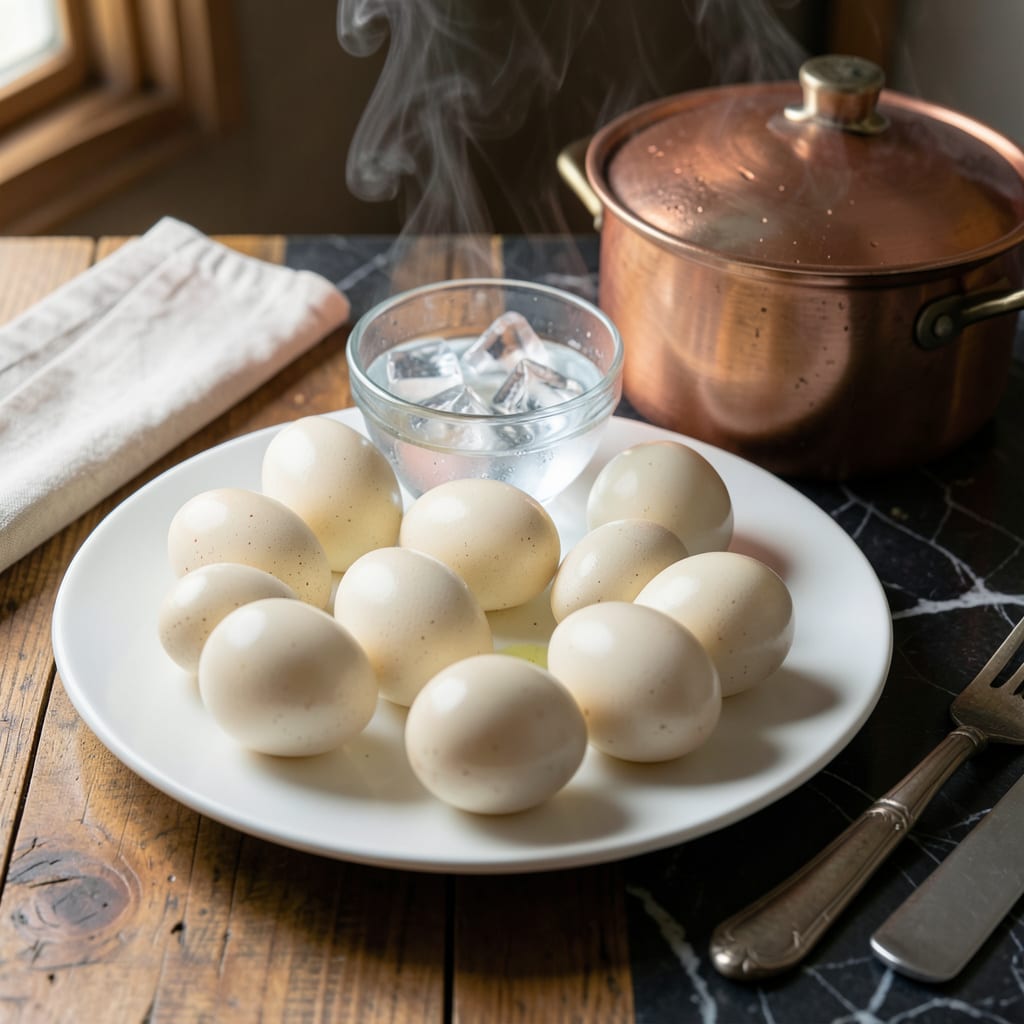
I’ve perfected a method for perfectly cooked eggs every time, and it starts with steaming instead of boiling. This approach delivers consistent results with no risk of cracking or overcooking.
The steam gently cooks the eggs, giving you full control over the yolk texture while ensuring the whites set completely. It’s a simple, reliable technique that works for any quantity.
Ingredients for Recipe for Steaming Hard Boiled Eggs
Minimal ingredients, maximum control over texture. Just eggs and a few pantry staples.
| Ingredient | Amount | Notes |
|---|---|---|
| Large Eggs 🥚 | 4 whole | Room temperature preferred |
| Water 💧 | 1 cup | For steamer base |
| White Vinegar 🍶 | 1 tbsp | Prevents cracking |
| Salt 🧂 | 1 tsp | Kosher or sea salt |
| Ice ❄️ | 2 cups | For ice bath |
| Cold Water 💧 | 4 cups | For ice bath |
The eggs are the only non-negotiable here. Freshness affects peeling—older eggs (1-2 weeks) peel more easily than ultra-fresh ones. Use large eggs for consistent cooking times; jumbo or extra-large will need an extra minute or two. Trader Joe’s or Costco have reliable quality at good prices. Room temperature eggs prevent thermal shock when hitting the steam.
No vinegar? Lemon juice works just as well for preventing cracks. Skipping the ice bath? The eggs will keep cooking and turn greenish-gray around the yolks. Salt in the water isn’t strictly necessary but adds a subtle seasoning to the whites. If your steamer basket is small, steam in batches—overcrowding leads to uneven cooking.
Store unpeeled eggs in the fridge for up to 1 week. Peeled eggs should be kept in water in a sealed container for 3-4 days. They’re perfect for meal prep—make a batch on Sunday for grab-and-go snacks all week.
Why You’ll Love This Recipe
- Hands-Off Cooking: I just drop the eggs in the steamer, set a timer, and walk away—no babysitting the pot.
- No Sulfur Smell: Honestly, the vinegar trick keeps the eggs from smelling up my kitchen.
- Meal Prep Hero: I make a batch on Sunday and they last all week for salads and snacks.
- Peel in Seconds: The ice bath makes the shells slip right off, every single time.
Step-by-Step Instructions for Steaming Hard Boiled Eggs
Here’s the method that guarantees perfectly cooked eggs with consistent texture and easy peeling.
Step 1: Prepare the Steamer and Eggs
Place a steamer basket in a large pot and add the 1 cup Water to the bottom. The water level should be just below the steamer basket. Add the 1 tbsp White Vinegar and 1 tsp Salt to the water—this combination helps prevent cracking and makes peeling easier.
Arrange the 4 whole Large Eggs in a single layer in the steamer basket. I prefer using room temperature eggs as they adapt to the heat more evenly, though cold eggs work too. Make sure the eggs aren’t touching each other so the steam can circulate freely around each one.
Step 2: Steam the Eggs to Desired Doneness
Cover the pot with a tight-fitting lid and bring the water to a rolling boil over high heat. Once boiling, reduce the heat to medium-low to maintain a steady, vigorous steam. Steam the eggs for 13-15 minutes for fully set whites and yolks.
For softer yolks with firm whites, aim for the lower end of the time range. For completely set yolks, go the full 15 minutes. The steam should be visible escaping from under the lid throughout the cooking process. Don’t lift the lid during cooking—this releases the steam and affects the cooking time.
Step 3: Transfer to Ice Bath Immediately
While the eggs steam, prepare an ice bath by combining the 2 cups Ice with the 4 cups Cold Water in a large bowl. The ice bath must be ready the moment the eggs finish steaming—this stops the cooking process instantly and helps the membranes contract, which makes peeling easier.
Using tongs, carefully transfer the hot eggs directly from the steamer to the ice bath. Let them sit for at least 10 minutes to cool completely. You’ll see the water temperature drop significantly as the eggs cool. This rapid cooling is what creates that perfect texture and easy peel.
Step 4: Peel and Serve or Store
Remove the eggs from the ice bath and peel them under a thin stream of cool running water if desired. The water helps wash away any membrane bits as you peel. Gently tap each egg on a hard surface to crack the shell all over, then roll it between your hands to loosen the shell before peeling.
The eggs should have smooth, firm whites and yolks that are either slightly soft or fully set, depending on your preference. Serve immediately, or store unpeeled in an airtight container in the refrigerator for up to 5 days. The steam method produces eggs that peel more cleanly than traditional boiling, with no unsightly gray ring around the yolk.
Pro Tips For Making Recipe For Steaming Hard Boiled Eggs
- Use Room-Temp Eggs: Start with eggs straight from the fridge and they’ll crack when the steam hits them. I learned this the hard way—let them sit out for 10 minutes first.
- Add Vinegar Early: Toss a tablespoon of white vinegar into the water before steaming—it softens the shells just enough to make peeling easier, no matter how fresh the eggs are.
- Don’t Overcrowd Basket: Stack eggs in the steamer basket and they’ll cook unevenly. One layer, with a little space between each, guarantees even doneness.
- Shock in Ice Water: Plunge them into ice water the second they come out—this stops the cooking instantly and makes the yolks that perfect bright yellow, not greenish-gray.
Wine and Beer Pairings for This Recipe
Light Beer Pairings
I love pairing these eggs with a crisp pilsner like Heineken or Stella Artois. The light, refreshing carbonation cuts through the richness of the yolks, creating a perfect balance. The subtle hop bitterness also complements the egg’s natural umami. 🍺
Wheat Beer Options
A Hefeweizen such as Weihenstephaner adds a fruity, slightly spicy note that works beautifully. The banana and clove esters in the beer enhance the egg’s creamy texture. Serve it in a proper wheat beer glass to fully appreciate the aromas.
Dry White Wines
For wine lovers, a Sauvignon Blanc from New Zealand offers zesty acidity that refreshes your palate. I particularly enjoy Kim Crawford—its citrus notes complement the egg’s richness without overpowering it. Chill to 45-50°F for the best experience. 🍷
Sparkling Wine Choices
Prosecco is my go-to sparkling option. The effervescence cleanses your palate between bites, while the light sweetness balances the egg’s savory notes. Look for La Marca or Zonin brands for consistent quality.
Rosè Pairing
A dry Provence rosé with its crisp acidity and subtle berry notes pairs surprisingly well. Whispering Angel is a reliable choice that won’t break the bank. Serve well-chilled in a white wine glass.
Non-Alcoholic Option
For those avoiding alcohol, a sparkling water with a squeeze of lemon or lime provides the same palate-cleansing effect. I keep San Pellegrino on hand for this exact purpose.
Nutrition Facts
Frequently Asked Questions
Why use steaming instead of boiling?
Steaming prevents cracking and gives you more control over doneness. The gentle heat circulates evenly, eliminating hot spots that can overcook parts of the egg. Plus, it’s nearly impossible to overcook them this way.
Can I steam eggs straight from the fridge?
Yes, but room temperature eggs adapt faster. Cold eggs may need an extra 1-2 minutes to cook through. For best results, let them sit out for 10 minutes before steaming.
How do I prevent the green ring around yolks?
Transfer eggs to an ice bath immediately after steaming. This stops the cooking process and prevents the chemical reaction that causes the grayish-green tint. Don’t skip this step!
What if my steamer basket is too small?
Steam in batches to avoid overcrowding. Too many eggs at once blocks steam circulation, leading to uneven cooking. A 12-inch pot with a basket fits about 6 eggs comfortably.

- 6 Egg Cake Recipe with Oil: Light as Air With Buttery Moisture - October 4, 2026
- 4 Bean Casserole Recipe: One-Pan Heartiness With Smoky Paprika Depth - October 4, 2026
- 3-Ingredient Keto Mug Cake Recipe: Microwave Magic in 2 Minutes - October 4, 2026