
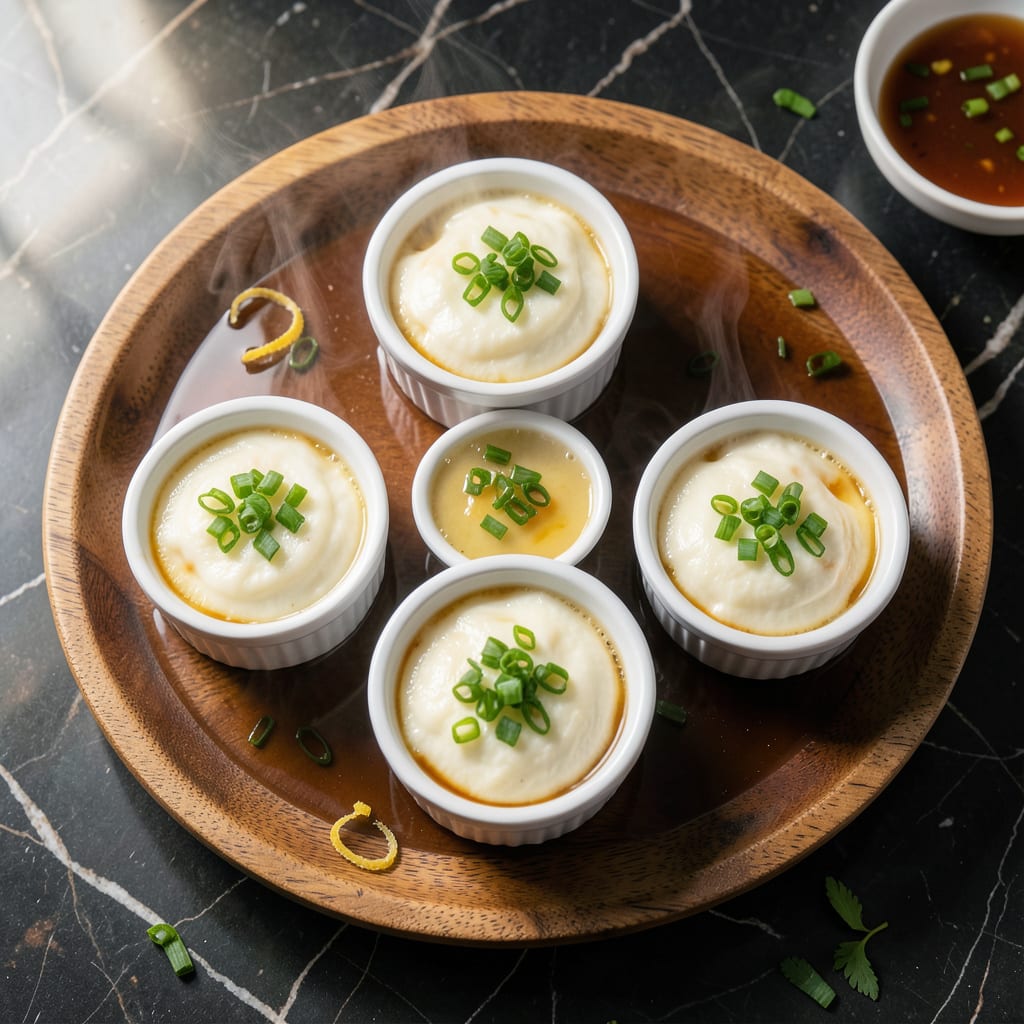
This steaming method transforms simple eggs into a silk-smooth custard with delicate texture and subtle flavor.
Using gentle heat and aromatic scallions, this technique ensures perfectly tender results every time with minimal effort.
Ingredients for Steaming Eggs
Simple ingredients create elegant silk-smooth custard with aromatic depth and minimal effort required.
| Ingredient | Amount | Notes |
|---|---|---|
| Large Eggs 🥚 | 6 whole | Room temperature preferred |
| Scallions 🧅 | 4 whole | Thinly sliced, white and green parts |
| Water 💧 | 2 cups | For steaming liquid |
| Soy Sauce 🫒 | 2 tbsp | Low-sodium preferred |
| Sesame Oil 🫒 | 1 tsp | Toasted for aroma |
| Salt 🧂 | ½ tsp | Fine sea salt |
| White Pepper 🌶️ | ¼ tsp | Freshly ground preferred |
| Shaoxing Wine 🍷 | 1 tbsp | Dry sherry as substitute |
| Vegetable Oil 🫒 | 1 tsp | For greasing ramekins |
| Chicken Stock 🥣 | ½ cup | Use vegetable stock for strict vegetarian |
The eggs are central here. Farm-fresh or organic eggs yield the richest custard texture, though standard large eggs work well. Room temperature ensures even cooking—cold eggs straight from the fridge can cause uneven setting. Scallions add delicate aroma; source from Asian markets for the most tender, sweet varieties. Avoid wilted or yellowing bunches.
No Shaoxing wine? Dry sherry at equal volume provides similar depth. For a non-alcoholic option, rice vinegar with a pinch of sugar mimics the balance. Chicken stock can be replaced with vegetable stock for strict vegetarian preparation. The sesame oil is non-negotiable for its toasted aroma—Kadoya brand offers consistent quality.
Prepared custards keep refrigerated for 2 days in sealed containers. Reheat gently in a double boiler to preserve texture. Do not freeze, as it alters the silky consistency. Best served immediately after steaming for optimal tenderness.
Why You’ll Love This Recipe
- Five-Minute Meal: I crack eggs into a bowl, add scallions, and steam—no fuss, no flipping, just set it and forget it while the water does the work.
- Umami Bomb: The soy sauce and sesame oil turn simple eggs into something rich and savory, with that last drizzle of oil adding a nutty finish that’s honestly addictive.
- Breakfast or Midnight Snack: I’ve served this silky, custardy dish for weekend brunch and also eaten it straight from the pot at 11 p.m. on a Tuesday.
- Pocket Change Dinner: A handful of eggs, a few scallions, and pantry staples feed two for less than the cost of a coffee. Between us, it’s my go-to when the fridge looks bare.
Step-by-Step Instructions for Steaming Eggs
Master this technique for custard-like eggs infused with savory depth and delicate texture.
Step 1: Prepare the Steaming Liquid and Aromatics
In a small saucepan, combine the 2 cups Water and 0.5 cup Chicken Stock. Add the 2 tbsp Soy Sauce, 1 tsp Sesame Oil, 1 tbsp Shaoxing Wine, 0.5 tsp Salt, and 0.25 tsp White Pepper.
Bring this mixture to a gentle simmer over medium heat. The liquid should be fragrant and just beginning to release small bubbles at the edges. This infused broth will steam the eggs, imparting complex umami and aromatic notes throughout the custard.
Step 2: Prepare the Eggs and Ramekins
Crack the 6 whole Large Eggs into individual ramekins or small heatproof bowls. I prefer using 6-ounce ramekins for this preparation, as they provide the ideal depth for even steaming. Lightly beat each egg with a fork just until the yolk and white are combined—avoid overmixing to maintain a silky texture.
Thinly slice the 4 whole Scallions, separating the white and green parts, and sprinkle a portion over each egg. Use the 1 tsp Vegetable Oil to lightly grease the ramekins before adding the eggs; this prevents sticking and ensures easy removal after steaming.
Step 3: Steam the Eggs to Silk-Smooth Perfection
Place the ramekins in a steamer basket or on a rack set over the simmering liquid in the saucepan. Cover with a tight-fitting lid and steam over medium-low heat for 8-10 minutes. The water should maintain a steady, gentle simmer—vigorous boiling can cause the eggs to cook unevenly or become rubbery.
Check for doneness by gently shaking a ramekin. The eggs should have a slight wobble in the center but be mostly set. The custard will continue to cook slightly from residual heat after removal, so err on the side of slightly underdone at this stage for the silkiest texture.
Step 4: Rest and Garnish
Carefully remove the ramekins from the steamer and let them rest for 2-3 minutes. This resting period allows the eggs to finish setting and makes them easier to handle. The texture should be smooth, jiggly, and custard-like, with the scallions providing a subtle oniony contrast.
Garnish with additional scallion greens if desired. Serve immediately while warm, as the eggs are best enjoyed fresh from the steamer. The aromatic broth can be served on the side for dipping or drizzled lightly over the eggs for added depth of flavor.
Pro Tips For Making Steaming Eggs
- Use Room Temp Eggs: Cold eggs straight from the fridge can crack when steamed—I learned this the hard way. Let them sit out for 10-15 minutes first.
- Prep Scallions Thinly: Cut the scallions into paper-thin slices for even cooking and better flavor distribution. Sounds tedious, but it makes a real difference in the final dish.
- Skip Boiling Water: Start with hot tap water in the steamer, not boiling, to prevent sudden temperature shock that can split the eggs.
- Sauce After Steaming: Drizzle soy sauce and sesame oil over the eggs only after they’re cooked—adding it earlier can make the texture uneven.
Flavor Customization for This steaming eggs
Herb-Infused Variations
Swap scallions for 1 tbsp chopped cilantro and add 1 tsp grated ginger to the steaming liquid for a Thai-inspired twist. The citrusy brightness pairs beautifully with the egg’s richness. I love this with a drizzle of sriracha after steaming. 🌶️
Mushroom Umami Boost
Add ¼ cup finely diced shiitake mushrooms to the ramekins before steaming. The mushrooms absorb the steaming liquid’s flavors while adding meaty depth. Dried shiitakes work too—just rehydrate them first in warm water.
Cheesy Upgrade
Sprinkle 1 tbsp grated Parmesan or Pecorino Romano over each egg before steaming. The cheese melts into the custard, creating a luxurious, savory layer. For extra decadence, I sometimes add a pinch of white truffle salt.
Spicy Kick
Stir ½ tsp chili crisp or Sichuan peppercorns into the steaming liquid. The heat infuses the eggs with a subtle, lingering warmth. I recommend Lao Gan Ma chili crisp for its balanced spice and crunch. 🔥
Citrus Zest
Add 1 tsp lemon or lime zest to the eggs before steaming. The citrus oils brighten the custard’s richness. I also like to finish with a squeeze of fresh juice just before serving for extra zing.
Smoky Depth
Replace 1 tsp of the water with 1 tsp liquid smoke for a barbecue-inspired flavor. A sprinkle of smoked paprika on top enhances the effect. This works surprisingly well with the soy and sesame base.
Nutrition Facts
Frequently Asked Questions
What type of eggs work best for steaming?
Room temperature large eggs yield the silkiest texture. Farm-fresh or organic eggs create richer custard, though standard eggs work well too.
Can I use a bamboo steamer instead of a metal one?
Yes! A bamboo steamer works perfectly and adds a subtle aroma. Just ensure it fits snugly over your pot and has a tight lid to trap steam.
How do I prevent the eggs from overcooking?
Steam over medium-low heat for 8-10 minutes and remove when centers still wobble slightly. The eggs firm up during the 2-3 minute rest.
What can I use if I don’t have Shaoxing wine?
Dry sherry works as a 1:1 substitute. For non-alcoholic, use 1 tsp rice vinegar with a pinch of sugar to mimic the balance.

- 6 Egg Cake Recipe with Oil: Light as Air With Buttery Moisture - October 4, 2026
- 4 Bean Casserole Recipe: One-Pan Heartiness With Smoky Paprika Depth - October 4, 2026
- 3-Ingredient Keto Mug Cake Recipe: Microwave Magic in 2 Minutes - October 4, 2026