
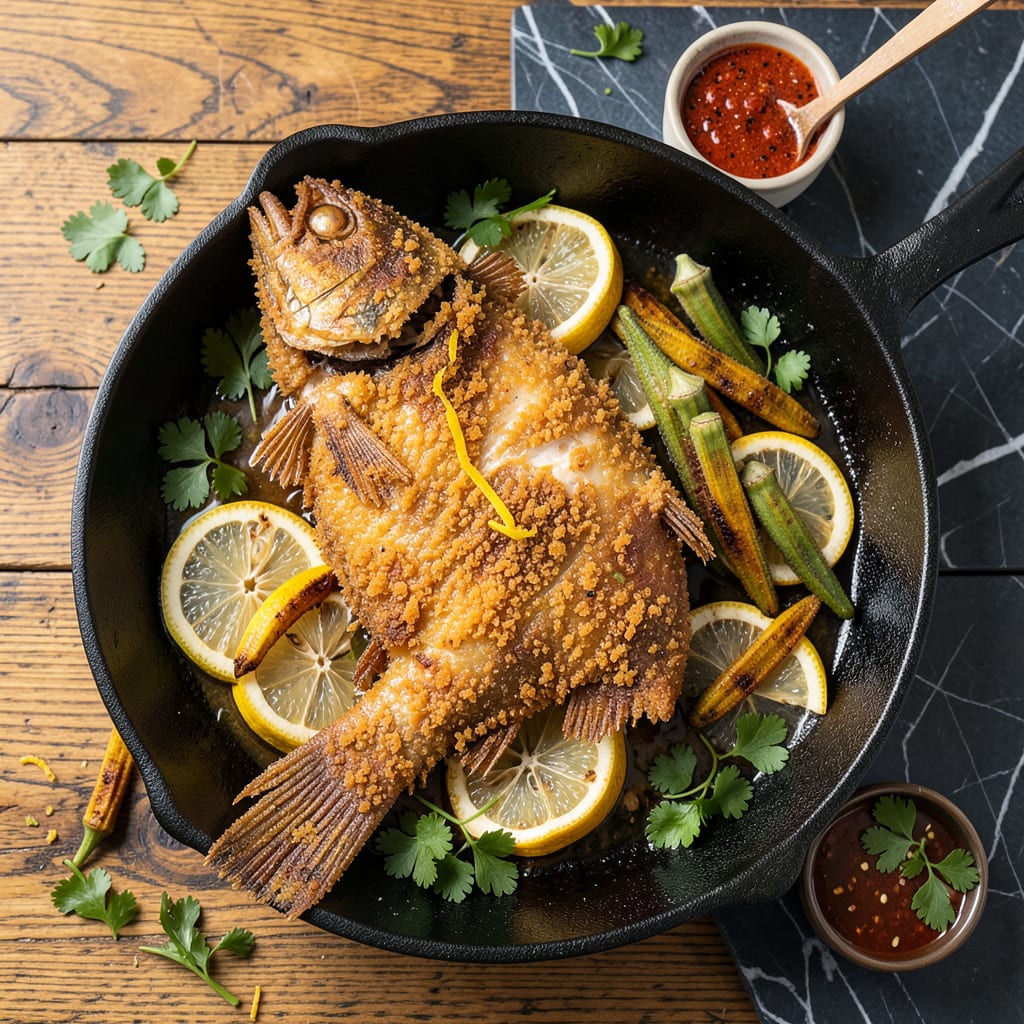
Perfectly fried whole catfish delivers the ultimate combination of crispy skin and tender, flaky flesh—all achieved in just 20 minutes. This method transforms a simple fish into a showstopping centerpiece with minimal effort. The secret lies in proper preparation and precise frying technique, ensuring every bite has that satisfying crunch.
I’ve refined this approach over years of testing, focusing on maintaining moisture inside while achieving golden-brown perfection outside. Whether you’re cooking for a weeknight dinner or a weekend gathering, this recipe guarantees professional results. The key is controlling oil temperature and timing—no guesswork, just consistently excellent fried catfish.
Ingredients for Fried Whole Catfish
Optimal ingredients ensure crispy skin and flaky flesh—focus on fresh catfish, precise seasonings, and proper frying mediums.
| Ingredient | Amount | Notes |
|---|---|---|
| Whole catfish 🐟 | 4 whole | Cleaned, scaled, 1-1.5 lb each |
| Buttermilk 🥛 | 2 cups | Full-fat for optimal adhesion |
| Hot sauce 🔥 | 2 tbsp | Louisiana-style preferred |
| Yellow cornmeal 🌽 | 2 cups | Fine to medium grind |
| All-purpose flour 🌾 | 1 cup | For dredging consistency |
| Kosher salt 🧂 | 2 tbsp | Diamond Crystal recommended |
| Freshly ground black pepper 🌶️ | 1 tbsp | Coarse grind preferred |
| Garlic powder 🧄 | 2 tsp | Freshly opened for potency |
| Onion powder 🧅 | 2 tsp | Fine powder texture |
| Paprika 🌶️ | 2 tsp | Sweet or smoked variety |
| Cayenne pepper 🔥 | 1 tsp | Adjust for heat preference |
| Vegetable oil 🫒 | 8 cups | Peanut oil alternative |
| Lemon wedges 🍋 | 4 slices | For serving |
| Fresh parsley 🌿 | ¼ cup | Chopped, for garnish |
The catfish quality determines final texture. Whole, farm-raised catfish (1-1.5 lb each) from reputable seafood markets ensures consistent results. Buttermilk must be full-fat for proper batter adhesion; Louisiana-style hot sauce (like Crystal or Tabasco) provides the necessary tang without overpowering. For cornmeal, Bob’s Red Mill offers reliable texture. Oil selection impacts crispness—vegetable or peanut oil maintains the ideal 350°F temperature without smoking.
Substitutions must preserve moisture balance. Almond milk plus vinegar can replace buttermilk in a 1:1 ratio. For gluten-free versions, rice flour substitutes effectively for all-purpose flour. Spice levels are adjustable—reduce cayenne by half for milder heat. If fresh parsley is unavailable, dried parsley at one-third quantity works, though fresh provides superior visual contrast. Lemon wedges can be swapped for lime wedges for a citrus variation.
Proper storage maintains texture integrity. Uncooked catfish remains optimal for 24 hours when refrigerated on ice. Prepared batter keeps 12 hours chilled. Fried catfish holds crispness for 2 hours at room temperature or 3 days refrigerated in airtight containers. Reheat in a 375°F oven for 8-10 minutes to restore crunch. Oil can be strained and reused 2-3 times if properly filtered and stored.
Why You’ll Love This Recipe
- No-Fuss Frying: Honestly, the buttermilk and hot sauce do half the work for you. Just soak the fish, dredge in the cornmeal-flour mix, and fry—no fancy techniques or finicky flipping.
- Crispy-Meets-Juicy Magic: That first bite where the cornmeal crust shatters and gives way to tender, flaky fish? I’ll be real: it’s the reason I make this twice a month. The hot sauce in the buttermilk adds just enough kick to keep things interesting.
- Feeds a Hungry Table: Between us, this is my secret weapon for summer cookouts or Sunday suppers. One whole catfish stretches further than you’d think, and it’s way more impressive (and affordable) than a platter of chicken.
- Leftovers? No Problem: Cold fried catfish on a biscuit the next morning? Solid. Or flake it into tacos—takes 5 minutes. I’ve even tossed leftovers into a salad for lunch. Nothing goes to waste here.
Step-by-Step Instructions for Fried Whole Catfish
Follow this professional method to achieve perfectly crispy skin and flaky flesh every time.
Step 1: Prepare the Catfish for Frying
Pat the whole catfish completely dry with paper towels, inside and out. This critical step ensures the buttermilk mixture adheres properly and creates that signature crispy crust. I recommend using about 3-4 paper towels per fish to absorb all moisture from the skin and cavity.
Make three diagonal slashes on each side of the fish, cutting down to the bone. These slashes serve two purposes: they help the fish cook evenly throughout and create more surface area for the crispy coating. The cuts should be about 1 inch apart and run parallel to each other.
Step 2: Create the Buttermilk Marinade and Seasoning Mixture
In a large bowl, whisk together the 2 cups buttermilk and 2 tablespoons hot sauce until fully combined. The acidity in the buttermilk tenderizes the fish while the hot sauce adds subtle heat that complements the catfish’s natural flavor. Submerge each prepared fish in the mixture, ensuring complete coverage.
In a separate bowl, combine the 2 cups yellow cornmeal, 1 cup all-purpose flour, 2 tablespoons kosher salt, 1 tablespoon freshly ground black pepper, 2 teaspoons garlic powder, 2 teaspoons onion powder, 2 teaspoons paprika, and 1 teaspoon cayenne pepper. Whisk thoroughly to distribute the spices evenly throughout the dry mixture.
Step 3: Dredge and Prepare for Frying
Remove each catfish from the buttermilk mixture, allowing excess to drip off for 10-15 seconds. Immediately dredge the fish in the cornmeal mixture, pressing gently to ensure complete coverage. I use a circular motion while pressing to create an even, thick coating that will fry to perfect crispness.
Place the dredged fish on a wire rack set over a baking sheet. This setup allows air to circulate around the fish, preventing the coating from becoming soggy before frying. Let the fish rest for 5 minutes while you prepare the frying oil – this brief rest helps the coating adhere better during cooking.
Step 4: Fry to Golden Perfection
In a large, heavy-bottomed pot or Dutch oven, heat the 8 cups vegetable oil to 350°F. Use a deep-fry thermometer to monitor the temperature precisely. The oil should be deep enough to fully submerge the fish, typically about 2-3 inches in the pot.
Carefully lower one fish at a time into the hot oil using tongs. Fry for 6-8 minutes per side until the coating turns deep golden brown and the internal temperature reaches 145°F when measured at the thickest part. The fish should float when done, and the coating should be audibly crisp when tapped with tongs.
Transfer the fried catfish to a clean wire rack or paper towel-lined plate to drain. The rack method preserves crispness better than paper towels by allowing air circulation. Let rest for 2 minutes before serving to allow the coating to set completely.
Step 5: Serve with Garnishes
Arrange each whole catfish on a serving platter. Garnish with the 4 slices lemon wedges and sprinkle with the 0.25 cup fresh parsley. The bright acidity from the lemon cuts through the richness of the fried fish, while the parsley adds freshness.
Serve immediately while the coating remains at peak crispness. For authentic presentation, I recommend serving with additional hot sauce on the side and classic southern sides like coleslaw or hush puppies. The fish should have an audible crunch when cut, with flaky white flesh that separates easily from the bone.
Perfect Pairings for This fried whole catfish
Classic Southern Sides
Nothing complements fried catfish better than creamy coleslaw with a tangy vinegar base. I make mine with 1/4 cup apple cider vinegar, 2 tbsp sugar, and 1/2 cup mayo for that perfect balance. The cool crunch contrasts beautifully with the hot, crispy fish. 🥬
For a heartier option, buttermilk hush puppies are essential. My secret is adding 1/2 cup finely diced onion and 1 tsp baking powder to the batter for extra fluffiness. Fry them in the same oil after the catfish for maximum flavor infusion.
Refreshing Beverages
An ice-cold sweet tea with lemon slices cuts through the richness perfectly. I brew mine with 4 family-sized tea bags per gallon and add 1 cup sugar while hot. The slight bitterness balances the fish’s crispy coating.
For beer lovers, a light lager like Pilsner Urquell or Bud Light works wonders. The crisp, clean finish cleanses your palate between bites. I always keep a few chilled bottles ready when serving this meal.
Sauce Pairings
Offer spicy comeback sauce on the side—mix 1/2 cup mayo, 2 tbsp ketchup, 1 tbsp Worcestershire, and 1 tsp hot sauce. This Mississippi favorite adds creamy heat that elevates each bite.
For tangy contrast, homemade tartar sauce with 1/4 cup chopped pickles and 1 tbsp capers provides bright acidity. I prefer using Duke’s mayonnaise for its rich, egg-forward flavor that stands up to the fried coating.
Nutrition Facts
Frequently Asked Questions
What’s the best oil temperature for frying?
Maintain the oil at 350°F throughout cooking. This ensures the coating crisps quickly without absorbing excess oil. Use a deep-fry thermometer for accuracy—too low and the fish becomes greasy, too high and it burns before cooking through.
Can I use fillets instead of whole fish?
Yes, but adjust the cooking time to 3-4 minutes per side for fillets. Whole fish stays moister during frying and makes a dramatic presentation. If using fillets, keep the skin on for better texture and flavor.
How do I know when the catfish is done?
The fish should float in the oil and reach an internal temperature of 145°F. The coating will turn deep golden brown, and the flesh should flake easily when tested with a fork.
What’s the secret to extra-crispy skin?
Pat the fish completely dry before dredging, and let the coated fish rest for 5 minutes before frying. The cornmeal-flour blend creates maximum crunch when fried at the right temperature.
How should I dispose of the used frying oil?
Let the oil cool completely, then strain through a coffee filter into a sealable container. Most communities have recycling centers that accept used cooking oil—never pour it down the drain.

- 6 Egg Cake Recipe with Oil: Light as Air With Buttery Moisture - October 4, 2026
- 4 Bean Casserole Recipe: One-Pan Heartiness With Smoky Paprika Depth - October 4, 2026
- 3-Ingredient Keto Mug Cake Recipe: Microwave Magic in 2 Minutes - October 4, 2026