
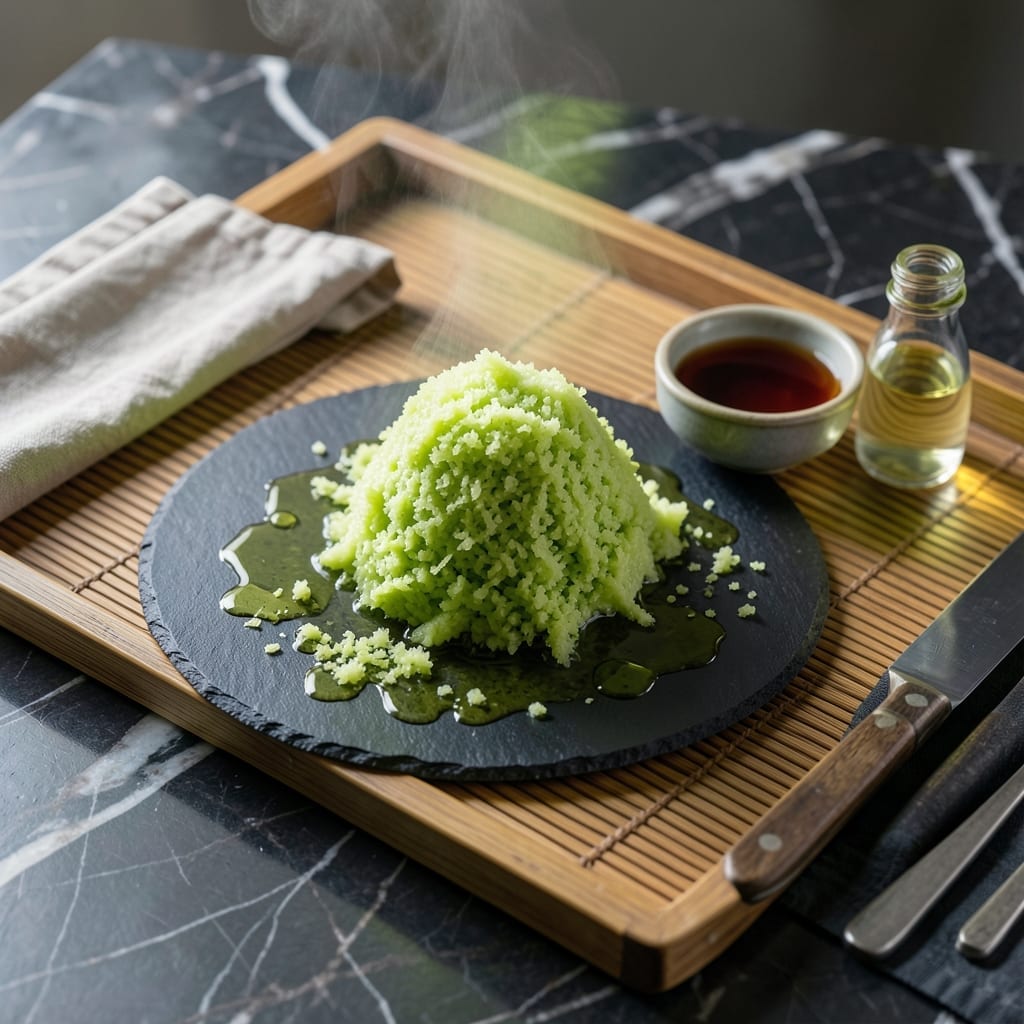
Authentic wasabi paste delivers a heat that’s both bright and fleeting, unlike anything from a tube. This recipe captures the true essence of Japanese wasabi root, freshly grated to release its natural spiciness.
The process is precise: the root must be finely grated to create a smooth, vibrant paste. Unlike horseradish-based imitations, fresh wasabi offers a clean, sharp flavor that enhances sushi and other dishes without overpowering them.
What you’ll achieve is a paste with a smooth texture and a heat that dissipates quickly, leaving behind a subtle sweetness. It’s the perfect accompaniment for raw fish or grilled meats.
Store it properly to preserve its potency, as the flavor fades within 30 minutes of grating. Here’s how to make it right.
Ingredients for Fresh Wasabi
Four simple ingredients to create authentic wasabi paste from scratch.
| Ingredient | Amount | Notes |
|---|---|---|
| Fresh Wasabi Root 🌿 | 2 oz | Peeled, grated finely |
| Cold Water 💧 | 2 tsp | To adjust consistency |
| Rice Vinegar 🍚 | ½ tsp | Optional for stability |
| Soy Sauce 🫙 | ¼ tsp | Optional for depth |
Fresh wasabi root is non-negotiable for authenticity. Japanese or Asian markets often carry it, but it’s rare—look for firm, unblemished rhizomes with a bright green interior. The root oxidizes quickly once exposed to air, so grate it immediately before use. Avoid pre-packaged wasabi powder or tubes, which are typically horseradish-based and lack the true flavor profile.
No rice vinegar? Skip it entirely—traditional wasabi paste requires nothing more than the root and water. Some chefs add a pinch of salt or sugar, but purists argue it masks the natural flavor. If the paste is too sharp, let it rest for 5-10 minutes to mellow. The heat dissipates naturally, so timing is key for serving.
Wasabi paste loses potency fast—30 minutes at room temperature, 24 hours refrigerated in an airtight container. Press plastic wrap directly onto the surface to minimize air exposure. For longer storage, grate fresh as needed. Never freeze, as it destroys the texture and flavor.
Why You’ll Love This Recipe
- I’ll be real: it keeps in the fridge for days, so I always have some on hand for spontaneous Asian-inspired meals.
- Minimal Effort: I just grate the wasabi root, mix with cold water and rice vinegar—no cooking required.
- That First Bite: The fresh root hits with a clean, fiery kick that store-bought can’t touch.
- Sushi Night Hero: It transforms homemade sushi rolls and pairs perfectly with soy sauce for dipping.
Step-by-Step Instructions for Fresh Wasabi Paste
Master this traditional technique to create authentic wasabi with the perfect balance of heat and freshness.
Step 1: Prepare the Fresh Wasabi Root
Begin by peeling the 2 oz Fresh Wasabi Root completely, removing all green skin to reveal the bright white interior. I use a sharp paring knife and work carefully to avoid wasting any of the precious root.
The root should be firm and free of blemishes. Any green parts left on will give your paste a bitter, unpleasant flavor. Once peeled, rinse the root briefly under cold water to remove any remaining skin fragments and pat it dry with a clean towel.
Step 2: Grate the Root Finely
Using a fine Microplane or traditional wasabi grater, grate the peeled root into a fine, snow-like texture. I’ve found that grating in a circular motion while applying light pressure gives the smoothest consistency.
Work quickly at this stage—the wasabi’s pungent compounds begin to dissipate within 15-30 minutes of grating. You should immediately notice the characteristic sharp aroma filling your workspace as you work.
Step 3: Adjust Consistency with Cold Water
Let the grated wasabi sit for 5 minutes to allow its full heat to develop. Then add the 2 tsp Cold Water gradually, one teaspoon at a time, mixing thoroughly after each addition.
The ideal consistency is thick yet smooth, similar to prepared mustard. If it becomes too thin, the heat will be less concentrated. If too thick, it won’t incorporate well into your dish. The cold water helps preserve the wasabi’s delicate compounds.
Step 4: Add Stabilizing Elements (Optional)
For better longevity and depth of flavor, stir in the 0.5 tsp Rice Vinegar and 0.25 tsp Soy Sauce. These ingredients help stabilize the paste and enhance its complexity.
The rice vinegar adds subtle acidity that balances the wasabi’s heat, while the soy sauce contributes umami depth. Mix these in gently to maintain the paste’s smooth texture. This traditional touch makes your creation more authentic.
Step 5: Rest and Serve Immediately
Let the finished paste rest for 10 minutes at room temperature to allow the flavors to meld completely. You’ll notice the heat intensifies during this time as the compounds fully develop.
For the best experience, serve within 1 hour of preparation. Store any leftovers covered in the refrigerator for up to 24 hours, though the heat will diminish over time. The freshest wasabi offers the most authentic and powerful flavor experience.
Pro Tips For Making Fresh Wasabi
- Grate Just Before Serving: Fresh wasabi loses its pungency within 15 minutes of grating, so only grate what you need right before using—this keeps the heat sharp and the flavor bright.
- Use a Microplane: A fine-grater or microplane gives the smoothest texture and best flavor release; a regular grater leaves it stringy and uneven.
- Skip Hot Water: Always use cold water when mixing grated wasabi to preserve its volatile compounds—hot water kills the heat and turns it bitter.
- Let It Rest Briefly: After grating, give the wasabi 5 minutes to develop its full spiciness before combining with rice vinegar or soy sauce.
Wine and Beer Pairings for This fresh wasabi
Sake Pairings
For an authentic Japanese experience, I pair this paste with dry sake like Dassai 23 or Hakkaisan. The clean, crisp notes complement the wasabi’s sharp heat without overpowering it. Serve chilled at 45-50°F for optimal balance. 🍶
Japanese Beer
A crisp Sapporo or Asahi Super Dry beer cuts through the spiciness beautifully. The light, refreshing carbonation cleanses your palate between bites of sushi. I always keep a few chilled for impromptu wasabi tastings.
White Wine
If you prefer wine, try a dry Riesling from Germany or Albarino from Spain. These wines have enough acidity to stand up to the heat while their citrus notes enhance the wasabi’s brightness. Serve at 45-50°F.
Green Tea
For a non-alcoholic option, sencha green tea works wonderfully. The light bitterness and grassy notes create a harmonious pairing. Brew at 175°F for 2-3 minutes to avoid over-extraction. 💚
Cocktail Pairing
A yuzu highball—soda water with 1 oz yuzu juice and 2 oz vodka—makes a refreshing companion. The citrus forwardness mirrors the wasabi’s fleeting heat. Garnish with a yuzu twist.
Nutrition Facts
Frequently Asked Questions
What’s the best tool for grating wasabi root?
A fine Microplane or traditional wasabi grater works best. These create the smoothest texture and release the most heat from the root.
How quickly does the heat fade after grating?
The heat begins to dissipate within 15-30 minutes of grating. For maximum potency, serve immediately after resting.
Can I make wasabi paste without a grater?
While possible with a knife, it won’t be as smooth or potent. A grater is essential for authentic texture and heat release.
Why does my paste taste bitter?
Bitterness comes from leaving green skin on the root. Peel completely before grating to avoid this common mistake.

- 21-Pound Turkey Recipe: Juicy Golden Meat With Foolproof Temperature Tricks - October 3, 2026
- 3-Lb Ribeye Roast Recipe: Steakhouse-Quality Crust and Juicy Core - October 3, 2026
- 6-Can Vegetable Soup Recipe: Pantry-to-Pot Heartiness in One Pot - October 3, 2026