
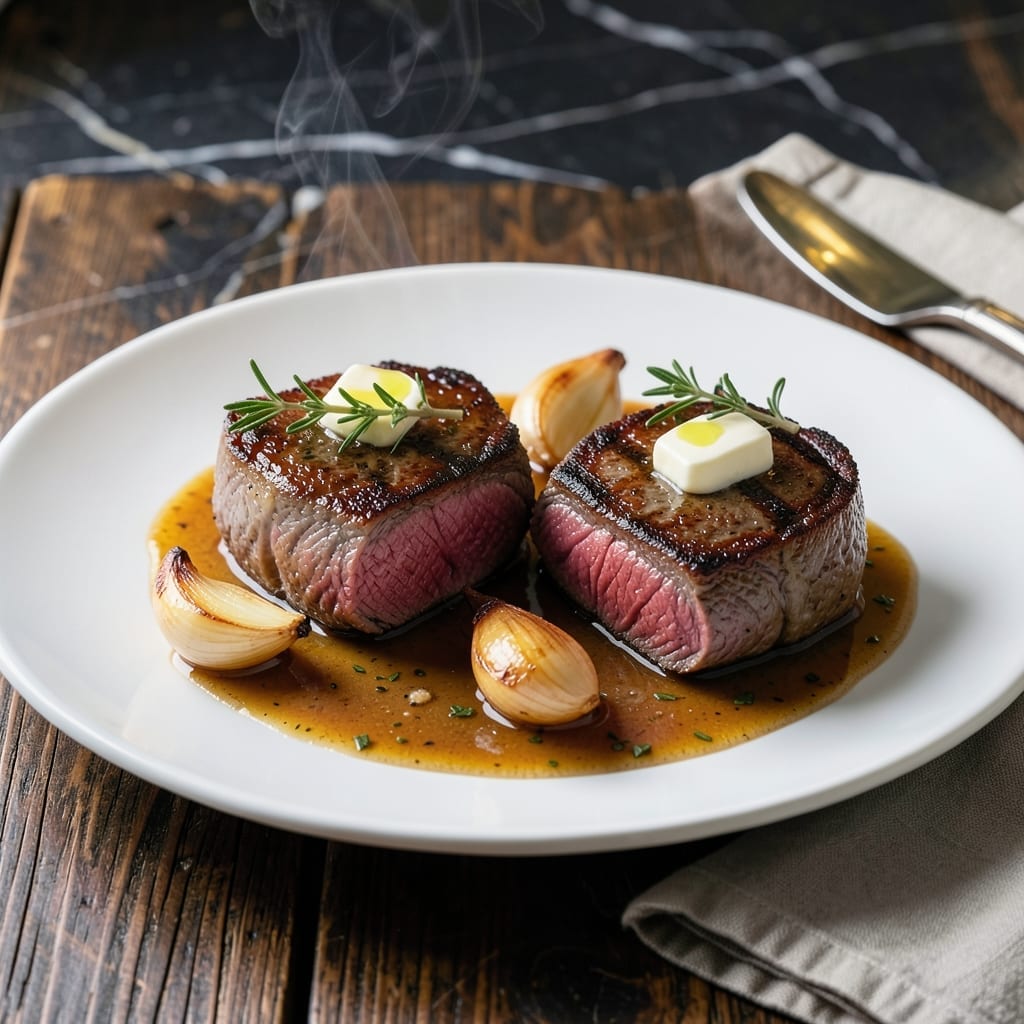
Mastering filet mignon at home is simpler than you think with this proven technique for achieving restaurant-quality results every time.
The secret lies in letting the steak come to room temperature before cooking and using a screaming hot pan to create a perfect crust. This method ensures tender, juicy meat with a beautifully caramelized exterior.
With just a few simple ingredients and precise timing, you’ll produce a steak that rivals any high-end steakhouse. The key is patience—both in preparation and in letting the meat rest after cooking.
Serve with your favorite sides for a meal that’s sure to impress. Here’s how to bring steakhouse elegance to your own kitchen.
Ingredients for Gordon Ramsay Filet Mignon
Steakhouse quality starts with just a dozen carefully chosen ingredients for this elegant dish.
| Ingredient | Amount | Notes |
|---|---|---|
| Filet Mignon Steaks 🥩 | 4 whole | 1.5 inches thick, room temperature |
| Kosher Salt 🧂 | 1 ½ tsp | Diamond Crystal preferred for texture |
| Freshly Ground Black Pepper 🌶️ | 1 tsp | Coarsely ground for crust |
| Extra-Virgin Olive Oil 🫒 | 2 tbsp | High smoke point preferred |
| Unsalted Butter 🧈 | 3 tbsp | European-style for richness |
| Garlic Cloves 🧄 | 4 cloves | Lightly crushed, not minced |
| Fresh Thyme Sprigs 🌿 | 4 whole | Plus 1 tsp chopped for garnish |
| Fresh Rosemary Sprigs 🌿 | 2 whole | Plus 1 tsp chopped for garnish |
| Shallot 🧅 | 1 whole | Finely minced for pan sauce |
| Dry Red Wine 🍷 | ½ cup | Full-bodied like Cabernet Sauvignon |
| Beef Stock 🥩 | ½ cup | Low-sodium preferred for reduction |
| Dijon Mustard 🟡 | 1 tsp | For finishing sauce |
| Cold Unsalted Butter 🧈 | 2 tbsp | For mounting sauce |
The filet mignon is non-negotiable here. Look for USDA Prime or Choice grade—the marbling makes all the difference. I always grab mine from Whole Foods or a trusted butcher (their dry-aged cuts are next-level). Thickness matters: aim for 1.5 inches so you get that perfect medium-rare center without overcooking. Let it sit out 40 minutes before cooking (no shortcuts). The herbs should be fresh—dried just won’t give you that bright, aromatic finish.
No red wine? Beef broth plus a teaspoon of balsamic vinegar mimics the depth. Out of shallots? Yellow onion at half the amount works, but the flavor will be slightly sharper. If you don’t have fresh herbs, dried at one-third the quantity is acceptable (though not ideal). The butter is key—European-style has a higher fat content and won’t burn as easily. And yes, you need both whole sprigs and chopped herbs for layers of flavor.
Cooked steaks hold in a warm oven (200°F) for up to 30 minutes while you finish the sauce. Leftovers? Wrap tightly and refrigerate for 3-4 days—reheat gently in a skillet to avoid overcooking. The pan sauce is best used immediately but can be stored separately for 2 days.
Why You’ll Love This Recipe
- One Pan Magic: I love that this only dirties a single skillet—sear the filet, baste with butter, and you’re done.
- Buttery Perfection: The combo of olive oil and butter creates a crust so rich it’s ridiculous, with just salt and pepper letting the beef shine.
- Date Night Ready: Honestly, it feels fancy enough for a special occasion but takes less time than ordering takeout.
- Leftovers? Nope: Between us, there’s never any left—even my picky nephew cleans his plate.
Step-by-Step Instructions for Pan-Seared Filet Mignon
Here’s the method I use to achieve that perfect crust and buttery interior every time.
Step 1: Season and Prep the Steaks
Pat the 4 whole Filet Mignon Steaks completely dry with paper towels—this is crucial for achieving a proper sear. I can’t stress this enough: moisture is the enemy of a good crust. Season both sides aggressively with the 1.5 tsp Kosher Salt and 1 tsp Freshly Ground Black Pepper.
Let the steaks sit at room temperature for 30-45 minutes after seasoning. This ensures even cooking throughout. The steaks should look almost dry on the surface by the time you’re ready to cook—the salt will draw out moisture that we’ll pat away just before searing.
Step 2: Sear the Steaks to Perfection
Heat a heavy skillet (cast iron works best) over medium-high heat until it’s screaming hot. Add the 2 tbsp Extra-Virgin Olive Oil and swirl to coat the pan. When the oil shimmers, add the steaks carefully—they should sizzle immediately upon contact.
Sear the first side undisturbed for 2-3 minutes until a deep golden-brown crust forms. Flip and add the 3 tbsp Unsalted Butter, 4 cloves Garlic Cloves, 4 whole Fresh Thyme Sprigs, and 2 whole Fresh Rosemary Sprigs to the pan. Baste the steaks with the foaming butter for 1-2 minutes.
Step 3: Finish Cooking and Rest
For medium-rare, continue cooking until the internal temperature reaches 125-130°F (about 2-3 minutes more, depending on thickness). The steaks should feel slightly springy when pressed with tongs. Transfer to a cutting board or warm plate and tent loosely with foil.
Let the steaks rest for 5-10 minutes—this allows the juices to redistribute. Don’t skip this step; cutting too soon will result in all those beautiful juices ending up on your cutting board instead of in your steak. The internal temperature will rise 5-10°F during resting (carryover cooking).
Step 4: Create the Pan Sauce
While the steaks rest, place the skillet back over medium heat. Add the 1 whole Shallot and sauté for 1-2 minutes until soft. Pour in the 0.5 cup Dry Red Wine and scrape up all the browned bits from the bottom of the pan with a wooden spoon.
Let the wine reduce by half (about 2-3 minutes), then add the 0.5 cup Beef Stock and 1 tsp Dijon Mustard. Simmer for 3-4 minutes until slightly thickened. Remove from heat and whisk in the 2 tbsp Cold Unsalted Butter one tablespoon at a time until the sauce is glossy and emulsified.
Step 5: Serve with Flavor
Strain the sauce through a fine-mesh sieve into a small bowl to remove the solids, pressing gently on the shallots to extract all the flavor. Slice the steaks against the grain if desired, or serve whole. Spoon the sauce over the steaks and garnish with chopped thyme or rosemary if you have extra.
The sauce should coat the back of a spoon and have a rich, deep flavor that complements the steak without overpowering it. Serve immediately while the steaks are still warm—they’re best enjoyed fresh off the rest.
Pro Tips For Making Gordon Ramsay Filet Mignon
- Dry the Steaks: Pat the filets bone-dry with paper towels before seasoning—I learned this the hard way after watching my first few steaks steam instead of sear in the pan.
- Blazing Hot Pan: Get your pan screaming hot before adding the oil, then the steaks. Sounds obvious, but I used to rush this part and wondered why my crust was lackluster.
- Baste with Butter: Tilt the pan and spoon that foaming butter over the steaks for the last 2 minutes—it’s the easiest way to add rich flavor without extra effort.
- Rest Before Slicing: Give the filets a solid 5-10 minutes under foil after cooking. I skip this when I’m hungry, but the juices stay put instead of running all over the plate.
Common Mistakes When Making gordon ramsay filet mignon
Cold Steak Mistake
Never cook your steaks straight from the fridge. I’ve ruined many filets this way—the center ends up cold while the outside overcooks. Always let your steaks sit at room temperature for 30-45 minutes before searing. 🔥
Overcrowded Pan
Putting all steaks in one pan causes temperature drops and steaming instead of searing. Use a large cast iron skillet or cook in batches. You want that screaming hot surface to maintain contact with each steak.
Skipping the Pat Dry
Moisture prevents proper browning. Even after seasoning, pat your steaks dry again just before cooking. I use paper towels and press firmly—the drier the surface, the better the crust.
Constant Flipping
Resist the urge to move your steaks. Let them sear undisturbed for 2-3 minutes per side. That golden-brown crust forms through patience and uninterrupted contact with the hot pan.
Ignoring Carryover Cooking
Your steak continues cooking after you remove it from the pan. Pull it at 125-130°F for medium-rare. The internal temperature will rise 5-10°F during resting, so don’t wait for it to reach 145°F on the stove. 💡
Sauce Over-Reduction
Reduce your wine by half, not to a syrup. If your sauce gets too thick, add a splash of beef stock. The perfect consistency should coat the back of a spoon without being gluey.
Nutrition Facts
Frequently Asked Questions
What temperature should I cook the steaks to?
For perfect medium-rare, cook until the internal temperature reaches 125-130°F. Remember the temperature will rise 5-10°F during resting. Use a meat thermometer for accuracy.
Can I use a different type of pan?
A cast iron skillet is ideal, but a heavy stainless steel pan works too. Avoid nonstick pans—they won’t get hot enough for a good sear. Always preheat your pan until it’s screaming hot.
How long should I rest the steaks?
Let them rest for 5-10 minutes after cooking. This allows the juices to redistribute for maximum tenderness. Skip this step and you’ll lose all those delicious juices on the cutting board.
What can I substitute for red wine in the sauce?
Use beef broth plus 1 tsp balsamic vinegar for similar depth. You can also use dry vermouth or simply more beef stock with a splash of lemon juice.

- 6 Egg Cake Recipe with Oil: Light as Air With Buttery Moisture - October 4, 2026
- 4 Bean Casserole Recipe: One-Pan Heartiness With Smoky Paprika Depth - October 4, 2026
- 3-Ingredient Keto Mug Cake Recipe: Microwave Magic in 2 Minutes - October 4, 2026